
Trustee looks cheap on paper and complicated in practice
 Available in US
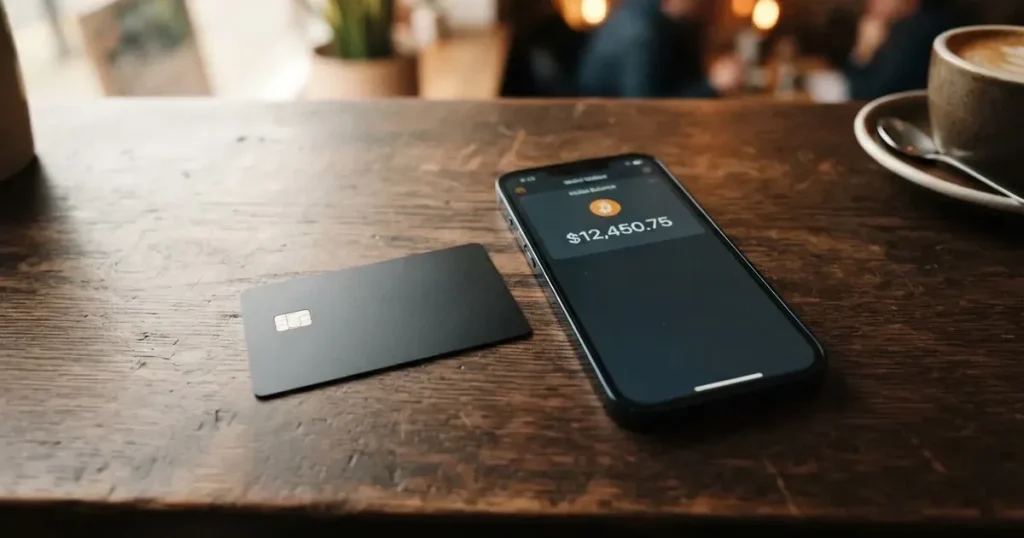
Trustee promises a crypto payment card that is hard to beat on paper: a virtual card listed at 10.00 $, “0% fees on transactions”, no monthly charge mentioned anywhere, and spending from a stablecoin balance through Apple Pay or Google Pay. That is exactly the pitch that pulls in people who have spent months without a usable card in their country — and it is why this review is worth reading carefully rather than skimming.
I spent the review looking at the card the way I would look at any offer aimed at someone who needs it to work: who actually gets one, what the real cost of a coffee or a subscription turns out to be, how you get money onto it, and — the part most pages skip — what happens when something goes wrong. On that last point the picture is not good. Trustee’s own pages describe a card that is currently virtual-only, with cash withdrawals switched off, and its review pages are full of accounts of frozen funds. My score is 5.1 out of 10, and I explain below exactly which marks make up that number and why.
Conditions are current as of October 28, 2026
Verdict
Trustee scores 5.1 / 10. That is an average, not a rounding — the card is genuinely good on price and genuinely weak on reliability, and the second thing matters more if your money depends on it.
The audience the card suits is narrow: EU users who want a virtual USD card for online spending, already hold USDC or USDT, and can accept that the physical card does not exist yet, that there are no cash withdrawals, and that the fee you are shown at signup is not the whole cost of a payment. If you are in that group, the card does one job competently.
The audience it does not suit is larger, and it includes anyone whose income is paid into a bank account, anyone planning a trip where they need to withdraw cash, and anyone who cannot afford to have funds frozen for weeks without warning. This is not a card for everyday life at the moment; it is a card for spending a stablecoin balance online.
| Criterion | Mark | Why |
|---|---|---|
| Who can get it | 5 / 10 | Countries are not listed; the pages say only “Issued in Great Britain” and “Worldwide Crypto Card”. Unofficial sources name the EEA plus Ukraine and Moldova, possibly out of date |
| Cost | 7 / 10 | Virtual card listed at 10.00 $, and “0% fees on transactions” is advertised; the conversion markup is not disclosed. Unofficial figures say 0.5% conversion and 0 EUR a month, but reviews cite up to 2% per transaction |
| Top-up options | 5 / 10 | USDC or USDT, first into the Trustee Plus wallet and then to the card balance; networks are not named. Unofficial sources say 30+ assets in the wallet |
| Reliability and complaints | 3 / 10 | Issuer Wirex Limited; Trustpilot 2.2 out of 5 from 236 reviews, 56% one-star — funds frozen for AML review, one amount 21,360 USDT, one case 53 days |
| Everyday use | 5 / 10 | Virtual card available, physical card temporarily unavailable, ATM withdrawals not available; Apple Pay and Google Pay supported |
One more thing I would want a reader to hear before anything else. In this category the company that appears on the app screen is often not the company that issued your card. Trustee’s pages name the issuer as Wirex Limited; the Trustee entity itself is not given on the page I read. That matters when something goes wrong, because the card network deals with the issuer, and the name on your statement may not be the name you signed up with. I come back to this in the risks section.
Will they give you the card
Short answer: the card’s own pages never say which countries are served. They say only two things — “Issued in Great Britain” and “Worldwide Crypto Card” — and neither is a country list. That is not a technicality. Being able to get a card is the first gate, and for this one you cannot check it from the public pages.
What you will find instead is third-party material. Unofficial sources — a crypto card comparison site and a guide published in the 2023-2025 period with no visible date — describe Trustee as available to residents of the EEA plus Ukraine and Moldova, usable wherever Mastercard is accepted. I am giving you that as what those pages say, not as something the card confirms, and both of those pages could easily be out of date. Treat the availability question as “ask in the app”, not “read it off the website”.
If you want to think about what “residence” and “citizenship” each mean here, it is worth being careful about the difference, because they are not the same thing and providers screen them separately. Your country of address decides what limits and rules apply; your citizenship and country of birth get screened for sanctions and issuer risk policy on their own. A card can therefore be available to residents of one country and still be unavailable to a citizen of another. This is standard practice across the industry, not something unusual about Trustee.
The practical test: install the app and see how far the country selector lets you go before it stops. That costs you nothing and it tells you in a minute what a page full of fine print would not.
How to get it
The stated sequence is short: get the Trustee Plus app, complete KYC verification, order the card, then top up the balance in USDC or USDT. That is the whole published process, and the honest summary is that it is the process for everyone who gets one — Trustee publishes no different track for people who cannot pass ordinary bank checks.
The verification step is a single in-app flow with more questions than crypto sign-ups usually ask. You go through Profile, then Identity, choose your country, pick “Other method”, and are asked to state the purpose of the account and the source of your income, plus your address. Then you submit an ID card (national passport) or an international passport, and a selfie. The pages say processing “usually takes little time”, which is about as precise as anyone wants to be about KYC timing.
Documents listed for this step are an ID card or international passport, a selfie, your address, and your stated account purpose and source of income. What is *not* stated on those pages: whether proof of address is required upfront, whether a residence permit counts if your passport is from elsewhere, what age you must be, what the verification tiers are, or which specific reasons make an application fail. Reviewers report being asked for additional documents later, sometimes as many as five at once — one account describes a request for five documents on 12 Oct 2026. Not stated is not the same as not required; it means you will find out later, which is worse.
One thing to expect regardless of what the page says: an AML review can follow. This is where the card’s trouble starts, so I have put the detail further down rather than burying it in the sign-up section where it belongs.
The card itself comes in two formats, and the distinction is not cosmetic:
- Virtual — orderable now, listed at 10.00 $, issued in “a few minutes”.
- Physical — marked “Temporarily unavailable”, with a waitlist.
The card currency is USD. The network is not stated on the pages I read, which is worth asking about if you plan to rely on the card in a specific place.
Fees
The headline is attractive and the detail is thin. Trustee advertises “0% fees on transactions” and lists the virtual card at 10.00 $ — the page does not label that as an issuance fee, so I am not going to call it one. No monthly fee appears anywhere on the card’s public pages.

Where the numbers stop is the part that costs you money. Payments in a currency other than USD are converted automatically at the moment of payment, and the conversion markup is not stated. That is the single most important fee on this card, and it is the one you cannot see before you pay. Unofficial sources put the crypto-to-euro conversion at 0.5% — described as the most consistent figure across 2023-2025 material — with 0% commission on card payments; the same sources note no virtual issuance charge during a promotion. Against that, reviews on the page I discuss under reliability cite conversion fees of up to 2% per transaction. Whether you meet 0.5% or 2% depends on terms the card does not publish.
| Fee or limit | What the card’s pages say |
|---|---|
| Issuance, virtual | 10.00 $ listed; not labelled as an issuance fee |
| Issuance, physical | Not stated; the card is “Temporarily unavailable” |
| Monthly fee | Not stated on the card’s public pages; unofficial sources say 0 EUR |
| Card payments | “0% fees on transactions” advertised |
| Conversion | Automatic for non-USD payments; markup not stated. Unofficial: 0.5%; reviews cite up to 2% per transaction |
| Cash withdrawals | Not available at the moment; fees and limits not stated |
| Monthly transaction limit | 30,000 USDC |
| Daily limit | Not stated |
Let me run three ordinary payments through that table, because that is the only way to see what it means.
A 30 EUR subscription. The card converts to USD at payment time. Your cost is the 30 EUR plus whatever markup sits inside the conversion rate — the figure not published. If the rate carries 0.5%, roughly a euro of your ten is gone before the subscription starts; at the 2% some reviewers describe, it is closer to three. I cannot tell you which applies to you, because the card does not say.
A 12 EUR taxi or restaurant payment. Same mechanism, smaller number, same uncertainty. This is where an undisclosed conversion fee is easiest to live with, because nobody minds a fraction of a euro — and hardest to notice, which is why it can quietly run for a year.
30,000 USDC in a month. That is the stated ceiling and it is high enough that most people will never approach it. But note what the limit is denominated in: USDC, not dollars. The conversion from USDC to whatever you actually spend happens per payment, so the ceiling does not tell you how much you can spend in the shop — it tells you how much stablecoin may leave the balance in a month.
There is no cashback and no tier structure stated. Two formats, no levels: the virtual card you can order, and the physical one you cannot yet.
Top up
Topping up Trustee is a two-step movement, and that detail explains a lot of the confusion in reviews. You send USDC or USDT to the Trustee Plus wallet first, and then move that money from the wallet to the card balance. Those are two separate balances. Funds sitting in the wallet are not spendable; funds on the card balance are.
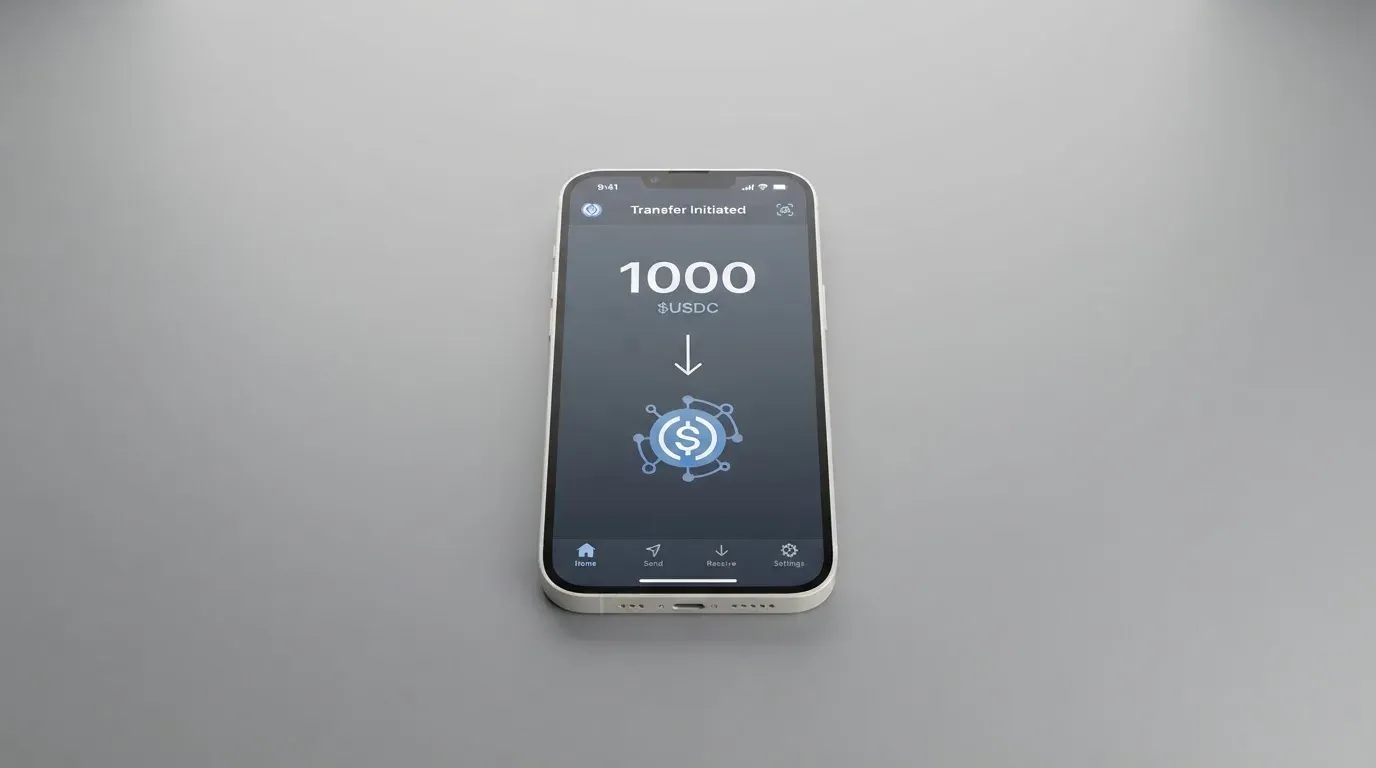
Crediting is stated as “usually within up to 5 minutes” — which reads oddly, since five minutes is both a ceiling and the word “usually”, and I would rather quote it than tidy it up.
What is not stated, and all of it matters to a first transfer: which networks are supported, what the fee is, what the minimum is, and whether you can send other assets. The wiki mentions a personal IBAN for SEPA transfers and an article on adding funds to the EUR balance, and a “Trustee Plus fees” article that could not be retrieved — so a number of pricing and network questions may well be answered somewhere I could not reach. Not stated on the pages I read is what I can honestly tell you; it may not be the full picture.
Here is the single most expensive mistake available on this card, and it is worth reading even if everything else works perfectly for you. Blockchain transfers are irreversible. If you send USDT on a network the provider does not support, or to an address belonging to a different network, the money can be lost, or recovered only through manual support work with no guarantee attached. Pick the network from the provider’s own current instructions, not from memory, not from a guide written two years ago, and not from what a support reply suggested in a chat window.
On unofficial claims about what else you can hold: sources conflict. One comparison site says 30+ assets in the wallet including BTC, ETH, TRX, USDT, USDC and SOL; the same site limits card spending to BTC, ETH and USDT, with USDC for wallet top-ups. That contradicts the card’s own statement of USDC or USDT, and I would follow the card’s version. What the card says is that the wallet is the deposit side and the card balance is the spending side, and it does not say the two accept the same things.
Pulling money back out is the part I would examine before committing anything substantial. The wiki links “How to withdraw money to a bank card”, which I have not read, and the fees and the balance handling on closure are not stated. Cash withdrawals from the card at ATMs are not available at present — the card’s own wording is that the team is working on this. So today, the realistic route out is back to crypto. An unofficial guide describes ATMs at NFC-enabled terminals with a PIN, up to EUR 2,000 a day and EUR 10,000 a month at 1.5% plus EUR 1 — but that guide contradicts the current official position, carries no visible date, and describes a feature the card’s page says you do not have. I would not plan around it.
Paying with it every day
Everyday use is where the 5 / 10 comes from. Apple Pay and Google Pay are supported, which is the part that genuinely works: adding the virtual card to your phone wallet is probably how you will actually use it, since it turns a virtual card into something tap-to-pay. What categories of merchant are blocked is not stated, and that gap matters more than it sounds — see below.
The virtual card is available and arrives in “a few minutes”. The physical card is unavailable. ATM withdrawals are unavailable. That is one card, no cash, right now.
The app itself is unremarkable in the way most financial apps are. The version I could see was iPhone iOS 17.0+, version 2.1.6, with an Android APK offered on the site, from developer MIKEPAY INC. The App Store listing I read on 2026-10-20 showed no rating (“not enough ratings”) on the Nepal storefront; I did not read the Google Play rating. That is a thin signal rather than a bad one, but it is worth knowing you are joining something with almost no visible public footprint in app stores.
Support is in-app, via an icon in the corner of the wallet, and the pages advertise “Human support service, real people without bots”, plus community channels on Telegram, YouTube, X, Facebook and LinkedIn. Email and hours are not stated. The app is listed in seven languages: English, Bulgarian, Lithuanian, Polish, Portuguese, Russian and Ukrainian — that language list is itself a hint about who the product is aimed at.
Rewards: not stated. Unofficial sources flatly contradict each other here — one comparison says no traditional cashback but a referral programme and hotel discounts, another says cashback is “in development”, and a sponsored piece claims up to 8% without clearly tying that figure to this card. I would plan on zero cashback.
Disputes and chargebacks are not described on either the card pages or the wiki pages I read. Not stated is not the same as not covered, but it means you have no published process to rely on, and one review describes an account closed after a chargeback request. If that pattern is real, the protection does not exist in any useful sense.
There is a broader reason to expect occasional friction with a virtual card that looks foreign. The first six or eight digits of a card number identify the issuer and its country, and any shop can look that up. When the issuer country differs from the billing address on file, some merchants apply extra scrutiny, and some decline prepaid cards outright. Address verification, which compares the street number and postcode the buyer typed against issuer records, is mostly a US, Canada and UK service and is generally unavailable on foreign-issued cards. That produces declines that look random and are nothing of the kind. Gambling merchants, tagged with category code 7995, are blocked by many issuers as policy rather than law, and Trustee’s block list is not published — another thing to expect to discover by trying.
What can go wrong
This is the section that produced the 3 / 10, and I would read it before any sign-up, because it is the one place where the card’s own silence and its users’ experience pull in opposite directions.
Frozen funds. The Trustpilot page for Trustee Plus shows 2.2 out of 5 from 236 reviews, 97 of them in the last twelve months, with 56% one-star and 37% five-star — read 2026-10-20. The dominant one-star theme is funds frozen under AML review with no timeline: one account describes 21,360 USDT held on 1 Oct 2026, another 53 days, others more than 30. In EU law, if due diligence cannot be completed, the institution is required to withhold the transaction or relationship and, where necessary, end it — which is why accounts close or freeze pending documents. Understanding that does not make it less painful; it makes it less surprising.
“Return to source” that does not return. Several reviews from March to October 2026 describe being asked to send funds back to the source and not seeing that completed. If a reviewer’s money has been returned once already, a second freeze over the same money is not an exotic outcome.
Support that reads as a template. The company replies to 98% of negative reviews, which is genuinely high, but the replies are described as mostly templated assurances that funds are safe. Volume of reply is not the same as resolution. Reviews also mention copy-paste support in June to October 2026, lost access or revoked verification in July and October 2026, and a card block in July 2026.
A separate, quieter complaint page. A separate Trustpilot profile shows 2.5 out of 5 from five reviews, all one-star, from June to October 2026: AML holds, a chargeback followed by account closure on 22 Sep 2026, five documents requested on 12 Oct 2026. The profile is unclaimed, which means nobody is answering there. One earlier reviewer complained about unclear handling for existing users after card issuance resumed for Ukrainian users, slow USDT transfers and an unclear AML procedure — that reviewer may be describing a different entity, so I weigh it lightly.
Platform change mid-flight. Reviews from January 2026 describe cards moving to a merged platform or a new provider. A July 2026 review reports a card block that the company’s reply of 30 Jul 2026 attributes to the card issuer, not to Trustee. That is the clearest single illustration of the structure I flagged in the verdict: the issuer, Wirex Limited, controls the card; Trustee is the interface. If the card is blocked, the decision and the appeal both sit somewhere you may not have a relationship with.
Licence and custody questions. No licence or fine news came up in what I checked. On safeguarding, the security page says “We safeguard, but we do not control” and does not explain the custody arrangement; insurance is not mentioned and instant card freeze is not stated. On the positive side, the same page advertises sign-in by passkey or biometrics, multi-level two-factor authentication, Hacken vulnerability testing and a HackenProof bug bounty, and 24/7 reserve monitoring. Two cautions sit against that: safeguarding obligations for e-money providers in the EU require segregated accounts or insurance, and such funds are not bank deposits and carry no deposit guarantee; and Tether, which issues USDT, states that it disables tokens on wallets linked to OFAC sanctions and has frozen funds tied to illicit activity. The supply chain around a crypto card is not one company’s control, and no company in it will promise you anonymity.
What I could not establish is as informative as what I could. Official incidents are not stated. The physical card’s unavailability and the absence of cash withdrawals were the page state on 2026-10-20.
What to take instead
The honest comparison is not “Trustee bad, everything else good”. These alternatives have their own problems — one has an NFT creation fee, one requires proof of residency in 45 listed countries, one has membership tiers that run into thousands — and I include them so you can see the shape of the trade, not so you can shop safely by association. Scores are from the same ten-point basis as Trustee’s.
| Alternative | Score | Card and eligibility | Cost picture |
|---|---|---|---|
| TokenPocket | 5.8 / 10 | Visa debit for a list of European countries and territories (Germany, France, Spain, Switzerland among them); Mastercard debit for Australia, Canada, Hong Kong, Japan, Taiwan, New Zealand, Singapore, South Korea, UK and others; Americas “planned for Q2 2025”. Cards virtual; runs on Arbitrum; balances in EUR24 and USD24 | NFT creation fee partly covered, user pays “a small portion”; apart from that “no additional fees”; 1% fee on depositing cryptocurrency into the card, to be refunded later via rewards |
| MetaMask | 7.1 / 10 | Sign-up open in 45 listed countries and territories (Andorra, Argentina, Brazil, Canada, Mexico, Germany, France, Spain, Uruguay among them); other regions on a waitlist; proof of residency required; US and UK sign-ups temporarily closed. Mastercard, virtual card issued instantly, metal card pre-orderable, one card per user; issuer Monovate, card provider Crypto Life | Virtual free, no annual or maintenance fee; metal 199 $/year; “minimal fee for each transaction” (amount not stated on the pages read), no additional MetaMask fees, no foreign transaction fee, Mastercard rate used |
| KAST | 6.1 / 10 | Residence list shown at KYC (“If your country isn’t listed, it means KAST is not available there”); citizenship matters separately — an ID from a restricted region can disqualify you even if you live in a supported country; VPN does not bypass. Visa, virtual and physical, up to 10 cards | Annual membership: Standard 0 USD, Premium 1,000 USD/year, Private 10,000 USD/year; extra virtual card 2 USD; Standard physical card 0 USD plus 40 USD delivery; inactivity fee 1 USD/month after 12 months |
Three comparisons worth drawing out:
On access rules, others are more legible. KAST tells you that an unsupported country means no availability, and — credit to it — that holding only an ID from a restricted region can disqualify a resident of a supported country, while a dual citizen with a supported-country ID may pass, and that only your own ID counts. MetaMask names 45 territories and tells you ineligible regions limit sign-ups, not spending, and that proof of residency is required. Trustee publishes no list at all, which leaves you with nothing to check before you install anything.
On fees, Trustee is competitive but not uniquely so. MetaMask’s virtual card is free with no annual or maintenance fee; KAST’s Standard tier has a 0 USD membership and lists a non-USD FX fee of 0.5%–1.75% by country and a 0.10 USD fee on non-USD transactions under 25 USD, plus 0.50 USD for a declined transaction. Trustee’s 0.5% unofficial conversion figure sits inside KAST’s published band — and Trustee’s own markup is not stated at all, while reviews describe up to 2%. Publishing a band, even an unattractive one, is better than publishing nothing.
On rewards, the honest options are better. KAST pays USD cashback of 1.5% on the first 2,000 USD a month (Standard), 2% on the first 10,000 (Premium) and 3% on the first 40,000 (Private), with KAST Points adding 1% and 2% of eligible spend on the two upper tiers, paid when the transaction is authorised. MetaMask pays cashback in mUSD into the Money Account: 1% on Virtual, and on Metal a headline 3% limited by a footnote to the first 10,000 $ spent and 1% after that, plus a bonus multiplier via a dining app. Trustee offers nothing stated, and the 8% figure sometimes cited in third-party sponsored content is unofficial and not confirmed by the card itself, so it is not a figure to plan around.
On control of your money, none of them is your bank. MetaMask spends directly from your own connected wallet on Linea, Base, Monad and Solana, with mUSD, wETH, EURe, GBPe, USDC and USDT named — which means key loss, phishing and clipboard malware are your problem rather than the platform’s. KAST holds a USD balance you fund with stablecoins (USDT, USDC, PYUSD, RLUSD on Ethereum, Solana, Polygon, Arbitrum and TRON) converted 1:1 at a 0% spread, and each purchase is deducted straight away rather than being credit. Trustee holds both a wallet and a card balance, which is the least direct arrangement of the four. Before choosing any of them, check whether the provider appears on ESMA’s interim register of authorised crypto-asset service providers; and remember that a card is a payment service regulated separately from the crypto side, so a crypto card often rests on two licences.
Who I would recommend it to
I would recommend Trustee to someone in this specific situation: you live in the EEA or in Ukraine or Moldova, you are an adult who can pass KYC without difficulty, you already hold USDC or USDT and want to spend it online, a virtual card added to Apple Pay or Google Pay is exactly the tool you need, and you can treat the money on it as money you might not see again for a while. If that is you, the card does what you need for 10.00 $ with no monthly fee and no cash-handling limits, and the top-up route is straightforward once you know the two balances are separate.
I would not recommend it — and would suggest MetaMask’s virtual card or KAST’s Standard tier first — if any of the following is true. You need physical cash. You need the card to work the day after you fund it without questions. You cannot afford an AML freeze. You want to know what a foreign-exchange payment costs before you make it. You plan to dispute a transaction. Or you are simply looking for a card you will stop thinking about, because the category’s defining feature is that you will not stop thinking about it.
Frequently asked questions
What is the Trustee card?
Trustee is a crypto payment card that spends a stablecoin balance rather than a bank account. You load USDC or USDT, and the balance converts to USD and pays at shops, online or in person. It is Mastercard-based, with a virtual card available now and a physical card the pages mark as temporarily unavailable.
How does the Trustee card work?
You install Trustee Plus, complete KYC, order the virtual card, and receive its details in a few minutes. You send USDC or USDT to the Trustee Plus wallet first, then move the money from the wallet to the separate card balance, and the card spends that balance. Payments in other currencies convert automatically at the moment of payment.
Is Trustee a bank?
No — it is not described as one. The pages name the card issuer as Wirex Limited, saying “Issued in Great Britain”, and do not name the Trustee entity on the card page. That distinction matters: the issuer controls the card programme, and in at least one reported 2026 case the issuer was blamed for a card block.
Is Trustee card available in my country?
The card’s public pages do not say. They state only “Issued in Great Britain” and “Worldwide Crypto Card”, with no country list. Unofficial sources describe it for EEA residents plus Ukraine and Moldova, undated and possibly outdated, so the app’s country selector is the only reliable test available to you.
Does the Trustee card require KYC?
Yes. KYC verification is required before the card is issued, as a single in-app step covering profile and identity, your country, the account’s purpose, your source of income, your address, an ID card or international passport, and a selfie. Levels, processing times and rejection reasons are not stated on the pages, and reviews report further document requests later.
How much does the Trustee card cost?
The virtual card is listed at 10.00 $ with no monthly fee stated, and the card advertises “0% fees on transactions”. The gap is conversion: non-USD payments convert automatically and the markup is not disclosed. Unofficial figures say 0.5%, reviews cite up to 2% per transaction — so ask for the rate in writing before you rely on the card.
How do I top up the Trustee card?
Send USDC or USDT to the Trustee Plus wallet, then move it to the card balance; crediting is stated as usually within up to 5 minutes. The networks are not named on the card pages, so take the network from the provider’s current instructions — a transfer on the wrong network is irreversible and can be lost.
Can I withdraw cash or money to my bank account?
Not from an ATM at the moment — the card states cash withdrawals in Trustee Plus at ATMs are not available, with the team working on it. The wiki links an article on withdrawing to a bank card that I did not read, so its fees are not established. An unofficial guide describing NFC terminals and 1.5% plus EUR 1 contradicts the official position.
Is the Trustee card safe?
Its security page advertises passkey or biometric sign-in, multi-level two-factor authentication, Hacken testing and a bug bounty, and 24/7 reserve monitoring. Against that, the card says only that it safeguards but does not control, explains no custody arrangement, mentions no insurance, and its Trustpilot profile shows 2.2 from 236 reviews with heavy themes of frozen funds.
Is the Trustee card worth it?
It depends on whether a virtual USD card fed by stablecoins solves a problem you actually have. At 10.00 $ with no monthly fee and no cash-handling fees, the cost is among the lowest in the category. But with no physical card, no ATM withdrawals, an undisclosed conversion markup and a 3 / 10 reliability mark, it is worth it only if you can hold it lightly.
Top wallet cards by score – cryptocardtop
Content created by the «cryptocardtop» team