
What Payth tells you, what it does not, and what that gap means for your money
 Available in US

Payth is a crypto card that converts Bitcoin, Ethereum or USDT into a spendable balance and hands you a virtual card to pay with. On paper that is a normal, slightly dull proposition, and the card’s own marketing supports it: zero transaction fees, a flat 2% fee on ATM withdrawals, availability worldwide except a named list of restricted countries. In practice, when I read through the public pages looking for the things I always look for before recommending a card to anyone — who issues it, in which country, under which licence, who holds the money, what a declined payment means — the answers were mostly silence. The site does not name the card network. It does not publish issuance or monthly fees. It does not state the limits. It does not say which blockchains to send funds on. Those are not small omissions; they are the parts of a card that decide whether your deposit ever arrives.
I scored it 6.2 out of 10. That is not a condemnation. It is a card whose pitch is genuinely appealing for a specific person and whose disclosure level is thin enough that I would want you to read the rest of this page before you move any money. The single most useful thing I can tell you is where the silence is, because in this category silence is itself a fact about risk.
The conditions described below are current as of October 28, 2026.
The score, criterion by criterion
| Criterion | Mark | Why |
|---|---|---|
| Who can get it | 8 / 10 | Issued worldwide except restricted countries, including Afghanistan, Russia, Ukraine, Iran and Syria |
| Cost | 7 / 10 | “Zero transaction fees”, 2% ATM commission; issuance and servicing not disclosed |
| Top-up options | 6 / 10 | BTC, ETH or USDT into the wallet; networks not named |
| Reliability and complaints | 4 / 10 | POPPO LLC; country, issuer and licences not named; no App Store rating, version 1.0.6; custodial wallet; no complaints found |
| Everyday use | 5 / 10 | Virtual cards; ATM available; Apple Pay and Google Pay not disclosed |
| Total | 6.2 / 10 | A workable product with a thin public record |
The two numbers to sit with are 8 and 4. The card is unusually open about who it will serve, and unusually quiet about who is behind it. A card can be cheap and still be careful with your money; what I could not establish here is the second half.
Who will they hand the card to?
This is the strongest part of the offer. Payth says it issues globally, with the exception of residents of a list of countries and regions it says it “cannot serve” — Afghanistan, Russia, Ukraine, Iran and Syria are among those named, and Belarus has appeared on the list in an earlier check of this card. The important detail for you is that the restriction is stated by residence, not citizenship. The list, the site notes, “is updated periodically based on issuer policies”, which means the exclusion is not a legal fact you can look up and rely on; it can change, and in one direction or the other, without warning.
That single sentence, “issuer policies”, is a small window into how the whole operation works. It tells you that the decisive power over who you are sits with whoever issues the card, not with Payth as a brand. If that issuer changes its appetite for a country, your access changes with it. For someone in a mainstream market this barely matters. For someone whose reason for wanting a crypto card is that ordinary banking is awkward where they live, it matters a great deal, and I would not want you to discover it at the moment your card stops working.
So: broadly open, with a moving exclusion list you should re-read before you commit, and a provider who can pull the rug on your country without your consent.
Getting the card
The route is short. You register in the app, verify your identity, deposit crypto into the Payth wallet, and receive a virtual card. There are “multiple virtual card options”, which is the card’s own phrasing for the fact that you can hold more than one. No physical or metal card is mentioned anywhere; delivery of a physical card is not part of what the public pages describe.
Identity verification is handled by Sumsub. The detail here matters more than it first appears: Sumsub, the card says, “only accepts IDs or passports issued by the same country as your ID”. In other words the document has to come from the country of which you are a citizen, which quietly rules out using a residence permit or driving licence from a country you merely live in. Whether proof of address is required, and what age threshold applies, is not stated. The card does mention that reviews “typically take 5–10 minutes”, which is fast for KYC but only meaningful if it passes.
There is a single KYC level described and no tiers. The card notes that refusals “may be due to a high-risk flag” — a phrase that explains a great deal and specifies nothing. What sets such a flag, how you would find out you carry one, and what you could do about it, are not stated.
One of the things I always want from a crypto card is its network. Visa or Mastercard is not named. The card currency is not named either. Both are load-bearing facts: the network determines which terminals accept you, and the currency determines what you are exposed to when you spend. Neither appears on the public pages.
Fees: what a Payth payment actually costs
Here the marketing is at its best and its sparsest at once. The claim is “zero transaction fees” — no percentage, no per-payment charge, and I found nothing contradicting it. The crypto conversion rate is described as “competitive rates”, which is a comparison to nothing. The foreign exchange fee is not stated at all, and for a card whose balance sits in a crypto-converted form, an undisclosed FX fee is a real hole rather than a formality.

ATM withdrawals are supported at “millions of merchants and ATMs worldwide”, with a “only 2% ATM withdrawal fee”. Whether there is a free allowance before that fee bites is not stated, so I cannot tell you what the first withdrawal in a month costs and what the tenth costs.
Everything else in the fee table is blank. And several things a card normally publishes are simply absent:
| Item | What Payth states |
|---|---|
| Issuance fee | not stated |
| Monthly or annual servicing fee | not stated |
| Transaction fee | “zero transaction fees” |
| Crypto conversion | “competitive rates”, no percentage given |
| Foreign exchange fee | not stated |
| ATM fee | “only 2% ATM withdrawal fee” |
| Free ATM allowance | not stated |
| Daily spending limit | not stated |
| Monthly spending limit | not stated |
| Card currency | not stated |
| Fee tiers | not stated |
“Worth it for the fees” is a conclusion I cannot responsibly give you, because two of the three biggest costs — a possible issuance charge and a possible FX fee — are not published. I can tell you the transaction fee is zero. I cannot tell you the total.
Let me walk three ordinary payments through what is known and unknown, because this is where a card like this either earns trust or spends it.
A coffee in your own currency. If your card currency matches the currency of the coffee shop and crypto is converted into that same balance, the transaction fee is zero and that is the whole cost. This is the payment the marketing is built around, and on the published numbers it is genuinely cheap.
A hotel abroad. The bill is in a currency your balance is not in, so a conversion happens at the network or issuer level, and then potentially again when your crypto balance is converted to cover it. The transaction fee is still zero. The FX fee is not stated. This is the payment I cannot price for you, and it is the one most people care least about until they are standing at the desk.
A cash withdrawal at an ATM. Here you have a number: 2%. But whether that is 2% of everything or 2% after a free allowance is not stated, and the ATM’s own operator may add its own charge on top, which is outside the card’s control and outside its published terms.
The pattern across all three is the same. Payth is clear about the parts that make the card look attractive and silent about the parts that decide what you actually pay. Ask before you rely on it.
Top up: sending crypto in, and the part that can go wrong
The funding route is crypto only. You “deposit BTC, ETH, or USDT in your wallet” — three assets, and the app listing on the App Store puts it as “multiple cryptocurrencies” such as USDT and BTC. The card’s own phrasing for the result is “top up your digital assets and get spending credit instantly”.
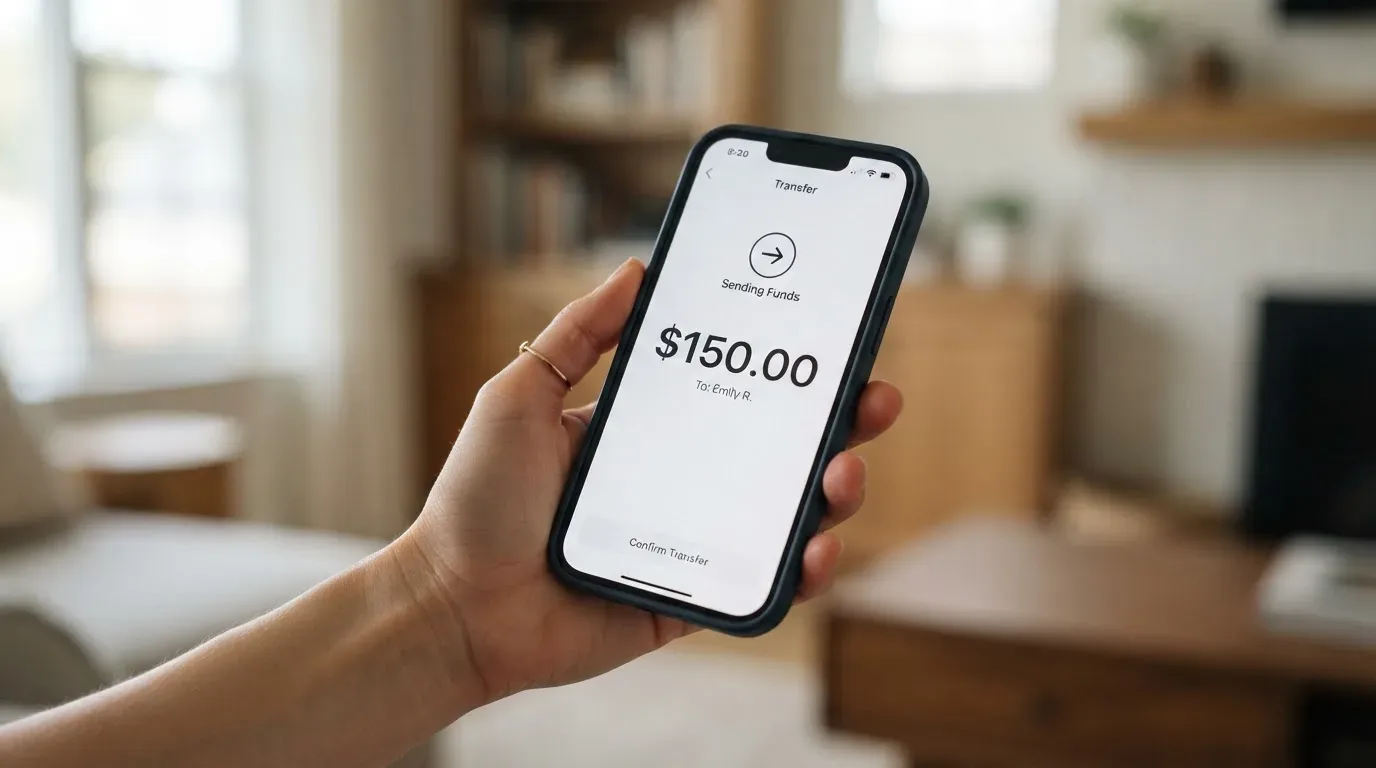
And here is the sentence I would underline for anyone reading this before transferring anything: the networks are not named. Not stated: the deposit fee, the minimum, who pays the network fee, and whether there is any fiat top-up route at all. Crypto is converted to fiat at the point of sale, which is the mechanism that makes the card work — but it also means the value you spend depends on when the conversion happens, and the card does not say when that is.
This is not a small gap in a minor part of the product; it is the part where money disappears. Blockchain transfers are irreversible. Send USDT on a network the provider does not support, or to an address belonging to a different network, and the funds can be lost or need manual recovery with no guarantee of either. Two examples of how sharp that edge is: on Ethereum, fees are paid in ETH, so a wallet holding USDT with no ETH cannot send anything at all; and Circle stopped supporting USDC on Tron in February 2024, so “USDC over TRC20” is not a native option despite what many exchanges still offer.
Some of this is general to the category rather than to Payth specifically, and it is worth being clear about the division. On-chain network fees for your deposit are charged by the blockchain, not by the card company — so gas is outside Payth’s control and outside its published pricing. But *which* network to use is a choice the card makes harder by not naming one. A card that told you “USDT on Ethereum” would cost you nothing to publish. A card that says nothing leaves you to guess, and guessing here is expensive.
My advice, stated as prudence and not as a trick: before you send anything larger than you would mind losing, confirm the supported network with the provider’s support in writing, and keep a small balance of the network’s own token alongside the stablecoin.
Paying with it day to day
Virtual cards only. That shapes the daily experience more than the fee table does.
An app for iOS and Android is available, plus an Android APK download. The App Store listing, read on 2026-10-21, shows no rating at all — the store’s own explanation is that it “hasn’t received enough ratings or reviews to display an overview” — at version 1.0.6. The Google Play rating could not be read. A young app with no public review history is not a red flag in itself; it does mean you are among the first users rather than a customer of a service with a track record.
Apple Pay and Google Pay are not mentioned, and the wallet situation inside the app is not stated. Neither are blocked merchant categories. No cashback or rewards of any kind is mentioned — that is worth saying plainly, because cashback is the standard feature crypto cards compete on and its absence here is a genuine difference from the alternatives further down.
The company’s FAQ addresses two specific concerns: refund delays and transaction failures. These are real questions in this product category — a declined authorisation can leave a hold on funds that stays for several days, typically up to seven. However, the answers and any time frames behind them were not readable on the public pages.
One more piece of context that shapes expectations: in the United States the card networks do not issue crypto cards to consumers at all. Visa and Mastercard license issuers and can suspend a programme, and they have done it. Visa said in November 2022 that it had “terminated our global agreements with FTX”, and the FTX US debit card was wound down by its issuer. WaveCrest, a Visa issuer that supplied crypto card brands, was suspended by Visa in Europe in 2018, closing all its Visa programmes. What that means for you is that a crypto card is not a permanent fixture. Programmes close on a sequence — notice, then spending and loading stop, then a request to withdraw remaining balances — and the brand you trust today may be gone next year.
What can go wrong
This is where Payth scored lowest, and it is not because something bad happened. Nothing bad happened. I could not find a single official incident, and a search of Trustpilot and Reddit turned up only unrelated brands with similar names. That silence is not evidence of safety. On the app store side, no Trustpilot page for payth.com was located. In a category where exchanges and card programmes have collapsed publicly and repeatedly, a brand with no review history is a brand nobody has written about yet — in either direction.
The company is POPPO LLC, named as the developer on the App Store. Its country of registration, the issuing bank, and its licences are not stated. That is the core of the 4 out of 10. When a card says “POPPO LLC” and stops there, the questions that matter have no published answer: under whose licence is this card issued, in which country, and what happens to the balance if that issuer fails? Note that an electronic money institution in the EU can issue e-money and payment cards but cannot lend, and that a card is regulated as a payment service separately from the crypto side of the business — so a crypto card commonly rests on two licences, and the public record here shows neither.
The wallet is custodial. The app listing refers to a Payth wallet you deposit into, which implies the provider holds the credentials rather than you holding a private key. That is the single most consequential fact on this page, and it needs to be understood rather than accepted. Custody has a documented cost: Mt. Gox reported about US$350 million stolen between 2011 and 2014, Coincheck about US$400 million in 2018, and Ronin Network US$625 million in 2022. Blockchain transfers have no built-in recovery — the network cannot freeze or return funds. Tether says it disables tokens in wallets on the OFAC sanctions list and has frozen funds tied to illicit activity, which is a reminder that stablecoins are not censorship-proof in either direction. You are choosing, in effect, between trusting Payth with your funds and holding the key yourself; there is no third option here.
On security features the card mentions “built-in risk controls” in its app listing. An instant freeze and spending monitoring are not stated for Payth specifically, and two-factor authentication is not stated. Those are the controls I would want before leaving a balance in a custodial wallet, and none of them is confirmed.
Support is an in-site FAQ. Languages and opening hours are not stated. On company news, the App Store shows version 1.0.5 released on September 15 and 1.0.6 on September 20, with the year not shown. Nothing else surfaced. It is a small company with a very small visible footprint, and a footprint that small cuts both ways: there is no history of failure to point at, and no track record of handling one.
What to take instead
None of these is a recommendation, and none is clearly safer in the ways you may be weighing. They are the comparisons I made while forming a view, and the scores are mine on the same basis as Payth’s.
CardFlow — 4.9 / 10. Aims at Nigeria, describing itself as “Nigeria’s smartest fintech card platform” and serving “Nigerians and global users”. No country list or exclusions are stated. It is a virtual USD Mastercard. Creating a virtual card is “completely free” per its own FAQ; the monthly fee is not stated, and neither are transaction fees or networks. Funding is Bitcoin, USDT, ETH or a Naira bank transfer, networks not named. No rewards mentioned.
HyperCard — 4.7 / 10. The official pages state no country list; the App Store says the card works in “more than 176 countries”, which is a statement about acceptance rather than eligibility — a distinction worth holding on to. Network not stated on the App Store page; balance in USD or EUR. No fees listed on the page I could read. Funding is crypto such as USDT, BTC or ETH deposited in the app and converted to USD or EUR on the card, networks not named. No rewards mentioned.
Card.fi — 6.6 / 10. The most documented of the three, and the most expensive to enter. Cards ship to “200+ countries”, with terms barring residents of, or orders from, “a country subject to sanctions that would prohibit the service”. It offers virtual Classic and Premium, physical Classic and Premium, and a stainless steel metal card, with every physical order including a virtual card; cards are issued “under licence from the relevant card schemes”, though Visa and Mastercard are not named, and the card currency is not stated. One-time prices are Virtual Classic $49 and Virtual Premium $249, with physical and metal prices not listed and no monthly, annual, inactivity or minimum-balance fee. Fees: top-up Classic 1.5% + $1.00, Premium 1%; FX Classic 3.5%, Premium 2.5%, with the conversion fee shown before each top-up. Funding is 32 coins across 5 networks — Ethereum, Base, BNB Chain, Solana and Kaanch — including USDT, USDC, ETH, BNB and SOL, with a deposit address per card, converted at market rate on arrival, and the terms warn that the wrong chain risks permanent loss. Rewards are the differentiator: cashback on card spending of Classic 0.8% (capped at 10 USDT/month), Premium 1%, Metal 1.2% (capped at 100 USDT/month and 5,000 USDT) or 2% (capped at 250 USDT/month and 20,000 USDT), a headline 10% at coffee shops capped at 10 USDT/month, and on balances “up to 18%” on Metal, variable.
| Payth | CardFlow | HyperCard | Card.fi | |
|---|---|---|---|---|
| Score | 6.2 / 10 | 4.9 / 10 | 4.7 / 10 | 6.6 / 10 |
| Who it serves | Worldwide except a named list | Nigeria-focused, global users | Not stated on official pages | 200+ countries, sanctions bar |
| Card | Virtual, options plural | Virtual USD Mastercard | Prepaid, USD or EUR | Virtual, physical and metal |
| Entry cost | not stated | Free virtual card | Not stated | $49 to $249 one-time |
| Transaction fee | “zero transaction fees” | not stated | not stated | Conversion shown before top-up |
| FX fee | not stated | not stated | not stated | 3.5% Classic, 2.5% Premium |
| Networks named | none | none | none | 5, listed |
| Rewards | not stated | not stated | not stated | Cashback and balance yield |
| Issuer and licences named | no | no | no | Licence from card schemes |
The honest summary is that Payth is cheaper at the point of use than the one alternative that publishes its numbers, and less documented than all of them. Card.fi’s disclosure is what makes it scorable; Payth’s silence is what makes it hard to recommend to anyone who cannot afford to be wrong.
Who I would recommend it to
I would recommend Payth to a crypto holder who already knows exactly which network they are sending funds on, who treats the balance as spending money rather than savings, who is comfortable with a custodial wallet and with the fact that the provider can change its mind about which countries it serves, and who wants the simplest possible product: crypto in, a card out, no per-payment charge. To that person the pitch is fair and the zero transaction fee is a genuine advantage over paying by exchange rate at a shop.
I would not recommend it to anyone whose plan depends on a specific figure — a monthly cost, an FX rate, a withdrawal limit, a physical card, a mobile wallet — because those numbers are not published, and a plan built on a guess is a plan that fails quietly. I would not recommend it as a primary card, as a place to hold money over time, or to anyone who cannot get an ordinary bank card and therefore has very few alternatives and no room for a surprise. And I would not recommend it to anyone who reads “POPPO LLC” and finds it reassuring, because it is not information; it is the absence of the information that would tell you whose balance it is.
Two things would change my score quickly: the card naming its issuer, its country of registration and its licence, and the card publishing its fees, limits, network and supported chains. That is a short list, and it is the list I would send the company before I sent anyone else their first dollar.
Frequently asked questions
What is the Payth card?
Payth is a crypto payment card that turns Bitcoin, Ethereum or USDT into a spendable balance and gives you a virtual card to pay with. The card is offered worldwide except a list of restricted countries, and Payth says the list changes periodically based on issuer policies. It is virtual only, with multiple card options mentioned but no physical or metal version described.
How does the Payth card work?
You register in the app, verify your identity through Sumsub, deposit crypto into your Payth wallet, and receive a virtual card. Crypto is converted to fiat at the point of sale, and the card spends that balance. The model is prepaid: the balance is loaded first, so in principle the card cannot overdraw. Which network to send funds on is not stated by the card.
Is Payth a bank?
Not as far as the public pages show. The card is operated by POPPO LLC, and neither the issuing bank, the country of registration, nor any licence is stated. An electronic money institution can issue e-money and payment cards but cannot lend, and a card is regulated separately from the crypto side of the business. I would not treat Payth as a bank on the evidence available.
Who owns Payth?
POPPO LLC is named as the developer on the App Store listing. That is the full extent of the ownership information I could find: no country of registration, no issuing bank, no licences, and no corporate group named. If ownership structure matters to you, this is the first question to put to their support in writing.
Does Payth require KYC?
Yes. Identity verification runs through Sumsub, which the card says “only accepts IDs or passports issued by the same country as your ID” — so your document must come from your country of citizenship. The card says reviews “typically take 5–10 minutes”. Whether proof of address is required and what age applies are not stated.
Is the Payth card free?
Part of it. Transaction fees are described as “zero transaction fees” and the ATM withdrawal fee is “only 2% ATM withdrawal fee”. But issuance, monthly servicing, the crypto conversion percentage and the foreign exchange fee are all not stated, so the total cost of a year of use cannot be calculated from what the card publishes.
Is Payth card safe?
I would not answer yes, because the safety case depends on facts the card does not publish. There are no known incidents and no complaints I could find, but also no Trustpilot page, no named issuer or licence, and a custodial wallet implied. Custodial platforms have a documented failure history — Mt. Gox, Coincheck, Ronin Network — and blockchain transfers cannot be reversed.
Can I use Payth in my country?
Possibly, but check the restricted list yourself. The card issues worldwide except residents of named countries and regions, among them Afghanistan, Russia, Ukraine, Iran and Syria, and says the list is updated periodically based on issuer policies. The restriction is by residence, and it can change without your involvement, so treat your own eligibility as provisional.
How do I top up the Payth card?
By sending BTC, ETH or USDT to the Payth wallet. The card says you get spending credit instantly. What it does not say is which network to use, what the deposit fee or minimum is, who pays the network fee, or whether a fiat top-up exists. Because transfers are irreversible, confirm the network with support before sending a meaningful amount.
Is Payth worth it?
If you want the simplest crypto-to-card route and care mainly about per-payment cost, possibly. If you want published limits, a named issuer, known fees, a physical card, Apple Pay, or cashback, no — those are either not offered or not disclosed. My score of 6.2 out of 10 reflects a good pitch attached to an unusually thin public record, not a broken product.
Top virtual cards by score – cryptocardtop
Content created by the «cryptocardtop» team