
A virtual Visa you can spend from a crypto balance — with most of the details coming from outside the company
 Available in US

The Kazawallet card is, in short, a virtual Visa card that you load from crypto and then spend like an ordinary payment card, either in a wallet on your phone or online. That is the whole product. There is no physical card, no interest, no credit line, and — as far as the company’s own public pages go — almost no published detail about fees, limits, identity checks or the institution that actually issues the card. My score for it is 6.1 out of 10.
Conditions described here are current as of October 28, 2026.
Verdict: 6.1 out of 10, and a lot of it is guesswork
Kazawallet is a real, working product for one narrow job: giving people a virtual Visa number funded from a crypto balance, with the crypto converted into the card’s own currency. For that job it does the basic things. You can hold more than nine coins, including BTC, ETH, SOL, USDT and USDC, exchange them into the card currency, and pay with the result. The app has a good Google Play rating.
But this is not a review of a well-documented product. The official FAQ says the card is issued worldwide, which is the only substantive eligibility claim the company makes. Everything else you want to know — the fee schedule, the limits, what documents you must send, whether the balance is your own money or the company’s, how complaints are handled — is either absent from the official pages or reported by third parties. When I score a card, half the score is what it does and half is whether I can find out what it does. Kazawallet does fine on the first half and poorly on the second.
The audience note that fits this card best: people who want a virtual Visa funded from many coins. If that is you, and you are comfortable reading unofficial sources and treating the fee schedule as provisional, there is something usable here. If you need a card you can hold in your hand, hold a salary on, or point a landlord at, this is the wrong card and the wrong company for that.
| Criterion | Mark | Reason |
|---|---|---|
| Who can get it | 8 / 10 | Issued worldwide per the official FAQ; unofficial sources say UK residents are excluded |
| Cost | 5 / 10 | Unofficial figures: Basic issuance $15, Plus free, no monthly fee, 2% currency markup, 1.5% Basic top-up fee — none of it confirmed by the card |
| Top-up options | 7 / 10 | 9+ coins including BTC, ETH, SOL, USDT, USDC, plus exchange into card currency; networks not named |
| Reliability and complaints | 5 / 10 | Operated by KASROAD LTD (UK) and Kasroad FZ-LLC (UAE); issuer not named; unofficial reports of declines, account blocks and AML freezes |
| Everyday use | 5 / 10 | Unofficial: virtual Visa only, Apple Pay and Google Pay supported, no physical card |
| Total | 6.1 / 10 | A working virtual card with an unusually thin official paper trail |
A word on what a “6.1” means. It is not a verdict of fraud. It is the score for a service whose virtues are real but unverified and whose risks are equally unverified. If the fee numbers are as reported and the service is competently run, this is a decent product with a bad information problem. If the reports of frozen accounts are common, it is a bad product. From the outside, I cannot tell which, and neither, I suspect, can you.
Who they will give you the card to
The official answer is: almost anyone, anywhere. The company’s own FAQ says the card is issued worldwide. That is a genuinely broad promise, and it matters if you live somewhere a normal bank is reluctant to open an account for you — which is, in the end, the crowd Kazawallet’s pitch points at.
The unofficial answer is narrower. Third-party card comparison sites, as of 2026, report that UK residents are excluded. I could not find that restriction stated by Kazawallet itself, and I would not treat it as settled — but if you are in the UK, that is the first thing to check with support before you spend an afternoon on sign-up. It is also worth knowing that “worldwide” from a FAQ is usually shorthand for “we do not publish an exclusion list,” not “we have checked every country’s law.” Companies in this category are bound by anti-money-laundering law wherever they operate, and the practical effect of that is that nationality, country of birth and country of residence all get screened, even when the marketing says “worldwide.”
Everything about the sign-up documents themselves is unofficial. The same third-party source says you provide an email address, a phone number, an ID document, proof of address and a selfie for the Basic card. The company’s public pages say none of this. That gap is worth pausing on, because a provider that will not tell you what documents it wants is also a provider that may ask for more, or different, things later. Ask them.
So the practical picture is: an officially world-wide card with at least one reported national exclusion, and an unstated verification process that third parties describe as standard. For most people that means you will be asked to prove who you are in the ordinary way. What I will not do is tell you how to get around any of it, and if you are trying to avoid identification, this card is the wrong place to be.
How to get the card
Two cards are on offer. The Basic card is denominated in USD; the Plus card is denominated in SGD. That is the only differentiation the company’s own starting data gives, and it is an odd one — the same service priced in two currencies for two different markets.
Beyond that, everything about the application is unofficial. According to third-party sources as of 2026, both cards are virtual Visa cards, and there is no physical card at either tier. The Basic tier is labelled “Full KYC (Level 4)” on one of those pages, a phrase that borrows the language of the EU’s e-money regulations; nothing official confirms it, and I would not read a KYC “level” as a promise of service afterwards.
What the official pages do not state is worth listing plainly, once: they do not say what identity documents are required, they do not say how long approval takes, they do not say whether delivery is involved or how any physical element would arrive, and they do not say what happens if verification fails. For a card with no physical component, “delivery” is a strange thing to look for, and its absence tells you the product is designed to live entirely inside your phone.
If you are deciding whether to try, the honest test is simple: the sign-up itself is cheap to attempt and cheap to abandon. Open the app, see what it actually asks you for at each step, and compare that to what you were expecting. That is more informative than anything I or anyone else can write, and it costs you an hour rather than money. Keep copies of whatever you upload; if a later dispute comes down to your documents, you will want them.
Fees: what a Kazawallet payment really costs
Here is the uncomfortable part of this review. Kazawallet does not publish a fee schedule. The cost figures below come entirely from a third-party card comparison site as of 2026, and I have not been able to confirm any of them with the company. Treat them as a good working estimate of what you will pay, not as terms.

| Fee or limit | Basic | Plus |
|---|---|---|
| Issuance | $15 | Free |
| Monthly fee | Free | Free |
| FX / currency markup | 2% | 2% |
| Top-up fee | 1.5% | Free |
| ATM | Not available | Not available |
| Daily spend limit | $200,000 (unofficial) | Unlimited (unofficial) |
| Monthly spend limit | Unlimited | Unlimited |
Now let me run three ordinary payments through those numbers, because fees on this kind of card are percentages that quietly compound, and the percentage you notice depends on what you are buying.
Buying a $30 lunch with your own money sitting in the card balance in the right currency costs you nothing extra on the figures above — no issuance fee is charged per transaction, no monthly fee applies. This is the case the fee schedule was designed for, and it is the one the marketing quietly emphasises.
Buying a $30 lunch with a euro balance, converted at the moment of payment, costs you 2% — 60 cents on this purchase. The same conversion on a $600 monthly grocery run costs $12. The 2% is not a one-off; it recurs on every currency movement, every foreign purchase, every exchange into card currency.
And topping up is where the two tiers separate sharply. A $200 top-up on Basic costs 1.5%, or $3, before anything else. The same $200 on Plus is free. If you are funding the card repeatedly — which is what the product is for — that difference is not a rounding error, it is the whole argument for Plus. But Plus is denominated in SGD, so if you are not spending in Singapore dollars, that advantage comes with a currency mismatch you did not ask for.
The card’s currency is USD on Basic and SGD on Plus, per the official starting data. Both cards charge 2% on currency conversion per the unofficial figures. Nobody has told me what happens if you hold the wrong currency and pay in the right one beyond the 2% figure, so I will not speculate about the rest.
One more cost that does not appear in the fee table at all: the blockchain network fee for the transfer that funds your balance. That is charged by the network, not by Kazawallet, and it is separate from the 1.5% top-up fee. On a busy network it can be a few dollars; on a quiet one it can be negligible. If you are topping up frequently, that is a real line item and the fee table is not the place you will find it.
Top up: how the balance gets funded
The official picture, which is the part Kazawallet does publish, is this: you hold 9+ cryptocurrencies — BTC, ETH, SOL, USDT, USDC and others — in your Kazawallet account, and the card spends an amount that has been exchanged from crypto into the card’s own currency. That is the whole model. You are not spending a coin directly at a shop; you are spending a balance that the card converted for you.
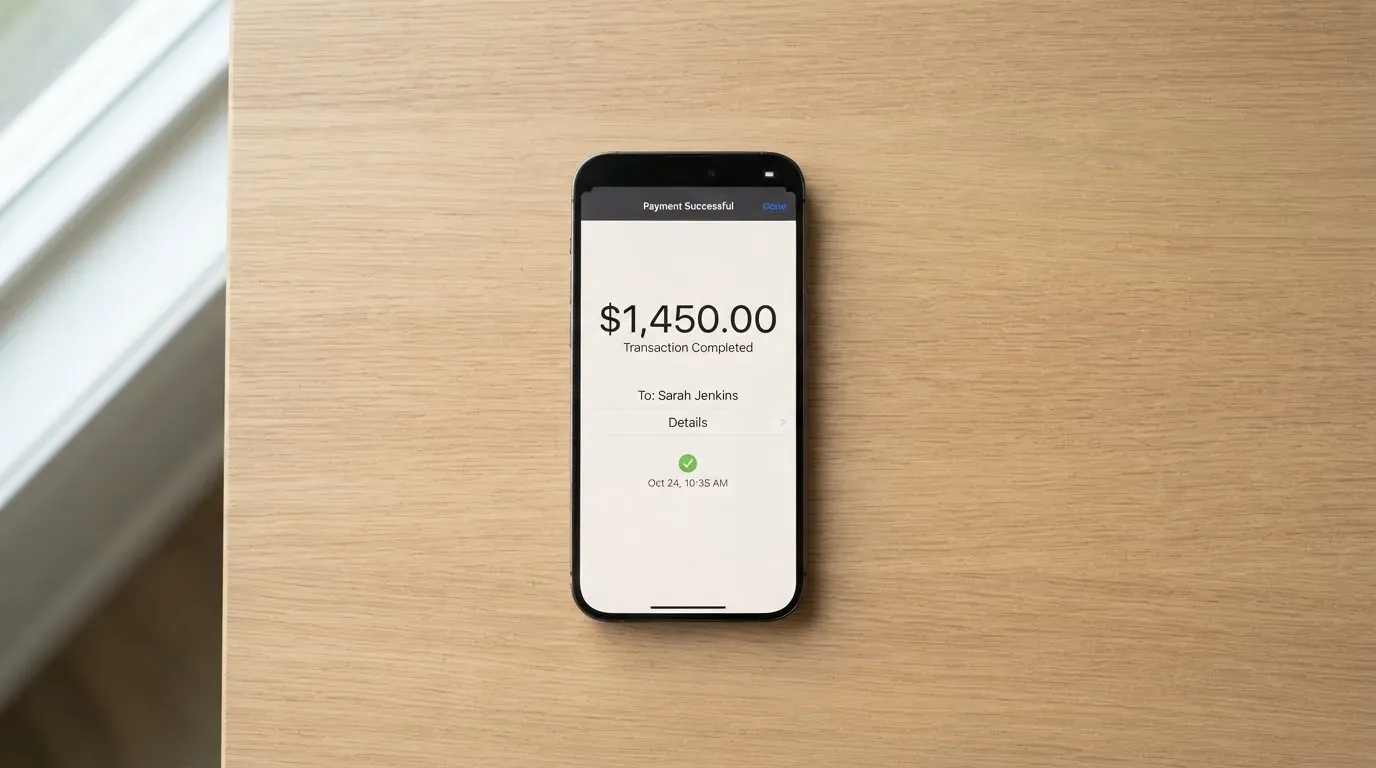
What is missing from that sentence is exactly the thing that matters most when you are about to send money: which networks. The official material does not name a single one. It says “9+ cryptos” and stops. And the unofficial cost line — 1.5% on Basic, free on Plus — does not tell you what happens if you send on the wrong chain.
This is where crypto cards have historically hurt people, and the risk is not theoretical. A transfer sent on a network the provider does not support, or to an address belonging to a different network, can be lost outright or require a long manual support recovery with no guarantee of success. Blockchain transfers are irreversible by design. There is no chargeback, no support team that can undo a transfer, and no bank to appeal to. So the first rule — which I say as a caution, not as advice on how to proceed — is that you confirm the network for your specific coin before you send anything, and you send a small test amount before you send a large one.
Stablecoins are the practical route for most people, but they are not interchangeable. USDT and USDC are both dollar-pegged and together account for about 90% of stablecoin market capitalisation, yet they live on different networks: USDT has been issued on Ethereum, Tron, Solana, Polygon, Avalanche and others, while Circle lists USDC as natively supported on 38 networks. Crucially, USDC over Tron is not a native option — Circle stopped supporting that route in February 2024. Sending a token on the wrong chain is the single most common way people lose money to a crypto card, and it is a mistake a support chat can rarely undo.
Also worth knowing: stablecoins are not, despite the name, actually stable. TerraUSD collapsed in May 2022 and USDC briefly lost its peg during the US banking crisis in March 2023. If the asset your balance is pegged to wobbles, your card balance wobbles with it.
What about withdrawing? Unstated. I have no information on whether you can move money back out of the card balance into crypto or to a bank, on what fee, or on what timescale. If you take the model seriously, that is the question I would put to support first.
Paying with it every day
The everyday experience of Kazawallet, as best I can reconstruct it, is: a virtual Visa number that lives in an app, added to Apple Pay or Google Pay for tap-to-pay, and used online wherever a Visa is accepted. Apple Pay and Google Pay support is reported by third-party sources as of 2026, not by the company itself.
That mobile wallet route is genuinely the product’s strongest suit. A virtual card that goes into your phone’s wallet works in physical shops, which is not something most crypto cards can do well. Apple Pay replaces your card number with a device-specific number stored in the phone’s secure hardware, never on Apple’s servers, and generates a one-time security code for each payment — so the card you add is safer than a card number typed into a website.
The weak suit is everything to do with being foreign. Your card number begins with a six- or eight-digit issuer identification number that tells any merchant’s system which institution and which country issued it. If that country does not match the billing address you type, some merchants apply extra scrutiny or decline the payment outright. There is a specific, documented mechanism for this: address verification, which compares the numeric parts of your billing address against the issuer’s records, is mainly offered in the United States, Canada and the UK and is generally unavailable for foreign-issued cards. For a card issued in one country and used in another, that is a real source of failed payments that has nothing to do with you or your balance.
Two more everyday details. First, no cashback — third-party sources list rewards as “Coming Soon,” so there is nothing coming back at you at present. Second, the Android app has drawn criticism from users as being little more than a website wrapped in an app shell; it still carries a 4.6 Google Play rating across 350+ reviews, so it is clearly not universally disliked, but if you are fussy about native apps, look before you commit.
Regarding disputes — a payment you did not make, goods that never arrived, a merchant who will not refund you — the official pages say nothing. Nothing at all. I will not tell you what your rights are, because I do not know what they are here, and the general rule for prepaid cards in many jurisdictions is that your protection is thinner than the marketing of a bank card suggests. Assume less protection than you have with a bank debit card until you have read the terms yourself.
What can go wrong
This is the section I would not skip, because it is where Kazawallet’s thin official information costs you the most.
The company is operated by KASROAD LTD, a UK company (number 16721888), and Kasroad FZ-LLC in the UAE. Neither is named as the card issuer — the issuer is not stated. That matters more in this category than it might seem: the issuer is the institution that actually holds your money, sets the terms, and is the party a payment network would come to. Here, that institution is not named, and the crypto brand is, in all likelihood, a front end over somebody else’s licence. That is normal for the category — most crypto cards work this way — but you should know it is happening.
The user reports are the other half of the picture. There is no Trustpilot or Reddit page for Kazawallet that I could find, which is itself notable for a service of this size — it means the evidence is thin in both directions, not that there is nothing wrong. What surfaces is a single undated user report, on a third-party site, describing a virtual Visa declined at Microsoft with support runaround lasting over a week; an account suspended after a security incident; rude Telegram support; the Android app being a website wrapper; and complaints about fees and about AML-driven freezes. These are one person’s account, not a pattern I can substantiate — but the themes are the standard themes for custodial crypto cards, and they deserve weight rather than dismissal.
AML freezes deserve particular attention, because they are the least avoidable risk here. If anti-money-laundering checks cannot be completed, the rules require the institution to decline the transaction or the relationship, and to end an existing relationship where necessary. That is why accounts close and balances freeze pending documents. It is not a judgement about you; it is a legal obligation on the provider. But the practical consequence for you is that your money can stop moving while someone asks for paperwork, and in a custodial arrangement there is no one else holding a copy.
The custody question is the deepest one. If the wallet is custodial — and third-party sources say Kazawallet’s is — the provider holds the credentials, and you must trust them completely. That is not a criticism so much as a description of what you have signed up for. Self-custody, where you hold the key and the funds stay in your wallet until the moment of payment, puts the responsibility on you instead: a seed phrase is typically 12 to 24 unencrypted words, anyone who obtains it can restore the wallet and spend everything, and a stolen key has no recovery mechanism because the network cannot freeze or return funds. Either way you are trusting somebody — the difference is who. Historical custodial failures are not small: Mt. Gox (about $350 million, 2011–2014), Coincheck (about $400 million, 2018), Ronin Network ($625 million, 2022).
Two things the official pages do mention, from third-party reporting: the wallet is custodial, 3-D Secure is supported, and card details auto-hide. Nothing official is stated about security features, and nothing official is stated about support. On support, users split — some reviewers praise Telegram support as fast and available 24/7; others describe it as rude. If support quality decides whether you keep an account, test it before you need it.
The wider category has scars worth knowing about. Visa terminated its global agreements with FTX in November 2022 and the FTX US debit card was wound down. WaveCrest, a Visa issuer that supplied several crypto card brands, was suspended by Visa in Europe in 2018, closing all its Visa programmes. Programme closures follow a pattern — a notice period, then spending and loading stop, then you are asked to withdraw what remains. One 2026 closure reported by a single secondary source ended new loads on 8 July 2026 and spending on 8 August 2026; I could not confirm it independently, but the pattern is well established. The point is not that Kazawallet will close. It is that your balance is a claim on a company, not a bank deposit, and companies in this space have failed before.
What to take instead
I looked at three other cards that do roughly the same job, so you can see how Kazawallet’s numbers compare against something with more published detail.
CardFlow (4.9/10) positions itself explicitly as “Nigeria’s smartest fintech card platform,” aimed at Nigerians and global users, with no country list or exclusions stated. The card is a virtual USD Mastercard, and creating a virtual card is free per their FAQ; monthly fee not stated. You can fund it with Bitcoin, USDT, ETH or a Naira bank transfer, networks not named. The narrow Nigeria-first positioning is the point: if you are in that market, CardFlow is built for you, whereas Kazawallet is built for nobody in particular.
HyperCard (4.7/10) is a prepaid card with a balance in USD or EUR, funded by depositing crypto such as USDT, BTC or ETH in the app and converted on the card. Their pages list no fees at all — which is not the same as no fees. Their App Store page says the card works in “more than 176 countries,” though that is a statement about acceptance, not about your eligibility to hold one. The lowest score of the three, largely on thin documentation.
Card.fi (6.6/10) is the most transparent of the alternatives and the one I would look at first if Kazawallet’s unofficial fee table makes you uneasy. They publish real numbers: one-time fees of $49 for a Virtual Classic and $249 for a Virtual Premium, with physical and metal options on top, and no monthly, annual, inactivity or minimum-balance fee. Top-up is 1.5% + $1.00 on Classic and 1% on Premium; FX is 3.5% on Classic and 2.5% on Premium — higher than Kazawallet’s reported 2%, but published. They name 32 coins across five networks (Ethereum, Base, BNB Chain, Solana, Kaanch), give each card its own deposit address, convert at market rate on arrival, and warn that the wrong chain risks permanent loss. Cashback is real: 0.8% on Classic capped at 10 USDT/month, 1% on Premium, up to 2% on Metal.
| Kazawallet | CardFlow | HyperCard | Card.fi | |
|---|---|---|---|---|
| Score | 6.1/10 | 4.9/10 | 4.7/10 | 6.6/10 |
| Card type | Virtual Visa | Virtual USD Mastercard | Prepaid | Virtual + physical, Visa/Mastercard under licence |
| Issuance | $15 Basic, free Plus | Free (virtual) | Not stated | $49 Virtual Classic, $249 Virtual Premium |
| FX / markup | 2% (unofficial) | Not stated | Not stated | 3.5% Classic, 2.5% Premium |
| Top-up | 1.5% Basic, free Plus | Not stated | Not stated | 1.5% + $1.00 Classic, 1% Premium |
| Coins | 9+, networks unnamed | BTC, USDT, ETH, Naira | USDT, BTC, ETH | 32 coins, 5 networks named |
| Cashback | None (“Coming Soon”) | Not stated | Not stated | 0.8%–2%, capped |
| Physical card | No | No | Not stated | Yes |
The honest summary of this comparison is that Kazawallet wins on reported price — free Plus tier, free Plus top-ups, 2% markup, no monthly fee — and loses on everything you would want to know before trusting it. Card.fi charges more and tells you exactly what for. For a first card, published terms are worth a lot.
Who I would recommend it to
I would recommend Kazawallet to someone who has a specific reason to need crypto-funded spending, has tested the app enough to trust it with a modest balance, and treats everything they read as provisional. Concretely: you are in a country where opening a normal card is genuinely difficult, you hold USDT or USDC already, you do not need cash from an ATM, and you are comfortable that the fee schedule may change without much notice and that your balance is a claim on a company rather than a deposit with a bank.
I would not recommend it to someone whose income depends on it, to anyone who needs a physical card, to anyone who intends to hold a large balance, or to anyone who finds the phrase “the issuer is not stated” unsettling. That last one is not squeamishness — in this category, the issuer is the entity that stands behind your money, and not knowing who it is means not knowing who to complain to when something goes wrong.
If you are on the fence, my suggestion is to start with the free tier rather than the paid one, put a small amount in, and make one everyday purchase. That single transaction will tell you more about the conversion rate, the app and the support than any review — including this one — can.
Frequently asked questions
What is the Kazawallet card?
It is a virtual Visa card you load from crypto. You deposit coins such as BTC, ETH, SOL, USDT or USDC into your Kazawallet account, the balance is exchanged into the card’s own currency, and you spend that balance online or through Apple Pay or Google Pay. There is no physical card, according to third-party sources, and no interest or credit involved. It is a spending tool, not a bank account.
Is Kazawallet a bank?
No — it is not a bank, and the pages reviewed do not present it as one. The service is operated by KASROAD LTD, a UK company, and Kasroad FZ-LLC in the UAE. Neither is named as the card issuer, and the issuer is not stated anywhere I could find. That means your balance is a claim on a company, not a deposit protected by a bank guarantee scheme.
Who owns Kazawallet?
The operator is KASROAD LTD in the UK, company number 16721888, together with Kasroad FZ-LLC in the UAE. The card scheme involved is Visa, and the actual issuing institution behind the card is not stated. I could not confirm the ownership structure beyond those two entities from the company’s own material.
Is the Kazawallet card available in my country?
The official FAQ says the card is issued worldwide, which is the company’s only stated eligibility position. Third-party sources as of 2026 report that UK residents are excluded. Nothing official confirms that exclusion, so if you are in the UK, ask support first. Other exclusions are not published — the FAQ simply does not list any.
Does the Kazawallet card require KYC?
Almost certainly yes, though the official pages do not say so. KYC rules require regulated businesses to verify customers as part of anti-money-laundering law. Third-party sources as of 2026 describe the process as email, phone, ID document, proof of address and a selfie for Basic. Nobody official confirms that. If you are trying to avoid identification, this is the wrong kind of service.
How much does the Kazawallet card cost?
Per third-party figures as of 2026 that the card does not confirm: Basic issuance is $15, Plus is free, and there is no monthly fee on either. Currency conversion is charged at 2%, and Basic top-ups cost 1.5% while Plus top-ups are free. Blockchain network fees are separate and charged by the network. Nothing about this fee schedule appears on the company’s own pages.
How do I top up the Kazawallet card?
You send crypto to your Kazawallet account and it is exchanged into the card’s currency — Basic in USD, Plus in SGD. Official material names the coins (BTC, ETH, SOL, USDT, USDC and others) but does not name a single supported network. Confirm the network before sending anything: a transfer on the wrong chain can be lost permanently, because blockchain transfers are irreversible.
Can I add the Kazawallet card to Apple Wallet?
According to third-party sources as of 2026, Apple Pay and Google Pay are both supported, which is the most practical part of the product — it turns a virtual card into something you can tap in a shop. Kazawallet does not confirm this on its own pages, so check inside the app after your card is issued. Apple Pay stores a device-specific number rather than your card number, so the token is safer than the card itself.
Is Kazawallet card safe?
Treat it as a custodial wallet holding real money, because that is what third-party sources say it is — the provider holds the keys and you trust them completely. That exposes you to the same counterparty and hack risk as any custodial platform, a history that includes Mt. Gox, Coincheck and Ronin Network. Reported 3-D Secure and auto-hiding card details help with fraud but do not change the custody question. Keep modest balances.
Is Kazawallet worth it?
Worth it if you need a virtual Visa funded from many coins and cannot easily get an ordinary card, and you are comfortable treating the fee figures as provisional and your balance as a claim on a company. Not worth it if you need a physical card, cash from an ATM, published terms, or a strong answer to “who is the issuer?” For that last requirement, a rival with fully published fees and named networks may suit you better.
Top virtual cards by score – cryptocardtop
Content created by the «cryptocardtop» team