
Wirex reviewed: one account for cash and crypto, with costs the pages do not explain
 Available in US

If you cannot get an ordinary bank card, or you would rather hold your money in one account instead of moving it between a bank and a crypto exchange, Wirex is worth a serious look. It is a multi-currency account with a Visa or Mastercard that spends directly from it, and you can load it with cash, stablecoins or cryptocurrencies rather than only with money from a current account.
It also asks more of you than a plain bank card does. The pages that explain what Wirex charges leave important numbers to the app, some of what I found in user complaints is about money being held or accounts being limited, and the company is moving users to a new app in 2026 while its two apps sit at very different ratings. My score is 6.7 out of 10: a good idea executed with a lot of rough edges, and a poor choice if you want every fee written down in advance.
The conditions described here are current as of October 28, 2026.
Verdict: 6.7 out of 10
| Criterion | Mark | Why |
|---|---|---|
| Who can get it | 6 / 10 | Service area is stated as worldwide (130+ countries), but the official country list did not open; unofficial sources put the card in 35 countries and not in the US |
| Cost | 7 / 10 | Issuance and monthly servicing are free, ATM free to 200 EUR a month in the EEA then 2%; metal card 45 GBP; the foreign exchange fee is not disclosed, though the card page says no foreign exchange fee |
| Top-up options | 7 / 10 | You can spend cash, stablecoins and cryptocurrencies, and the exchange lists 200+ cryptocurrencies; which coins and networks you can deposit with are not disclosed |
| Reliability and complaints | 5 / 10 | Wirex Pte Ltd (Singapore) and Wirex Limited (England) are named, the issuer for UK and EEA programmes is not; complaints about held funds and limited accounts, a card outage of 5 h 51 min on 25 June 2026, and Wirex One rated 1.87 |
| Everyday use | 9 / 10 | Virtual and physical cards, Apple Pay and Google Pay, ATM on the physical card but not the virtual one |
The card suits people in Europe who want a single account for fiat and crypto, and people who have no access to a conventional bank card at all. It suits you badly if you want the full price of every transaction printed on the public website, or if a held balance would seriously damage you, or if you intend to hold a large sum there.
Let me be honest about where the number comes from, because a single score hides more than it shows. The everyday-use mark is the highest of the five, and it is deserved: this is a card you can put in your phone and use, and the limits are clear enough to plan around. The reliability mark is the lowest, and reliability is what actually costs you money when something goes wrong. Everything in between this paragraph and the FAQ is detail for one of those two judgments.
Will they give you the card?
Yes, in many countries, but not everywhere, and not on the strength of your citizenship alone.
Whether you can get a physical or a virtual card “depends on your region” — that is the card’s own wording, and it is doing a lot of work. Fees are published for the UK, the EEA, APAC, Singapore, Australia and a category labelled “Other”, and delivery fees are published for the United Kingdom, the EEA, Hong Kong, Singapore, Australia, New Zealand, the Philippines and Taiwan. The homepage describes the service area as “Worldwide (130+ countries)”, which is a statement about the business, not a promise that a card will be posted to your door.
That gap matters. An unofficial source (thegodfunded.com, October 2026) puts actual card availability at 35 countries: most of the EU, the UK, Switzerland, Norway, Australia, New Zealand, Hong Kong, Taiwan, Argentina and Brazil, and not in the US. I could not confirm that list against the card’s own country page, so treat it as a lead to check rather than a fact to rely on. If your country is not among those, the honest answer is that you will have to try, and the answer you get will depend on which country your residence is in.
Two country-specific restrictions are worth knowing before you apply. Under the Singapore terms, cash withdrawals “are not permitted in Singapore” — the account works, the ATM does not. And transactions with “Prohibited Countries” (Iran, Cuba, Syria “and others”) are barred. These are not unusual terms in this industry, but they do mean that a card advertised as worldwide is not usable everywhere.
The last practical point is about the address you type in: the country of residence you enter must match your identity document. You cannot enter a country you do not live in to get around regional rules, and doing so would only be discovered at verification.
How to get it
The route is the same everywhere: open an account first, verify it, then order the card. “Wirex services are only available to verified users”, and the verification starts when you upgrade to “Starter” status.
Verification covers identity, address and source of funds, and more information may be requested by email. Documents are uploaded in the mobile app only, and “depending on the country of your residence, we may ask for the Liveness Verification” — a live check that you are holding the document. Accepted papers are a passport, ID card, driving licence or residence permit, with the accepted types varying by issuing country. The document must show your full name, date of birth, photo and expiry date, be in English and be in full colour. Minimum age is 18. A Wirex account has to exist before you can order a card, which is why the app comes first.
One thing I could not find: the list of accepted proof-of-address document types is not stated in the pages I read. If you are using a document type that is unusual in your country, that is the question to ask support before you start.
The card itself comes in two forms. The virtual card is for online use; the physical card works at point of sale and at ATMs accepting Visa or Mastercard, and the Singapore terms specify Visa. Elsewhere the network is stated as “Visa or Mastercard” rather than fixed per region. You can hold one physical and one virtual card at a time. There is also a metal card, described as a “Visa Signature debit card”. The card currency and its validity period are not stated on the pages I read.
Delivery is the part that most often surprises people, so here it is in full:
| Destination | Method | Fee |
|---|---|---|
| United Kingdom | Royal Mail (not trackable) | 5 GBP |
| United Kingdom | DHL Express (international) | 15 GBP |
| EEA | DHL WorldMail | 5 EUR |
| EEA | DHL Express | 15 EUR |
| Hong Kong | Local post | 39 HKD |
| Hong Kong | DHL Express | 238 HKD |
| Singapore | SingPost | 5 SGD |
| Australia | Local | 1 AUD |
| New Zealand | Local | 7.99 NZD |
| New Zealand | DHL Express | 49.99 NZD |
| Philippines and Taiwan | Local | 4.99 USD |
| Philippines and Taiwan | DHL Express | 29.99 USD |
Delivery takes from several days up to four weeks, and an express order needs a starting balance on the account. The cost of a replacement card is not stated.
Statuses run in order: “Starter” starts identity verification, then address and source-of-funds checks follow. Neither the processing time nor the reasons a check might be rejected are stated publicly, which is the part I would want to know before I moved money in.
Fees: what it really costs
Issuance is free in the UK, the EEA, APAC, Singapore, Australia and “Other”, and there is no monthly servicing fee. Changing the PIN is free. The metal card is 45 GBP on the UK page, which includes free DHL Express delivery, and “only 45 EUR” as a delivery fee elsewhere. The card page carries the marketing line “no annual or foreign exchange fees”. Two more charges exist that are easy to miss: a one-off administrative fee of 30 GBP for accounts violating the General Terms of Service, and the standing note that all fees are “subject to change”.

Here is the same picture as a table, because the ATM allowance is the number most people will actually use:
| Item | What the card’s pages say |
|---|---|
| Card issuance | Free in UK, EEA, APAC, SG, AU and “Other” |
| Monthly fee | None |
| PIN change | Free |
| Metal card | 45 GBP (UK page, with free DHL Express) or “only 45 EUR” delivery fee elsewhere |
| Currency conversion | No fixed amount; rate varies by pair and liquidity and is shown in the app before you confirm. The card page says no foreign exchange fee; the fee page does not disclose the FX fee |
| ATM withdrawal | Free up to 200 GBP monthly (UK and “Other”), 200 EUR (EEA), 200 SGD (APAC and Singapore), 400 AUD (AU); 2% after that. Not available on virtual cards |
| Administrative fee | One-off 30 GBP for accounts violating the General Terms of Service |
| Foreign exchange, as advertised | Card page: “no annual or foreign exchange fees” |
Now the part you will actually feel. Take a coffee costing about EUR 4 in a eurozone country, paid on the physical card from a balance already in euro: no conversion happens, so no FX fee arises at all — the only thing to watch is that your balance covers it. Take the same coffee paid from a balance held in another currency while you are outside your home country: the app shows an exchange rate and a fee before you confirm, and the rate is what you get, but the FX fee itself is not published, so you cannot check in advance what the rate will cost you. Take EUR 60 out of an ATM in the EEA: free up to 200 EUR a month, then 2%. Take EUR 250 out of the same machine in the same month: the first 200 EUR is free and the 2% applies to the rest. And a virtual card cannot withdraw cash at all, which is the one limit that catches people out.
The practical advice is small but worth stating: check the app’s conversion screen before you confirm anything in a currency you do not hold, because that screen is the only place the exchange fee is visible. Anyone who wants the foreign exchange rate fixed in advance and in writing will not find it here.
How to Top up the Wirex card
Topping up is the strongest part of the offer, and it is also the part where the card’s own pages are most silent about specifics.
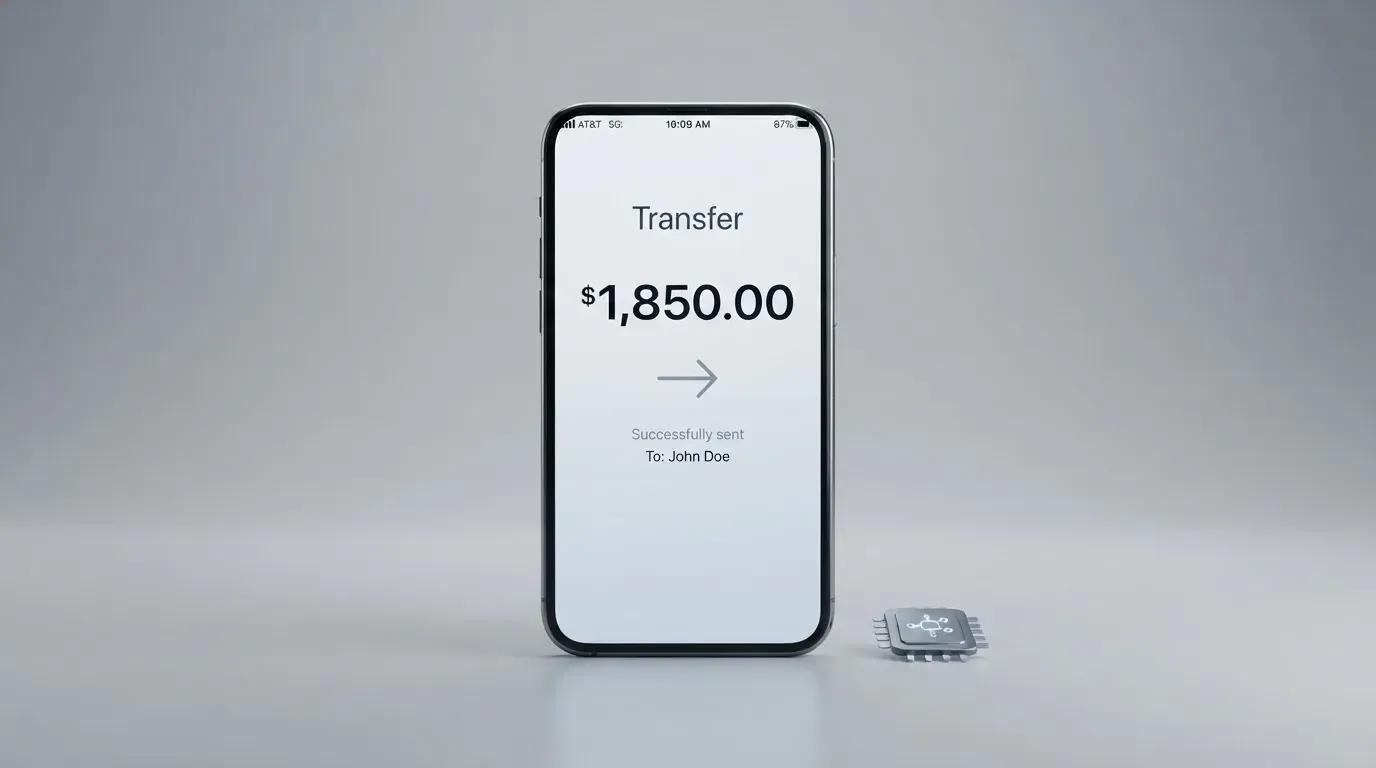
The card is a debit card linked to your Wirex account, and you can spend “cash, stablecoins, and cryptocurrencies”. Money can arrive from another Wirex account, from another person, or through a third-party payment provider. Fiat deposits by SEPA (EUR), Faster Payments (GBP), ACH (US) and PIX (Brazil) are free. Which coins and networks you can deposit with is not stated — the homepage only tells you the exchange carries “200+ cryptocurrencies”, which is a headline, not an instruction. That is the question to ask before you send anything on-chain, because a transfer on a network the provider does not support can be lost or need manual recovery.
By card:
- External card top-up: minimum 12 USD; unconfirmed card 15,000 USD per day (2,000 USD in Singapore), confirmed card 25,000 USD per day. The funding fee is “0% or more”, depending on currency and country.
- Card-to-Wirex transfer: minimum 10 USD; 10,000 USD per transaction for a first-party transfer and 2,500 USD for a third-party one; 50,000 USD and 10,000 USD per month respectively.
Crypto withdrawals from Wirex to Wirex and off-chain are 0%; withdrawals to external wallets vary by network. Fiat withdrawals by SEPA, Faster Payments, ACH and PIX are free. What happens to any balance left when you close the account is not stated.
Paying with it every day
This is where the card earns its best mark, and it is the reason most people stay with it.
You can add the card to Apple Pay and Google Pay — both are on the homepage feature list — and the card can also be linked to Revolut, which has its own help article. Spending works in physical shops, online and contactless. What you spend can come from cash, stablecoins or crypto in the same account, which is the entire point: no transfer to a bank, no waiting.
The reward system is Cryptoback in WXT, the platform’s own token: Standard returns 0.5%, Premium 3%, and Elite up to 8%, with the metal card advertised as “up to 8% back in WXT”. Limits and currencies may differ for UK and US customers. What does not earn Cryptoback: ATM withdrawals, cash advances, crypto purchases, gambling, refunds, and a long list of merchant category codes including 4829, 6010, 6011, 6012, 6050, 6051, 6211, 6529–6532, 6534, 6536–6538, 7012, 7399, 8999, 9211, 9222, 9311 and 9399. Those category codes are how card networks label businesses — a four-digit number assigned when a business starts accepting cards, under ISO 18245 — so “not eligible at 7995” in practice means gambling merchants, which issuers often block by policy rather than by law.
If you use your phone for payments, know that Apple Pay does not store your card number: it replaces it with a device-specific number held in the phone’s Secure Element, and each payment carries a one-time code. That is worth knowing not because it is unusual but because it means a lost phone is a smaller problem than a lost card.
The plans layer on top of this. There are three — Standard, Premium and Elite — with the metal card as the Elite-tier card, carrying a higher monthly purchase limit of EUR 75,000 and a 45 GBP or EUR order fee, and plans can be upgraded with WXT. Plan prices are not stated on the official pages I read. Unofficial figures (from a competitor’s blog, Bleap, and thegodfunded.com, October 2026) put Standard at free with 0.5% WXT rising to 1% with 150,000 WXT locked for 180 days, Premium at 9.99 EUR monthly or 102 EUR yearly for 1%–3%, and Elite at 29.99 EUR monthly or 306 EUR yearly for 4%–8%, where 8% requires 7.5 million WXT locked for 180 days. I could not confirm those prices on Wirex’s own pages, so check them there before budgeting around them.
Two things to know about limits. Limits are set by card type rather than by verification level — no KYC tiers are described — and they “may vary by region or currency”. And the balance of linked currency accounts is charged when you spend, with the conversion fee as described earlier.
| Limit | Virtual | Physical (plastic) | Metal |
|---|---|---|---|
| Single purchase | EUR 30,000 | EUR 30,000 | EUR 30,000 |
| Purchases per month | EUR 30,000 | EUR 30,000 | EUR 75,000 |
| Cash per day | None | EUR 500 | EUR 500 |
| Cash per month | None | EUR 5,000 | EUR 5,000 |
Bank transfers sit outside these: SEPA up to 50,000 EUR per day, Faster Payments up to 50,000 GBP per day. Metal limits can be raised on request.
One practical trap in the Singapore terms: transfers to unrelated third parties are prohibited, along with drug paraphernalia, stolen goods, firearms and “certain financial products”. If you are in Singapore and intend to send money to someone you do not know, read that clause first.
What can go wrong
This is the section where my score is lowest, and the material here is not a list of hypotheticals — it is what people report.
Start with the complaints. A 2026 user report on Trustpilot describes funds held since January 2025, a limited account blocking crypto transfers, and an unresolved ATM withdrawal case in Cyprus from July 2025. I did not read the Trustpilot score or review count, so I cannot tell you how large this is — only that the themes exist. Then there is a run of reported incidents: a third-party report (Pingoru, not official) listing card payouts disabled from 6 May 2026; a card outage of 5 h 51 min on 25 June 2026; a 54-minute outage on 26 June 2026; unexpected declines on 13 July 2026; and a WirexOne transaction-processing incident on 3 September 2026.
An outage is an inconvenience. A declined payment in front of a cashier is something else, and declines also happen for structural reasons that are not the card’s fault: a merchant can decline a prepaid or foreign-issued card because the BIN lookup reveals the card type and issuer country, and the address verification service that compares your billing address with issuer records is generally unavailable for foreign-issued cards. Some merchants apply extra scrutiny when the issuer country differs from the customer’s billing address, which is exactly the profile of a Wirex card used abroad. That is not a Wirex defect, but it will feel like one.
A declined authorisation can also leave a hold on your money that stays for several days, typically up to seven. If you are spending a balance you also need, that is a real cost with no receipt.
On the company side, the issuer behind the card is not entirely clear from the public pages. Wirex Pte Ltd (Singapore, registration number 201731976E) is named as the card issuer in the Singapore terms, with Visa. Wirex Limited (England, company number 09334596) is named as the card issuer by a third party, Trustee Plus, and is the App Store seller for both apps. The issuer for the UK and EEA programmes is not stated. The homepage says the company was founded in 2014 in London and is a “Principal member of Visa and Mastercard”. That is normal for this industry — a crypto brand often fronts a card programme run by a licensed bank or e-money institution rather than issuing the card itself — but you are entitled to know who stands behind the card you hold, and for UK and EEA users that name is not published on the pages I read.
The migration is the other thing I would want a straight answer about. Wirex is moving users to a new app called “Wirex One” in 2026. The two apps do not look like the same product: the App Store listing for “Wirex: All-In-One Trading App” shows 3.76 from 846 ratings, updated 2026-01-23, while “Wirex One” shows 1.87 from 15 ratings, updated 2026-10-05. I read those on 2026-10-20. The homepage’s structured data shows 4.5 from 15,000 ratings, which does not match either store listing, so do not treat any single rating as the truth. A company moving customers onto a barely-reviewed app is a thing to plan around, not a reason to walk away — but keep an eye on it.
On custody and safety, the account is account-based: the platform holds the credentials, so you are trusting the provider with your money. On-chain transfers are typically irreversible, and no network can freeze or return funds — a mistake with an address or a network is not recoverable by you. Merchant authorisation holds can reach 20% above the anticipated bill under the Singapore terms. What I could not confirm: whether 2FA, card freeze controls and safeguarding are offered in the form the pages would describe, since these were not stated in the pages I read. Dispute handling terms are also not stated, which matters because a chargeback is a refund ordered by the issuer, and the practical route to one runs through the issuer’s rules rather than the app’s.
One piece of reassurance that is genuine: I found no regulator suspension against Wirex. That is not the same as a clean bill of health, and it is not a substitute for checking the relevant regulator’s register yourself.
What to take instead
Three alternatives came up in my research, and each solves a different part of the problem. The comparison is worth walking through, because the differences are mostly about custody and about how much of the cost is published.
| Wirex | International Visa Card | UNi Card | Morse | |
|---|---|---|---|---|
| My score | 6.7 / 10 | 6.7 / 10 | 6.1 / 10 | 7.5 / 10 |
| Card type | Virtual and physical, Visa or Mastercard | Virtual Platinum Visa; physical “coming soon” | Multicurrency Mastercard | Fully virtual Visa prepaid debit |
| Issuance | Free | $5 one-time | Not stated | Not stated |
| Monthly fee | None | None (plans: Classic free, Pro $9.00, Max $19.00) | “No annual fee” | Not stated |
| FX | Not disclosed; card page says none | “Visa exchange rate + 2% FX fee” | Live OTC rates, “no hidden exchange fees” | “Zero foreign exchange fees or markups”, real-time Visa rate |
| Currency used | Not stated | USD | Multicurrency | Any currency from the balance |
| Custody | Account-based | Not stated | Not stated | Self-custodial wallet |
| Rewards | Cryptoback in WXT, 0.5%–8% by tier | No cashback stated | Spend-to-Earn up to 3% | Not stated on card pages |
International Visa Card is the closest match on score and the most rule-bound. Its account and card are not available to residents or legal registrants of Belarus, mainland China, North Korea, Cuba, India, Iraq, Iran, Israel, Myanmar, Nepal, Nicaragua, Russia, Syria, Turkey, Ukraine, Venezuela and Vietnam, with FATF grey-list countries reviewed case by case. The rule is by residence or registration — citizenship is not mentioned, which is the detail worth holding on to. Purchases are blocked in North Korea, Cuba, Iran, Russia, Syria, Ukraine and Venezuela. It pays in USD from a virtual card, deposits USDC or USDT into the USD account (networks not stated), and adds a transparent 2% FX fee on foreign-currency use. In exchange it tells you plainly what it charges, which Wirex does not.
UNi Card sits lower at 6.1. It is a multicurrency Mastercard spending from a UNi.Global account balance, with “no annual fee or foreign transaction fee”, assets converted at live OTC rates and “no hidden exchange fees”, and spend-to-earn rewards up to 3%. What I could not establish: who can open an account, how you fund it, and whether the card is physical or virtual.
Morse scored highest at 7.5, and the reasons are about control rather than price. It is “fully virtual for now”, a Visa prepaid debit spending from the Morse Balance in any currency, with “Zero foreign exchange fees or markups” on the real-time Visa rate and free online and contactless payments. Its wallet is self-custodial, which means the funds stay in your own wallet until the moment of payment — you take on the risk of key loss, phishing and malware that swaps copied addresses, but you are not exposed to a provider holding your money. You fund it by debit card, stablecoin transfer or account details (USD, EUR, MXN, COP; Brazil needs a CPF), with USDC, USDG and EURC free via Solana and other tokens or blockchains carrying a fee. Its catch is access: eligibility is by residence, not citizenship, the app is in over 140 countries, and a list of countries including the United Kingdom, Australia, New Zealand, Japan, Singapore, Switzerland, Serbia, Thailand, Türkiye, Hong Kong SAR China, Jersey, Guernsey, Isle of Man, Cape Verde, American Samoa and Western Sahara is in closed beta and needs an invite code. Morse also “cannot serve customers subject to sanctions issued by the United States” (also UK, EU, UN). Issuance and monthly fees are not stated — the card page simply says “Fees may apply. See Cardholder Agreement”.
If you cannot get a conventional bank card at all, your comparison may not be between these three. It may be between Wirex and a plain prepaid card from a regulated e-money institution in your own country, and the country-specific rules matter more than any global ranking.
Who I would recommend it to
I would recommend Wirex to someone in Europe who holds both fiat and crypto, wants one balance instead of two, and is comfortable with a crypto company rather than a bank holding the money. I would recommend it to someone who has no route to an ordinary card. And I would recommend it to anyone who reads the app’s fee screen before confirming a conversion, because that screen is the only honest price list you will get.
I would not recommend it as the place for your savings, your salary, or a balance you cannot afford to have frozen for months. The complaint pattern I found is specific about held funds, and the limits are high enough that people do park real sums here. I would not recommend it if you need cash from an ATM in Singapore, or if you want a physical metal card in the UK or Europe and a fixed published price for everything, or if you are in the US. I would think twice if your income arrives as crypto, because every payment becomes a conversion event whose fee you cannot read in advance.
Two questions to ask the support team before you commit, in this order: who issues the card for my country, and what happens to my balance if the account is limited? Neither is answered on the public pages I read, and both matter more than the reward rate.
I also want to be clear about the limits of this review. Dispute terms are not stated, the FX fee is not published, the proof-of-address document types are not stated, plan prices are not on the official pages, and the official country list did not load when I checked. Where unofficial sources filled a gap — the 35-country availability, the plan prices — I have said so, and I would not budget around either without confirming them on Wirex’s own site.
Frequently asked questions
What is the Wirex card?
Wirex is a multi-currency account with a payment card attached to it. You can hold and spend cash, stablecoins and cryptocurrencies in the same place, and the card pays directly from that balance — a virtual card for online use, a physical card for shops and ATMs on Visa or Mastercard, and a metal Visa Signature debit card. The company says it was founded in 2014 in London and is a principal member of Visa and Mastercard.
How does the Wirex card work at a payment?
When you pay, the merchant charges the card, the balance in your account is reduced, and the transaction is settled. If the balance is in a different currency from the merchant’s, the app shows you an exchange rate and a fee before you confirm — that screen is the only place the real price appears. The card cannot overdraw, because it spends a stored balance rather than a credit line. Under 3-D Secure, the issuer may add an identity step to online payments, approving it silently or challenging you.
Is Wirex a bank?
Not as far as the public pages describe, and you should not treat it as one. It is a card programme with a licensed issuer behind it: Wirex Pte Ltd (Singapore) is named as issuer there, and Wirex Limited (England, company number 09334596) is named by a third party, but the issuer for the UK and EEA programmes is not stated. Funds held with an e-money institution are safeguarded rather than bank deposits, and may not be covered by a deposit guarantee scheme.
Who owns Wirex?
Wirex describes itself as founded in 2014 in London, and names itself as a principal member of Visa and Mastercard. Two legal entities appear in its own material: Wirex Pte Ltd in Singapore and Wirex Limited in England, the latter named as the App Store seller for both its apps. Ownership beyond that is not spelled out on the pages I read, so this is a question for their support team.
Does the Wirex card require KYC?
Yes. “Wirex services are only available to verified users”, and the check covers identity, address and source of funds, with more information possibly requested by email. You upload documents in the mobile app, and depending on your country of residence you may be asked for a Liveness Verification. Accepted papers are a passport, ID card, driving licence or residence permit showing full name, date of birth, photo and expiry date, in English and full colour. Minimum age is 18.
Is the Wirex card free?
Issuance is free in the UK, EEA, APAC, Singapore, Australia and other regions, there is no monthly servicing fee, and PIN changes are free. ATM withdrawals are free up to 200 EUR a month in the EEA, 200 GBP in the UK, 200 SGD in APAC and Singapore and 400 AUD in Australia, then 2%. A metal card costs 45 GBP in the UK, or a 45 EUR delivery fee elsewhere. The foreign exchange fee is not disclosed on the fee page.
Which countries can use the Wirex card?
Whether you get a physical or virtual card “depends on your region”, and the country of residence you enter must match your ID. Fees are published for the UK, EEA, APAC, Singapore, Australia and “Other”. An unofficial source (October 2026) lists 35 countries, most of the EU plus the UK, Switzerland, Norway, Australia, New Zealand, Hong Kong, Taiwan, Argentina and Brazil, with no US availability — I could not confirm that against Wirex’s own country list. Cash withdrawals are not permitted in Singapore.
How do I top up the Wirex card?
From another Wirex account, from another person, or through a third-party payment provider, and you can add fiat by SEPA, Faster Payments, ACH or PIX free of charge. By external card the minimum is 12 USD, with 15,000 USD a day on an unconfirmed card and 25,000 USD on a confirmed one. Card-to-Wirex transfers start at 10 USD. Crypto can also be deposited, but which coins and networks are supported is not stated publicly, so check before sending on-chain.
Is the Wirex card safe?
It is a custodial account, so the platform holds the credentials and you trust it with your balance. Alongside that, the standard card safeguards exist in principle, but I could not confirm from the pages I read whether 2FA, freeze controls and safeguarding are offered as described elsewhere. Transactions can still be declined at the till, merchant holds of up to 7 days can sit on your money, and blockchain transfers cannot be reversed. Treat it as a convenient spending account, not as savings.
Is the Wirex card worth it?
For someone who wants one account for fiat and crypto, spends mainly in the currency they hold, and can check the app’s fee screen before converting, yes — the daily-use side of the card is genuinely good. I score it 6.7 out of 10. Hold it against the alternative of a published, fixed-fee card if you want predictable costs, and against not holding crypto in a card account at all if a frozen balance would hurt you.
Top app and neobank cards by score – cryptocardtop
Content created by the «cryptocardtop» team