
Morse reviewed: virtual, fee-light, and not much else
 Available in US
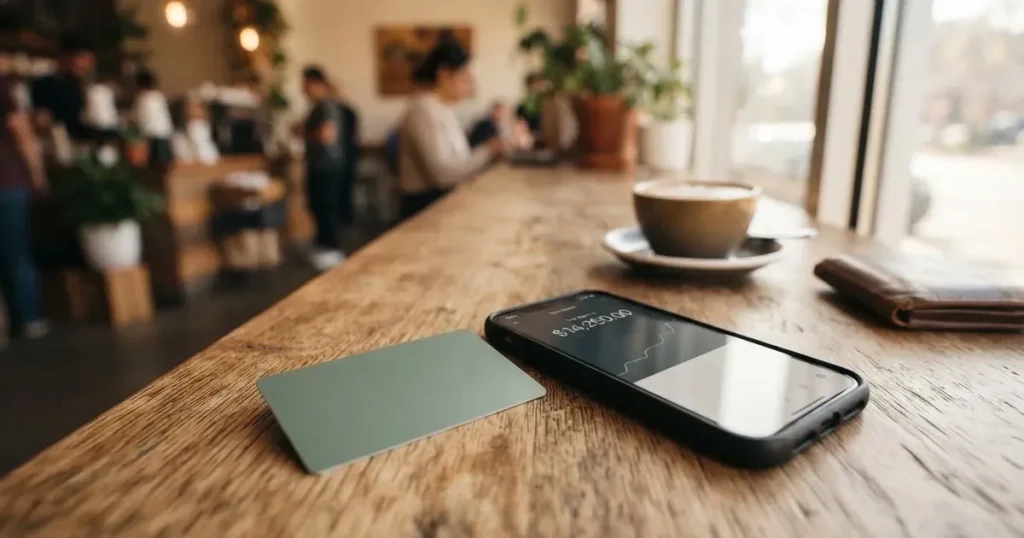
Morse is a virtual Visa prepaid card that spends straight from a stablecoin balance, built for people who want to pay for things abroad without the foreign-exchange markup that ordinary cards charge. It is a thin, deliberately narrow product: no physical card, no ATM, one clear promise about conversion, and a regulatory structure that splits across three countries and four companies. Whether that narrowness suits you depends almost entirely on why you are here.
I scored it 7.5 out of 10. That is a good score for what it does and a poor one for what it does not do. If you want a card that behaves like an ordinary bank card — plastic in the post, cash from a machine, a banking relationship you can lean on — Morse is not it. If you want to hold dollars on-chain, spend them anywhere Visa is accepted, and pay the real exchange rate, it is genuinely good at that and hard to beat on the conversion fee.
Who it suits: anyone already holding USDC, USDG or EURC who travels or buys from foreign merchants and is tired of a 2% or 3% foreign-transaction charge. Who it does not: cash-handlers, physical-card loyalists, anyone who wants to keep a float on a card for emergencies, and anyone who reads “bank” in a partner’s name and assumes deposit protection.
The conditions described here are current as of October 28, 2026.
The score, criterion by criterion
| Criterion | Mark | Why |
|---|---|---|
| Who can get it | 7 / 10 | App in over 140 countries, local add and withdraw in over 70; the card itself only in some countries, list in the app; sanctioned countries closed |
| Cost | 8 / 10 | Issuance and monthly fee not disclosed (“Fees may apply”); conversion with no markup, card payments free, zero currency commission |
| Top-up options | 8 / 10 | USDC, USDG and EURC deposits via Solana are free; Bitcoin, USDT, Ethereum and other tokens also accepted; the wallet is self-custodial |
| Reliability and complaints | 8 / 10 | Issuer Lead Bank, platform Avian Labs (US MSB), AFM authorisation in the Netherlands under MiCAR; no official incidents, no reviews found |
| Everyday use | 6 / 10 | Apple Pay and Google Pay supported; card is virtual only; no ATM |
| Total | 7.5 / 10 | A well-executed narrow product, held back by the gaps a narrow product leaves |
Two of those marks deserve a word of context. Reliability and complaints scores 8 partly because there is nothing to complain about yet — the product is young, its parent company rebranded from Sling Money, and a search for reviews turned up nothing at all, which is not the same as a clean record. It is an absence of evidence. And the 6 for everyday use is not a criticism of quality; it is arithmetic about what the product chose not to build.
Will they give you the card
Eligibility is decided by where you live, not what passport you hold. The card’s own conditions say you must be “at least 18 years old” and “a resident in a supported country”. The app itself is available in “over 140 countries”, and local deposits and withdrawals work in more than 70 of them. Those are three different numbers doing three different jobs, and it is worth keeping them apart: an app you can download is not an account you can open, and an account you can open is not a card you can hold.
Morse also “cannot serve customers subject to sanctions issued by the United States”, and the same restriction is extended to UK, EU and UN sanctions. That is a legal floor, not a risk appetite. If you are resident in a sanctioned jurisdiction, the answer is no and no amount of documentation changes it.
Then there is the closed-beta list. Sixteen countries need an invite code rather than a plain sign-up: American Samoa, Australia, Cape Verde, Guernsey, Hong Kong SAR China, Isle of Man, Japan, Jersey, New Zealand, Serbia, Singapore, Switzerland, Thailand, Türkiye, United Kingdom and Western Sahara. Several of these are countries where you would otherwise expect a crypto card to be easy — Singapore, Switzerland, the UK — so if you live in one of them, the product may simply be unavailable to you. The card itself is “available only in certain countries” and that list is not published on the card page; you have to open the app to see it.
One thing the card’s public pages do not say: proof of address. That is covered in the next section.
How to get it
The process is four steps: install the app, verify your identity, fund your Morse balance, add the virtual card to your wallet. There is no plastic to wait for, because there is no plastic. “Morse Card is fully virtual for now” — a Visa prepaid debit card that spends from your Morse Balance “in any currency”.
The verification itself may ask for your name, phone number, date of birth, residential address, “a selfie” and “a picture of a photo ID card”. The card’s phrase for this is “requirements vary by country”, which is honest and also unhelpful: what exactly you will be asked for is decided locally and is not published. Proof of address is not stated as a separate requirement. There is one identity check, not a tiered ladder — the card’s pages describe a single verification, with the note “We may review larger deposits for compliance”.
Two consequences follow. First, there is no way to apply in advance and be told yes or no; the app is the application. Second, because the card is virtual-only, delivery is simply not applicable — once it is added, it is available.
Your own questions at this stage are practical: what happens if you are refused, and what happens to money already in the account. On closure, the instruction is to “Withdraw any money from your Morse Balance” first, and closure is permanent. What happens to an unwithdrawn balance is not stated.
Fees: what it really costs
Here is the honest position: the card’s own page says “Fees may apply. See Cardholder Agreement”. Issuance fee and monthly fee are not stated. That is a real gap and I will not paper over it — you should read the Cardholder Agreement before you commit, because that document, not this page, is what binds you.
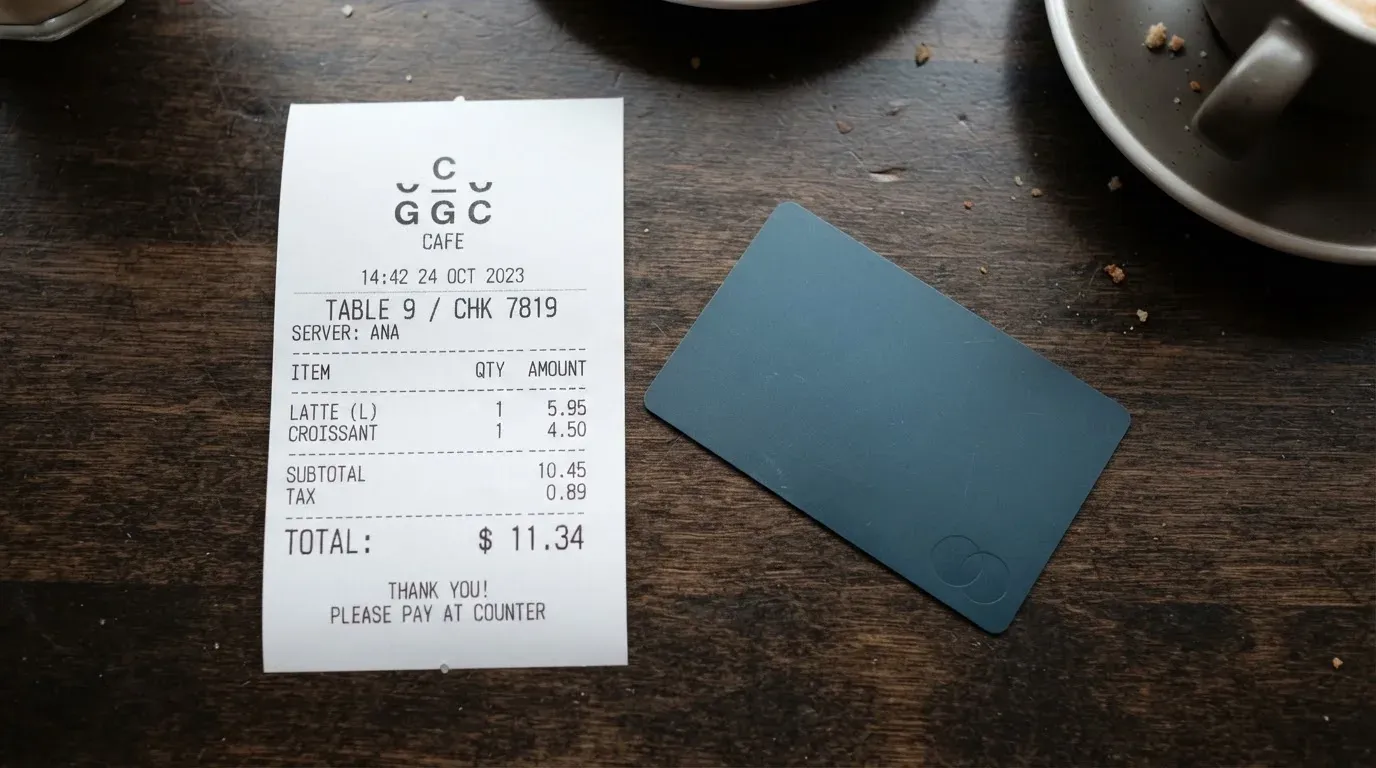
What *is* clear is where the money does and does not leak. Conversions inside Morse use the real exchange rate “with no markup”. Card spending states “Zero foreign exchange fees or markups” and uses the real-time Visa exchange rate. Paying with the card, “online and contactless, is free”. There is a single tier — no card tiers are published.
| Item | What the card states |
|---|---|
| Issuance fee | Not stated (“Fees may apply”) |
| Monthly / maintenance fee | Not stated (“Fees may apply”) |
| Conversion markup | None; real exchange rate used |
| Foreign exchange fee | Zero |
| Card payment (online, contactless) | Free |
| ATM withdrawal | Not supported |
| Daily card spend limit | 2,000 USD for the first 30 days, then 5,000 USD per day |
| Money-transfer services | Weekly cap 500 USD |
| Weekly / monthly deposit and withdrawal limits | Shown in the app’s Limits screen; amounts not stated |
Three ordinary payments, and what applies to each. A €40 lunch in Lisbon paid by tapping the phone: no fee, no markup — the balance converts at the real rate and nothing is added. A $120 online subscription in a currency other than your balance’s: the same, free, at the Visa rate. A 300 USD transfer to a money-transfer service: the card accepts it, but there is a weekly cap of 500 USD on money-transfer services, which is a limit rather than a fee and bites quickly if you were planning something larger.
The ATM row is the one that ends the “just a normal card” idea outright: “Morse Card does not currently support ATM withdrawals”. No fee, because no cash.
How to top it up
Deposits arrive by debit card, by stablecoin transfer, or through Account Details — which supports USD, EUR, MXN and COP, while BRL needs a Brazilian CPF. Bitcoin, USDT, Ethereum and other tokens can be deposited as well. The wallet itself “is self-custodial”, which means the private key is yours and exportable, not Morse’s.
The free paths are specific and worth memorising. Depositing USDC, USDG or EURC over Solana is free. Other tokens and other blockchains carry a fee. Domestic deposits are free in most countries. International deposits through a linked bank account, card or mobile money carry a fee — with the first three international transactions using linked payment methods free, then US$0.50 flat per transaction; deposits to Account Details cost 0.1%. Network fees are charged by the blockchain itself and are separate from anything Morse charges. The minimum top-up is not stated.
One reassurance is worth naming because it is unusual: “Morse shows any fee before you confirm”. So the number you approve is the number you pay.
The counterweight to all of this is the network-choice trap, and it is the single most expensive mistake available to you here. Blockchain transfers are irreversible. If you send on a network the provider does not support, or to an address belonging to a different network, the funds can be lost or need manual support recovery with no guarantee. Circle stopped supporting USDC on Tron in February 2024, so “USDC over TRC20” is not a native option here. Check the network, then check it again.
Paying with it every day
Add the card to Apple Pay or Google Pay and it behaves like any contactless card in a shop. What it will not do is stand in for a physical debit card at merchants that only accept one. Merchants can look up the card’s issuing country from its number and apply extra scrutiny when it differs from your billing address, and some decline prepaid or foreign-issued cards outright for that reason; that is why a card issued in one country can look “foreign” in another.
What is not stated on the card’s pages, and what you should assume nothing about: blocked merchant categories (gambling is commonly restricted by policy rather than law, and the list varies by issuer), rewards, and how disputes are handled. The help centre has an “Earn rewards” collection and a “Make a complaint” article; neither was readable, so I am not going to paraphrase them. The app is iOS and Android, formerly Sling Money; a third-party snapshot — not confirmed by Morse — showed 4.5 stars from 400 reviews on the App Store under the old name, undated.
What can go wrong
The structural risk here is not fraud so much as fragmentation. Four parties are involved: the platform provider is Avian Labs, with Avian Labs, Inc. in Delaware registered as a US Money Services Business (NMLS ID 2639252, FinCEN MSB registration 31000315485256), and Avian Netherlands B.V. (company registration 91273323) authorised by the Dutch AFM (registration 41000005) under MiCAR as a CASP. The card issuer is Lead Bank, under licence from Visa U.S.A. Inc. The programme manager is Bridge Ventures LLC, which “operates as an agent of Lead Bank”. The network is Visa, and Visa licenses rather than issues — it can suspend a programme, as it did with WaveCrest in Europe in 2018.
So when something goes wrong, there may be three or four places to go, and the card’s support route is in-app chat (profile > Support > Chat), email, and AI support described as “24/7/365” alongside human chat support, with hours not stated.
Beyond structure, the concrete risks:
- Self-custody cuts both ways. Your key is yours, which is the point — and if you lose it, no one can restore it. A seed phrase is typically 12 to 24 words, unencrypted, and anyone who obtains it can spend your funds. Cryptographic transfers are irreversible by design.
- Stablecoins are not stable. USDC and USDT are dollar-pegged; USDC is described by Circle as fully backed by cash and cash equivalents mostly in a government money market fund with monthly reserve attestations. USDC also lost its peg briefly in March 2023 during the US banking crisis. Pegs are promises, not guarantees.
- Limits can surprise you. The daily card limit starts at 2,000 USD for 30 days before rising to 5,000 USD, and the deposit and withdrawal caps you will meet are not published anywhere but the app.
- Safeguarding is not described. EMIs are required to safeguard customer funds by segregating them or insuring them, but such funds are not bank deposits and may not sit under a deposit guarantee scheme. Do not assume they are.
- No complaint record exists yet. No official incidents were found and no reviews of the product surfaced at all; there is no Trustpilot page for Morse. That is an untested surface, not a proven one.
One more that catches people out at the worst moment: a declined authorisation can leave a hold on your funds for several days, typically up to seven. The money is committed and unavailable while the shop and the bank argue.
What to take instead
If virtual-only is the dealbreaker, the honest comparison is with products that ship plastic. Bitpanda, for instance, issues a physical Visa debit card in EUR for euro-area residents, costs nothing to open or maintain, and lets you spend directly from a chosen asset — though non-EUR payments carry “VISA mark-up fees” and the cashback figure is stated inconsistently across its own pages. It also excludes accounts verified through Bankident.
Other options, with their own compromises:
| Option | Score | Card | Costs | Catch |
|---|---|---|---|---|
| Morse | 7.5 / 10 | Virtual only | Issuance and monthly not stated; zero FX markup; payments free | No cash, no physical card |
| International Visa Card | 6.7 / 10 | Virtual, US-issued Platinum; physical “Coming soon” | $5 issuance, no maintenance; 2% FX fee on foreign currency | Long exclusion list by residence; purchases blocked in several countries |
| UNi Card | 6.1 / 10 | Multicurrency Mastercard; physical/virtual not stated | No annual fee, no foreign transaction fee; live OTC rates | Eligibility, funding and issuance terms not stated; rewards up to 3% |
| Bitpanda | 6.5 / 10 | Physical Visa debit, EUR only | Free to open and maintain; reissue and extra-card fees | Euro-area residents only; VISA mark-up on non-EUR |
Two patterns run through all four. Every one of them splits your money across a licence-holder and a front-end, and in none of them does the brand on the app logo mean the bank that issued the plastic. And every one of them treats foreign currency as the place the money leaks — which is exactly the problem Morse was built to solve, and does solve better than the field.
Who I would recommend it to
I would recommend Morse to someone specific: a person who already holds stablecoins, who is often abroad or buys from foreign merchants, who does not need cash, and who has been paying a foreign-transaction fee to do it. For that person the value is immediate and quantified — zero markup is worth more than almost any rewards programme.
I would not recommend it as a first card, or as an emergency card, or as the card you keep a float on. It is virtual, so a phone failure is a payment failure; it has no ATM, so a place with no terminal is a dead end; and its issuance and monthly costs are not published, which is not a small thing when you are deciding whether to keep something long-term.
Before you commit, the three things I would check are all free to check: read the Cardholder Agreement for the two fees the card page leaves blank; open the app’s Limits screen for the deposit and withdrawal caps you will actually hit; and confirm your country is on the card list, since it is not published and one of the sixteen closed-beta countries is more than a formality.
Frequently asked questions
What is Morse card?
Morse is a virtual Visa prepaid debit card that spends from a stablecoin balance. You load USDC, USDG, EURC or other crypto into the app, and the card converts and pays at the real exchange rate. It is fully virtual — there is no physical card — and it does not support ATM withdrawals.
How does Morse card work?
You install the app, verify your identity, fund your Morse balance, then add the virtual card to Apple Pay or Google Pay. At payment the crypto converts to a fiat balance and the card spends it, Visa-style, with no foreign-exchange markup. Your wallet is self-custodial, so the private key is exportable and yours.
Is Morse a bank?
No. The platform provider is Avian Labs, registered in the US as a money services business and authorised in the Netherlands by the AFM under MiCAR. The card itself is issued by Lead Bank under licence from Visa. Morse is the front end; Lead Bank is the issuer.
Who owns Morse?
Avian Labs, Inc. is a Delaware company, and Avian Netherlands B.V. is the Dutch entity. The company was previously named Sling Money and rebranded to Morse, which is why you will find the old name on app-store listings. The programme manager is Bridge Ventures LLC, operating as an agent of Lead Bank.
Who can get the card?
Anyone 18 or over who is a resident of a supported country — the rule is residence, not citizenship. The app works in over 140 countries, local add and withdraw in more than 70, but the card itself is only issued in certain countries, checked in the app. Sanctioned persons are excluded, and sixteen listed countries need an invite code.
Does Morse card require KYC?
Yes. Verification may require your name, phone number, date of birth, residential address, a selfie and a photo of an ID document, with requirements varying by country. There is one identity check rather than tiers, and larger deposits may be reviewed for compliance. Proof of address is not separately stated.
How much does the Morse card cost?
Issuance and monthly fees are not stated — the card page says only “Fees may apply”, pointing to the Cardholder Agreement. What is clear: conversion carries no markup, foreign-exchange fees are zero, and paying with the card online or contactless is free. Deposits of USDC, USDG or EURC over Solana are free too.
Can I use the Morse card in my country?
Probably, but check the app first, because the country list for card issuance is not published on the card page. If you are in Australia, Japan, Singapore, Switzerland, the UK, Türkiye, Thailand, Serbia, New Zealand or a few others, you are in closed beta and need an invite code. Spending works wherever Visa is accepted, subject to merchant and issuer checks.
Is the Morse card safe?
It has the usual safeguards — self-custody of crypto, instant card lock and unlock, transaction notifications and 24/7 fraud monitoring — and zero FX markup is a genuine advantage. But no reviews or official incidents exist yet, fees are only partly published, and two-factor authentication is not stated. Read it as a young product, not a proven one.
How do I top up the Morse card?
By debit card, stablecoin transfer, or through Account Details in USD, EUR, MXN and COP (BRL needs a Brazilian CPF). USDC, USDG and EURC over Solana are free; other tokens and chains carry a fee. Domestic deposits are free in most countries; international ones cost US$0.50 after three free ones, or 0.1% to Account Details. Check the network before sending.
Top app and neobank cards by score – cryptocardtop
Content created by the «cryptocardtop» team