
Xplace card review — a Visa paid from crypto, with four tiers, 0% FX on Platinum, and a credit mode that borrows against your holdings
 Available in US
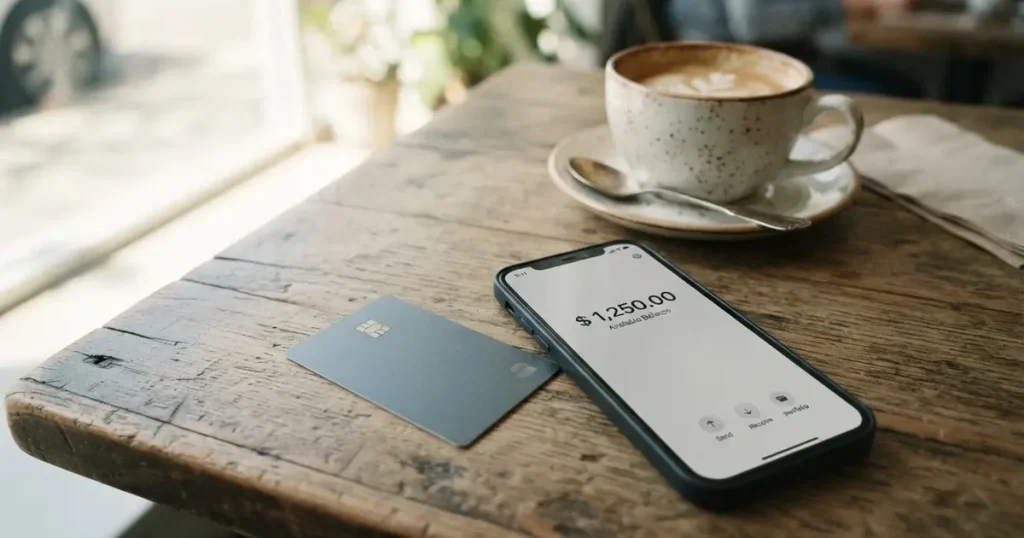
The Xplace card is a Visa you can load from crypto, spend through Apple Pay or Google Pay, and, on the higher tiers, borrow against your balance instead of spending it. It runs on Solana, accepts the usual mix of BTC, ETH, USDC, USDT, SOL, JitoSOL and xStocks, and ships with a four-step tier ladder — Basic, Silver, Gold and Platinum — that scales the monthly limit from $2,000 up to $750,000. The headline number is the FX line: the official card-terms table says 0% on foreign exchange, cross-border and foreign-transaction fees, although the marketing pages only claim 0% FX on Platinum, and one unofficial source still quotes 0.5% on Silver and 0.25% on Gold. There is no cash withdrawal at all: the terms say cash advances and balance transfers are simply not available under the programme. If that trade-off — no cash, no paper statements, but cheap online spending and a built-in credit mode — sounds useful, keep reading. The card is best suited to Solana users who want to spend stablecoins or borrow against them; it is a poorer fit if you need an ATM, expect a metal card at Silver, or want a clearly itemised monthly statement.
The conditions described here are current as of October 28, 2026.
Verdict
I am giving the Xplace card a score of 7.7 out of 10. The card is genuinely cheap on FX if the official terms hold up, the tier ladder is well-defined, and the Solana funding set is one of the broadest available. It loses marks for cash being unavailable, for the company being vague about ATM and replacement fees, for the gap between what the marketing pages say about FX and what the card-terms table says, and for the volume of user complaints about hidden fees and slow support.
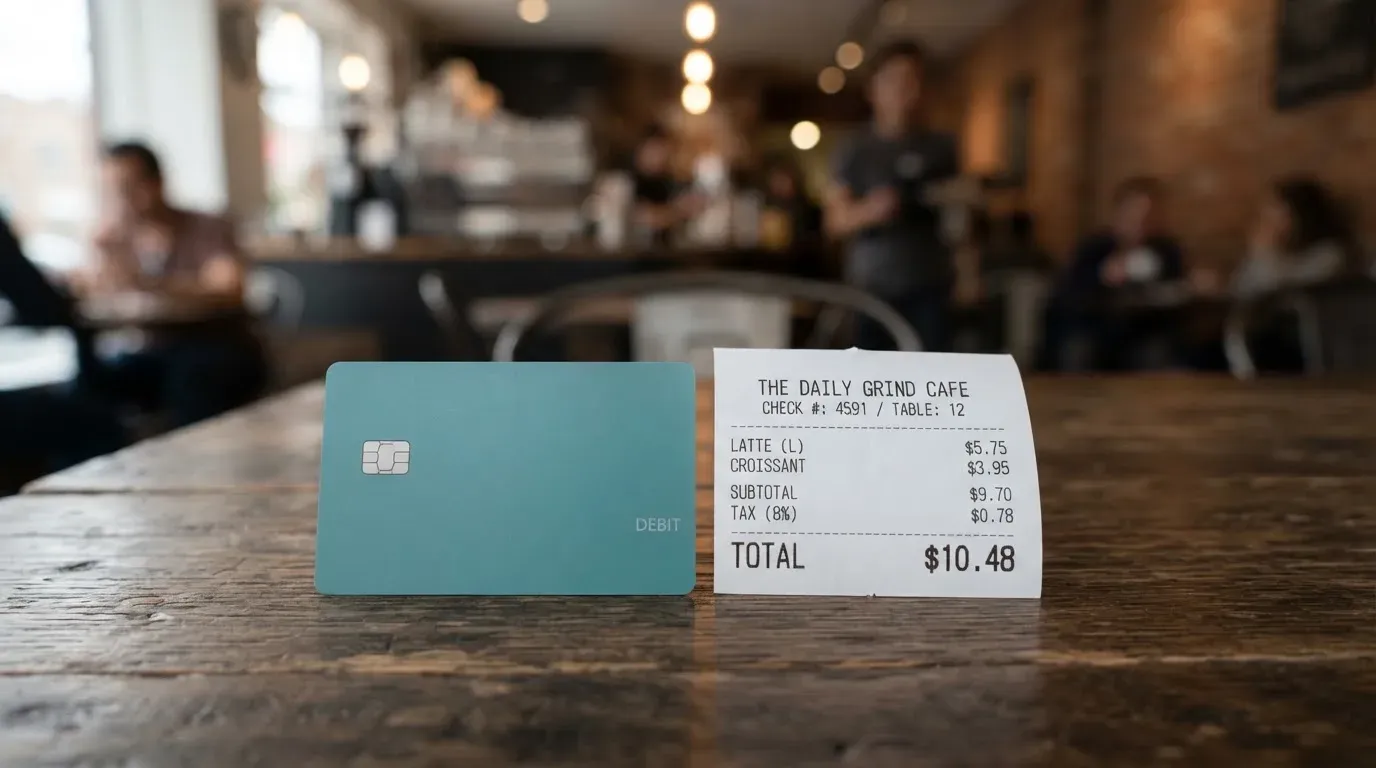
This card is the one for you if you already hold USDC or USDT on Solana and want a way to spend that balance in shops without an exchange on the way, if you are comfortable with the idea that “Credit mode” is a collateral loan rather than a free overdraft, and if you are happy with virtual and tap-to-pay — i.e., you do not need cash from an ATM. It is not the card for you if you live somewhere you cannot get the physical card delivered, if you need an ATM, if you are looking for a US-regulated bank product, or if you want a metal card at the entry level.
Score breakdown
| Criterion | Mark | Why it scores that way |
|---|---|---|
| Who can get it | 9 / 10 | The card’s pages do not publish a full country list; the programme’s Visa is accepted in 160+ countries, and an unofficial count puts 162 countries onboardable and 34 explicitly closed. |
| Cost | 8 / 10 | Basic is free, the next step is $99 a year, the card-terms table is 0% on FX/cross-border/foreign-transaction fees, and cash is not available; unofficial data still quotes a 0.5% Silver FX. |
| Top-up options | 8 / 10 | You can fund with BTC (cbBTC), ETH (wETH), SOL, JitoSOL, USDC, USDT and xStocks, all on Solana. |
| Reliability and complaints | 6 / 10 | Operator is Pontech Group L.L.C-FZ in Dubai; the card itself is issued by Third National under a Signify Holdings programme; Trustpilot reads 4.1/5 from 56 reviews, Google Play 3.5, with recurring themes of hidden fees and slow support. |
| Everyday use | 7 / 10 | The virtual card is instant, Silver’s physical card is shipping, Gold and Platinum are listed as “coming soon”, Apple Pay and Google Pay are built in, and there is no cash withdrawal. |
Total: 7.7 / 10
The audience the card fits best, in my reading, is Solana users who specifically want to spend stablecoins or borrow against them. If you are coming from a more vanilla debit-card world, you will have to recalibrate, and the rest of this review is about how.
Will they give you the card
The first question I ask of any crypto card is “where can I actually get one?”, and with Xplace that is a slightly awkward question. The official site does not publish a country list, and the only thing it states is the standard “services are not available in all jurisdictions”. The Visa itself is accepted in 160+ countries, which is what most people actually want to know: will the merchant in front of me take it. Yes, almost certainly.
For residence rules, you have to look one layer down. An unofficial count (CryptoCardHub, August 2026) puts 162 countries as available and 34 as explicitly closed; Russia and India are on the closed list. The same source is careful to note that the negative list does not prove every unlisted country is onboardable, so I would not treat that figure as a guarantee.
If you want a hard rule, the safest framing is: you can apply if the country you live in is not on a small list of barred jurisdictions, you can complete the verification described below, and you can be delivered a physical card (or, if not, you can use the virtual card through Apple Pay or Google Pay). I would not buy a flight on the assumption that the physical card will reach me; I would verify delivery to my address before paying the annual fee.
What the card does not state is anything about tiered KYC, about what documents they want beyond a generic “register and verify”, or about which proof of address is accepted. That opacity is something to take into account before you put time into the application.
How to get it
The official onboarding story is short: register, verify, and the virtual card activates in minutes. That is the entire procedure as the marketing page describes it; the underlying card terms are not more forthcoming about what “verify” means.
The card you receive is a Visa. There are two forms. The virtual card is issued instantly and can be added to Apple Pay or Google Pay right away. The physical card is currently shipping for Silver, with Gold and Platinum listed as “coming soon”. Delivery is given as 7–14 business days depending on the region, with a third-party report from August 2026 quoting 3–12 days once a Silver member orders. Neither the delivery cost nor the list of countries the physical card is shipped to is stated on the official pages; the terms do mention that there are “fees for Card issuance or replacement” but do not give the amounts.
Once you have the card, you have two spending modes. Cash mode spends from your stablecoin balance; Credit mode borrows against your holdings. The “borrows against” part is worth pausing on — see the risks section, because it is the same mechanism the company describes, and it carries lending risk that a pure prepaid card does not.
What is not stated, and is genuinely missing: the list of documents you will be asked for, the KYC tiers, how long the review takes, the criteria for rejection, the card’s base currency, the daily limit, the replacement fee, and the address-verification standard. I would treat each of those as a question to put to support before you fund the card, not after.
What it really costs
Cost is the area where the Xplace card is most interesting, and the area where I have to be most careful to separate what the card-terms PDF says from what the marketing pages say. They are not the same.
The annual fee ladder is clear: Basic is free, Silver is $99 a year, Gold is $249 a year, Platinum is $999 a year. Borrowing has no origination fee, and stablecoin spending is described as having “no hidden spread”. The card-terms table goes further and says 0% Foreign Exchange Fee, 0% Cross Border Fee and 0% Foreign Transaction Fee. The marketing pages, by contrast, only claim “0% FX on Platinum”. Those two statements can be reconciled — the terms document governs — but if you are reading the homepage, you will only see the Platinum claim.
The unofficial write-up, citing the app’s fee comparison, says the actual FX you will see is 0.5% on Silver, 0.25% on Gold, and 0% on Platinum, with Basic unconfirmed. That contradicts the official terms. I am giving the official terms the heavier weight, but I would test a small foreign-currency transaction early and check the receipt before relying on it.
The cost section is also where the limitations of the card show up most clearly. There is no cash withdrawal at all, and the terms spell that out: “Cash advances and balance transfers are not available under these Card Terms.” The fee for an ATM attempt is not stated, because there is no fee schedule for an ATM attempt to charge. The card does not state a daily spending limit; what it says is that the spending limit is generally set by Pontech Group L.L.C-FZ, and that the issuer may set additional limits that can change at any time. The monthly limit is stated, and it is generous at the top end.
Costs at a glance
| Fee or limit | Basic | Silver | Gold | Platinum |
|---|---|---|---|---|
| Annual fee | $0 | $99 | $249 | $999 |
| Monthly spend limit | $2,000 | $20,000 | $200,000 | $750,000 |
| Cashback in Credit mode | 0.5% | 1% | 1.5% | 2% |
| FX (per official card-terms table) | 0% | 0% | 0% | 0% |
| FX (per unofficial app comparison) | not confirmed | 0.5% | 0.25% | 0% |
| Cashback in Cash mode | not stated | not stated | not stated | not stated |
| ATM cash | not available | not available | not available | not available |
| Origination fee on borrowing | none | none | none | none |
| Per-transaction limit (unofficial) | — | $3,000 | $10,000 | $25,000 |
| Lounge visits per year | none | 1 | 4 | unlimited |
| Fast Track passes per year | none | none | 2 | 5 |
| Concierge | none | Standard | Personal | VIP Priority |
Three everyday costs to keep in mind:
- A £4 coffee in London, paid by tap on a non-USD balance. With the official 0% FX, the only price you should see on the receipt is the conversion of the network; if you see anything else, you are seeing a tier-specific FX and the 0% claim is not holding up for your card.
- A €60 dinner in Paris, paid through Apple Pay. Same logic, on a euro balance: confirm on the receipt that the network’s exchange rate was used and no issuer mark-up is layered on.
- Borrowing in Credit mode for two weeks. There is no origination fee, but the third-party guides describe Credit mode as a collateral-backed loan, with interest and liquidation risk. The cost line that is not on the table is the cost of that loan; it is what you will pay back in addition to the principal.
The conversion fee on crypto-to-fiat funding is not stated. The marketing line is “No hidden spread, no FX games”, which is a position but not a number.
How to top up the Xplace card
The funding story is one of the strengths of the card. You can deposit BTC (specifically Coinbase’s cbBTC), ETH (the wrapped form, wETH), SOL, JitoSOL, USDC, USDT and xStocks, all on the Solana network. The card is built around a single chain; the trade-off is breadth within that chain, and the list is broader than most crypto cards manage.
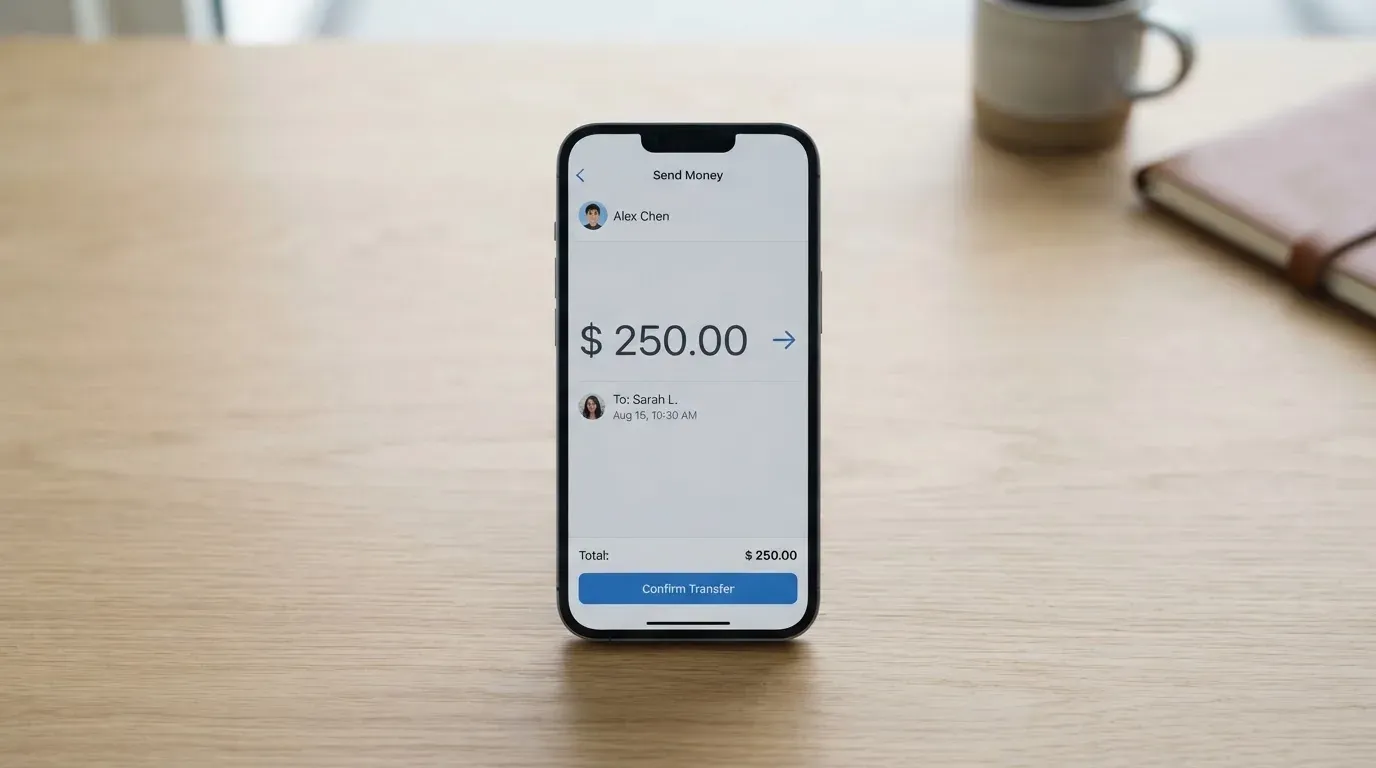
The things the official pages do not state, and that I would want to know before funding, are: the deposit fee, the top-up fee, the minimum top-up, the maximum single top-up, and whether there is a fiat on-ramp at all. The terms mention “no origination fee” on borrowing, but the funding-side fee is silent. “No lock-ups” is the official line on withdrawals: you can pull the balance out at any time, although “withdrawals depend on protocol liquidity and may be temporarily limited during market stress”, which is a non-trivial caveat. The withdrawal fee and the balance treatment on card closure are not stated; the terms only say to surrender or destroy the card on closure.
Practically: this is a Solana-funded card, and you should treat it as such. The on-chain fee (gas) for a Solana transfer is paid by you to the network, not to the card provider. The deposit address, the network, and the asset are the three things to get right; sending USDC on Ethereum to a Solana address is a real risk and the funds are unlikely to be recoverable.
Paying with it every day
Day-to-day use is the area where the card is most consumer-friendly. The virtual card is instant, Apple Pay and Google Pay are described as “native” to the card (meaning the tokenised number is added without a separate provisioning step), and the merchant-acceptance question is really the Visa acceptance question.
In Credit mode, the cashback ladder is paid in USDC to the wallet at settlement: 0.5% on Basic, 1% on Silver, 1.5% on Gold, and 2% on Platinum. The Cash-mode cashback is not stated. There is a Blocked Merchants document linked from the footer, and the categories of merchant that are automatically declined include explosives, small arms, wire transfers, pawn shops, gambling and lotteries, money transfer services, escort and massage services, and political, labour and religious organisations. The named-merchant blocklist includes eToro, Skrill, Neteller, Wish, MoonPay and Wise, plus a “dynamic list” the issuer can update.
If something goes wrong with a charge, the official dispute window is 60 days from the date the disputed charge is posted, and chargebacks resolved in your favour are credited back to your XPlace account. The card-association conversion path is: a foreign-currency transaction is converted by the card association into US dollars, and the table says that conversion carries 0% Foreign Exchange Fee, 0% Cross-Border Fee and 0% Foreign Transaction Fee. The marketing pages say only “0% FX on Platinum”; both statements are present in the public documents and they are not the same claim.
The app itself is on the Apple App Store and Google Play; the official page does not show ratings. Third-party measurements of the same app are 3.5 on Google Play (35 ratings) per CryptoCardHub, August 2026, and 3.6/5 from 40 reviews per the user report.
What can go wrong
A review of this card has to spend real time on the things that can go wrong, because several of them are structural rather than incidental.
The first is Credit mode. The marketing language says “borrow against holdings”, and a third-party guide (penchan.co, reviewed October 2026, unverified) describes Credit mode as a collateral-backed loan with interest and liquidation risk. That is the standard DeFi-lending mechanic: you deposit collateral, you can borrow up to a fraction of it, the protocol can liquidate you if the collateral value falls. The card abstracts that away behind a credit-card interface, but the underlying obligation is the same. The user-visible field is “0% origination fee”; the user-invisible field is the interest rate and the liquidation threshold. I would want both before borrowing through the card.
The second is the company. The operator is Pontech Group L.L.C-FZ, registered in Meydan Free Zone, Dubai, UAE, with licence number 2527237.01. The card itself is “issued by Third National under a programme managed by Signify Holdings, Inc.”. The site makes a point of saying it is not a bank, not a licensed lender and not an investment firm. That is an honest description of the corporate structure, but it also tells you where to go for a complaint: not to a national banking regulator, because there is no banking licence. The third-party guide also notes that XPlace moved from the Drift lending protocol to Kamino in May, after a hack affected users on Drift; this is a third-party claim and I have not verified it against an XPlace statement.
The third is the non-custodial claim. The site says “XPlace does not hold your funds” and “XPlace cannot freeze, seize, or move your funds”. The first part is plausible at the protocol layer; the second is the marketing line. In practice, regulated platforms can and do restrict accounts under KYC and sanctions rules, and the dispute clause (60 days) sits within a card-issuer framework that does have a master account and a card programme. Treat the non-custodial framing as a direction of travel, not a guarantee.
The fourth is the complaint themes. Trustpilot reads 4.1/5 from 56 reviews (read October 2026). The recurring complaints are: a user in September 2026 was offered a plastic card instead of the advertised metal card, with an extra payment; a user in the same month complained of “hidden fees” and gave 2 stars; users in August and September 2026 reported slow support; a user in October 2026 had incoming SEPA transfers rejected without reason; a user in September 2026 could not add the card to Apple Wallet. Google Play sits at 3.5 (35 ratings per third party, August 2026) with at least one scam claim. The Sep 2026 metal-card complaint has a company reply explaining that the metal version launches in October, which is a good sign for response quality but a bad sign for the clarity of the original marketing.
The fifth is the official-incident record. The official pages do not state any. The third-party aggregator noted a card-terms document from October 2025 listing penalty fees (up to $40 for late payment, $29 for returned payment) and reports Silver members being able to order a physical card for $99 with delivery in 3–12 days (August 2026).
What the card does not state, and that you should not assume: 2FA, in-app card freeze, spending controls, insurance on balances, regulatory action history. The support line is “real support, 24/7, across every tier”, with email [email protected] and phone +971 554 570 290 in the terms; community links include Discord, X, Telegram, Instagram, YouTube and LinkedIn.
What to take instead
If the Xplace card does not match your situation, the three alternatives I would look at are Sponge, ether.fi and Anodos. None is a like-for-like replacement; each one trades the Xplace trade-off for a different one.
Sponge is the simplest of the three: a virtual Visa, described on its homepage as a credit card issued by Rain (a Visa Principal Member), funded with USDC from a Sponge wallet (the example chain is Base; the SDK also supports Solana). The cost, fees, reward, country and KYC detail are not stated on the pages I looked at, and the score I am working from is 4.9/10. The pitch is minimal: load USDC, spend it, accept whatever card terms Rain publishes. If you want a virtual-only USDC card and you are happy to deal with Rain as the issuer, Sponge is the lightweight option. It is not the card for you if you want a physical card, a clear fee schedule, or a published country list.
ether.fi is closer to a full programme. It is a Visa, virtual and physical, issued under a list of residence-based jurisdictions — e.g. Andorra, Argentina, Australia, Austria, Brazil, Canada, Cyprus, Czech Republic, France, Germany, Hong Kong, Hungary, Italy, Japan, Mexico, Poland, Portugal, Singapore, Spain, Switzerland, UAE, the UK, plus 31 US states, with Belgium and Ireland eligible without physical delivery; the rule is “if your jurisdiction is not listed, you will not be able to apply”. The cost: a free virtual card for Core members, except in regional-pricing countries (Argentina, Angola, Bangladesh, Bolivia, Colombia, Ecuador, Indonesia, Malaysia, Mexico, Nigeria, Peru, Philippines, South Africa, Thailand) where the first virtual is $10. FX: 0.5% on Core, 0.25% on Luxe, none on Pinnacle and VIP; the article on EUR purchases says 0% FX. Rewards: 3% cashback in ETHFI, locked for 7 days, with monthly caps that step down at $2,000, $3,000, $10,000 and $50,000 depending on tier. ATM, cash advances, P2P and gambling MCCs are excluded. The score is 6.7/10. ether.fi is the pick if you want a residency-checked programme with a published tier ladder and a published reward token, and you are willing to sit with a 7-day lock on the cashback.
Anodos Card is the broadest on residency. It says it is “currently available in 150+ countries, with a few exceptions” and spells them out: cards cannot be issued to residents of Belarus, China (Mainland), Cuba, India, Iran, Iraq, Israel, Myanmar, Nepal, Nicaragua, North Korea, Russia, Syria, Turkey, Ukraine, Venezuela, Vietnam; Chinese and Hong Kong passports are not eligible; Nigeria, Sri Lanka and South Africa need “enhanced review + explicit approval”; spending is blocked in Cuba, Iran, North Korea, Russia, Syria, Ukraine and Venezuela; Russia is doubly blocked — no issuance to residents and no spending there; Belarus is no issuance to residents; users must attest they are not US citizens (a separate US programme exists in 30 US states). It is a Visa licensed by the network, with physical or virtual cards; the network converts foreign-currency transactions to USD. The cost ladder is Free ($0), Pro ($9.99/mo or $99.90/yr) and Elite ($29.99/mo or $299.90/yr), with the first virtual card included and extra virtual cards at $20 / $10 / $10. Card FX/international fee is 1.50% / 1.25% / 1.00% by tier; the non-card currency exchange is 1.00% / 0.75% / 0.50%; purchases are 0% APR currently; late payment up to $40; returned payment $29. The card’s reward line is not stated in the terms I have. The score is 7.2/10. Anodos is the pick if you need a clear published residency list, a stated fee schedule and a real monthly tier, and you are willing to pay a 1.00–1.50% FX.
The shape of the choice: Xplace for the lowest FX and the broadest on-chain funding, ether.fi for a clear tier ladder and a published reward token, Anodos for residency transparency, Sponge for a minimal virtual card. The cash constraint — Xplace’s no-ATM rule — applies to all of them in one form or another; the ether.fi exclusion list is explicit, and Anodos and Sponge do not advertise an ATM feature.
Who I would recommend it to
If I had to give one person, the Xplace card is the one I would point a Solana user to. They will already have USDC, USDT, SOL or JitoSOL in a wallet; the funding set is a perfect match; the on-chain fee for a Solana transfer is low; the card-terms table’s 0% FX claim is the strongest in this category; and the four tiers give a clear upgrade path. The Apple Pay and Google Pay integration is real, and the virtual card being instant is genuinely useful when the alternative is a week of waiting for a piece of plastic. The Credit-mode mechanic is also genuinely interesting for someone who already understands DeFi lending — they will recognise the structure and know what to ask about interest and liquidation thresholds.
I would not recommend the card to someone who needs an ATM, who lives in one of the unconfirmed delivery regions, who is looking for a US-regulated bank product, or who wants a metal card at the entry tier. I would also not recommend it to someone who is uncomfortable with the corporate structure (operator in a Dubai free zone, card issued by a programme manager in the US) and the fact that the company is at pains to tell you it is not a bank. And I would not recommend it to anyone who has not read the Blocked Merchants document and the official card-terms PDF, because the marketing pages and the terms do not say the same thing about FX.
If you are the kind of person who reads the receipt on every transaction, the Xplace card will reward that habit. If you are the kind of person who assumes the marketing page is the full story, it will not.
Frequently asked questions
What is the Xplace card?
The Xplace card is a Visa that you load with crypto — mostly stablecoins and other Solana-based tokens — and spend through Apple Pay, Google Pay or a physical card. The operator is Pontech Group L.L.C-FZ in Dubai, and the card itself is issued by Third National under a programme managed by Signify Holdings, Inc. It is not a bank product.
How does the Xplace card work?
You register, verify your identity, and the virtual card is issued instantly. You deposit supported crypto (BTC as cbBTC, ETH as wETH, SOL, JitoSOL, USDC, USDT or xStocks, all on Solana) and you can spend that balance. In Cash mode the card spends your balance; in Credit mode it borrows against your holdings instead of spending them.
Is Xplace a bank?
No. The site says explicitly that it is not a bank, not a licensed lender and not an investment firm. The corporate structure is an operator in a Dubai free zone and a card-issuing bank in the US.
Who owns Xplace?
The operator is Pontech Group L.L.C-FZ, registered in Meydan Free Zone, Dubai, UAE, with licence number 2527237.01. The card programme is run by Signify Holdings, Inc., and the card is issued by Third National.
Is the Xplace card available in my country?
The official pages do not publish a country list. The programme says “services are not available in all jurisdictions”, the Visa is accepted in 160+ countries, and an unofficial count puts 162 countries as onboardable and 34 as explicitly closed (Russia and India among them). Treat the unofficial list as a starting point only and confirm with support before applying.
How do I get the Xplace card?
Register on the site, complete the verification, and the virtual card activates in minutes. The physical card is shipping for Silver and is listed as “coming soon” for Gold and Platinum; delivery is given as 7–14 business days depending on the region, and a third-party report quotes 3–12 days for Silver.
Does the Xplace card require KYC?
Yes. The marketing language is “register and verify in minutes”. The exact documents, the number of KYC tiers, the review time and the rejection criteria are not stated on the public pages.
How do I top up the Xplace card?
Send one of the supported assets — BTC (cbBTC), ETH (wETH), SOL, JitoSOL, USDC, USDT or xStocks — to your Xplace deposit address on the Solana network. The deposit fee, the top-up fee and the minimum top-up are not stated; the marketing line is “no hidden spread”.
How do I add the Xplace card to Apple Wallet or Google Pay?
Apple Pay and Google Pay are described as “native” to the card, meaning the tokenised card is added to the wallet without a separate provisioning step. The steps are the standard in-app “add to wallet” flow; one user report from September 2026 says it failed on their device, so check it on a small transaction first.
Is the Xplace card safe?
The marketing claim is “XPlace does not hold your funds” and “XPlace cannot freeze, seize, or move your funds”. Treat that as a direction of travel, not a guarantee. What is verifiable is the dispute window (60 days), the blocked-merchant categories, and the underlying card-issuer framework; what is not stated is 2FA, in-app card freeze, spending controls and insurance on balances.
Top credit and cashback cards by score – cryptocardtop
Content created by the «cryptocardtop» team