
A rand card funded with crypto, open to South African residents and foreigners with KYC — narrow eligibility, published fees, thin detail on several basics
 Available in US
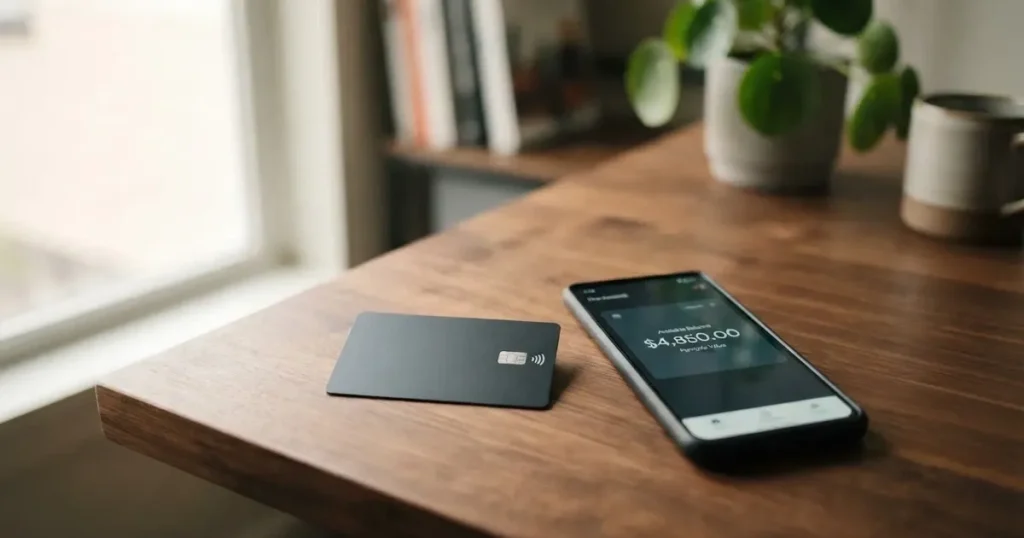
Spendl is a payment card, not a bank account, and the first thing to settle before anything else is whether you can have one at all: the card ships across South Africa, and the sign-up form asks for your nationality and country of residence. That is the whole filter. If you live anywhere else, this card is not for you and nothing on this page will change that. If you do live in South Africa, or you are a foreign national living there, you can apply — the company says residents and foreign nationals with valid KYC qualify, and there is a separate verification level for some of the plans that asks for a passport, a work permit and proof of residence.
What you get in return is a card loaded in rand. You convert crypto to ZAR, the ZAR sits in a wallet, and the card spends that balance. The card is loaded, not connected to a bank account, so it behaves like a prepaid card: it cannot overdraw, and it is only as good as the balance you have put into it. There is a virtual card and a physical one, cash machines work, and the fees are published in rands with real numbers attached — which is more than a lot of cards in this category manage. What is missing is detail. The card network is not named on the official pages, the conversion fee is described as “a small transparent fee” with no amount, the networks for the crypto deposits are not listed, Apple Pay and Google Pay are not mentioned anywhere in the terms, and there is no app in the App Store or Google Play to rate.
I scored it 5.0 out of 10, and the score is lopsided on purpose: the fundamentals and the paperwork side score well, the geographic side scores badly, and the middle sits in between.
The conditions described on this page are current as of October 28, 2026.
Verdict
| Criterion | Mark | Why |
|---|---|---|
| Who can get it | 2 / 10 | South Africa only (“Ships across South Africa”); residents and foreign nationals with valid KYC |
| Cost | 3 / 10 | Card R99.00, replacement R100.00, monthly R25.00, international payment R45.00 + 1.56 %, domestic ATM R12.50 + R2.50 per R100 |
| Top-up options | 7 / 10 | 12 assets convert to ZAR — BTC, ETH, USDT, USDC, SOL, AVAX, BNB, LINK, TRX, XRP, DOGE, SHIB; networks not named; fiat top-up too |
| Reliability and complaints | 8 / 10 | Light Fusion (Pty) Ltd t/a Spendl Technologies, FSP No. 53757, FSCA-exempt CASP, Payaccsys partner; issuing bank not named; no complaints found |
| Everyday use | 7 / 10 | Virtual and physical card, cash machines available; Apple Pay and Google Pay not disclosed; progressive web app with no App Store listing |
| Total | 5.0 / 10 | Narrow eligibility, honest fees, thin documentation |
Who this suits: a South African resident, or a foreign national living in South Africa, who already holds crypto, wants a rand-denominated card rather than a dollar one, and is comfortable with the fact that the card is loaded from a wallet balance and that the rand is held somewhere that is not a registered bank deposit. The clearest fit is someone funding a rand card with crypto.
Who it does not suit: anyone outside South Africa; anyone who wants their crypto to stay in their own wallet until the moment of payment; anyone who relies on mobile wallets; anyone who needs a named issuing bank; and anyone for whom an undisclosed conversion fee is a dealbreaker. It is also not the card for a large monthly spend — the top plan caps monthly spend at R500,000.00, which is a lot in rand but still a ceiling, and the daily ceilings on the lower plans are much tighter.
Will they give you the card?
South Africa is the whole answer. The shop says “Ships across South Africa”, and the application form asks for nationality and country of residence as separate fields, so the rule runs on where you are, not where you are from.
Foreign nationals are not excluded outright. The Guru plan, for foreign nationals, needs a passport, a work permit and proof of residence — which tells you the company expects work permits to be part of the picture, not just tourist stays.
Where the card’s own pages contradict themselves, you should know about it. The KYC guide lists “No SA Nationals” on the Smart plan, while the card plans page says Smart is for foreign nationals and non-RSA users, Savvy is for RSA and foreign nationals, and Guru is for RSA users. Those two sets of statements do not agree, and I will not pretend they do. If you are a South African national and you want Smart, the safe move is to ask the company directly before you upload documents, rather than discovering the answer through a rejection.
Who gets which level follows the KYC tier: KYC 2 is Smart, KYC 3 is Savvy, KYC 4 is Guru. That matters not because the number is interesting but because the limits and fees attach to it.
If your country is not South Africa, stop reading and look at a card that is open to you — there are alternatives later on this page that accept a much wider set of countries.
How to get it
The sequence is short. You sign up in the app, complete KYC, and then order the card in the shop. The card costs R99.00 and there is one card per order, so a second card means a second order at a second R99.00. Upgrading from Wallet only to Wallet + Card adds an extra KYC step, which means going through verification again rather than just flipping a switch.
The documents are specific, and the specifics are where most rejections come from:
- Identity: a South African ID Smart Card, front and back, or a passport, information page.
- Proof of residence: a utility bill, bank statement, municipal rates account, or a signed lease.
- The proof must show your full name and physical street address, must be no older than 3 months, and cannot be a PO Box. There is a 10 MB upload limit.
The minimum age is not stated anywhere on the public pages; the form does collect a date of birth. Prepaid cards are generally sold to adults, so assume 18 and do not read anything into the silence beyond that.
Timing: most verifications finish within minutes, some take up to 24 hours, and you get an email either way. The listed reasons for rejection are worth reading twice, because every one of them is avoidable — a name mismatch between your documents, blurry or cropped images, proof of address older than 3 months or in someone else’s name, a PO Box, or inaccurate information, which the company warns may lead to permanent suspension.
Delivery: the card ships across South Africa. Delivery time and delivery cost are not stated. A replacement costs R100.00, and the terms say replacements typically take 5 to 10 business days, so if you lose the card, budget for more than a week.
One point on the network, because it comes up in every search on this card. The official pages do not name it. They say it works “anywhere a supported networked card is accepted”, and the terms disclose it as “a major payment Network” shown on the website. A third-party site describes it as a Visa debit card, but I could not open that page and no month is shown with it, so treat that as unofficial and unconfirmed by the card. What you can rely on is that it is a mainstream network — not which one.
Fees: what it really costs
The fee table is the strongest part of this card’s public information. Values below are the ones the card publishes.
| Fee or limit | Amount |
|---|---|
| Card price | R99.00 per card |
| Replacement card | R100.00 |
| Monthly fee | R25.00 (listed for Savvy and Guru; the Smart monthly fee is not listed) |
| Crypto conversion | “A small transparent fee may apply” — amount not published, shown before you confirm |
| International POS payment | R45.00 + 1.56 % of transaction value |
| International POS decline | R17.50 |
| Local ATM withdrawal | R12.50 + R2.50 per R100 or part thereof |
| Local balance enquiry | R6.75 |
| International ATM withdrawal | R100.00 |
| International balance enquiry | R12.00 |
| International ATM decline | R20.00 |
| Free allowance | not stated |
| Network and FX | the network is not named on official pages |
Two things stand out. The monthly fee is listed for the two upper plans, and the plans page says the monthly price is the same across plans without giving an amount — so for Smart you have a number that may or may not apply to you. And there is no free allowance stated: no “first ATM withdrawals free”, no monthly free conversions. If a free allowance exists, it is not written down, and I would treat the ATM fee as payable on every withdrawal.
Three everyday payments, and what each one costs:
- Buying coffee in Rand for R85. Cash-machine withdrawals are where the fee bites hardest: R12.50 + R2.50 per R100 or part of R100, so R85 out of a machine is R12.50 + R2.50 = R15.00. A shop purchase in rand has no extra fee attached to it beyond the conversion you already paid on the way in.
- International payments: R45.00 plus 1.56% of the transaction value; if the payment is declined, you are charged R17.50.
- Withdrawing cash at an overseas ATM costs R100.00, plus whatever the machine’s owner charges on top, and R20.00 if the withdrawal is declined.
The one number I cannot give you is the conversion fee, because the card does not publish it. It is described as small and transparent and it appears before you confirm, so the honest advice is to watch the confirmation screen rather than assume.
Top up: how money gets onto the card
The card is loaded from the Spendl Wallet, and the path is always the same shape: crypto comes in, it is converted to rand, the rand sits in the wallet, the card spends the rand. There is no direct crypto spend — the card never touches a token at the moment of payment, which is the safer design of the two.
Twelve assets convert to ZAR: BTC, ETH, USDT, USDC, SOL, AVAX, BNB, LINK, TRX, XRP, DOGE and SHIB. The networks for those assets are not listed, and that is not a small gap — sending on the wrong network is the classic way to lose money in this category, because blockchain transfers cannot be reversed. Find out which networks are supported before your first transfer, not after.
Minimums are published per asset, which is unusual and useful:
| Asset | Minimum |
|---|---|
| BTC | 0.000008 |
| ETH | 0.0002 |
| USDC | 0.6 |
| USDT | 0.6 |
| SOL | 0.003 |
| XRP | 0.8 |
| AVAX | 0.03 |
| BNB | 0.0008 |
| DOGE | 3 |
| LINK | 0.04 |
| TRX | 2 |
| SHIB | none listed |
The general floor is R10 or the asset minimum, whichever applies. Crypto deposit fee and who pays the network fee are not stated. On-chain network fees are charged by the blockchain rather than by the card company, so something has to cover the transfer, and this card does not say who does.
Fiat funding exists too, and this is where the fee list becomes interesting: receive from the card issuer R1.20, receive from an outside source R2.75, instant deposit R12.00, SWIFT deposit R55.00. You can fund by card, PayShap, RTC, EFT, cash at participating tills, or Zapper QR. If you are funding with crypto, that R12.00 instant deposit and the R55.00 SWIFT route do not apply to you — they are the fiat paths.
Money coming out is deliberately narrow. You cannot send crypto to third-party wallets, and you cannot convert rand back into crypto. Rand leaves only by EFT to a named, compliant bank account. If you close the account, the residual balance is generally returned within 30 days, less fees, holdbacks and amounts owed, and a sanctions or anti-money-laundering hold can delay that.
Paying with it every day
The everyday mechanics are fine. You get both a virtual card and a physical one — every plan lists both as available — the balance is in rand, and cash machines work. International transactions are allowed on Savvy and Guru, with the international payment fee applied.
Limits are where the plans separate. This is the comparison that matters if you are actually spending money:
| Limit | Savvy | Guru | Smart |
|---|---|---|---|
| POS per day | R20,000.00 | R100,000.00 | not stated |
| Cash ATM per day | R5,000.00 | R10,000.00 | not stated |
| POS purchase with cash per day | R5,000.00 | R10,000.00 | not stated |
| Maximum daily spend | R25,000.00 | R100,000.00 | not stated |
| Per transaction, ATM | R2,000.00 | R2,000.00 | not stated |
| Per transaction, POS | R10,000.00 | R50,000.00 | not stated |
| Maximum monthly spend | R25,000.00 | R500,000.00 | R25,000 |
| Maximum monthly balance | R25,000.00 | R500,000.00 | not stated |
| Deposits per month | R25,000.00 | R500,000.00 | not stated |
| EFT per month | R20,000.00 | R50,000.00 | not stated |
Smart’s own ceiling is R25,000 per month on KYC 2. Savvy is labelled “Coming Soon” and Guru “Popular Plan” — note that Savvy, the middle tier, is the one marked as not yet available, so on current information the choice is between Smart and Guru.
Every plan includes the virtual and physical card, digital asset funding, vouchers, remittance, and the same card price.
What is missing in daily use is as notable as what is there. Apple Pay and Google Pay are not stated — neither the terms nor the documents mention them, so do not plan around tapping your phone. Which merchant categories are blocked is also not stated, which means you cannot tell in advance whether a given purchase will go through. Multi-currency balances are not stated; this is a rand card.
Rewards: no cashback is stated. What there is instead is XP and points tied to levels, streaks and a leaderboard, with no monetary value attached to any of it. I would not count it as a reward until the company puts a number on it.
The app is a progressive web app at app.spendl.money — a web app, not a native one, and there is no App Store or Google Play listing, which also means there are no store ratings to read. Read on 2026-10-21.
If a payment goes wrong, the process is: tell Spendl promptly with your evidence, typically within 30 to 60 days of the transaction posting. Disputes run through the Programme Partner under Network Rules. And be aware that chargeback abuse is treated seriously — it can bring higher fees, a reserve, a restriction, or termination.
What can go wrong
The company behind it is Light Fusion (Pty) Ltd t/a Spendl Technologies, registration 2023/154151/07, in Cape Town. It holds FSP No. 53757, FIC ID 74993, and describes itself as “an FSCA-exempt Crypto Asset Service Provider (CASP)”. Its partner is Payaccsys Services (Pty) Ltd, “A Registered SO & TPPP”, FIC ID 69498. The card is issued and processed by a licensed third-party payment “Programme Partner” — and that bank’s name is not given.
That unnamed partner is the single most important structural fact on this page. Your card is not issued by a bank you can name; it is issued by a third party under a programme that Spendl administers. This is normal for this category — the card network routes the messages, the issuer holds the programme, and the crypto brand is often just the front end — but it means your protections come from the programme partner’s terms, not from a bank relationship you hold directly.
The money side deserves a direct look. ZAR balances are held in a pooled client account at the Programme Partner. The terms say plainly that these are “not deposits at a registered bank in SPENDL’s name”, and that there is no statutory deposit insurance. They also say “SPENDL is not a custodian of standalone crypto holdings”. So the rand you have loaded sits in a pool, not in your own named account. That is a different risk profile from a bank balance, and the distinction is not a technicality.
Practically, the card can be blocked on request — the fraud hotline is 011 207 1600 — and support is at [email protected] with standard hours 08:00 to 17:00 South African time, Monday to Friday. Those hours are stated for business support; card support hours are not stated. Whether two-factor authentication and in-app card freeze exist is not mentioned anywhere I could find, which for a card holding a pooled balance is a gap I would want closed before loading a large sum.
On complaints, there is a silence in both directions. The official documents publish no incidents. A search for reviews found nothing: no Trustpilot page, no Reddit threads, as of 2026-10-21. A card with no visible complaint history is not the same as a card with a good track record — it may simply be young, and it may simply be small enough that nobody has written about it yet. Absence of complaints should not be read as evidence of reliability.
One more risk that belongs to the category rather than to this company: programme closures happen. When a card programme winds down, the pattern is a notice period, then spending and loading stop, then users are asked to withdraw remaining balances. If you hold a balance on a card like this, keep an eye on company communications and do not treat a loaded balance as money you have already spent.
Finally, the irreversibility of crypto transfers. If you send on a network the provider does not support, or to an address belonging to a different network, the funds can be gone, and recovery is a manual support process with no guarantee.
What to take instead
I pulled three alternatives worth weighing, and the honest headline is that none of them is a clean substitute — they fail in different directions.
| Spendl | International Visa Card | UNi Card | Morse | |
|---|---|---|---|---|
| Score | 5.0 / 10 | 6.7 / 10 | 6.1 / 10 | 7.5 / 10 |
| Who can get it | South Africa only | Not residents of Belarus, mainland China, North Korea, Cuba, India, Iraq, Iran, Israel, Myanmar, Nepal, Nicaragua, Russia, Syria, Turkey, Ukraine, Venezuela, Vietnam | not stated | Residents of supported countries, 18+, app in over 140 countries |
| Card form | Virtual and physical | Virtual (physical “Coming soon”) | Multicurrency Mastercard, form not stated | Fully virtual Visa prepaid |
| Currency | ZAR | USD | Account balance | Any currency |
| Cost | R99.00 card, R25.00 monthly | $5 issuance, no maintenance; plans Classic free, Pro $9.00/month, Max $19.00/month | No annual fee | not stated |
| Foreign currency cost | R45.00 + 1.56 % | Visa rate + 2 % FX fee | No foreign transaction fee | Zero FX fees or markups |
| Cash machines | Yes, local R12.50 + R2.50 per R100 | not stated | not stated | not stated |
| Funding | 12 crypto assets plus fiat | USDC or USDT into the USD account free at 1:1, also USD, EUR, SEPA, SWIFT, FedNow | not stated | Debit card, stablecoin transfer, Account Details (USD, EUR, MXN, COP); self-custodial wallet |
| Rewards | XP and points, no cashback stated | no cashback stated | Spend-to-Earn up to 3 % | not stated |
Where the alternatives genuinely beat it:
- If you are not in South Africa, the International Visa Card is open to far more countries — though it refuses residents and legal registrants of a long list including India, Turkey, Ukraine and Vietnam, and it blocks purchases in North Korea, Cuba, Iran, Russia, Syria, Ukraine and Venezuela. Its rule runs on residence or registration, not citizenship.
- If you spend abroad, Morse charges zero FX fees and uses the real-time Visa rate with no markup, and card payments online and contactless are free. Its card is fully virtual for now. It is also the strictest on residency: you must be a resident in a supported country, 18 or older, and some countries including Australia, Japan, Singapore, Switzerland and the UK are in closed beta and need an invite code. It cannot serve customers subject to US sanctions.
- If you want a card without annual fees and without foreign transaction fees and a reward you can name, UNi is the one with “Spend-to-Earn rewards” up to 3 %. But its eligibility is not stated, and so is how you fund it, which is a lot of missing for a card you are considering.
Where they all fail in the same way: none of them names everything I would want. UNi does not state funding or who can get it; Morse does not state issuance or monthly fees and points to a cardholder agreement; the International Visa Card’s physical card is still coming.
If you are in South Africa, the case for staying with Spendl is the rand. Every alternative above is dollar- or multi-currency-first, and spending rand locally is what Spendl is built for.
Who I would recommend it to
I would recommend this card to a South African resident — or a foreign national with a South African address and the documents to back it — who already holds crypto, wants to spend rand, and is content to have the converted rand sit in a pooled client account rather than a bank deposit. I would want that person to read the fee table first and the pool-account language second, and to fund it in amounts they could afford to have temporarily inaccessible.
I would recommend it specifically to someone whose spending pattern is ordinary retail: a shop in rand here and there, the occasional cash withdrawal, and not enough volume for R45.00 + 1.56 % to matter. The international fee is punishing at small transaction sizes and merely acceptable at large ones.
I would not recommend it to anyone who plans to live off this card’s ATM, given R12.50 + R2.50 per R100 with no stated free allowance. I would not recommend it to anyone whose money needs statutory deposit protection, because there is none. And I would not recommend it to anyone who wants their crypto in their own wallet, because this design converts first and holds the fiat.
And if you are reading this from outside South Africa, the answer is simpler: this is not your card, and no amount of reading will change the shipping line.
Frequently asked questions
What is Spendl card?
Spendl is a payment card you load with money and spend like an ordinary card. You convert crypto into rand, the rand sits in a Spendl Wallet, and the card draws on that balance. It comes as both a virtual and a physical card, and the balance is rand, not dollars. It ships across South Africa only, and it is a card rather than a bank account.
Is Spendl a bank?
No. Spendl is Light Fusion (Pty) Ltd t/a Spendl Technologies, registered in Cape Town, holding FSP No. 53757 and describing itself as an FSCA-exempt Crypto Asset Service Provider. The card itself is issued and processed by a licensed third-party payment Programme Partner whose name the company does not publish. Your rand sits in a pooled client account there.
Who owns Spendl?
The operator is Light Fusion (Pty) Ltd t/a Spendl Technologies, registration number 2023/154151/07, with FSP No. 53757 and FIC ID 74993. Its programme partner is Payaccsys Services (Pty) Ltd, described as a Registered SO & TPPP with FIC ID 69498. The card is issued by a further third party, which the terms do not name.
Is the Spendl card available in my country?
Only in South Africa — the shop says it ships across South Africa, and the sign-up form asks for nationality and country of residence. Residents and foreign nationals with valid KYC can apply. Foreign nationals on the Guru plan need a passport, a work permit and proof of residence. If you live elsewhere, you need a different card.
How do I apply for the Spendl card?
You sign up in the app, complete KYC, then order the card in the shop at R99.00, one card per order. KYC means a South African ID Smart Card front and back or a passport information page, plus proof of residence no older than 3 months showing your full name and physical street address, with no PO Box. Most checks finish within minutes, some take up to 24 hours.
What documents do I need, and why is my application rejected?
The rejection reasons are all avoidable, which is the good news. Common causes: a name mismatch between documents, blurry or cropped images, proof of residence older than 3 months or in another person’s name, a PO Box address, or inaccurate information — which the company warns may lead to permanent suspension. Check every field twice before you submit.
How do I top up the Spendl card?
You convert crypto to rand and the rand loads the card from the Spendl Wallet; there is no direct crypto spend. Twelve assets convert: BTC, ETH, USDT, USDC, SOL, AVAX, BNB, LINK, TRX, XRP, DOGE and SHIB. The networks are not listed, so confirm which ones are supported before transferring. You can also fund by card, PayShap, RTC, EFT, tills or Zapper QR.
Can I withdraw money or cash from Spendl?
Cash withdrawals work: local is R12.50 + R2.50 per R100 or part thereof, international is R100.00. You cannot convert rand back into crypto and you cannot send crypto to third-party wallets. Rand leaves only by EFT to a named, compliant bank account, and on closure the residual balance is generally returned within 30 days, less fees, holdbacks and amounts owed.
Is the Spendl card safe?
It is a custodial-style card, so weigh it that way. Rand balances sit in a pooled client account, the terms say they are “not deposits at a registered bank in SPENDL’s name”, and there is no statutory deposit insurance. The card can be blocked on request and the fraud hotline is 011 207 1600. Two-factor authentication and in-app freeze are not mentioned, which is worth asking about.
Is Spendl card worth it?
For a South African resident who wants to spend crypto in rand, arguably yes — the fees are published in rands and the limits are clear. The weakest points are the undisclosed conversion amount, the unnamed issuing bank, and no stated support for Apple Pay or Google Pay. For anyone outside South Africa, the question does not arise. If you are outside the country, other cards accept far more applicants.
Top app and neobank cards by score – cryptocardtop
Content created by the «cryptocardtop» team