
A Visa card that spends your USDPT, built by Western Union's camp
 Available in US
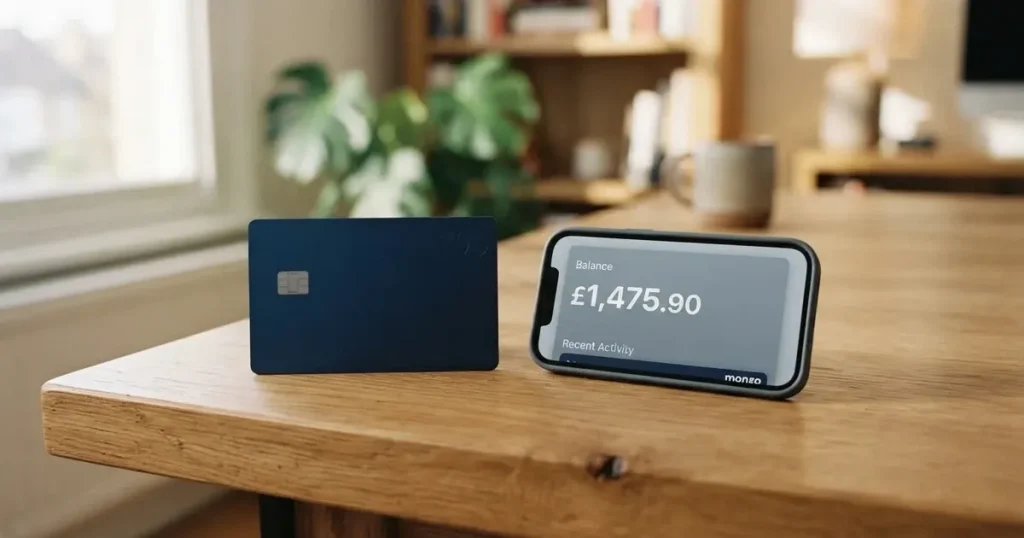
If you have ever tried to open an ordinary bank card and hit a wall — a country the bank will not serve, a document it does not accept, an address it cannot verify — then the pitch of this card is obvious before anyone explains the fees: Stablecard by Western Union gives you a real Visa number, tied to a stablecoin balance instead of a current account. You spend from USDPT, a dollar-pegged token, and the money comes off your balance as the shop rings it up.
That pitch is also the whole story. This is not a bank account with a card attached; it is a card programme where your balance is a token on a blockchain. That single design choice explains almost everything else in this review: why you cannot add money from your usual bank, why the card works instantly but the physical one does not, why the fee schedule is the weakest part of the whole offer, and why “Western Union” in the name means less than you might assume.
I have read the card’s own pages, checked what is stated and what is not, and compared it against three other crypto cards with published numbers. What follows is my honest assessment, including the parts I cannot verify.
The conditions described here are current as of October 28, 2026.
The score: 6.7 out of 10, and who it is actually for
My overall mark for Stablecard by Western Union is 6.7 out of 10. That is a middling score, and I want to be precise about why, because “middling” here is not the same as “bad”. The card is excellent at the narrow job of letting you spend crypto at any shop that takes Visa. It is weak at transparency, at funding flexibility, and at telling you what it will cost you. If your problem is “I need to pay for things and my crypto is the money I have”, the score jumps. If your problem is “I want a cheap, well-understood everyday card”, it drops.
Here is how I broke the score down, criterion by criterion:
| Criterion | Mark | Why |
|---|---|---|
| Who can get it | 6 / 10 | 37 markets at launch, specific country list not published; targets 60+ by end of 2026; “Availability is subject to geographic, regulatory, and eligibility requirements.” |
| Cost | 5 / 10 | “No hidden fees” claimed at account setup, but the physical card is sent “for a fee” and “foreign transaction fees may apply”; actual amounts sit in terms I could not access |
| Top-up options | 4 / 10 | USDPT on Solana only: from another wallet or exchange, or by redirecting Western Union transfers |
| Reliability and complaints | 9 / 10 | Issued by Western Union (NYSE: WU) through Rain (Third National, a Visa Principal Member); USDPT issued by Anchorage Digital Bank; no incidents since launch; App Store 5.0 out of 5 from 10 ratings |
| Everyday use | 10 / 10 | Instant virtual card, physical on request, Visa, Apple Pay and Google Pay, ATM withdrawals |
The pattern in that table is the honest summary of the card. Everything on the *using* side scores well. Everything on the *getting in and paying fees* side scores poorly. That asymmetry is the thing to hold on to as you read the rest.
The audience I would picture for this card, plainly: existing Western Union customers who already receive money transfers and want to spend that money as USDPT with a Visa card rather than collect it in cash. For them the redirection route in the funding section is not a workaround; it is the intended path, and it makes the whole product coherent.
Will they give you the card?
The honest answer is: probably, if you are in one of the markets they have opened, and there is a real chance they will not if you are not — and neither the card nor I can tell you exactly which case you are in.
Stablecard by Western Union was available in 37 markets at launch, and the card’s stated aim is 60 or more markets by the end of 2026. The specific list of those 37 countries is not stated on the public pages. That is not a detail I can fill in for you; it is a genuine gap. The card does publish a blanket condition: “Availability is subject to geographic, regulatory, and eligibility requirements.” In practice that sentence covers three different things at once — where you live, what the regulator in your country permits, and whether you meet the programme’s own eligibility rules — and it is the first thing to check before you plan anything around this card.
If you were hoping for a specific answer about Russian or Belarusian citizens or residents: I found no explicit mention of either in any official source I checked. Western Union does screen against sanctions lists (United States, European Union, United Kingdom), and that screening is a separate matter from market availability. I am not going to tell you how to get around any of it, and you should not want to — the honest path is to see whether your country and your documents are accepted as they stand, and to accept the answer if they are not.
Two practical consequences of the country question. First, because the country list is unpublished, your realistic route is to look inside the app after signing up rather than to read a list beforehand. Second, “the app let me register” does not mean “the card will be issued”: the card’s own terms reserve issuance decisions to geographic, regulatory and eligibility requirements, and rejection reasons are also not stated anywhere I could find.
One more thing worth knowing before you start: this card has no credit check and no minimum balance. There is no credit history being built here, which is good news if you have been turned down elsewhere — and it also means the card will not extend any credit to you.
How to get it
The short answer is that the application is digital, the identity check is mandatory, and you get a virtual card number in your account straight away if you are approved.
Identity verification is required, and the card is unusually explicit about why: it asks for “personal information and documentation as required by applicable laws and regulations, including anti-money laundering, sanctions screening, and customer identity verification requirements.” The verification itself is performed by Rain or its authorised service providers — Rain being the programme manager, not Western Union’s own in-house team.
The steps the card describes are short:
- Download the app
- Complete onboarding and identity verification
- Receive your virtual card instantly, once approved
There is no credit check and no minimum balance along the way. The App Store age rating is 18+, which is in line with prepaid and debit cards generally.
What you get at the end is two things. A virtual card, issued immediately upon approval, and an optional physical card that you request after approval and which is sent for a fee. The network is Visa. The card’s currency is USDPT — a US dollar-pegged stablecoin, not a national currency.
A few things about the verification level, because people often assume crypto cards come in tiers. This one has a single verification level: identity verification is required for all applicants, and no tiered system (basic versus advanced, say) is mentioned anywhere. There is no mention of tiered KYC at all.
On timing: the virtual card is stated as “available immediately” upon approval. How long *approval* takes is not stated. That gap matters if you are hoping to pay for something on a particular day — you could easily find yourself approved in minutes or waiting days, and the card does not promise which.
The physical card is “mailed to the address on file for a fee”, and “delivery time varies by shipping method and destination.” Which countries it ships to is not stated, and the cost of a replacement card is not stated. If you lose the plastic, you are in undocumented territory.
Fees: what it really costs
This is where I have the most to say, and where the card is least forthcoming. Here is what is actually published:
| Fee or limit | What the card says |
|---|---|
| Account setup | “No hidden fees” |
| Credit check | None |
| Minimum balance | None |
| Physical card | Mailed “for a fee” — amount not stated |
| Monthly or annual fee | No amounts published on the site |
| Conversion (crypto to fiat at the point of sale) | Specific fee or spread not stated on the public FAQ or product page |
| Foreign transaction fees | “Foreign transaction fees may apply” |
| ATM withdrawals | “Fees may apply, including charges for card use and ATM withdrawals”; free allowance not stated |
| Spending and transaction limits | “based on program-level risk controls and regulatory requirements”; described in the Terms and Conditions; no amounts published |
| Card currency | USDPT, pegged 1:1 to USD |
| Merchant settlement | “The merchants will be paid through the Visa network in their local currency” |
I want to be direct about the size of that gap. The card’s own documentation says the full fee schedule lives in the Terms and Conditions on the Western Union stablecard website. When I went to that address in October 2026 it was behind a Cloudflare anti-phishing block and I could not open it. I also found no third-party source publishing exact issuance, monthly or annual fees — and I should flag that as an unofficial, unconfirmed finding rather than a fact. So: the amounts simply are not stated anywhere I could reach. That is not me being unhelpful; it is the actual state of the public information.
There is also no tiered structure — no free tier versus paid tier, no monthly plan choices. One product, one set of terms.
Now the part I think matters most in practice, which is the one no table can settle: what a payment actually costs you end to end. Three everyday situations.
A coffee bought with dollars in your own country. In the cleanest case this is your simplest transaction — your balance is already dollar-pegged, and the merchant is paid through Visa in their local currency. The friction you would expect here is the foreign transaction fee, if your card is being used outside its home market, plus whatever spread sits inside the conversion. The card tells you foreign transaction fees may apply. It does not tell you the conversion spread, and that is the number that could quietly eat a small purchase.
An online subscription priced in dollars while your balance is in USDPT. This is the case the card is genuinely built for, and the one where the fee story is most favourable: dollar-denominated, dollar-pegged, no currency mismatch in the middle. The costs that remain are whatever conversion fee applies, and any 3-D Secure verification step.
A cash withdrawal at an ATM. Supported at “any supported ATMs with the Visa logo”, and you can also take cash at Western Union agent locations globally. “Fees may apply.” No free allowance is stated, no withdrawal limit amount is stated, so I cannot tell you what a month of ATM use would cost you — and neither, at this remove, can the published pages.
My practical advice: before you commit, go and open the Terms and Conditions page yourself. That single document is where the real numbers are, and if you cannot open it, that is itself information about how much confidence you can place in a product this new.
How to top up
The funding route is the narrowest part of the whole offer, and it is worth understanding before you get excited about the card.
You fund the card with USDPT, the US Dollar Payment Token. There are exactly two ways to do it.
The first is to transfer USDPT from another digital asset wallet or a compatible crypto exchange wallet. That is the ordinary crypto path: you already hold the token, you send it, the balance arrives.
The second is to redirect incoming Western Union money transfers that were originally sent for cash pickup. Instead of collecting the money in cash, the amount is converted from fiat into USDPT and lands on your card. This is the route that makes the Western Union name meaningful, and it is the one existing transfer customers are most likely to care about.
What you cannot do matters just as much. There is no bank card top-up and no bank transfer top-up mentioned. Fiat enters this product only by being redirected from an existing Western Union transfer. If you are someone who would normally top up a card from a current account, that route simply does not exist here.
A few structural facts to keep in your head. USDPT is issued by Anchorage Digital Bank on the Solana blockchain. That means every top-up is a transfer on one specific network, and network fees — the Solana gas for your own deposit — are not stated. Those are charged by the blockchain rather than by the card, but they come out of your transaction and you should expect them to exist.
There is no minimum balance, and no deposit fee is stated, consistent with the “no hidden fees” claim at setup. No cashback or rewards programme is mentioned for Stablecard in any official source — Western Union has a separate Rewards programme, but it applies to money transfers, not to card spending.
One practical warning that belongs here rather than in the risk section. Blockchain transfers are irreversible, and a deposit sent on the wrong network or to an address belonging to another network can be lost, or need manual support recovery with no guarantee. On a product that has exactly one supported network, that mistake is easier to make than it looks. Check the network before you confirm a transfer.
Paying with it every day
This is the strongest part of the card, and it is where I would put my own money if I were choosing between this and nothing.
The everyday mechanics are simple. Your virtual card arrives immediately, the physical card is available on request, the network is Visa, and you can “Add Stablecard to their digital wallets such as Apple Pay and Google Pay”. Tokenised mobile wallets are genuinely the more secure way to carry a card, since the number is replaced by a device-specific number and each payment uses a one-time dynamic code.
You can spend at any shop that takes Visa, worldwide, plus take cash out at ATMs with the Visa logo and at Western Union agent locations globally. The merchant is always paid through the Visa network in their local currency — you are spending a dollar-pegged balance, but the shop receives what it expects.
The apps: iOS (requires 17.6 or later, iPhone only) and Android. The App Store rating is 5.0 out of 5 from 10 ratings — a perfect score, and a very small sample. Google Play shows no star rating on the listing page but 1K+ downloads. Both read on 2026-10-21. I would not lean on a ten-rating average to tell you anything, but I also note that nothing has gone wrong yet.
One thing to check on your own list: blocked merchant categories are not stated. Crypto cards in this category often carry restrictions on gambling and similar categories, and the specifics vary by issuer rather than by law. If gambling or adult material matters to you, that is a question to ask in support chat before you rely on the card.
If something goes wrong with a payment, support is through in-app chat with your transaction details. “Disputes are handled according to the Visa dispute rules and program policies” — but time frames are not stated.
What can go wrong
Nothing bad has happened to this card yet, and that is genuinely worth something in a category with a poor history. But “no incidents yet” is a statement about a young product, not a guarantee about an old one.
First, the reassuring part. No official incidents — shutdowns, hacks, or programme changes — have been reported since launch on August 4, 2026. There is no dedicated Trustpilot page for Stablecard by Western Union. Western Union’s general Trustpilot rating is 4.5 out of 5 from roughly 173,168 reviews, but that is the money transfer business, not the card, and I would not transfer that confidence across. No recurring complaint themes have been identified, which is at least partly because the product is too new to have a complaint pattern.
Second, the structural risks, which exist whether or not anything has gone wrong:
- The balance is a token, not bank money. USDPT sits on a blockchain. Transfers are irreversible, and stablecoins can lose their peg — TerraUSD collapsed in May 2022, and USDC temporarily lost its peg in March 2023 during the US banking crisis. The name is a promise, not a mechanism.
- Custody and keys. USDPT is deposited into a non-custodial digital asset wallet, which is the better arrangement — the funds are not simply held by the operator. But with a self-custody-linked setup, the loss risk shifts to you: key loss, phishing, and clipboard-hijacking malware that silently swaps a copied address. Nobody can restore a lost seed phrase for you.
- Sanctions and censorship are live. Tether says it disables tokens in wallets on the OFAC sanctions list and has frozen funds tied to illicit activity. Stablecoins are not censorship-proof, and Western Union screens against US, EU and UK sanctions lists.
- Programme closure. Cards in this category do close. In November 2022 Visa said it had “terminated our global agreements with FTX” and the FTX US debit card programme was wound down by its issuer. WaveCrest, a Visa issuer that supplied crypto card brands, was suspended by Visa in Europe in 2018, closing all WaveCrest-issued Visa programmes. Closures typically mean a notice period, then spending and loading stop, then you are asked to withdraw what remains.
- Account closure. On closure, “remaining USDPT balance must be transferred or spent according to the Terms and Conditions” — so your exit is governed by a document I could not open.
- Declines and holds. Some merchants decline prepaid or foreign-issued cards because the issuer lookup reveals the card type and its country. A declined authorisation can also leave a hold on funds for several days, typically up to seven.
- Address verification. Address Verification Service compares the billing address a buyer types against issuer records, and is generally unavailable for foreign-issued cards — which can cause declines. This is a plausible explanation for a card that works at home and not abroad.
On the positive side, the safeguards that are stated: the card can be locked and unlocked in the app, identity verification is required, and data is encrypted in transit. What is not stated: two-factor authentication, spending controls, and safeguarding arrangements. Also unknown is where USDPT sits legally — whether these funds enjoy deposit protection is exactly the kind of question this page cannot answer for you.
Who is behind all of this? The Western Union Company (NYSE: WU), headquartered at 7001 E. Belleview, Denver, CO 80237, USA. The issuer and programme manager is Rain (Nimbus LLC dba Third National), a Visa Principal Member licensed in Puerto Rico, United States. The card network is Visa. USDPT is issued by Anchorage Digital Bank, N.A., a US national trust bank. Money transfer services come from Western Union Financial Services, Inc. (NMLS #906983) and/or Western Union International Services, LLC (NMLS #906985), licensed as Money Transmitters by the New York State Department of Financial Services.
The recent timeline is the strongest argument for optimism. Rain joined Visa’s stablecoin settlement pilot in May 2025 and raised $250M in a Series C in January 2026. Western Union unveiled USDPT in May 2026 — on Solana, issued by Anchorage Digital Bank, designed to align with the GENIUS Act framework. Bybit added USDPT trading and transfers in June 2026. The card launched in 37 markets on August 4, 2026.
And support, when you need it: in-app chat Customer Care, email [email protected], app languages English and Spanish, hours not stated.
What to take instead
I do not want to present this as the only sensible card in the category — it is not. Here is how it compares with three alternatives that publish more of their numbers.
| Stablecard by WU | TokenPocket | MetaMask Card | KAST | |
|---|---|---|---|---|
| Score | 6.7 | 5.8 | 7.1 | 6.1 |
| Network | Visa | Visa / Mastercard | Mastercard | Visa |
| Virtual card | Free, instant | Virtual only | Free, instant | Yes |
| Physical card | For a fee, amount not stated | None mentioned | $199/year (Metal) | Standard free + 40 USD delivery; Premium/Private included |
| Monthly or annual fee | Not stated | None beyond NFT fee | 0 virtual; 199 USD metal | 0 / 1,000 / 10,000 USD by tier |
| Funding | USDPT on Solana, or redirected WU transfers | Crypto from TokenPocket wallet | Direct from connected wallet | USDT, USDC, PYUSD, RLUSD |
| Networks | Solana | Arbitrum | Linea, Base, Monad, Solana | Ethereum, Solana, Polygon, Arbitrum, TRON |
| FX fee | “May apply”, amount not stated | Not stated | None; Mastercard rate | 0.5%–1.75% depending on country and tier |
| Deposit fee | Not stated | 1%, refunded via rewards | None stated | 0% |
| Rewards | None | 1% deposit fee refunded | 1% virtual; 3% headline on Metal capped after 10,000 USD | 1.5% / 2% / 3% USD cashback by tier |
| Sign-up reach | 37 markets, list unpublished | European list, plus APAC and others | 45 listed countries, waitlist elsewhere | Residence list shown at KYC, not published |
TokenPocket scores 5.8. Its Visa debit covers a list of European countries and territories — Germany, France, Spain, Switzerland among them — with Mastercard debit for Australia, Canada, Hong Kong, Japan, Taiwan, New Zealand, Singapore, South Korea and the UK. Cards are virtual only, balances are in EUR24 and USD24. The wrinkle is a 1% fee on depositing cryptocurrency into the card, described as refundable later through rewards or reduced transaction fees.
MetaMask Card scores 7.1, the highest here, and it earns it by publishing. Sign-up is open in 45 listed countries and territories with proof of residency required; other regions join a waitlist; US and UK sign-ups are temporarily closed. The virtual card is free with no annual or maintenance fee; the Metal card is $199/year. There is “no foreign transaction fee” and the Mastercard rate is used, with only a “minimal fee for each transaction” whose amount is on a linked table rather than the pages. Rewards are real: 1% cashback in mUSD on Virtual, 3% headline on Metal with a footnote limiting 3% to the first $10,000 spent and 1% after, plus a $FLY bonus of 5X or 7X via the Blackbird dining app. It runs Mastercard, on Linea, Base, Monad and Solana.
KAST scores 6.1 and is the most transparent on fees of anything here. Stablecoin top-up 0%, card spend in USD 0%, transaction fee 0%, Apple and Google Pay 0%. The non-USD FX fee is 0.5%–1.75% depending on your residence country, the transaction country and the card programme; non-USD transactions under 25 USD cost 0.10 USD; a declined transaction for insufficient balance costs 0.50 USD. Rewards are USD cashback of 1.5% on the first 2,000 USD per month (Standard), 2% on the first 10,000 (Premium), or 3% on the first 40,000 (Private), plus KAST Points on the two upper tiers. The catch is membership: Standard 0 USD, Premium 1,000 USD/year, Private 10,000 USD/year, billed annually upfront with no monthly option, plus 1 USD per month inactivity after 12 months.
My read on the comparison: if your priority is *knowing what things cost*, KAST publishes numbers and Stablecard does not. If your priority is *not paying anything to hold a card*, MetaMask’s free virtual card is the clearest. If your priority is *Western Union transfers you already receive*, Stablecard is the only one of these four that turns them into spendable balance. And the honest observation across all of them: this category’s fee transparency is improving faster than its safety record, and Stablecard is on the leading edge of that improvement in one direction and trailing it in the other.
Who I would recommend it to
I would recommend this card to three kinds of person, and be cautious about it for everyone else.
Recommend it if you already receive Western Union money transfers and want to spend them as USDPT rather than collect cash. That is the design centre of the product and the one path it does cleanly.
Recommend it if you hold USDPT on Solana already, in a wallet or on an exchange, and want a Visa number that spends it anywhere Visa is accepted — including Apple Pay and Google Pay, which make it practical day to day.
Recommend it if ordinary bank cards have been closed to you — because of where you live, what documents you hold, or a banking history you do not have — and this is one of the few routes left that does not require a credit check and carries no minimum balance.
Be cautious if you need to move money in from a bank account. You cannot. The only fiat entry is a redirected Western Union transfer.
Be cautious if you are planning to spend heavily on non-dollar currencies or to use ATMs often. Foreign transaction fees “may apply”, ATM fees “may apply”, and neither amount is stated.
Be cautious if you are the kind of person who needs to read the price before you commit. On this card, the price is in a document you may not be able to open.
Skip it if you want cashback or rewards. None is mentioned for Stablecard in any official source.
The programme behind it is solid, the network is Visa, the issuing bank is a real one, and the engineers have been at work: a stablecoin pilot with Visa, a $250M Series C, a listing on a major exchange. I rate everyday use at 10 out of 10 because, as a way of spending a dollar-pegged balance at any shop in the world, it does the job cleanly. I rate cost at 5 out of 10 because I could not find a single actual fee amount in public, and a payment product that will not tell you its price is asking for trust it has not yet earned.
I would wait for the Terms and Conditions page to be reachable, and for the fee schedule to be in plain sight, before moving anything you would miss.
Frequently asked questions
What is the Stablecard by Western Union card?
It is a Visa payment card that spends a USDPT balance instead of a bank current account. USDPT is a US dollar-pegged stablecoin issued by Anchorage Digital Bank on the Solana blockchain. You get a virtual card instantly on approval and can request a physical card for a fee. Western Union markets it; Rain (Third National) issues it under a Visa Principal Member licence.
How does the Stablecard by Western Union card work?
You load USDPT onto the card, then spend it like any Visa. The merchant is paid through the Visa network in their local currency, which means conversion happens somewhere between your dollar-pegged balance and the shop’s currency. The card states that foreign transaction fees may apply, but the conversion spread itself is not stated on the public pages. The full fee schedule sits in the Terms and Conditions.
Is Stablecard by Western Union a bank?
No. The brand belongs to The Western Union Company, but the card issuer and programme manager is Rain (Nimbus LLC dba Third National), a Visa Principal Member licensed in Puerto Rico, and USDPT is issued by Anchorage Digital Bank, N.A. So your balance is a token on a blockchain, not a bank deposit, and you should not assume deposit-guarantee protection applies to it.
Who owns Stablecard by Western Union?
The Western Union Company, listed on the New York Stock Exchange as WU, headquartered at 7001 E. Belleview, Denver, CO 80237, USA. The card programme itself is run by Rain, with money transfer services provided by Western Union Financial Services, Inc. (NMLS #906983) and Western Union International Services, LLC (NMLS #906985).
Is the card available in my country?
It launched in 37 markets and the company targets 60 or more by the end of 2026, but the specific country list is not published. Availability is “subject to geographic, regulatory, and eligibility requirements”, so the reliable test is whether the app accepts you. I found no explicit mention of Russian or Belarusian citizens or residents in any official source checked.
Does it require identity verification, and is there a credit check?
Identity verification is required for all applicants, covering personal information and documentation for anti-money laundering, sanctions screening and customer verification purposes, performed by Rain or its providers. There is a single verification level, not a tiered one, and the App Store age rating is 18+. There is no credit check and no minimum balance, which is the main reason this card is often discussed as an alternative.
How do I top it up?
Two ways only, both in USDPT. You can transfer USDPT from another digital asset wallet or a compatible crypto exchange wallet, or you can redirect an incoming Western Union money transfer originally sent for cash pickup, which converts from fiat into USDPT. There is no bank card top-up and no bank transfer top-up. Solana network fees apply to the transfer and are charged by the blockchain, not the card.
What does it cost to use?
The card claims “no hidden fees” at account setup, with no monthly or annual fee amounts published on the site. The physical card is sent “for a fee” and foreign transaction fees may apply. ATM withdrawals may carry fees with no free allowance stated. I found no third-party source publishing exact amounts — and the Terms and Conditions page that holds the schedule was behind a Cloudflare block in October 2026, so open it yourself before committing money.
Is it safe, and can I trust it?
There is no reason to doubt the institutions: a New York Stock Exchange-listed parent, a Visa Principal Member issuer, and a US national trust bank behind the token. No official incidents have been reported since the August 4, 2026 launch, and the app scores 5.0 out of 5 on the App Store, though from only 10 ratings. The balance remains a token, transfers are irreversible, and stablecoins have depegged before.
Can I add it to Apple Wallet or Google Pay?
Yes. The card states you can “Add Stablecard to their digital wallets such as Apple Pay and Google Pay”, and both are rated 0% cost at the network level in this category. Tokenised mobile wallets are the safer way to carry any card, since the number is replaced by a device-specific one and each payment uses a single-use code. You can also lock and unlock the card in the app between uses.
Top wallet cards by score – cryptocardtop
Content created by the «cryptocardtop» team