
Walme is a cheap-to-start crypto card that still has too many missing pieces to call it finished
 Available in US
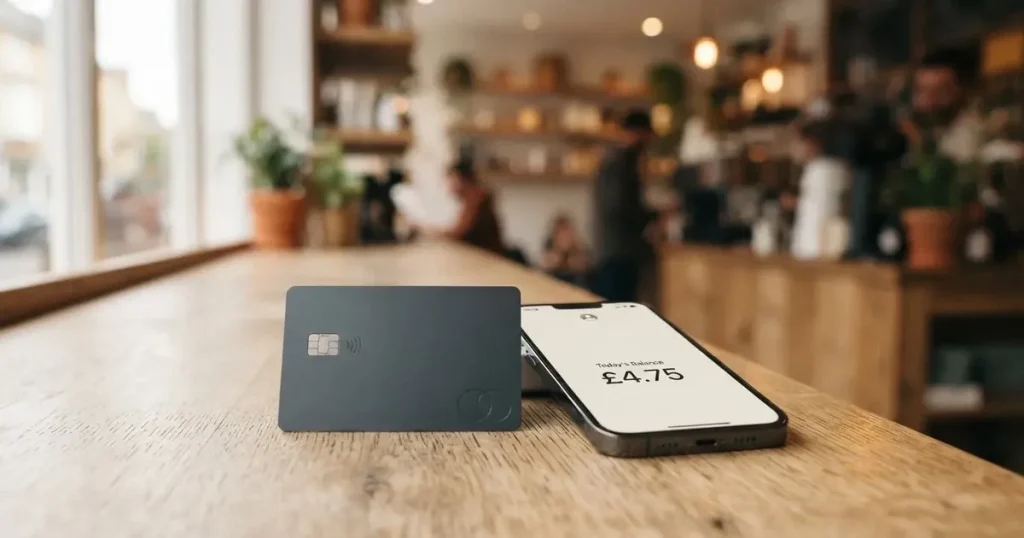
The Walme card is a virtual payment card you load with stablecoins and spend like any other Mastercard: a crypto balance converts to fiat at the till, and the merchant sees nothing unusual. The idea is sound, and the stablecoin top-up options are broader than what most competitors offer, covering TRC-20, ERC-20 and Solana. The problem is everything that sits around that core idea. Walme is a new product with very little public information: no legal entity named, no issuer named, no ATM fee disclosed, no plastic card available, and no app you can actually download. So while the fee schedule on paper is straightforward, the practical unknowns are large enough that you should only commit a small test amount first.
The conditions described in this review are current as of October 28, 2026.
Verdict
Walme earns 5.8 out of 10 in my scoring. That is an average score that does not mean “average card” — it means the good parts and the missing parts cancel out.
The strongest score is on top-up options (9/10), because USDT and USDC on TRC-20, ERC-20 and Solana is a real breadth of stablecoin rails, and the WLM token is accepted for top-ups too. Who can get the card also rates reasonably (7/10), because the only official statement is that “card availability may vary by region” — there is no closed country list in the terms, which is a more open posture than some competitors. Everyday use rates 6/10: the virtual card is valid for two years, and both Apple Pay and Google Pay are supported, but there is no physical card, no ATM disclosure, and the Google Play listing is still “Coming Soon.”
The two weak scores tell the real story. Cost comes in at 3/10, not because any single fee is extreme but because the cumulative structure — a $10 issuance fee, a 3% top-up fee, $0.25 per transaction, 0.4% per successful payment, and a $0.25 cancellation fee — adds up to noticeably more than what most crypto cards charge. Reliability and complaints sit at 5/10, which reflects that I could find no Trustpilot page, no Reddit threads and no third-party reviews for the card, and the card was only unveiled in November 2025. There is simply not enough track record to be confident either way.
| Criterion | Score | Why it lands there |
|---|---|---|
| Who can get it | 7/10 | Availability is region-dependent but not closed by a published list; unofficial sources flag blocks on several countries |
| Cost | 3/10 | $10 issuance, 3% top-up, $0.25 per transaction, 0.4% per successful payment, $0.25 cancellation, $30 minimum top-up |
| Top-up options | 9/10 | USDT and USDC across TRC-20, ERC-20 and Solana; WLM token also accepted |
| Reliability and complaints | 5/10 | No legal entity or issuer named; no reviews or complaints found; card launched November 2025 |
| Everyday use | 6/10 | Virtual card only, 2-year validity, Apple Pay and Google Pay supported, no app available yet |
| Total | 5.8/10 | A new product with strong top-up breadth undermined by cost stacking and a thin public record |
Who this card suits: someone who already holds USDT or USDC across multiple networks and wants a low-friction way to convert and spend them, particularly if the WLM token fee discount applies. It also suits a reader who has been excluded from other crypto cards and is testing whether Walme is reachable from their region.
Who it does not suit: anyone who needs a physical card, anyone who needs ATM access disclosed upfront, anyone who wants a well-known issuer behind the programme, and anyone whose monthly spend is large enough that a 3% top-up fee plus 0.4% per transaction will hurt.
Who they will give the card to
The official line from Walme is brief: “card availability may vary by region.” That is the entire eligibility statement, and it is not a published country list you can check yourself. What it means in practice is that the card is sold without a hard geographic wall, but the issuer (whoever that turns out to be) reserves the right to refuse service based on where you are.
Unofficial information, drawn from a Walme team reply on Product Hunt, is more specific. It lists countries where merchant transactions are blocked for regulatory reasons, and that list includes Belarus, Iran, Russia, Ukraine and Venezuela. Because this comes from a third-party source rather than Walme’s own terms, I cannot confirm it as official policy, but it is the most concrete guidance you will find on who is excluded.
The card itself is virtual and requires no identity documents at signup, according to the official pages. There is no published tier structure and no stated KYC level — that information is simply not disclosed. For a card sold as a virtual product, this is consistent with the low-friction positioning, but it also means you do not know in advance what limits or controls will appear later.
If you are reading this from one of the countries mentioned above, treat the unofficial block list as a working assumption rather than a guarantee. If you are elsewhere, the more relevant question is whether the card’s underlying issuer or payment partner will accept your residency once you actually try to load funds and spend.
How to get it
The signup path, as described by Walme, is short. You sign up for the virtual card, no documents are required, and the card is issued. That is the entire process according to the official pages. There is no plastic card, no delivery step, and no stated activation procedure beyond what happens inside the web app at app.walme.io.
The card is virtual only and is valid for two years from issuance. Unofficial sources, specifically stablecoininsider.org writing in November 2025, describe it as a virtual Mastercard. Walme’s own pages do not name the card network, which is a notable gap in a review — knowing the network (Visa or Mastercard) matters because it affects where the card is accepted, how chargebacks work, and what 3-D Secure flow you will see online.
There is no stated delivery time, because nothing is delivered. There is no stated KYC level, no stated age requirement, and no onboarding checklist published. In practice, the closest parallel is a prepaid virtual card you would add to a mobile wallet and start using within minutes of issuance. The Google Play listing for the app is still marked “Coming Soon,” so for now the web app is the only interface.
What it really costs
Walme’s fee schedule is published and easy to read, and the costs table below summarises every figure the official pages provide. The costs section heading must contain “Fees,” and that word appears here.
| Fee or limit | Amount |
|---|---|
| Card issuance | $10 |
| Top-up fee | 3% |
| Per-transaction fee | $0.25 |
| Cancellation fee | $0.25 |
| Successful-transaction fee | 0.4% |
| Minimum top-up | $30 |
| Per-transaction spending limit | $10,000 |
| Daily spending limit | $500,000 |
| Monthly spending limit | No stated limit |
| ATM fee | Not stated |
| Currency conversion / FX fee | Not stated |
| Tier-based pricing | Not stated |
| WLM token holder discount | “Reduced fees” (exact discount not published) |
A few everyday examples will show you how the stacking works in practice. Imagine you top up $100 once and then make four $25 purchases over the month:
- Top-up: 3% of $100 = $3.00, deducted from the top-up.
- First purchase: $0.25 + 0.4% of $25 = $0.25 + $0.10 = $0.35.
- Second purchase: $0.25 + $0.10 = $0.35.
- Third purchase: $0.25 + $0.10 = $0.35.
- Fourth purchase: $0.25 + $0.10 = $0.35.
Because fees stack, the cost of using the card is not a single rate. Every top-up incurs a 3% fee, and every purchase incurs both a flat $0.25 fee and a 0.4% transaction fee. This structure means the effective cost of using the card is higher for smaller top-ups and more frequent, smaller purchases, as the fixed $0.25 fees and the 3% top-up fee are amortised over a smaller amount of spending.
For larger balances, the percentage-based fees are the primary driver of cost. The 3% top-up fee applies regardless of the amount you load, and the 0.4% transaction fee scales with your spending. While the $0.25 flat fee becomes less significant for larger purchases, the 3% top-up fee remains a constant cost. To minimise fees, you should batch your spending and limit the number of top-ups you make.
Two things are conspicuous by their absence. The ATM fee is not stated, so any cash withdrawal is a gamble until the app or terms clarify the cost. The FX / currency conversion fee is also not stated, which matters if you are paying in a currency different from the card’s base, or if the card’s base currency itself is not stated (the official pages do not say). Without those two figures, a meaningful cost comparison against other cards is impossible.
The WLM token discount deserves a separate note because it is the only published lever that lowers the fee. Walme says token holders get “reduced fees,” but does not publish the exact discount. If you already hold WLM, this could be material; if you would have to buy WLM to qualify, you are adding a new token position to your wallet, with all the custody and liquidity risk that brings.
How to top it up
The top-up heading must contain “Top up,” and that phrase appears in this heading.
Walme’s model is what the industry calls “convert at purchase”: you send stablecoins to a Walme address, Walme converts them to fiat at the prevailing rate, and the resulting balance is what the card spends. The card never holds your crypto directly, and the balance cannot go below zero because the card is effectively a prepaid instrument.
Three stablecoin-and-network combinations are officially supported:
- USDT on TRC-20 (Tron) — usually the cheapest network for USDT transfers.
- USDT on ERC-20 (Ethereum) — more expensive in gas, but the most universally accepted.
- USDC on TRC-20, ERC-20 and SOL — the official pages list USDC across the same three networks, which gives you flexibility if you hold USDC rather than USDT.
Unofficial coverage, from the same November 2025 stablecoininsider.org article, narrows the picture slightly: it says USDT is supported via TRC-20 or ERC-20. Either way, you have at least two networks for USDT and three for USDC, which is broader than most crypto cards, which often support only one or two.
The WLM token is also accepted for top-ups. Because the fee discount for WLM holders is not published, the practical reason to top up in WLM is the discount itself, not the token’s independent value.
The minimum top-up is $30, and every top-up carries a 3% fee. Because of the minimum top-up requirement and the percentage-based top-up fee, smaller top-ups are disproportionately expensive. If you only need a small amount for a purchase, you are still required to load at least $30 and pay the 3% fee on that entire amount.
A few practical warnings that apply broadly to stablecoin top-ups and are worth keeping in mind for Walme specifically:
- Network selection is irreversible. Sending USDT on ERC-20 to a TRC-20 address, or USDC to a Solana address, can permanently lose the funds. Always double-check the network before signing the transaction.
- Gas and bandwidth fees are separate. On Ethereum you need ETH to pay gas; on Tron the network uses bandwidth and energy resources. If your wallet has only USDT and no native gas token, the transaction will fail.
- Withdrawals are not stated. The official pages do not describe how to move money back off the card. Treat the card as one-way: funds go in via stablecoin, funds come out via purchases.
Paying with it every day
The card lives inside the web app at app.walme.io. You can add it to Apple Pay or Google Pay, and once it is tokenised in your phone’s wallet, you can tap to pay at any contactless terminal that accepts the underlying network. Unofficial sources confirm Apple Pay and Google Pay support.
The Google Play listing is still “Coming Soon,” which means there is no native Android app to download yet. If you are on Android, the web app on mobile is your only option. There is no published app rating and no published reviews of the app, simply because the app is not generally available.
There is no physical card. That single fact disqualifies Walme for a few common use cases: online subscriptions that want a physical address on file, in-person card readers at restaurants that still require a swipe, and any situation where the merchant’s terminal does not accept mobile wallets. Most modern terminals do, so this is a smaller limitation than it used to be, but it is worth knowing.
There is no stated rewards or cashback programme. If you spend $1,000 on the card you do not earn anything back in WLM, USDT or fiat, beyond whatever the WLM token discount on fees happens to be. For a card whose competitors often advertise 1–2% cashback, the absence of rewards is a real cost.
There is no published information about how disputes are handled, what merchant category codes are blocked, whether gambling transactions work, or what the 3-D Secure flow looks like for online purchases. In the absence of published information, assume the defaults: standard network 3-D Secure will likely trigger on unfamiliar merchants, and any unusual MCC (gambling, crypto purchases, adult content) may be blocked by the issuer’s policy.
What can go wrong
The risks section is where this card is hardest to assess, because the biggest risk is what is not said.
Unknown issuer and legal entity. Walme’s official pages do not name the company behind the card, the legal entity, or the licensed issuer. That is a meaningful gap. A crypto card typically relies on a licensed e-money institution or bank to issue the card, and a separate crypto-asset service provider to handle the conversion. Without knowing which regulated entity holds your balance, you cannot check whether your funds are safeguarded under e-money rules, whether the entity is authorised under MiCA, or whether the issuer is subject to the kind of banking supervision that gives you a route to complaint if things go wrong.
No track record. The card was unveiled in November 2025, with early activations at Web Summit Lisbon. I searched Trustpilot, Reddit and general web sources for “Walme card reviews” in October 2026 and found no reviews, no complaint threads, and no Trustpilot page. That is not proof of anything bad, but it does mean there is no public track record to lean on. You are, in effect, an early user.
Conflicting custodial claims. Unofficial sources disagree on the custody model. A November 2025 article describes Walme as non-custodial with 2FA and fraud monitoring, while the Walme GitHub page describes custodial wallets with KYC for cards. These two cannot both be true, and the official marketing pages do not clarify which is correct. For practical purposes, the card is prepaid and your balance is held by the issuer, which is at least partially custodial. If you were drawn in by “non-custodial,” adjust your expectations.
ATM and FX fees are not disclosed. If you try to withdraw cash from an ATM, the fee will appear on the receipt but not in the published schedule. If you pay in a currency different from the card’s base, the conversion fee will be deducted but not declared in advance. These are everyday use cases with undisclosed costs.
No published security details. The official pages do not describe 2FA, fraud monitoring, card freeze, or other standard safeguards. Unofficial sources mention 2FA and fraud monitoring, but I cannot confirm that those features are live in the product.
Support channels are limited. A Help Center and Contact page exist, but the available channels, hours, and supported languages are not stated. If something goes wrong, you do not know in advance how reachable the support team is.
Stablecoin depeg risk. Walme’s value proposition depends on USDT and USDC holding their peg. Both have historical depegs: TerraUSD in May 2022, USDC in March 2023 during the US banking crisis. If you top up in USDC and the stablecoin drops while your funds are in transit or sitting in the card balance, you bear the loss.
Sanctions and frozen funds. Stablecoins are not censorship-proof. Tether has stated it disables tokens in wallets on the OFAC sanctions list and has frozen funds tied to illicit activity. If the address you send from is flagged, the top-up may not arrive, and recovering it will be difficult.
What to take instead
If Walme does not fit, three alternatives are worth considering. They are not ranked against Walme in a head-to-head; the scores below are independent ratings from my reviews of each card.
CardFlow (4.9/10). Aimed at Nigeria and “Nigerians and global users.” The virtual USD Mastercard is created quickly, and creating a virtual card is free. Monthly fees are not stated. Funding options include Bitcoin, USDT, ETH or Naira bank transfer; the specific networks for the crypto options are not stated. Rewards are not stated. CardFlow suits someone whose primary need is a free virtual card in Naira or USD, and who is happy to accept that the fee schedule beyond issuance is not published.
HyperCard (4.7/10). The official pages do not list supported countries; the App Store says the card works in “more than 176 countries,” but that is acceptance, not eligibility. The card is prepaid, balance in USD or EUR, and the network is not stated. Fees are not stated on the pages I could read, and the App Store listing shows no fees. Funding is by depositing crypto such as USDT, BTC or ETH in the app, converted to USD or EUR on the card. Rewards are not stated. HyperCard suits someone who wants a no-fee-disclosed card and is comfortable with the gap.
Card.fi (6.6/10). This is the strongest alternative in the set. Cards ship to 200+ countries, with a sanctions clause barring service to “a country subject to sanctions that would prohibit the service.” The product line includes Virtual Classic ($49 one-time), Virtual Premium ($249 one-time), physical and metal versions; every physical order includes a virtual card; the network is issued “under licence from the relevant card schemes” (Visa/Mastercard not named on the page I read). Top-up fees are 1.5% + $1.00 (Classic) or 1% (Premium); FX fees are 3.5% (Classic) or 2.5% (Premium). Thirty-two coins across five networks (Ethereum, Base, BNB Chain, Solana, Kaanch) are supported, with a dedicated deposit address per card and conversion at market rate on arrival. Cashback is paid on card spending only: 0.8% Classic (capped at 10 USDT/month), 1% Premium, 1.2% Metal (capped at 100 USDT/month and 5,000 USDT) or 2% (capped at 250 USDT/month and 20,000 USDT); 10% cashback is advertised at coffee shops, capped at 10 USDT/month; Metal balances can earn “up to 18%,” variable. Card.fi suits someone who wants published fees, published cashback, physical or metal options, and broader coin support than Walme offers.
A side-by-side of the four on the published dimensions:
| Card | Score | Top-up coins / networks | Card form | Published issuance fee | Published per-transaction fee |
|---|---|---|---|---|---|
| Walme | 5.8 | USDT, USDC, WLM on TRC-20, ERC-20, SOL | Virtual only | $10 | 0.4% + $0.25 |
| CardFlow | 4.9 | BTC, USDT, ETH, Naira (networks not stated) | Virtual USD Mastercard | Free (virtual) | Not stated |
| HyperCard | 4.7 | USDT, BTC, ETH (networks not stated) | Prepaid virtual | Not stated | Not stated |
| Card.fi | 6.6 | 32 coins on 5 networks | Virtual, physical, metal | $49 (Virtual Classic) | Cashback on spending |
Who I would recommend it to
If you have read this far, you already know my recommendation. I would recommend Walme to a narrow reader: someone who already holds USDT or USDC across multiple networks, who values the breadth of TRC-20, ERC-20 and Solana support more than they value the lowest per-transaction fee, and who is willing to commit a small test amount (the $30 minimum, plus 3% top-up, plus a couple of small purchases) to see how the card behaves in their region before deciding whether to scale up. The WLM token discount, if it turns out to be meaningful in practice, tilts the calculation further toward Walme for readers who already hold or want to hold WLM.
I would not recommend Walme to a reader who needs a physical card, who needs cash access, who needs an established issuer with a public track record, or who plans to spend more than a few hundred dollars a month (because the 3% top-up fee compounds). I would also not recommend it as a primary card for someone whose country is on the unofficial block list — Belarus, Iran, Russia, Ukraine or Venezuela — because the working assumption should be that transactions will not work.
For everyone in between, the honest answer is: this is a new product with strong bones and a thin public record, and the right approach is to test it carefully before trusting it with serious money.
Frequently asked questions
What is the Walme card?
The Walme card is a virtual payment card you load with stablecoins and spend at merchants. Crypto is converted to fiat at the point of top-up, and the card balance is what you spend. It was unveiled in November 2025, is virtual only, and is valid for two years from issuance.
How does the Walme card work?
You sign up, receive a virtual card, and top it up with stablecoins (USDT or USDC) on one of the supported networks. Walme converts the stablecoins to fiat at the prevailing rate and credits your card balance. When you pay, the merchant sees a normal card payment, not a crypto transaction. The card works with Apple Pay and Google Pay.
Is Walme a bank?
No. Walme is a card programme; the official pages do not name a bank or e-money institution as the issuer, and they do not name a legal entity. In practice, a licensed issuer sits behind the card, but Walme has not disclosed which one. That is a gap if you need a regulated counterparty for complaints or safeguarding.
Who owns Walme?
The official pages do not name the company behind Walme, the legal entity, or the issuer. There is no “About” page that names founders, a parent company, or a registered address. This is unusual for a card product and is one of the main reasons the reliability score is not higher.
Is the Walme card available in my country?
The official line is that “card availability may vary by region,” and no country list is published. Unofficial sources (a Walme team reply on Product Hunt) flag Belarus, Iran, Russia, Ukraine and Venezuela as countries where merchant transactions are blocked. If you are elsewhere, you will not know for certain until you try to load funds and make a purchase.
Does the Walme card require KYC?
The official pages describe the card as virtual and requiring no documents at signup. There is no published KYC level or tier structure. That means low-friction onboarding at the start, but it also means controls or limits could appear later without warning if the underlying issuer applies them.
How do I top up the Walme card?
You send USDT or USDC to a Walme deposit address on TRC-20 (Tron), ERC-20 (Ethereum) or Solana. The minimum top-up is $30, and every top-up carries a 3% fee. The WLM token is also accepted for top-ups. Always double-check the network before sending, because sending on the wrong network can permanently lose the funds.
How do I add the Walme card to Apple Wallet?
After the card is issued in the web app, you add it to Apple Pay or Google Pay through the standard tokenisation flow. The unofficial coverage confirms both mobile wallets are supported. Note that the Google Play listing for the app is still “Coming Soon,” so on Android the web app is your only interface for now.
Is the Walme card safe?
Safety has two sides. On the technical side, unofficial sources mention 2FA and fraud monitoring, but the official pages do not describe any security features. On the institutional side, the issuer and legal entity are not named, which means you cannot check regulatory standing or safeguarding. Treat the card as a low-friction option for small balances, not as a primary store of funds.
Is the Walme card worth it?
For a narrow reader — someone who already holds USDT or USDC across multiple networks and wants a prepaid virtual card with broad top-up support — the answer is yes, with a small test amount first. For a reader who needs a physical card, ATM access, published FX fees, or a named issuer, the answer is no; one of the alternatives in this review will serve you better.
Top virtual cards by score – cryptocardtop
Content created by the «cryptocardtop» team