
A prepaid crypto card with sensible fees, an unnamed issuer, and a physical card that is not here yet
 Available in US
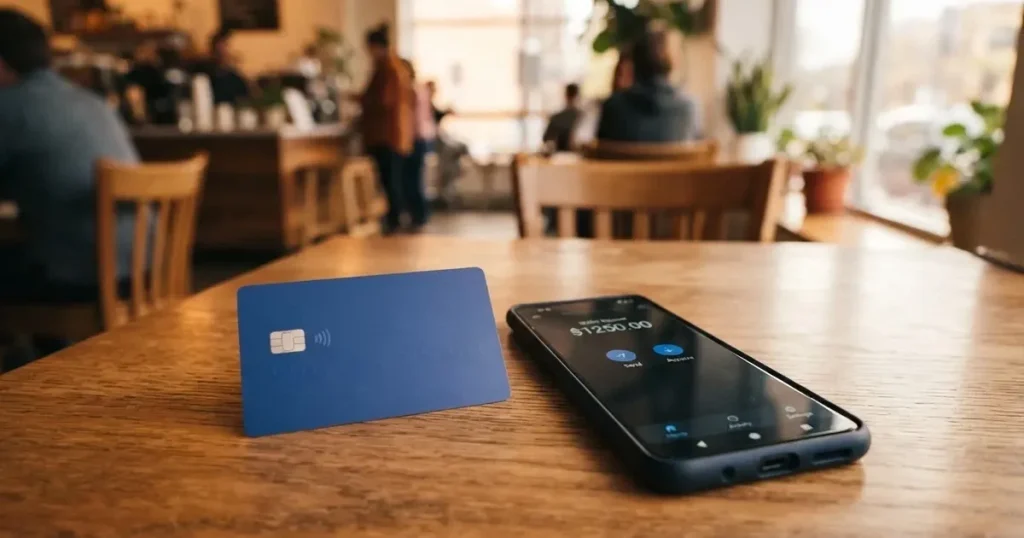
If you have been trying to open an ordinary bank card and the bank says no — wrong country, wrong paperwork, wrong address — then a card like YPT is aimed squarely at you. The pitch is simple: send crypto to the app, spend it like a normal card wherever cards are accepted. That pitch is real and the card does what it says on that level. But YPT is a young, thinly documented product with an unnamed issuing bank, a physical card that is still marked “coming soon”, and a help centre that leaves several of the most practical questions unanswered. My score is 7.4 out of 10. In plain terms: it is a reasonable, low-cost prepaid card for spending BTC, ETH and stablecoins, and a poor fit for anyone who needs a physical card today, a bank account relationship, or clear answers about who is actually behind the money.
The conditions described here are current as of October 28, 2026.
The verdict
7.4 / 10. YPT is a virtual, prepaid crypto card that converts USDT, USDC, BTC and ETH into a spendable balance and pays with it through Apple Pay, Google Pay and “multiple payment platforms”. There is no annual fee disclosed, no monthly fee disclosed, and a transparent percentage for spending — 1% if you pay in the card’s default currency, 2.2% if you don’t. What holds it back from a higher score is not the pricing but the paperwork: the card’s public pages do not name the bank that issues it, do not state the price of the physical card, do not list which networks you can send on, and do not tell you what happens to your money if the company stops operating.
So who does it suit? Someone who already holds crypto or stablecoins, wants to turn it into everyday spending without a bank, and is comfortable with a virtual card only. Someone travelling, working remotely, or living somewhere a traditional account is awkward. Someone who does not mind reading the fee table before each payment.
Who does it not suit? Anyone who needs a physical card in their hand this month. Anyone whose employment, visa or benefits require a bank account in their own name. Anyone nervous about custodial arrangements — and that is most people who ask the question “is this safe?” first. Anyone spending in a currency other than the dollar without reading the 2.2% line first. And anyone who plans to save or hold a balance for months, because the card is a spending tool, not a savings account.
Here is the score, criterion by criterion:
| Criterion | Mark | Why |
|---|---|---|
| Who can get it | 9 / 10 | Only five places are excluded as a mailing address (Egypt, Tunisia, Palestine, Puerto Rico, Tanzania); a billing address is supported |
| Cost | 7 / 10 | 1% in USD, 2.2% in another currency; $0.20 for a small authorisation, $0.5 for a declined one; the issuance price is not disclosed |
| Top-up options | 7 / 10 | USDT, USDC, BTC and ETH, converted when you pay; networks not stated; deposits above 1U only |
| Reliability and complaints | 7 / 10 | YPT.COM Company and RedotPay launched it; assets sit with a licensed trust company insured for $50 million; the issuer is unnamed; no complaints found |
| Everyday use | 6 / 10 | Virtual card with Apple Pay and Google Pay; the physical card and its ATM are marked “IT WILL BE PUT INTO USE SOON” |
Total: 7.4 / 10
That “who can get it” mark deserves a word of caution. A 9 sounds near-perfect, but it is a mark for *breadth of eligibility*, not for how easy the process is. Wide eligibility is exactly what you want if a bank has turned you down, and exactly what you should be careful about if the card’s own compliance is young. The knowledge base lists the countries it will not ship to and says little about who passes or fails the identity checks, because identity checks are handled by a third party and the criteria are not published.
Who will they give you the card
The card’s help centre names the places it will not accept as a mailing address: Egypt, Tunisia, Palestine, Puerto Rico and Tanzania. It adds one useful clarification — a billing address is supported, so living in one of these five is not automatically disqualifying if your postal address is elsewhere. That is the whole country list on the public pages. There is no stated list of eligible countries, no list of excluded citizenships, and no nationality rule stated anywhere.
So the honest answer to “is YPT card available in my country” is: in most countries the card itself is not the obstacle. The obstacles that do exist are on the identity side, described next, and they are the same kinds of obstacles every regulated card faces.
Two further things the public pages do not state, which you will look for and not find: whether there are tiered account levels with different limits, and what happens to your balance if you close your account.
How to get it
Getting the card means going through an identity check, and the check is done by Sumsub, a third-party eKYC provider. YPT asks for your full legal name, your date of birth, and an identity card, passport or driver’s licence. The page also warns that more information may be requested — which in practice means a selfie, a proof of address, or a re-submission if the first attempt does not read cleanly.
Third-party descriptions of YPT, published around May 2025, also say identity verification is required for compliance. That is consistent with what YPT itself documents, but it comes from an outside source rather than the card’s own pages.
Once you pass, the card you get is virtual. It is described in the product pages; a physical card is named in the site navigation without any detail — no price, no delivery time, no countries. The card’s network is not stated: the pages do not say Visa or Mastercard. Neither is the card’s currency stated as a single choice, though the default settlement currency for fees is USD. The physical card carries the label “IT WILL BE PUT INTO USE SOON”.
Two practical notes. First, because no card network is named, you cannot currently verify which network your virtual card runs on before you rely on it — the fee language (1% versus 2.2%) suggests a card that settles in USD on a global network, but that is an inference, not a statement. Second, the knowledge base does not state delivery times or shipping cost for anything physical, because there is nothing confirmed to ship.
If you are asking “how do I activate it”, the public documentation does not spell out an activation step beyond completing the identity check and receiving the card details; treat the in-app flow itself as the authority.
What it really costs: the Fees
The pricing is the strongest part of this card, and it is also where the fine print does the work. The card’s public pages do not state an issuance price, a monthly fee, or any subscription. Those are not stated. What *is* stated is the per-transaction schedule:
| Fee or limit | Value |
|---|---|
| Transaction in the card’s default currency (USD) | 1% |
| Transaction in a non-default currency | 2.2% |
| Small-amount authorisation fee | $0.20 per transaction, for amounts between $0 and $1 (first 5 per card per month waived) |
| Declined transaction fee | $0.5 (first 3 per card per month waived) |
| ATM withdrawal | Fee not stated; the ATM feature is listed but marked “It will be put into use soon” |
| Per-transaction limit (USD card) | $100,000 |
| Daily limit (USD card) | Unlimited |
Two or three everyday payments show what this means in practice.
A grocery shop paid in dollars. The default currency is USD, so the fee is the 1% tier: 1% of the purchase. This is the cheapest way to use the card, and if you are in the US or spending with a US merchant, this is the path.
A €25 pharmacy paid in euros. The currency is not the default, so the 2.2% tier applies: about €0.55. Not ruinous, but it is more than double the dollar rate, and it applies to *every* non-dollar payment. If you live outside the US or travel outside it, this 2.2% is your normal rate, not an edge case. The card does not state any FX markup beyond this percentage; the “2.2%” is the stated charge for a non-default-currency transaction and is the number to plan around.
A $0.60 coffee tap. This falls between $0 and $1, so it attracts the $0.20 small-amount authorisation fee — a third of the purchase price. The good news is the first five such authorisations per card per month are waived, so light micro-spending is cushioned. But the fee is charged per transaction in that band, not per day, and a bad month of retries at a terminal could use that allowance quickly.
A declined transaction costs $0.5, with the first three per card per month waived. Declines are more common on cards like this than people expect — foreign-issued cards can be declined by merchants who check the card’s origin — so that $0.5 is worth knowing about before you tap a card that refuses.
One more limit worth noting: an outside description says spending limits can be customised, but gives no amounts; the card’s own pages state only the $100,000 per-transaction and unlimited daily ceiling on the USD card.
How to Top up the card
The card is funded with USDT, USDC, BTC and ETH, converted to fiat for spending. The conversion happens at the moment of payment, so you are not permanently locked into holding a crypto balance after you load — the card spends the converted value. What the page does not state is which blockchain networks each coin can be sent on, and that is the single most consequential gap on this card.
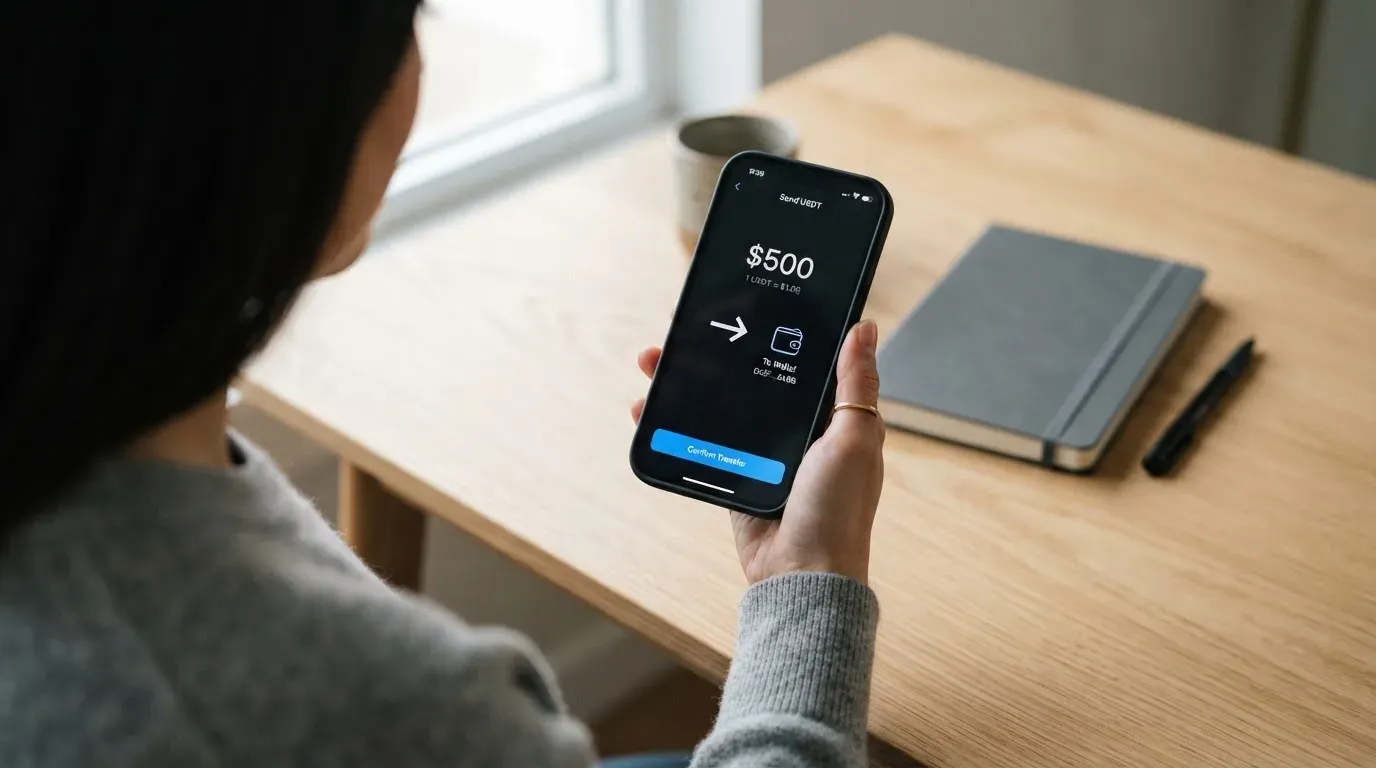
How a top-up actually works:
- In the app, choose the currency and the network.
- Send to the displayed address, or scan the displayed QR code.
- The recharge must be more than 1U or it will not be credited and cannot be retrieved.
- Unsupported coins or networks are lost.
That last line deserves emphasis. Because the network list is not published, the app’s screen at the moment of transfer is your only authority on whether the network you are about to use is one the card supports. This is not a YPT-specific problem — crypto transfers are irreversible in general, so a deposit sent on a network the provider does not support, or to an address belonging to a different network, can simply be gone — but it makes YPT’s silence here more costly than it would be for a card that published its chains. The 1U minimum is small, which is good for testing, but note that a test deposit below 1U is a deposit you cannot get back.
Withdrawals from the card balance back out to a bank or wallet are not stated on the public pages. If your plan involves cashing out rather than only spending, that is an open question to ask support before you commit.
Paying with it every day
In daily use, YPT is a virtual card you add to Apple Pay, Google Pay and “multiple payment platforms”. Whether any spending categories are blocked — gambling, adult content, fuel, and similar — is not stated on the pages I could read. That matters if you travel: merchant category codes classify what a business sells, and issuers block particular categories by policy, not by law, with the blocked list differing from issuer to issuer. YPT does not publish its list.
The app itself is described officially only thinly; an outside description from around May 2025 says there is a mobile app on iOS and Android for applying, depositing and tracking, but no ratings were read, so treat the app’s quality as unverified.
Refunds are the one operational detail the card does spell out, and it is a useful one: refunds usually take 2–15 days, some taking longer than a month, and YPT credits the user after receiving the refund from the merchant. So the money comes back to you on the card’s timetable, after the merchant’s, not on the shop’s promise.
What daily use feels like in practice: a smooth tap-to-pay experience on a stablecoin balance, with two frictions — the 2.2% on anything not in dollars, and the fact that a card can be declined on a foreign-issued prepaid card more often than with a local bank card.
What can go wrong
The main risks, honestly assessed:
You do not know who issues the card. YPT is described as “jointly launched by YPT.COM Company and RedotPay”, and the issuer is not named on the public pages. When you tap the card, some bank or licensed institution is the legal issuer, is bound by the card network’s rules, and is the party that ultimately stands behind your balance. YPT is the brand and front-end. You are not being told which institution that is.
Your funds are held by someone else. Digital assets are said to be held by a licensed trust company with $50 million in insurance, with a unique blockchain address per user, Sumsub KYC, a PIN code, and anti-misuse fees and negative-balance rules. The insurance figure is a real comfort, but it is insurance held by the custodian for the aggregate, not a guarantee of your individual balance. Custody is the standard model for this kind of card, and it means your money’s safety depends on an institution you cannot audit.
The physical card and ATM are not here. Both the ATM-withdrawal feature and the physical card are flagged “It WILL BE PUT INTO USE SOON”, and the ATM fee is not stated. If your plan is to withdraw cash, this card cannot do it today.
Programmes like this close. Card programmes run on licences they do not own: networks license issuers and can suspend a programme, and closures typically mean a notice period, then spending and loading stop, then you are asked to withdraw what remains. This is the single most under-discussed risk in the category.
The networks are not listed. As above, an unsupported network means a lost deposit, with no guarantee of manual recovery.
Complaints: none found. I searched for complaints and found none, and found no Trustpilot page for YPT Group. Treat this as neutral-to-mildly-positive rather than proof of anything — a young product with few users generates few complaints — but it does mean there is no public track record of mistreatment either.
Support, if you need it, is reachable at [email protected], on Telegram @ypt_official and X @ypt_official, with a GitBook help centre in English — email and Telegram being the realistic channels for a real question.
What to take instead
If YPT does not fit — because you want a physical card, or clearer issuer disclosure, or a longer record — there are three comparison points. None of them is a like-for-like substitute; they are the alternatives a reader searching at the same time would come across.
| YPT | CardFlow | HyperCard | Card.fi | |
|---|---|---|---|---|
| Score | 7.4 / 10 | 4.9 / 10 | 4.7 / 10 | 6.6 / 10 |
| Card | Virtual (physical “soon”) | Virtual USD Mastercard | Prepaid, network not stated | Virtual + physical, metal options |
| Cost | 1% USD / 2.2% other; issuance not stated | Free to create virtual; monthly not stated | Not stated; app page lists no fees | Virtual Classic $49, Premium $249 one-time; no monthly fee |
| Who it targets | Broad; 5 mailing-address exclusions | Nigeria and “Nigerians and global users” | Broad; “176+ countries” acceptance claimed | Ships to “200+ countries”; sanctions-barred countries refused |
| Rewards | Not stated | Not stated | Not stated | Cashback: Classic 0.8% (10 USDT/mo cap), Premium 1%, Metal 1.2–2% (caps by tier) |
A few things stand out when you line them up. CardFlow is the cheapest to start — creating a virtual card is free — but it is aimed at Nigeria, its fees are not stated, and a virtual USD Mastercard created in a few minutes says nothing about what it costs to actually spend. HyperCard is the vaguest of the group: no stated fees, no stated network, no stated eligibility, with an app-store claim that it works in “more than 176 countries” — that is acceptance, not permission to open one. Card.fi is the most transparent and the most expensive to enter: $49 for a virtual Classic, $249 for a virtual Premium, top-up fees of 1.5% + $1.00 (Classic) or 1% (Premium), FX fees of 3.5% or 2.5% — noticeably worse than YPT’s 1%/2.2% — but it publishes all of it, offers real physical and metal cards, supports 32 coins across 5 named networks, and layers cashback on top.
If the reason you are here is that a bank refused you, note that all four are still virtual-first and identity-checked. None of them is a route to a bank account.
Who I would recommend it to
I would recommend YPT to someone who already has crypto or stablecoins, lives somewhere an ordinary card is awkward or impossible, does not need physical plastic or cash withdrawals, and is comfortable paying a flat 1–2.2% to spend. The fees are genuinely competitive and, unusually, clearly published. The wide eligibility is the point of the card and it delivers on that.
I would point someone else elsewhere. If you need a card in your hand, this is not the product yet. If you want to know which bank stands behind your balance, you will not find that here. If you are planning to hold value on the card rather than spend it, a prepaid spending card is the wrong shape of tool. And if the idea of a third party holding your money makes you uneasy, that unease is well-founded and not something the insurance figure should talk you out of.
Before you commit, ask support one question: which network can I send USDT and USDC on, and what happens to my balance if the card is wound down. The answer to the first is operational. The answer to the second is the one that matters if the company ever stops.
Frequently asked questions
What is the YPT card?
YPT is a prepaid crypto payment card. You send it USDT, USDC, BTC or ETH, it converts them to a fiat balance, and you spend that balance through a virtual card you add to Apple Pay, Google Pay and other payment platforms. It behaves like a prepaid card, not a bank account: it draws on money you have already loaded, and the card’s public pages name no issuing bank.
How does the YPT card work in practice?
Top up in the app by choosing a currency and network, then sending to the displayed address or QR code. The card converts crypto to fiat at the moment of payment, and each purchase costs 1% in dollars or 2.2% in another currency. Balances behave like prepaid funds, so the card cannot overdraw, and small authorisations under $1 or declines carry small fixed fees.
Does YPT require KYC, and what does it ask for?
Yes. YPT runs identity verification through Sumsub and asks for your full legal name, your date of birth, and an identity card, passport or driver’s licence. The documentation also warns that more information may be requested, so expect to be asked for additional proof if the first submission does not read cleanly. This is normal for any regulated card, not a YPT quirk.
Is YPT a bank, and who owns it?
Neither, as far as the public pages say. YPT is described as jointly launched by YPT.COM Company and RedotPay, and it is a card brand and app rather than a bank. The institution that legally issues the card is not named on those pages, which is the single biggest piece of missing information for anyone weighing this card.
Is YPT available in my country, and can I use it there?
The card’s help centre names only five places it will not accept as a mailing address: Egypt, Tunisia, Palestine, Puerto Rico and Tanzania, and it adds that a billing address is supported. No list of eligible countries or excluded citizenships is published. Where it can be opened, it is a standard card network product usable wherever that network is accepted.
How much does YPT cost to hold and to spend?
No issuance price, monthly fee or subscription is stated on the card’s public pages. Spending is 1% in the card’s default currency, USD, and 2.2% in any other currency. A $0.20 fee applies to authorisations between $0 and $1, with the first five per card per month waived, and a declined transaction costs $0.5, with the first three per card per month waived.
Can I top up with any crypto and any network?
You can top up with USDT, USDC, BTC and ETH, and the card’s page does not state which networks are supported. In the app you pick the currency and network and follow the displayed address or QR. The deposit must exceed 1U or it is not credited, and coins or networks the card does not support are lost — irreversible, as crypto transfers generally are.
Does YPT have a physical card and can I use an ATM?
Not yet, as things stand. The physical card appears in the site navigation but carries the label “IT WILL BE PUT INTO USE SOON”, with no price or delivery details, and ATM withdrawal is listed as a coming feature with no fee stated. For now this is a virtual card for tap-to-pay, with cash withdrawals unavailable.
Is YPT card safe, and what are the main risks?
Assets are said to be held by a licensed trust company insured for $50 million, with per-user blockchain addresses, Sumsub KYC, a PIN and anti-misuse rules, and no complaints were found. The real risks are structural: a prepaid card is custodial, so safety depends on institutions you cannot audit; the issuer is unnamed; the networks for deposits are not listed, so a wrong-chain transfer can be lost; and card programmes can be wound up, leaving you to withdraw whatever balance remains.
How do I add YPT to Apple Wallet, and what about refunds?
The card can be bound to Apple Pay and Google Pay as well as other payment platforms, so adding it to your phone wallet is the main way you would use it day to day. Refunds usually take 2–15 days and sometimes longer than a month, because YPT credits you only after it receives the money back from the merchant — so allow for that when returning something.
Top virtual cards by score – cryptocardtop
Content created by the «cryptocardtop» team