
Is Card.Club the right card when a normal bank card is hard to get?
 Available in US
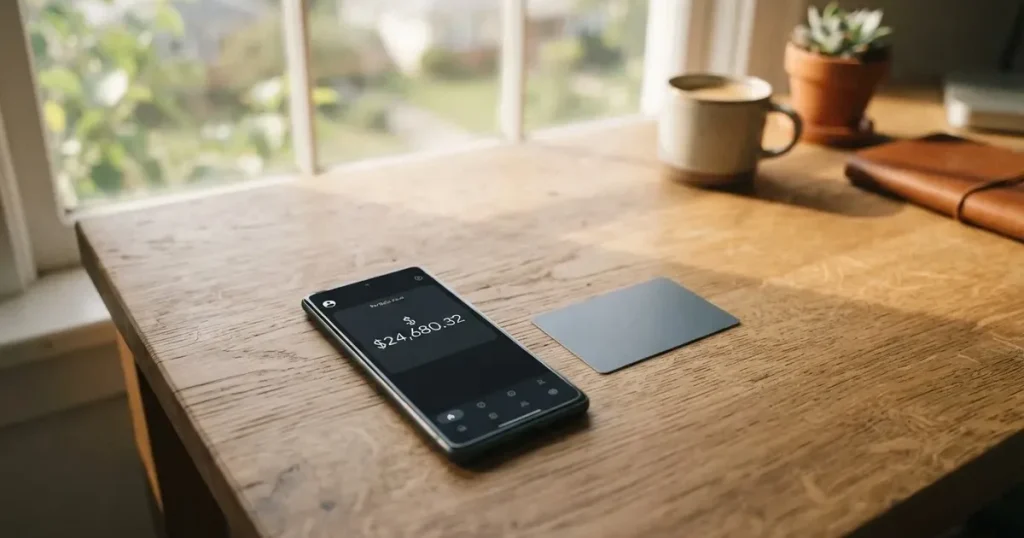
If you have struggled to get an ordinary bank card — because of where you live, because your documents are in a language your bank does not read, or because a bank simply will not open an account for you — the Card.Club crypto card is one of the options people actually turn to. It converts your crypto into a normal card balance and lets you spend it in shops and online like a Visa or Mastercard. That promise is real. The catch is that almost none of the card’s specifics are stated by Card.Club itself; the numbers below come from third-party review sites and vendors, and I treat them as unofficial throughout. My score for it is 5.0 out of 10 — a genuinely useful escape hatch for a narrow set of situations, held back by costs that quietly eat into your money and an official website that is, at the time of checking, an empty page.
The conditions described here are current as of October 28, 2026.
Verdict: a useful fallback, not a everyday replacement
The score is 5.0 / 10. That middle number is not a shrug — it reflects a card that solves a real problem for some people who want several virtual cards for subscriptions and travel, and who cannot easily get a normal card, while being genuinely expensive and almost entirely undocumented by the operator. I would not hand this card to someone who has a normal bank card and a reason to prefer it; I would consider it for someone who has no other option, and only after they go in knowing exactly what it will cost.
Here is how each criterion broke down:
| Criterion | Mark | Why |
|---|---|---|
| Who can get it | 7 / 10 | Cards cannot be used in countries on the US sanctions list (unofficial); the official site is empty |
| Cost | 3 / 10 | Issuance $20, $35 or $100; top-up from 4%; $0.25–$0.50 per payment (unofficial) |
| Top-up options | 5 / 10 | SBP in rubles, or USDT on TRC-20 and ERC-20 (unofficial) |
| Reliability and complaints | 5 / 10 | Webrex Co., Ltd; issuers unnamed; Trustpilot 3.7/5 from 1 review, crmindex.ru 4.8 from 35; complaints about fees (unofficial) |
| Everyday use | 5 / 10 | Three cards, Apple Pay and Google Pay only on the travel card, a plastic Visa exists, no ATM support (unofficial) |
The pattern to notice: the one strong category is eligibility, because a card that reaches people a bank will not serve has, by definition, few competitors for that job. Every other category is dragged down by the same thing — you are trusting a service that tells you almost nothing about itself.
Who will they give you the card?
The honest answer is that Card.Club’s own website does not say. The official page is empty — it does not state who is eligible, which countries are excluded, or what documents are needed. An earlier check of a card-information page suggested the card is available worldwide except countries under US sanctions, including Russia and Belarus, but that is not something the current official site confirms.
What third parties report is this: the vendor says the cards cannot be used in countries on the US sanctions list, and that disputes are governed by British Virgin Islands law, which means Russian-law consumer protection does not apply to you. In practice, “can I use the card in my country” and “will they issue it to me” are two different questions, and for both the only concrete answer I can find is unofficial. Treat this section as a reason to check before you commit, not a green light.
- The card appears aimed at users who can fund it in rubles (via SBP) or in USDT — that points squarely at users who hold crypto but not a usable bank card in the same country.
- You are told, unofficially, that you cannot use the cards in sanctioned countries, and that the contract sits under British Virgin Islands law.
- Nobody has published a clean list of accepted and rejected countries on the official site.
How to get it
Again, Card.Club itself does not describe the application. What the vendor and reviewers say: obtaining the card and full access may require a passport, proof of address and sometimes a selfie, with a check that takes one to two days. The same identity procedure is used to return a balance from an account that has been blocked or closed. Once approved, issuance is reported to happen in five minutes, through an app or a Telegram bot.
What this means for you is that the “instant crypto card” experience is real only after you clear identity checks — you cannot expect to be spending within minutes of signing up if you are new to the service. And because the balance-return procedure is the same KYC process, think of your identity documents as something you will hand over more than once over your time with the card, not just at signup.
- Expect passport and proof of address; a selfie may also be requested (unofficial).
- Verification is reported to take one to two days (unofficial).
- Cards are issued in five minutes once you are through the app or Telegram bot (unofficial).
- Card currencies are USD and EUR (unofficial).
Fees: what it really costs
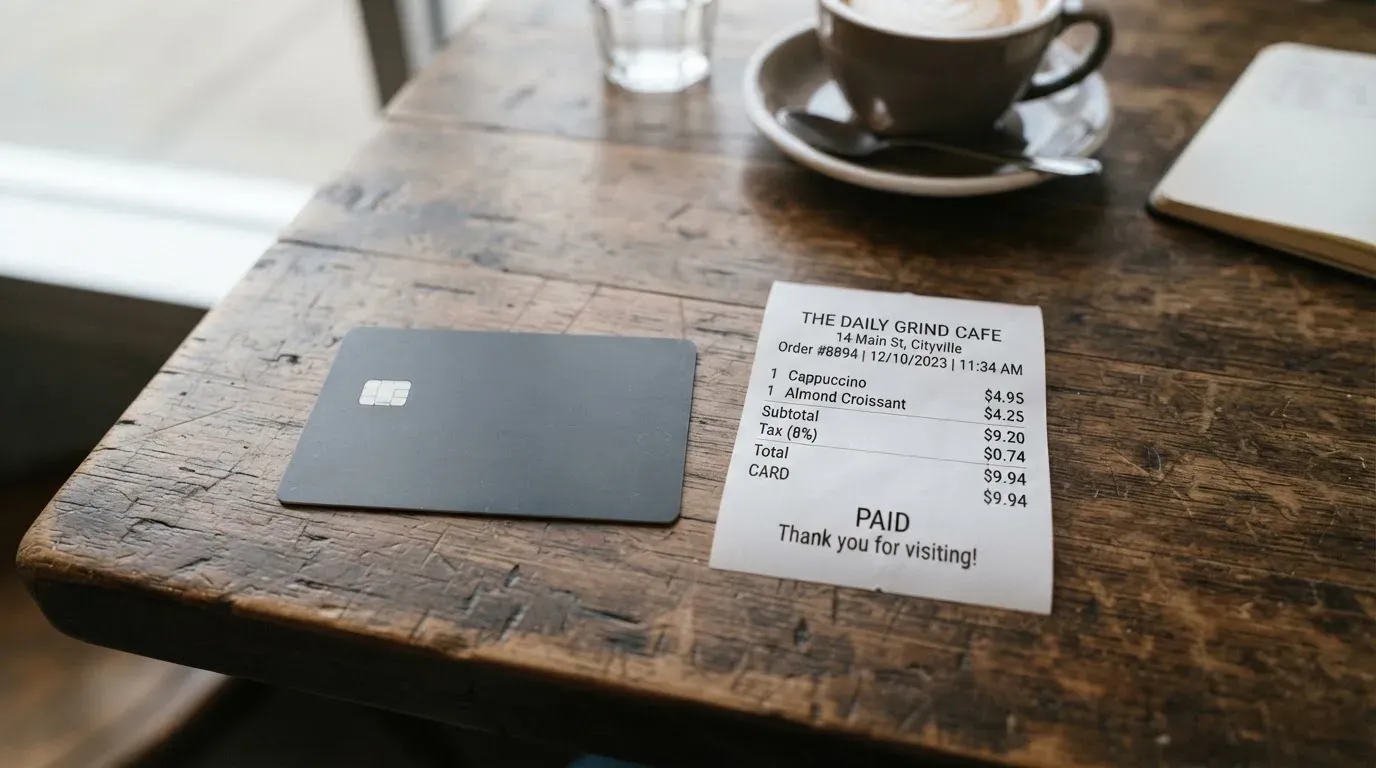
The cost is where this card is weakest, and it earned the lowest single score of any category — 3 out of 10. Almost everything below is unofficial, because Card.Club does not publish its own pricing. Read this table as what users report paying, not as a contract.
| Fee or limit | What is reported (unofficial) |
|---|---|
| Issuance | $20 (subscriptions card), $35 (travel card), $100 (plastic Visa) |
| Monthly servicing fee | Free |
| Top-up commission | From 4% |
| Per-payment fee | $0.25–$0.50, including on declined payments |
| ATM cash withdrawal | Not supported |
| Currency of the card | USD and EUR |
| Minimum top-up | $25 |
| Payment and monthly limits | Exist, but the amounts are not published |
Two things jump out. First, that $0.25–$0.50 per-payment fee is charged even when the payment is declined — so a payment that does not go through still costs you, which is an unusual and unpleasant way to be billed. Second, the per-payment fee is charged on top of conversion, so paying in a currency other than the card’s own currency can trigger a double conversion, and users complain about exactly this. There is also a conflict between sources on issuance: one review site lists issuance as free, while a reviewer recorded paying 35 EUR — so treat the 20/35/100 dollar figures as the more-observed, not the guaranteed, numbers.
To make this concrete, look at three ordinary payments and which fees bite:
- Buying a $30 subscription on the subscriptions card: you pay the per-payment fee of $0.25–$0.50 (unofficial, not confirmed by the card), and if the merchant charges in your local currency rather than USD you may hit the double conversion as well. The subscription card is reported to be a Mastercard with a Singapore BIN and no Apple Pay.
- A $200 flight booked on the travel card in USD: again the $0.25–$0.50 fee (unofficial, not confirmed by the card), plus the top-up commission of 4% was already taken when you loaded the balance. This card is the one reported to support Apple Pay and Google Pay.
- Withdrawing cash from an ATM: not possible — cash withdrawal at ATMs is not supported, so this fee never applies because the feature does not exist.
Note the two top-up-related numbers together: the 4% top-up commission is charged when money goes in, and the $0.25–$0.50 (unofficial, not confirmed by the card) is charged when a payment goes out. On a card you reload often, those add up quickly against the amounts you actually spend.
How to top up
The funding story is the one genuinely usable part of the picture, though the details are unofficial and come from earlier checks rather than a live official page. You can top up via SBP in rubles, or with USDT; USDT can be sent over the TRC-20 and ERC-20 networks, through a Telegram Mini App or the iOS/Android apps. The minimum top-up is reported as $25 (in USD or EUR), and the fee as 4%.
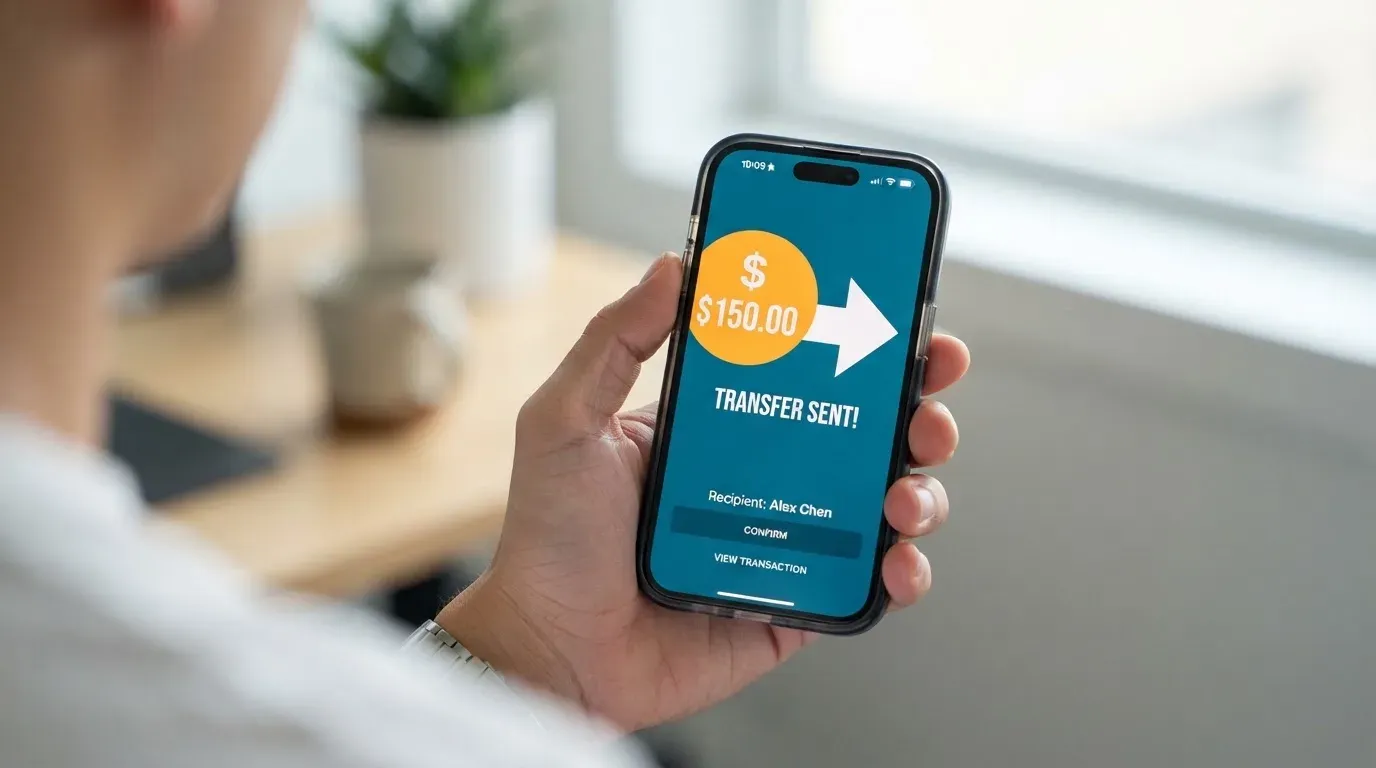
For most people the practical sequence is the same: you convert or transfer your money to the card, the card holds a fiat balance, and you spend that balance. Because the card is effectively prepaid, it cannot overdraw — but every dollar you put in is exposed to that 4% loading fee, so do not leave a large float sitting on it. If you are sending crypto, double-check that you are using a network the service supports; as with any crypto transfer, sending on the wrong network can lose the funds.
- SBP in rubles, or USDT, are the reported options (unofficial).
- USDT over TRC-20 and ERC-20 via the Telegram Mini App or the mobile apps (unofficial).
- Minimum top-up $25; top-up fee 4% (unofficial).
- There is no normal self-serve withdrawal: funds can be withdrawn only by contacting support, and any balance from a closed account needs to go through KYC first (unofficial).
That last point deserves emphasis. There is no ordinary “withdraw to my bank” button in the way you would expect from a bank account. Getting your money back out means asking support, and if your account has been closed or frozen, it means re-entering the identity process. Treat the card balance as money you are spending, not money you are saving.
Paying with it every day
Day-to-day use is workable but full of small edges. Apple Pay and Google Pay work only on the travel card, not on the subscriptions card or the plastic Visa. Some merchant categories are blocked — games, gambling, crypto purchases and financial services — and the allowed categories are set by the issuing bank, not by Card.Club, which means the block list can change without notice and may differ from what any review site says. There have also been reports of ChatGPT payments being refused on some card regions, and of game and subscription merchants declining the card.
There are three cards, and the choice among them matters more than it might seem:
| Card | Reported type | Wallets | Notes |
|---|---|---|---|
| For subscriptions | Virtual Mastercard, Singapore BIN | No Apple Pay | Meant for recurring online services |
| For travel | Virtual Mastercard, US BIN | Apple Pay and Google Pay | The one reported to work with mobile wallets |
| Plastic | Physical Visa | Not stated | Highest issuance fee |
For most everyday situations — paying a subscription, booking travel — the mental model is straightforward: this is a prepaid card spending a balance you loaded. What to watch is that a blocked category or a regional refusal can strike at the worst moment, when you are trying to pay for something, and that a declined authorisation can still leave a hold on your funds for several days. There is no ATM, so if a payment goes through and you want cash, you cannot get it.
What can go wrong
Because the operator does not publish its own terms, most of the risk here is described by users rather than by the company, and by the general behaviour of prepaid crypto cards.
- Fees. The most common complaint across reviews from 2025 into 2026 is high commissions, and the double-conversion issue when you pay in a currency other than the card’s own.
- Declines. Merchant-category and region declines show up in reports — gambling and game merchants, ChatGPT on some regions. Some declines trace to the foreign BIN and prepaid status rather than anything you did.
- Recurring charges. One user reported recurring $10 charges from a Singapore merchant after a card reissue; crmindex.ru notes the amount was refunded the same day (Jun 19, 2026).
- Custody. The card is custodial, and a high decline rate can lead to an account being blocked. The advice circulating is not to keep large sums on the card — which fits the withdrawal-by-support model, since money you cannot easily withdraw is money you cannot easily get out in a hurry.
- Withdrawals. Money comes back only through support, and a closed account’s balance requires KYC again. There is no self-serve cash-out.
- Counterparty. The card is run by Webrex Co., Ltd, described as a technology platform, with cards issued by unnamed licensed partner issuers. You are therefore relying on companies whose names you do not know.
- Law. Disputes are governed by British Virgin Islands law. If something goes wrong, you are not under your home country’s consumer protection.
On reviews specifically: Trustpilot shows 3.7/5 from a single review (Jan 18, 2026, which was positive — too small a sample to lean on); crmindex.ru shows 4.8 from 35 reviews; inokarti.com shows 3.8 from 18. I found no confirmed official incidents, though one unreliable article calls the service a scam — that is not verified and I would not treat it as established, any more than I would treat a low single-review score as meaningful.
What to take instead
If your situation is “I need a card and a bank will not give me one,” these are the alternatives I compared, and none of them is dramatically better — they trade Card.Club’s cost problem against their own gaps.
| Alternative | Score | Cost | Top-up | Main catch |
|---|---|---|---|---|
| CardFlow | 4.9 / 10 | Creating a virtual card is free; monthly fee not stated | Bitcoin, USDT, ETH or Naira transfer | Aimed at Nigeria; fees not stated |
| HyperCard | 4.7 / 10 | Not stated on the pages I could read | Crypto (USDT, BTC, ETH) in the app | No country list; card network not stated |
| Card.fi | 6.6 / 10 | Virtual Classic $49, Virtual Premium $249, one-time | 32 coins across 5 networks | Much higher up-front cost; FX fee 2.5–3.5% |
CardFlow is the cheapest to start, with a virtual USD Mastercard created in three minutes; its fees are simply not published on what I could read. HyperCard is a prepaid card that works in “more than 176 countries” (acceptance, not eligibility) and converts crypto deposits into USD or EUR balance; its network and fees are also unstated. Card.fi is the most fully documented of the three and scores highest, but it costs considerably more up front — $49 or $249 for a virtual card — and its FX fee is 2.5–3.5%, which is not obviously better than Card.Club’s structure for a high-volume spender. It does, however, publish its cashback tiers and accepts a wide range of coins, and it clearly states a sanctions-based exclusion.
The pattern across all three: if you are outside the obvious mainstream, the reliable information is thin everywhere, and the cheapest option is usually the least documented. There is no option here that is both cheap and fully transparent.
Who I would recommend it to
I would recommend the Card.Club card to someone in a narrow situation: you hold crypto, you can fund it via SBP or USDT, you genuinely cannot get a normal bank card, and you need a working card number — ideally a separate one for subscriptions or travel — rather than a full banking relationship. In that case the four-percent top-up fee is annoying but not disqualifying, and the three-card choice is a real convenience.
I would not recommend it if any of these are true: you have an ordinary bank card you can use; you are paid in and live in a currency where the double-conversion friction will hurt; you need cash from ATMs; you rely on Apple Pay or Google Pay on your main card; you want to hold a balance on it; or you want to withdraw money yourself without asking support. And I would want you to check the current official terms yourself before loading more than you can afford to lose — because, as of this writing, the official site does not state them.
Frequently asked questions
What is Card.Club card?
Card.Club is a service that turns crypto into a spendable prepaid card balance. You load the balance — reportedly via SBP in rubles or via USDT on TRC-20 or ERC-20 — and then spend it with Mastercard and Visa cards like an ordinary payment card. The operator is described unofficially as Webrex Co., Ltd, with cards issued by unnamed licensed partner issuers. Its own website, as of October 2026, does not publish the details.
Does Card.Club require KYC?
Probably yes, at least to reach full access, though the official site does not say so. Third-party sources report that full access may require a passport, proof of address and sometimes a selfie, with a check taking one to two days. The same identity procedure is reported to be required to return a balance from a blocked or closed account, so expect to verify more than once.
How much does the Card.Club card cost?
Unofficially, issuance is reported at $20 for the subscriptions card, $35 for the travel card and $100 for the plastic Visa, with free monthly servicing. The ongoing costs are a top-up commission from 4% and $0.25–$0.50 per payment, including declined payments. These figures come from third parties, not Card.Club, and sources disagree about whether issuance is sometimes free.
How do I top up the Card.Club card?
The reported methods are SBP in rubles, or USDT sent over the TRC-20 or ERC-20 networks through the Telegram Mini App or the iOS/Android apps. The minimum top-up is reported as $25 (unofficial) and the top-up fee as 4% (unofficial). Because blockchain transfers are irreversible, make sure you use a network the service supports and the exact deposit details it gives you.
Is the Card.Club card free?
No — not fully. Creating and keeping the card free is reported, but loading money costs from 4% and each payment costs $0.25–$0.50. One review site lists issuance as free, but another reviewer recorded paying 35 EUR, so assume there is some cost the moment you either load or pay. The card is not a free replacement for a bank card in the way people sometimes hope.
Is Card.Club a bank?
No. It is a card programme run by a technology platform, not a deposit-taking bank. The cards are issued by unnamed licensed partner issuers, which means the balance is a prepaid card balance rather than a bank account. That is why there is no ATM, why withdrawal is only via support, and why British Virgin Islands law, not your home country’s consumer protection, governs disputes.
Can I use the card in my country?
That depends on sanctions, not on Card.Club’s published list, because there is no published list. The vendor says the cards cannot be used in countries on the US sanctions list. If your country is not sanctioned, the card is reported to work worldwide; but because almost everything here is unofficial, check the current terms yourself before relying on it in a country you need it to work in.
Is Card.Club safe to use?
Treat it as custodial and use it accordingly. Reported risks: it is a custodial setup, high decline rates can lead to an account being blocked, withdrawals are only via support, and the issuer is unnamed. User reviews are mixed-positive (crmindex.ru 4.8/35, Trustpilot 3.7 from one review) with recurring complaints about fees. No confirmed official incidents were found, but I would not keep a large balance on it.
Can I add the card to Apple Wallet?
Only on the travel card, and only as an unofficial account of behaviour. The travel Mastercard (US BIN) is reported to support Apple Pay and Google Pay; the subscriptions card is reported not to support Apple Pay. Availability of the mobile wallets therefore depends on which of the three cards you chose, and none of this is confirmed by the official site.
Why was my payment declined?
Several ordinary reasons show up in user reports: the merchant category is blocked (games, gambling, crypto purchases and financial services are blocked, and the allowed list is set by the issuing bank), the card region is refused by some services (ChatGPT is reported to refuse payments on some regions), or the foreign BIN and prepaid status make the merchant cautious. Note that a declined payment can still incur the $0.25–$0.50 fee (unofficial, not confirmed by the card), and the authorisation hold on your funds can linger for several days.
Top virtual cards by score – cryptocardtop
Content created by the «cryptocardtop» team