
A card that works, on paper, with the details missing
 Available in US
Ultimo looks, at first glance, like the answer to a simple problem: you hold crypto, you want to spend it at an ordinary shop, and the card you can get at home refuses you. Ultimo issues a Visa Platinum debit card linked to a crypto balance, and it is reachable in a way many mainstream cards are not. That is genuinely the appeal. The trouble is that almost none of the numbers a cardholder needs are on the company’s own pages, and what circulates instead comes from third-party sites and from a small number of user reports. That is not a rounding error caused by one bad detail; it is the sum of a card that says very little, charges what a third party says is a lot, and has a public complaint trail about locked funds.
The conditions described here are current as of October 28, 2026.
The short version
Ultimo suits experienced users who are already comfortable on offshore crypto platforms, who can hold a balance through an awkward onboarding, and who treat a card as one tool among several rather than as their main way of paying. It does not suit anyone who needs to know the fee before they spend, who is starting out with crypto, or who wants a card they can defend in a dispute.
Here is the score, criterion by criterion.
| Criterion | Mark | Why |
|---|---|---|
| Who can get it | 4 / 10 | No countries named on the official pages; the older Ultimo Pay Platinum card is reported blocked in the EU and UK, with no country list published |
| Cost | 1 / 10 | Card fees are not disclosed officially; a 1.5% all-in conversion is stated, and third-party sources report $450 issuance and $450–$600 total setup |
| Top-up options | 9 / 10 | BTC, ETH, SOL, USDT and more across 9 networks: Bitcoin, Ethereum, Solana, BNB Chain, Tron, Polygon, Arbitrum, Base, Avalanche |
| Reliability and complaints | 1 / 10 | The brand is described as “founded in 2026”, the registration country and issuing bank are not named, and a Trustpilot review from August 2026 reports cards and funds locked after the move to ultimox.io |
| Everyday use | 6 / 10 | Visa Platinum, plastic in 10–15 banking days and virtual in minutes, cash withdrawal wherever Visa is accepted; Apple Pay and Google Pay are reportedly unsupported |
| Total | 3.7 / 10 | Strong on funding, weak on disclosure, cost and complaint history |
Two of those rows deserve a note. The top-up score is high and genuinely deserved — nine networks covering the major chains is more than most cards in this category offer. And the reliability score is not a rounding artefact: the mark rests on a single review, read on 21 October 2026, which is not the same as a pattern, but is also not nothing.
I want to be careful about what “not stated” means throughout this page. Ultimo’s public pages simply do not say these things. That is different from the card having no such feature, and different again from a feature existing behind a login you have not reached yet. Where a third party says otherwise, I will flag it as unofficial and unconfirmed by the card.
Will they give you the card?
The official pages do not name a single country. Not one. That is the plain answer, and it is an unhelpful one, because eligibility is usually decided by country of residence and citizenship rather than by where you happen to be sitting.
The unofficial picture is worse in a different way. The older Ultimo Pay Platinum card is reported as blocked in the EU and the UK, with reviewers attributing it to sanctions — that is their explanation, not a statement from Ultimo — and no country list has been published. So for the reader in Europe, the picture is: an older product stopped working in your region, the newer brand says nothing about which regions it serves, and the reason given by other people’s reviews is the same one you would guess.
Two things follow from a country list that does not exist. You cannot check eligibility before opening an account. And you cannot rule out the possibility that your own nationality is the issue rather than your address, because nationality is screened separately from residence — sanctions screening and issuer risk policy are often applied to citizenship and country of birth as well as to the country on your documents. A card that does not publish a policy leaves you guessing, and guessing costs you time when you already cannot afford time.
I would not treat any of this as a technicality. If your situation is that you have been turned down by ordinary banks, then the reason you are reading about Ultimo is precisely that banking access is fragile for you — and a provider that will not say which countries it serves is asking you to find that out the hard way.
How to apply
The process as described is short: an identity check to open an account, and another before withdrawals. Documents are not specified on the card’s own pages, nor is proof of address. Third-party sources say email, phone and an identity document are required, and that proof of address and a selfie are not. Treat that as unofficial.
What you end up with, per the card page, is a Visa Platinum debit card linked straight to your Ultimo balance — a physical card plus a virtual one. The card’s currency is not stated. Levels or tiers of any kind are not stated. From opening an account to a usable virtual card is “minutes”; the physical card is delivered in 10–15 banking days, with destination countries, delivery cost and replacement terms all unstated.
So the shape of the answer is: cheap and fast to start, vague in the details. The virtual card is the part that would let you test whether this works for you at all — if the cost figures reported below turn out to be right, that test is not something you want to make repeatedly.
A word on the verification itself, since it is the part people most often want to skip past. Identity checks exist because anti-money-laundering and counter-terrorism-financing rules require regulated businesses to verify customers and assess risk, including ongoing monitoring and suspicious-activity reporting. In the EU, customer due diligence covers name, address, date of birth, nationality and identity documentation, a sanctions check, the purpose of the relationship, and whether you are a politically exposed person. If due diligence cannot be completed, rules require the institution to refrain from the transaction or relationship and, where necessary, end existing relationships — which is why accounts get closed or frozen pending documents. A provider which cannot tell you which documents it needs is a provider that may one day ask you for a document it did not mention.
Fees: what it really costs
Ultimo does not publish its card fees. The Fees section on the card page lists exchange fees only. Everything else you have read about the cost of this card — the $450 issuance, the $450–$600 total setup — comes from third-party sources and is not confirmed by the card.

Here is what is actually on the table, marked by where it comes from.
| Fee or limit | Value | Source |
|---|---|---|
| Card issuance | $450 | Unofficial (cryptocards.so, 2026) |
| Total setup cost | $600 — $450 card plus $150 deposit | Unofficial (cryptocards.so, 2026) |
| Issuance, second report | $550–$600 | Unofficial (cryptocards.so, 2026) |
| Monthly fee | Free | Unofficial (cryptocards.so, 2026) |
| Buy and sell | 1.5% all-in, shown up front | Official |
| Spot trading | 0.05% maker / 0.10% taker | Official |
| Card foreign-exchange fee | Not stated | — |
| FX fee | Free | Unofficial (cryptocards.so, 2026) |
| Crypto-to-fiat conversion cited by a user | 3% | Unofficial (Trustpilot user, via cryptocards.so, 2026) |
| Per-card-transaction fee cited by a user | 0.75% | Unofficial (Trustpilot user, via cryptocards.so, 2026) |
| ATM fee | 0.1%, unlimited | Unofficial (cryptocards.so, 2026) |
| Cash withdrawal | Wherever Visa is accepted; fee and allowance not stated officially | Official / partial |
| Daily, monthly spend and ATM limits | Listed as “Unlimited” | Unofficial (cryptocards.so, 2026) |
Three everyday payments, and what applies to each:
A EUR 40 grocery shop. You are converting crypto to spend, so the 1.5% all-in buy-and-sell fee is the number that bites — that is the official one. Then the question is whether the card adds its own foreign-exchange fee on top. Ultimo does not say. A third party says the FX fee is free, and a user says they were charged 0.75% per card transaction. Those cannot both be the whole truth on any given day, and you have no way to tell which one your payment would follow.
A USD 25 online subscription. Here the network fee may apply — Visa Secure is Visa’s 3-D Secure brand, and the issuer either approves frictionlessly or challenges you with a one-time code or biometrics. Add the conversion, add whatever per-transaction charge exists, and note that address verification is mainly offered in the US, Canada and the UK and is generally unavailable for foreign-issued cards, which can cause declines on exactly this kind of purchase.
Withdrawing $100 in cash. The official line is that you can withdraw “wherever Visa is accepted”. Unofficially the ATM fee is 0.1% and unlimited, and daily, monthly and ATM limits are listed as unlimited. Limits are not stated officially anywhere, so treat “unlimited” as a claim from a third-party site rather than a promise.
The number that should stop you, if you are honest, is the setup cost. $450 for issuance, reported by third parties and not denied by the card, means the break-even point on ordinary spending is far away. A $450 charge against a card with a free monthly fee is not a monthly-fee story; it is an entry price. And the entry price is precisely the number the card itself will not state.
How to Top up the card
This is where Ultimo is genuinely good, and it is worth saying so plainly before we get back to the problems.
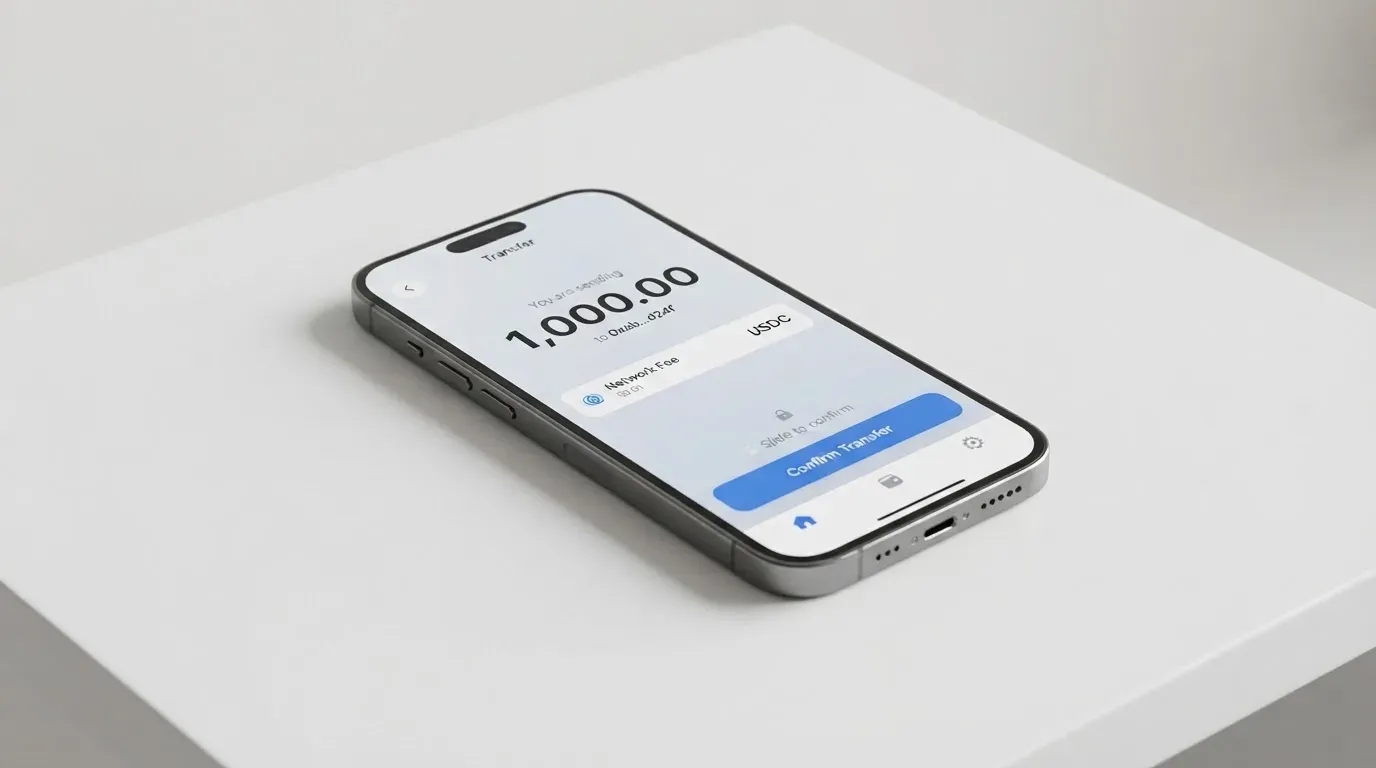
The platform supports BTC, ETH, SOL, USDT “and more” across nine networks: Bitcoin, Ethereum, Solana, BNB Chain, Tron, Polygon, Arbitrum, Base and Avalanche. The card is linked to the Ultimo balance, so what lands in the balance is what the card can spend. Top-up options for the card specifically are not stated on the official pages. Unofficially the top-up fee is free, and a Trustpilot user cites 1% for an immediate USD transfer against free for a 72-hour transfer.
Read that last line as the practical tip of this section: if you are funding from fiat rather than from crypto, the slow option is the one reported as free. That is a user’s account, not a published rate card, so treat it as a lead to check rather than a saving to bank on.
Withdrawals work differently. They need a one-time code and email confirmation, followed by a routine risk check; fees are not stated. Unofficially the withdrawal fee is 0.1% plus 0.001 BTC.
Now the part where you have to be careful, because this is where mistakes become permanent. Blockchain transfers are irreversible. If you send on a network the provider does not support, or to an address belonging to a different network, the deposit can be lost or need manual support recovery with no guarantee. The nine-network list above is your allowlist — check your network against it before you press send, every time.
Two more traps worth knowing before you fund it. Gas: on Ethereum, fees are paid only in ETH, so a wallet holding USDT with no ETH cannot send. On Tron, fees are paid through bandwidth and energy and often burn TRX. And a detail that catches people out specifically: Circle stopped supporting USDC on Tron in February 2024, so “USDC over TRC20” is not a native option here. USDT on Tron is a different token from USDC on Tron, and the difference is a lost deposit.
Paying with it every day
It is a Visa Platinum debit card, physical and virtual, and the virtual one exists within minutes of opening the account. That combination is genuinely useful for testing a card you have never used before. Cash works wherever Visa is accepted, at least in principle.
What is missing is the connective tissue of modern payment. Apple Pay and Google Pay are reportedly not supported — unofficial, but if it is true it removes the single most-used way people pay with a card now. If you currently tap your phone at a terminal several times a day, this card pushes you back to a physical wallet.
No cashback is listed, per the same unofficial source. No wallet support details, no rewards, no dispute process: all not stated. That last one matters more than it sounds. A chargeback is a refund ordered by the card issuer to settle a dispute, with reason codes such as fraud, duplicate billing or goods not received — and whether that mechanism exists here, and how it is triggered, is something the card does not describe. In the US, debit card reversal rights come from Regulation E and credit card rights from Regulation Z, and prepaid-card coverage varies and should not be assumed to be the same thing. Where a card does not describe its dispute process, assume there is friction until you have seen otherwise.
The app is a web app at app.ultimox.io. Store listings and ratings are not stated, which means you cannot check its reputation in an app store before committing.
One structural detail worth understanding, because it explains a lot of card behaviour in this category generally. A card number starts with a six- or eight-digit issuer identification number that tells the merchant which institution and country issued it, and the rest is an account identifier. Merchants can look that up, and some apply extra scrutiny when the issuer country differs from the billing address. Some simply decline prepaid or foreign-issued cards. Address verification, which compares the numeric parts of your typed billing address with issuer records, is mainly offered in the US, Canada and the UK and is generally unavailable for foreign-issued cards. None of this is specific to Ultimo — it is the situation of most crypto cards whose issuer sits offshore. But it means that even if you are happy with the card, some payments may be refused for reasons that have nothing to do with you.
What can go wrong
Start with the complaint that made me lowest-scoring this card. A Trustpilot review dated 17–20 August 2026, read on 21 October 2026, reports that after the change to ultimox.io, “cards and funds are locked”. It is one review, one star, and a Trustpilot rating of 3.2/5 from a single review. One review is thin evidence and I will not pretend otherwise. What makes it harder to dismiss is what surrounds it.
A second user report, undated and covering 2025–2026, concerns the older Ultimo Pay card: it stopped working in the EU and UK, a $600 fee was still charged, support was unreachable, and there was no way to delete the account. No official incident announcement was found for either. Also missing: any official announcement of the brand’s move to ultimox.io. That silence is the substance of the risk. You are not being asked to decide whether one reviewer is right. You are being asked to notice that a change of domain happened and no explanation was published, and that the only accounts of what followed are user ones.
That pattern is not unique to this brand, and knowing the category history is what lets you weigh it properly. In November 2022 Visa said it had “terminated our global agreements with FTX”, and the FTX US debit card programme was wound down by its issuer. In 2018 Visa suspended WaveCrest in Europe, a Visa issuer that supplied crypto card brands, closing all WaveCrest-issued Visa programmes. Visa and Mastercard do not issue crypto cards to consumers themselves; they license issuers and can suspend a programme. Programme closures typically follow a pattern: a notice period, then spending and loading stop, then users are asked to withdraw remaining balances. One 2026 closure reported by a secondary source ended new loads on 8 July and spending on 8 August — single source, unconfirmed, but the shape of it is what you should expect.
Then the company question. The brand is Ultimo, described as founded in 2026, with no registration country stated. The physical card is issued through an offshore bank that is not named. Infrastructure partners listed are BitMEX, Bitget, Deribit, Cobo and Simplex. No licences are listed. Unofficially, the starting data names Silver Capital Financial s.r.o., and reviews cite a Laos bank, JDB, later “removed from the partnership” — which, if accurate, describes a change of issuing partner inside the life of the product, and partner changes are what the complaint above happened after.
Custody is not stated. The custody model is the single most important thing to establish about any custodial crypto product, because control of the crypto belongs to whoever holds the private key or seed phrase — with a custodial wallet, the provider holds the credentials and you must trust them completely. Unofficially the custody providers are named as BitGo, Shiftmarket and Fireblocks. Separately, be aware that a seed phrase, typically twelve to twenty-four words, is an unencrypted form of the private key, and anyone who obtains it can restore the wallet and spend the funds; transfers are typically irreversible, and a stolen key has no built-in recovery because the network cannot freeze or return anything. The history of custodial failure in this industry is long: Mt. Gox, about US$350 million reported stolen between 2011 and 2014; Coincheck, about US$400 million in 2018; Ronin Network, US$625 million in 2022. Holding funds with a custodian carries counterparty and hack risk — that is not alarmism, it is the base rate.
Support is described as chat and email at [email protected], 24/7, “any time — day or night”. The claim is easy to make and hard to verify. The older-card report describes support as unreachable, which is the more useful data point for judging what happens when something goes wrong.
On the regulatory side, I can tell you what the frameworks require without telling you what Ultimo’s position is, because Ultimo does not say. In the EU, MiCA — Regulation (EU) 2023/1114 — took legal effect in June 2023, with rules on asset-referenced and e-money tokens applying from 30 June 2024 and the remaining provisions, including crypto-asset service provider rules, from 30 December 2024. Under MiCA, e-money tokens may be issued only by a credit institution or an electronic money institution. The transitional period lets providers operating under national law continue only until 1 July 2026 or until they receive or are refused a MiCA authorisation, whichever comes first. ESMA keeps an interim register of authorised CASPs, white papers and non-compliant entities, and a provider authorised in one member state can serve the EU. Note also that a card is a payment service regulated separately under e-money and payment-services law, so a crypto card often depends on two licences. In the US, FinCEN guidance treats administrators and exchangers of convertible virtual currency as money transmitters, while people merely buying goods or services are not.
I am not making a legal or tax judgment here, and you should take your own advice on both. Two general points belong in a card review, though. If a card’s provider is an e-money institution, it must safeguard customer funds by segregating them in dedicated accounts or insuring them — but such funds are not the same as bank deposits and may not be covered by deposit guarantee schemes. And on tax, the IRS treats digital assets as property, so exchanging them for goods, services, dollars or other digital assets generally produces a taxable gain or loss, measured in local fiat currency at the fair market value on the transaction date, meaning each card payment funded from crypto may be a separate disposal. Other countries’ rules differ; that is a conversation with an accountant, not with me.
One more thing you may want to know about stablecoins, since this card’s whole funding model rests on them. A stablecoin aims to hold a stable value against a fiat currency, but despite the name, stablecoins are not necessarily stable. The BIS in July 2025 put about 90% of stablecoin market capitalisation in USDT and USDC, the two dollar-pegged tokens. Circle says USDC is redeemable 1:1 for USD and 100% backed by cash and cash equivalents, mostly in an SEC-registered government money market fund, with monthly reserve attestations by a Big Four firm, and lists it as natively supported on 38 networks as of 16 September 2026. Tether describes USDT as built on multiple blockchains with reserves intended to back it one-to-one. And they can depeg: TerraUSD collapsed in May 2022, and USDC temporarily lost its peg in March 2023 during the US banking crisis. Tether also says it disables tokens in wallets on the OFAC sanctions list and has frozen funds tied to illicit activity, so stablecoins are not censorship-proof. That last point cuts both ways for a card user: the same machinery that can freeze a stablecoin issuer is the machinery that can freeze your balance.
What to take instead
The honest comparison here is uncomfortable, because the alternatives in this category mostly have better-published numbers and worse reach, or better reach and worse disclosure. Ultimo’s reach is its strongest real feature. Here is what else is on the table.
| Alternative | Score | Who it is for | Cost and fees | Funding | Rewards |
|---|---|---|---|---|---|
| Young Card | 5.7 / 10 | Not stated | Not stated | Not stated for the card | Cashback in YNG tokens by tier: Essential 0.1%, Gold 1.8%, Platinum 3.6% (Bronze and Silver not stated) |
| Coinbase Card | 6.4 / 10 | All US states except Hawaii; USA PATRIOT Act identity rules, no other countries | Zero spending fees, no annual fees; a spread applies when Coinbase buys, sells or trades | Link a bank account or deposit part of a paycheck (zero fees); crypto balance converts to USD | Optional crypto rewards on every purchase, US only, variable rate in the app |
| OKX | 6.2 / 10 | EU plus Norway, launched 28 January 2026; Iceland and Liechtenstein excluded; EEA users route through OKX Europe Ltd. under MiCAR | Card fee: none (as of May 2026); no transaction fee, no OKX FX fee; conversion spread 0.1% per the explainer vs 0.4% in the launch release | USDC or USDG in OKX Pay; other coins converted first; no auto top-up | Cashback only on USDG purchases, EUR caps: Regular 2% cap 10; VIP1 4% cap 300; VIP2 4.5% cap 450; VIP3 5% cap 1,000; VIP4+ 10% cap 1,000 |
| Ultimo | 3.7 / 10 | No countries named | $450 issuance and $450–$600 setup, reported by third parties; 1.5% all-in conversion official | BTC, ETH, SOL, USDT and more over 9 networks | Not listed |
Three observations from that table.
The Coinbase Card is the transparent one. “Zero spending fees and no annual fees” is a sentence a card company can say out loud, and it does, with all fees disclosed in the Cardholder Agreement and User Agreement. Its ceiling is that it is US-only, all states except Hawaii. If you are in the US, that ceiling may not bind, and you would be choosing between a card whose costs are published and one whose costs are not.
OKX has the clearest rulebook, with one asterisk. Card fee none, no transaction fee, no OKX FX fee, and a conversion spread reported at 0.1% by an explainer in May 2026 against 0.4% in the launch release — the newer figure is the one I would plan around. Its regional scope is stated, which is more than Ultimo offers, and its card is a euro-denominated virtual Mastercard issued through an unnamed European licensed payment provider, with no physical card mentioned. The cashback structure is the kind of thing to read carefully: only USDG purchases earn, USDC earns nothing.
Young Card shows what happens when rewards are the pitch. Cashback is paid in YNG tokens at rates that swing by club tier from 0.1% to 3.6%, with two tiers unstated. That is the shape to look for anywhere: when the reward is in the platform’s own token, you are being paid in something whose price the platform sets.
What Ultimo has that none of them do is reach to people the others would decline, and nine funding networks. If you are outside the US and outside the EEA, three of these four are simply not available to you, and the comparison collapses. That is the case where Ultimo is a serious candidate — and it is also the case where you are furthest from anyone who can explain the fees to you.
Who I would recommend it to
To be concrete, I would point this card at someone in this position: you already hold crypto across several chains, you have a bank or payment problem that closed off the usual cards, you are comfortable with an offshore platform and with an interface that is a web app rather than a native one, and you treat the card as a secondary tool with a small balance on it rather than as your primary account.
What makes that a defensible recommendation rather than a hedge is the asymmetry. If the fee turns out to be free as the third party claims and the monthly fee is genuinely zero, you have gained a Visa Platinum card that reaches nine networks. If the $450 setup cost is real and the funds-locked complaint is a pattern rather than an anecdote, you have lost money and a card, in a jurisdiction where you may have few alternative banking options. The upside is a better card; the downside is being the exact person the complaints describe. Only you know which side of that trade you are on, and the card’s refusal to publish its fees means you have to make the trade with the numbers hidden.
I would not point it at anyone starting out with crypto. The 1.5% all-in conversion plus a possible per-transaction charge plus no stated FX fee is a bad place to learn how cards work. I would not point it at anyone whose income depends on this card, because the dispute process is not stated and chargebacks are hard enough when they are documented. And I would not point it at anyone for whom the word “cash locked” would be catastrophic rather than annoying.
Frequently asked questions
What is Ultimo card?
Ultimo is a crypto payment card product: a Visa Platinum debit card linked directly to your Ultimo balance, offered as both a physical card and a virtual one. The virtual card is described as ready within minutes of opening an account, while the plastic arrives in 10–15 banking days. The brand is described on its own site as founded in 2026, with no registration country named publicly.
Is Ultimo a bank?
No, and the card itself points away from that idea: the physical card is described as issued through an offshore bank, and that bank is not named. Ultimo lists infrastructure partners including BitMEX, Bitget, Deribit, Cobo and Simplex, and publishes no licences. The custody model is not stated. If you need a regulated bank with deposit protection, this is not that.
Who owns Ultimo?
Officially, little is clear: the brand is Ultimo and the site says founded in 2026, but no registration country is given. Unofficially, third-party sources name Silver Capital Financial s.r.o. as the starting data, and reviews cite a Laos bank, JDB, later removed from the partnership. None of this is confirmed by the company itself.
Is Ultimo card available in my country?
The official pages name no countries at all, so eligibility cannot be checked before you apply. Unofficially, the older Ultimo Pay Platinum card is reported blocked in the EU and UK, with reviewers attributing it to sanctions, and no country list published. If you need certainty before committing money, assume you will not get it.
Does Ultimo card require KYC?
Yes — an identity check is required to open an account, and again before withdrawals. The official pages do not specify which documents or whether proof of address is needed. Third-party sources say email, phone and an identity document, with no proof of address or selfie required. Treat the document list as unofficial and confirm it yourself.
Is Ultimo card free?
Not officially clear. Card fees are not published; the Fees section lists exchange fees only, including a 1.5% all-in buy-and-sell rate and 0.05%/0.10% spot rates. Third-party sources report $450 issuance and a total setup of $450–$600, with a free monthly fee. Those figures are not confirmed by the card.
How do I top up the Ultimo card?
You send crypto to the platform balance the card is linked to. Supported assets include BTC, ETH, SOL, USDT and more across nine networks: Bitcoin, Ethereum, Solana, BNB Chain, Tron, Polygon, Arbitrum, Base and Avalanche. Transfers are irreversible, so match the network every time, and remember Ethereum gas needs ETH even when you are sending USDT.
Can I add Ultimo card to Apple Wallet?
Reportedly not. Third-party sources state that neither Apple Pay nor Google Pay is supported, though the official pages do not address it. If you currently pay by tapping your phone, that alone may rule the card out for daily use in your country. Worth confirming before you spend on a setup cost.
Is Ultimo card safe?
The safety question here is mostly about disclosure and history rather than about any specific breach. Ultimo publishes no licences, names no issuing bank, does not state its custody model, and is the subject of a Trustpilot review reporting cards and funds locked after the move to ultimox.io, alongside an older report of an EU/UK shutdown, a fee still charged and no account deletion. Support is advertised as 24/7.
How do I withdraw money from Ultimo?
Withdrawals require a one-time code, email confirmation and then a routine risk check, with fees not stated on the official pages. A third party reports 0.1% plus 0.001 BTC. Before you rely on the card, test a small withdrawal end to end — the one time to learn that a withdrawal rule is different from the card page is when your balance is already inside the platform.
Top exchange cards by score – cryptocardtop
Content created by the «cryptocardtop» team