
The cheapest crypto card in the EEA, if you live in the EEA
 Available in US
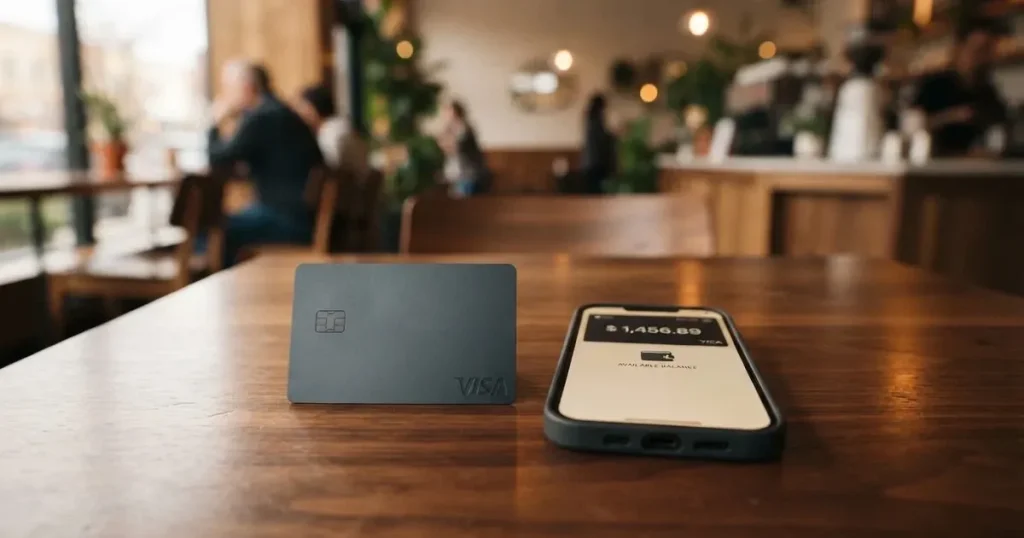
If you are reading this, you have probably already tried the obvious thing: open an ordinary bank account, get a debit card, spend from it. And you have probably been turned away, or stuck in a queue, or told to come back with documents you cannot get. Confidopay is a crypto card built for exactly that situation — you pay with a card number, but the money behind it is a crypto balance converted into euros as you spend. That is a real answer to the problem, and it comes with €0 issuance, no monthly fee and no stated FX fee. It is also, plainly, an EEA product with a long list of countries where it does not work at all.
The conditions described here are current as of October 28, 2026.
I went through the card’s own pages and the public record before writing this. What follows is what I found, what I could not find, and where the gaps matter more than the numbers do.
Verdict: 7.6 out of 10
I score this card 7.6 / 10. That is a good score for a narrow product: the card does one job very cheaply and does not hide much. It is not a good score for a general-purpose money tool, because the eligibility gate is narrow, several important numbers are missing from the public pages, and the whole arrangement rests on companies you have never heard of.
Who it suits: you live in the EEA (or Switzerland), you hold citizenship or residence there, you already hold crypto and want a card to spend it from, and you would rather not pay issuance or monthly fees. Who it does not suit: anyone outside the EEA, anyone in Hungary right now, anyone without crypto of their own, anyone who needs a card that reliably works at a shop in a country where your card looks foreign, and anyone who treats “no complaint page” as proof of a track record.
The honest part of this review is the column of gaps below. Confidopay’s public pages do not state the FX fee, the ATM fee, the monthly fee, the card currency, the processing time, or the physical delivery cost and countries. Not “no fee” — simply not stated. Those are different, and I have marked them that way.
| Criterion | Mark | Why |
|---|---|---|
| Who can get it | 5 / 10 | Citizenship or residence in the EEA or Switzerland; cards only to EEA residents; Hungarian onboarding suspended |
| Cost | 8 / 10 | Physical and virtual card creation €0; crypto exchange 0.1% + €1; monthly fee and FX fee not stated |
| Top-up options | 7 / 10 | BTC, BTC Lightning, ETH, USDC (ERC20), USDC on Polygon, BNB on BNB Smart Chain; USDT not listed |
| Reliability and complaints | 9 / 10 | Issuer Wallester AS (Estonia); crypto services via Lightspark Payments Europe AS, VASP licence FVT000546; no incidents or complaint pages found |
| Everyday use | 10 / 10 | Virtual card immediately after verification, plus physical; Apple Pay and Google Pay for both; ATM €3,000/month and €350/day |
| Total | 7.6 / 10 | Strong on price and daily use, held back by eligibility and by what the pages leave unsaid |
The card’s intended user, in the card’s own terms, is an EEA resident funding a card from a crypto balance. Read that sentence twice if you are outside the EEA — it is the whole pitch and the whole limit in one line.
Will they give you the card?
Here is the first thing to check, before anything else, because it is the one that ends conversations. Confidopay issues to natural persons with citizenship or residency in an EEA state or Switzerland. The payment cards themselves are available only to EEA residents — so a Swiss resident who qualifies on paper cannot get the card. And Hungarian onboarding is suspended, with no date given for that suspension.
Citizens of Russia are excluded unless they also hold EU/EEA or Swiss citizenship. That is the one nationality rule stated outright. Everything else about who gets refused is left to the compliance check.
Card payments are also blocked in listed jurisdictions including Russia, Belarus, Ukraine (partial), UAE and Türkiye. This is the part people miss. Holding the card and being able to spend it are two separate questions, and they are answered by two different lists. If you live in a permitted country but spend in one of the blocked ones, the card simply fails at the till, and no amount of good behaviour changes that.
Why so many rules? Because this is not a crypto startup bending rules — it is a regulated stack. KYC rules require regulated businesses to verify customers and assess risk as part of anti-money-laundering law, including ongoing transaction monitoring. In the EU, customer due diligence covers name, address, date of birth, nationality and identity documentation, a sanctions check, and whether you are a politically exposed person. Nationality is screened separately from residence, because sanctions screening and issuer risk policy are often applied to citizenship and country of birth as well as to country of address. If due diligence cannot be completed, EU rules require the institution to refuse the transaction or the relationship — which is why accounts get closed or frozen pending documents.
So: check your citizenship, your residence and your address country, and the country you plan to spend in, before you spend an evening on an application.
How to get it
The verification has two tiers, and the second one arrives on its own schedule.
Tier 1. An ID card or passport for EEA and Swiss citizens; a passport for others; plus a selfie. Third-country citizens living in the EEA or Switzerland also need a residence permit. Proof of address may be requested.
Tier 2. Triggered automatically when virtual-asset inflow reaches €15,000, or when total activity reaches €25,000. You then have to supply proof of address — a utility bill or bank statement from within the last three months; mobile bills are not accepted — and a source of funds. You get 30 days to complete it, with full access in the meantime.
The card itself is available in virtual and physical form. Which network it runs on (Visa or Mastercard) and what currency it carries are not stated on the public pages. The virtual card is available immediately after verification. Physical delivery — which countries, how long, what it costs, and how a replacement works — is not stated.
That last gap is the one to email about. The card claims €0 to create a physical card, but creation is not delivery, and shipping to your address in, say, Greece or Portugal is exactly the kind of detail a marketing page omits. Ask support before you order.
What is not stated: processing time, rejection reasons, card currency, network, and physical delivery. I am not going to guess at any of them.
Fees: what it really costs
The headline numbers are genuinely good. The omissions are the reason this section is worth reading slowly.
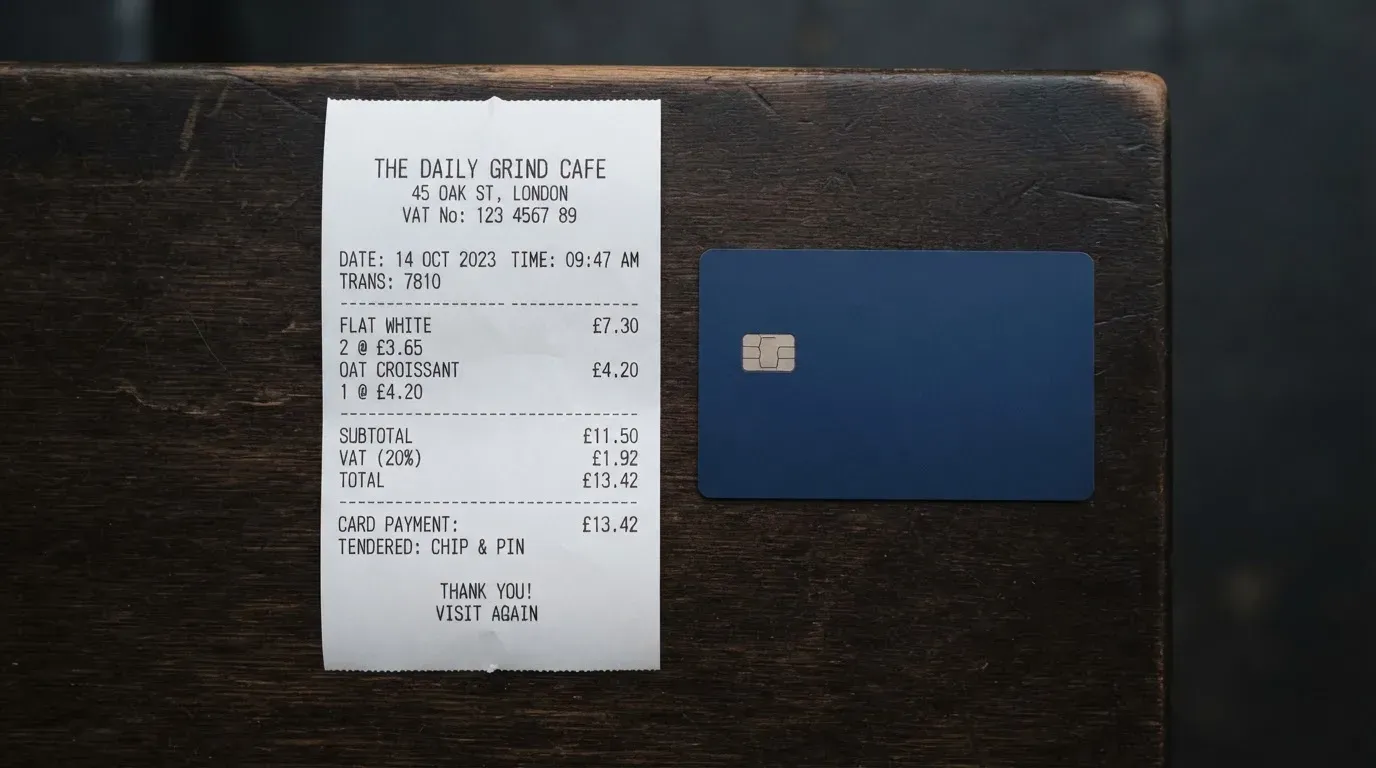
| Fee or limit | Value |
|---|---|
| Physical card creation | €0 |
| Virtual card creation | €0 |
| Monthly or annual fee | not listed |
| Crypto exchange on card spend | 0.1% + €1 |
| FX fee | not listed |
| ATM withdrawal fee | not listed |
| Card payments, Tier 1 | €10,000/month and €10,000/day |
| Card payments, Tier 2 | €15,000/month and €10,000/day |
| Overall outbound, Tier 1 | €10,000/month |
| Overall outbound, Tier 2 | no limit stated |
| ATM withdrawals | €3,000/month and €350/day (both tiers) |
Fees are quoted in euros. The currency the card spends in is not stated — and that is the single most useful number missing from these pages, because a card that spends in euros while you are buying in dollars is spending through a conversion you cannot see the price of.
Now the three everyday payments, because abstract fee tables do not tell you what you will actually pay.
No fee is stated for a same-currency card purchase. This is the case where Confidopay is at its best, and it is a real case — a euro balance spent in the eurozone.
A payment in dollars, from a euro balance. The conversion is quoted at 0.1% plus €1. The FX fee is not listed. So you know one component and not the other, and the missing one is usually the larger. Assume you are paying an unknown amount on top and treat that as a reason to avoid foreign-currency spend rather than a reason to price-compare.
A 200-euro cash withdrawal. The withdrawal is inside the €350/day and €3,000/month limits. The ATM fee is not listed. This is the classic prepaid-card trap: free card, fee at the cash machine, and the fee is the one number nobody prints until you are standing in front of the machine. Ask for it in writing before you rely on cash.
Two more things worth knowing. There are only two KYC tiers and no paid tiers — you do not unlock better fees by paying more, which is a genuinely simple model. And on-chain network fees for your deposit are charged by the blockchain, not by Confidopay, so a transfer on a busy network will cost you something the card’s own pricing does not show.
Top up: how the balance gets there
You deposit crypto, then either convert to fiat or spend directly. The supported assets and networks are:
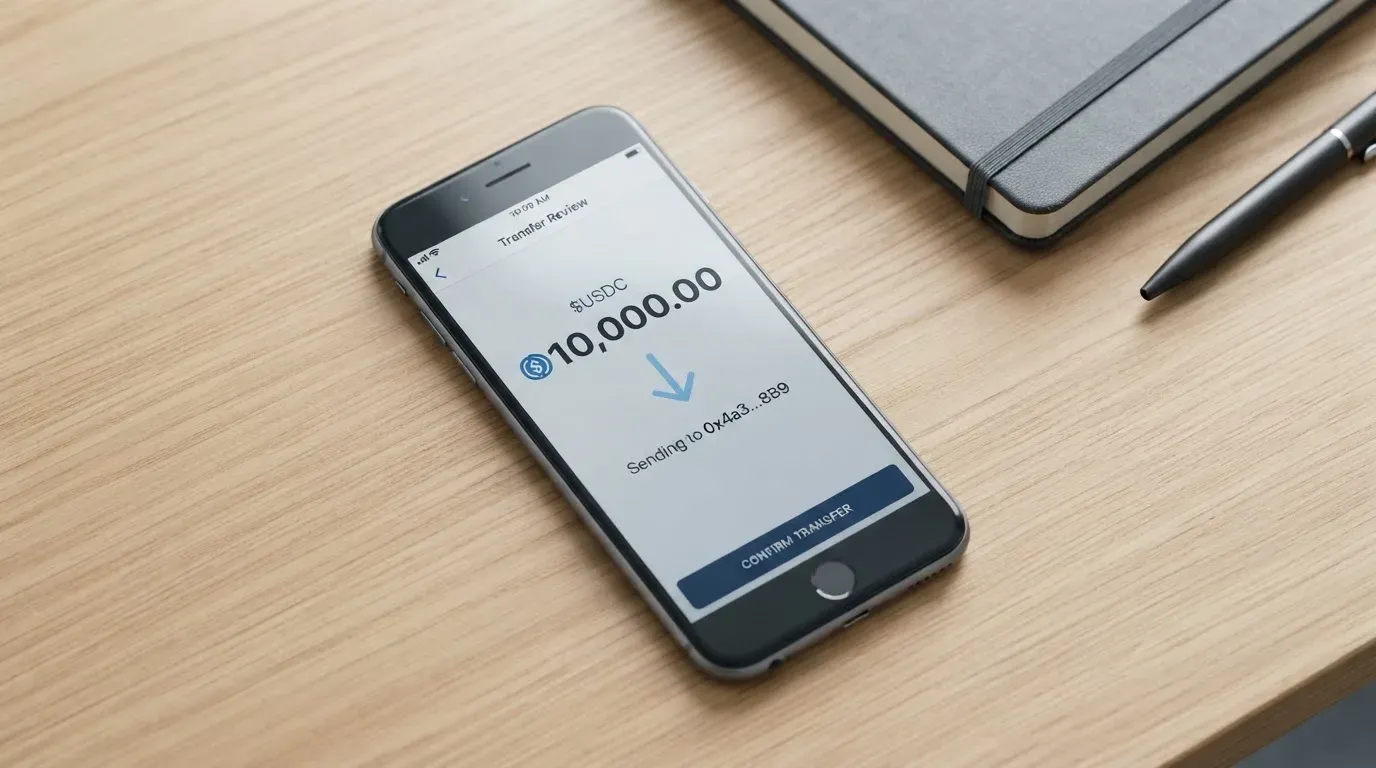
- BTC
- BTC Lightning
- ETH
- USDC on ERC20 (Ethereum)
- USDC on Polygon
- BNB on BNB Smart Chain
USDT is not listed. If USDT is what you hold — and USDT is one of the two stablecoins that dominate the market — you have a problem the card does not solve. You would need to convert it somewhere else first, and that means another set of fees and another counterparty.
The charging model is symmetrical and worth reading twice: crypto deposit 0.1% + €1, and bank transfer in 0.1% + €1. Minimum deposit is not stated.
That symmetry hides an asymmetry that matters a lot. On the way out, crypto withdrawal costs 0.1% + €1 plus a third-party network fee, and bank transfer out costs 0.1% + €1. The fixed €1 is brutal on small amounts: a €20 top-up costs you €1.02 in fees, more than five per cent. The card is cheapest for larger transfers, and if you are moving small sums around, count the €1 twice before you decide.
Two further details. If you close the account, the return of your balance is not described. And the company may close accounts with 30 days’ notice, or immediately where fraud is involved. So the exit path is less defined than the entry path — worth asking about before you send a large balance.
Networks are the other trap. Blockchain transfers are irreversible, so a deposit sent on a network the provider does not support, or to an address belonging to a different network, can be lost or need manual support recovery with no guarantee. Check the network name on both sides before you press send. Note also that Circle stopped supporting USDC on Tron in February 2024, so “USDC over TRC20” is not a native option here, and gas on Ethereum must be paid in ETH — a wallet holding USDT with no ETH cannot send it at all.
Paying with it every day
This is where the card is strongest, and it is why the everyday-use score is a perfect 10.
Apple Pay and Google Pay are supported for both the virtual and the physical card. That matters more than it sounds. Adding the card to a phone wallet means the card number is replaced by a device-specific token stored in the Secure Element, never on the phone maker’s servers, and each payment carries a one-time dynamic code. In practical terms: pay by phone at a terminal, and you stop worrying about a physical card being lost or skimmed.
ATM withdrawals are available with the physical card, at €3,000/month and €350/day on both tiers.
Other everyday details:
- Cashback is not mentioned on the card pages. Do not assume any exists.
- The card is a stored-balance instrument. You convert or load first, and the card spends only that balance — so it cannot overdraw. That is a genuine protection, even though it means you are always spending money you have already moved.
- Blocked merchant categories are not stated. This one deserves attention: many issuers block gambling (MCC 7995) by policy rather than by law, and the list varies by issuer. You cannot tell from the public pages whether travel, fuel or subscriptions pass.
- Address verification can cause declines. AVS compares the numeric parts of the billing address you type against issuer records, and it is generally unavailable for foreign-issued cards. A card issued in one country looks foreign to a merchant in another.
- Apps on Google Play and App Store. The store listing links were not resolved and ratings were not read, so I have no view of what users report there.
One reassurance and one warning. The card sits on a normal payment network, so 3-D Secure applies — Visa’s brand is Visa Secure, Mastercard’s is Identity Check — meaning an extra identity step on online payments that is normal for any card. But a declined authorisation can leave a hold on funds for several days, typically up to seven. Budget for that if you plan to spend a large balance in one go.
What can go wrong
Let me separate what the record shows from what the record is silent about.
Who is actually behind this. Confidopay UAB is a Lithuanian company, no. 306414477, Mėsinių g. 5, Vilnius. The card is issued by Wallester AS in Tallinn, Estonia (reg. 11812881). Virtual asset services and the virtual IBAN come from Lightspark Payments Europe AS, which holds an Estonian VASP licence, FVT000546.
That is the standard shape for this category and it is reassuring in one specific way: an EMI in the EU can issue e-money, payment cards and e-wallets but cannot lend, and it must safeguard customer funds by segregating them in dedicated accounts or insuring them. Those funds are not bank deposits and may not be covered by a deposit guarantee scheme — so you are trusting an e-money institution, not a bank.
The custody question is not answered. The card’s pages state encryption, multi-factor authentication, PCI DSS processing, real-time monitoring and instant notifications. The custody model and safeguarding arrangements are not stated. So the question “do I hold the keys, or do they?” has no public answer. With a custodial wallet the provider holds the credentials and you must trust them completely; with a self-custody-linked card the funds stay in your wallet until the moment of payment, and you carry the risk of key loss, phishing, and clipboard malware that silently swaps a copied address. Crypto transfers are typically irreversible and a stolen key has no recovery path. Custodial platforms have a real history of failure: Mt. Gox (about US$350 million reported stolen, 2011–2014), Coincheck (about US$400 million, 2018), Ronin Network (US$625 million, 2022).
No complaints found — and no complaints page found. I found no official incidents, and no Trustpilot or Reddit page for Confidopay in a single search. That is genuinely neutral. It is not a track record. It could equally mean a clean young operation or a customer base too small to have generated disputes. No complaint themes are available because there is no page to read them from. One silver lining: if there is no complaint page, then complaints are presumably not being managed on one.
Dispute handling. Chargebacks are not addressed on the public pages — that is, if you buy something fraudulent with this card, the mechanism for getting your money back is not documented. US debit card reversal rights come from Regulation E and credit card rights from Regulation Z; prepaid-card coverage varies and should not be assumed. Confirmed and unaddressed in the same product: complaints are acknowledged in 2 business days and resolved in 7–10 business days, which is a stated, published commitment.
Programme closure is a real category risk. Visa terminated its global agreements with FTX on 13 November 2022 and the FTX US debit card was wound down by its issuer. WaveCrest, a Visa card issuer that supplied crypto card brands, was suspended by Visa in Europe in 2018, closing all WaveCrest-issued Visa programmes. Closures follow a pattern: a notice period, then loading and spending stop, then you are asked to withdraw what is left. The Hungarian suspension shows the same shape — an onboarding stop with no date attached. When a card depends on a licence, a partner and a bank account, those three can change without asking you.
Regulation is moving underneath it. MiCA, the EU’s markets-in-crypto-assets regulation, took legal effect in June 2023; the rules on stablecoins applied from 30 June 2024 and the CASP provisions from 30 December 2024. E-money tokens may be issued only by a credit institution or an electronic money institution. Transitional “grandfathering” runs until 1 July 2026 or until a provider is authorised or refused, whichever comes first — that date is now behind us or very close to it, and providers are being authorised or wound up. ESMA keeps an interim register of authorised CASPs, and a CASP authorised in one member state can serve the whole EU. A card is regulated separately from the crypto side, so a product like this commonly rests on two licences at once.
Sanctions screening applies to the money, not just the person. Tether says it disables tokens in wallets on the OFAC sanctions list and has frozen funds tied to illicit activity. Stablecoins are not censorship-proof, and a card funded from one inherits that.
Support. [email protected], live chat Monday to Friday 09:00–17:00 CET, email replies in 24–48 business hours. Note that email figure: it is stated in *business hours*, and it can run past two days. There is no weekend or evening live chat.
Finally, taxes, which are yours and not the card’s: the IRS treats digital assets as property, so exchanging them for goods, services or dollars generally produces a taxable gain or loss, measured in local fiat currency at fair market value on the date of the transaction. Each card payment funded from crypto may therefore be a separate disposal. That is not advice — it is a reason to keep records.
What to take instead
I looked at three alternatives on comparable terms. None of them is clearly better; each trades away something different.
| Card | Score | Cost | Card fees | Crypto in | Key limit |
|---|---|---|---|---|---|
| Confidopay | 7.6 / 10 | €0 physical and virtual, no monthly fee stated | 0.1% + €1 conversion | BTC, Lightning, ETH, USDC (2 networks), BNB | EEA/Swiss only; Hungary suspended |
| International Visa Card | 6.7 / 10 | $5 issuance; plans free / $9 / $19 per month | USD use free; foreign currency = Visa rate + 2% FX fee | USDC or USDT into a USD account, free; USD, EUR, SEPA, SWIFT, FedNow | Long exclusion list of countries; physical card “coming soon” |
| UNi Card | 6.1 / 10 | No annual fee | No FX fee; live OTC rates, “no hidden exchange fees” | Not stated | Eligibility not stated |
| Morse | 7.5 / 10 | Issuance and monthly fee not stated | “Zero foreign exchange fees or markups”; card use online and contactless free | USDC, USDG, EURC via Solana free; others fee; self-custodial wallet | Closed beta in 15 named countries incl. Switzerland, UK, Singapore; card fully virtual |
If you are not in the EEA, these are the options. The International Visa Card is a U.S.-issued Platinum Visa, virtual, paying in USD, and it explicitly refuses residents and registrants of a long list — Belarus, mainland China, North Korea, Cuba, India, Iraq, Iran, Israel, Myanmar, Nepal, Nicaragua, Russia, Syria, Turkey, Ukraine, Venezuela, Vietnam — with FATF grey-list countries reviewed case by case. Note the rule is by residence or registration, not citizenship. The physical card is “coming soon”. Its 2% FX fee is the sharpest number in this table.
UNi Card is the cleanest on fees: a multicurrency Mastercard spending from the account balance, no annual fee, no foreign transaction fee, conversion at live OTC rates. It also has “Spend-to-Earn rewards up to 3%”, which Confidopay does not mention. But its eligibility and funding routes are not stated, which for a reader who cannot open a normal account is a serious gap.
Morse is the nearest rival on score, and the most interesting structurally: fully virtual Visa prepaid, spending from a balance in any currency, “zero foreign exchange fees or markups” at the real Visa rate, and paying online and contactless is free. Deposits by debit card, stablecoin transfer, or bank details; USDC, USDG and EURC via Solana are free while other tokens and chains carry a fee; and the wallet is self-custodial, which answers the custody question Confidopay leaves open. Its catch is geography: it works by residence, not citizenship, in over 140 countries, but fifteen named countries are closed beta needing an invite — including Switzerland, the UK, Singapore, Japan, Australia and Türkiye — and the full list is not published, so you must check the app.
My honest read: if you are in the EEA, hold crypto and want free card creation, Confidopay is hard to beat. If you are outside it and outside those exclusions, Morse is worth a look because of the self-custody and the zero-markup claim. If your problem is cost rather than eligibility, UNi’s no-FX-fee structure is the one to test, provided you can find out how you qualify.
Who I would recommend it to
I would recommend this card, without hedging, to an EEA resident who already holds crypto, who has been refused or delayed by ordinary banks, and who wants a card for everyday spending in the eurozone without paying to open it. For that person the combination of €0 issuance, no stated monthly fee, 0.1% + €1 conversion, instant virtual card, Apple Pay and Google Pay, and no USDT requirement makes this one of the more generous cards in the category.
I would not recommend it, and would say so plainly, if you are outside the EEA or Switzerland, if you are in Hungary, if you plan to spend mainly in the United States or other non-euro markets, if your crypto is held mainly in USDT, or if you need a card for cash withdrawals and are pricing the ATM fee. It would also be the wrong choice if you cannot obtain a utility bill or bank statement for proof of address, since that is the standard Tier 2 document.
The single question I would put to support before sending money, in this order: what is the FX fee and the ATM fee; what currency is the card issued in; where does physical delivery go, how long, and at what cost; who holds the crypto, and under what safeguarding; and what happens to my balance if the account is closed. Four of those five are not on the public pages. A provider that answers them plainly is worth more to you than a fee that happens to be low.
Frequently asked questions
What is Confidopay card?
Confidopay is a payment card you fund from crypto rather than from a bank account. It is issued by Wallester AS in Estonia, with the crypto side run by Lightspark Payments Europe AS under an Estonian VASP licence. You load BTC, ETH, USDC or BNB, and the card spends a converted euro balance. Confidopay UAB is the Lithuanian company behind the service, and the card is aimed at EEA residents.
How does the Confidopay card work?
You deposit crypto, optionally convert it to fiat, and the card spends that stored balance like a prepaid card. Because it is a stored-balance instrument, it cannot overdraw — the card only ever draws on money you have already moved in. Payments route over a normal card network, so 3-D Secure applies on online purchases, and you can add either card type to Apple Pay or Google Pay.
Is Confidopay a bank?
No. It is an e-money and payment-services setup, not a bank. Confidopay UAB is a Lithuanian company, the card comes from Wallester AS, and the crypto and virtual IBAN services come from Lightspark Payments Europe AS. An electronic money institution in the EU can issue e-money and payment cards but cannot lend, and it must safeguard customer funds separately — though those funds are not bank deposits and may not sit under a deposit guarantee scheme.
Who owns Confidopay?
The card’s public pages name Confidopay UAB, registered in Lithuania under number 306414477, at Mėsinių g. 5, Vilnius. The card programme itself is held by Wallester AS in Tallinn, Estonia, registration 11812881. Virtual asset services are provided by Lightspark Payments Europe AS under VASP licence FVT000546. Ownership beyond these entities is not stated.
Can I get the Confidopay card in my country?
Only if you have citizenship or residency in an EEA state or Switzerland, and for the cards themselves you must be an EEA resident. Hungarian onboarding is suspended with no date given. Citizens of Russia are excluded unless they also hold EU/EEA or Swiss citizenship. Separately, card payments are blocked in listed jurisdictions including Russia, Belarus, Ukraine (partial), UAE and Türkiye.
Does the Confidopay card require KYC?
Yes, in two tiers. Tier 1 needs an ID card or passport for EEA and Swiss citizens, a passport for others, plus a selfie; third-country citizens also need a residence permit, and proof of address may be requested. Tier 2 triggers at €15,000 virtual-asset inflow or €25,000 total, requiring proof of address — a utility bill or bank statement within three months, mobile bills not accepted — and source of funds, within 30 days.
Is the Confidopay card free?
Card creation is €0 for both the physical and the virtual card, and no monthly or annual fee is listed. Spending from a euro balance in the eurozone appears to carry no stated fee. Beyond that: crypto exchange on card spend is 0.1% plus €1, deposits are 0.1% plus €1, but the FX fee and the ATM fee are not listed, which is where the cost could still be hiding.
How do I top up the Confidopay card?
Deposit BTC, BTC Lightning, ETH, USDC on ERC20, USDC on Polygon, or BNB on BNB Smart Chain, then convert to fiat or spend. USDT is not listed. Crypto deposits cost 0.1% plus €1, as does a bank transfer in; minimums are not stated. Check the network on both sides carefully — transfers are irreversible, and a wrong network can mean lost funds.
Is the Confidopay card safe?
Take it in layers. The card pages list encryption, multi-factor authentication, PCI DSS processing, real-time monitoring and instant notifications, and the issuer is an established Estonian institution. But the custody model and safeguarding arrangements are not stated, so whether you or Confidopay holds the crypto is unanswered. Support runs Monday to Friday 09:00–17:00 CET, and email replies take 24–48 business hours.
Is the Confidopay card worth it?
Worth it if you are an EEA resident with crypto who wants free card creation and euro spending, and if a normal bank card has been hard to get. Not worth it if you are outside the EEA, based in Hungary, hold mainly USDT, or need a card in another currency — since the FX fee, card currency and ATM fee are not stated publicly. Get those three answered before you move a large balance.
Top app and neobank cards by score – cryptocardtop
Content created by the «cryptocardtop» team