
A practical look at the OSMO virtual Visa and what it actually costs to spend Bitcoin and stablecoins in Latin America
 Available in US
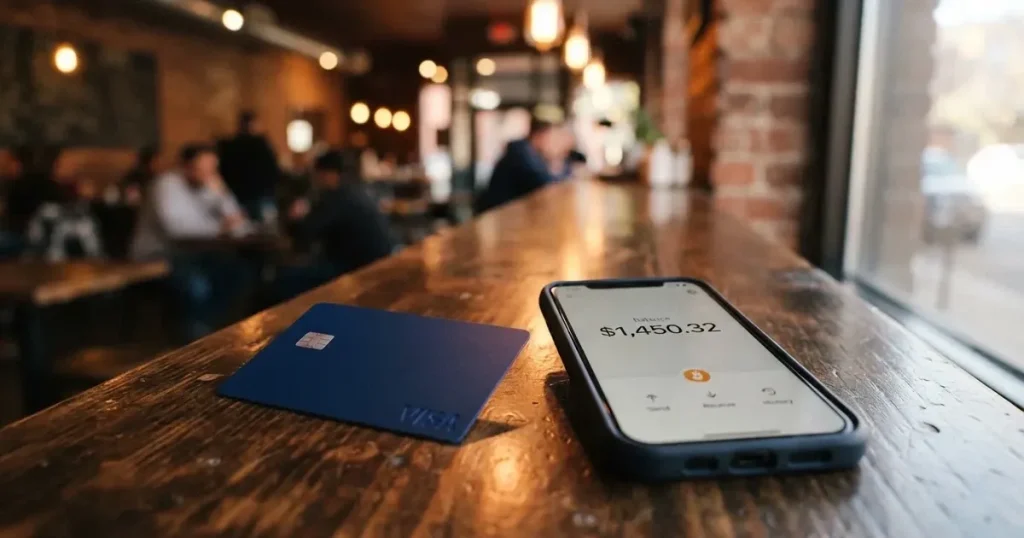
OSMO is a virtual Visa debit card built for people in Latin America who want to spend their Bitcoin and stablecoin balances like ordinary money. If you live in one of the sixteen countries where OSMO operates, hold dollars or Bitcoin, and find it hard to get a regular bank card, the OSMO card does something specific and useful: it turns a crypto balance into a Visa number that works at checkout, in Apple Pay, and for online payments. It is not a bank, it does not lend, and the plastic version is not on offer, but the virtual card is free, the monthly fee is zero, and the app has earned strong marks on the App Store. The catch is that OSMO is geographically narrow, several key card details (FX, ATM, Google Pay) are simply not published, and the public complaint record is thin enough that one negative experience carries weight.
This review walks through who can actually get the card, what sign-up looks like, the real cost of using it, how to top it up, and the everyday experience of paying with it. I will also look at the risks, compare it to a few alternatives, and finish with a recommendation.
Conditions are current as of October 28, 2026.
Verdict
OSMO scores 6.4 out of 10. It is a competent regional product that does the basics well, but it is held back by its narrow geographic reach, the gaps in what the card company publishes about fees, and a complaint profile too thin to confirm reliability beyond a single data point.
| Criterion | Mark | Why |
|---|---|---|
| Who can get it | 4 / 10 | Confined to 16 Latin American countries; the App Store itself notes that product availability depends on where you live |
| Cost | 8 / 10 | No monthly fee, free virtual card; ATM and bank withdrawal both 1%, but the card’s own FX fee is not disclosed |
| Top-up options | 7 / 10 | Bitcoin, USDT, card, bank transfer, and cash all supported; the card’s own top-up fee is not stated |
| Reliability and complaints | 8 / 10 | No official incidents; cards issued through Rain and SOINSA, USD accounts at Bridge Ventures, Bitcoin custody in El Salvador supervised by CNAD, BCR, and SSF; App Store 4.8/5 from about 1.8 thousand ratings; Trustpilot 3.2/5 from a single review |
| Everyday use | 5 / 10 | Virtual Visa adds to Apple Pay right away; Google Pay and ATM access are not stated, and cash only via affiliated agencies |
The reader this card suits is a Latin American resident who already holds dollars or Bitcoin in an app, wants to spend them without first cashing out through a traditional bank, and is comfortable with a virtual card rather than plastic. The reader it does not suit is anyone outside the listed countries, anyone who needs a physical card, anyone who relies on Google Pay, and anyone who needs the card’s FX mark-up to be published before they sign up.
Who Will They Give You the Card
OSMO is only available in Latin America. The starting list of countries the company names is Costa Rica, Guatemala, El Salvador, Panamá, Honduras, República Dominicana, Argentina, Colombia, Chile, Ecuador, México, Uruguay, Paraguay, Puerto Rico, Perú, and Bolivia. The list has sixteen entries, which is a meaningful footprint for the region but leaves the rest of the world, including the United States, Canada, the European Union, the United Kingdom, and most of Asia, without access.
The App Store listing makes the constraint explicit: it warns that “product availability depends on where you live.” That is a normal regulatory boundary for a card product, and it reflects the licences and banking partners OSMO works with rather than a marketing choice. The relevant point for you is that eligibility is decided by residence, not citizenship, and the boundary is drawn at the country list, not at the passport.
If you live in one of those sixteen countries you can create an account. Sign-up is done with an email or phone number, takes about 30 seconds on the app, and the identity check is also done in the app under a section the help centre calls “verificación de identidad.” The specific documents the check needs, whether a proof of address is required, and what tier of verification unlocks the card versus the wallet are not stated on the public pages. The help centre has a KYC collection with six articles, which suggests there is depth to the verification process, but the details are not surfaced in the public material I worked from. If you are about to sign up, the practical question is which document the app asks for at the point you actually try to load the card; the answer is not in the marketing.
What the public pages do confirm is that the card product is built around a virtual Visa International debit card, free at issuance, with the option to spend a USD balance that is auto-converted to the local currency at the point of sale. Visa cards are issued by Rain, which sits under Signify Holdings; Mastercard cards are issued by SOINSA. That is the issuer chain a merchant’s terminal would see.
How to Get It
Getting the card is a matter of installing the OSMO app, creating an account with an email or a phone number, and passing the in-app identity check. Sign-up is reported to take about 30 seconds; the identity step is the part that can vary, because the public pages do not state the document tier required for the card specifically. Because OSMO is virtual-only, there is no delivery step, no shipping address to manage, and no waiting for the post.
The card you receive is a virtual Visa International debit card. You can add it to Apple Pay straight away, which is the route most users in the region would use at a physical terminal. There is no physical card mentioned in the public material, so if your use case depends on a piece of plastic, OSMO does not currently fit.
The onboarding steps, in order, are:
- Install the OSMO app and create an account with email or phone.
- Complete in-app identity verification under the “verificación de identidad” section.
- Fund the account (see the top-up section below).
- Add the virtual Visa to Apple Pay to spend from the USD balance.
Because identity verification is done in the app and the document requirements are not public, the only honest way to describe the process is that the sign-up itself is fast and the verification step is the part you have to be ready to spend a few minutes on with your ID document in hand.
Fees: What It Really Costs
The cost picture is mostly favourable, with two important gaps. On the positive side, the virtual card is free to issue and the monthly fee is zero; the company states this as “$0 de cuota mensual.” On the negative side, the card’s own FX mark-up is not stated, the ATM fee is not stated, and the card top-up fee is not stated. Those are the three numbers a careful spender would want before they commit, and the published material does not give them.

The full fee schedule lives on the Tarifas page in Spanish, and the figures that are public are:
- Monthly fee: $0.
- Virtual card issuance: free.
- Cash withdrawal at an affiliated agency: 1% (immediate).
- Bank withdrawal: 1% (one to two business days).
- Receiving USD: no cost.
- Bitcoin send: 3%.
- Bank transfer (SINPE): fee not stated separately.
- Card FX mark-up: not stated.
- ATM fee: not stated.
- Card top-up fee: not stated.
- Bitcoin purchase minimum: from $1.
The pattern is that platform-level fees are disclosed and competitive, but card-specific fees are not. The way to read this is that the conversion cost you pay when you spend in a currency you do not hold is not visible on the public page, which means the effective cost of a foreign-currency purchase can only be measured by trying a small payment and comparing it to the mid-market rate. For a card whose main use case is “spend a USD balance anywhere in Latin America,” that is a meaningful gap.
To make the everyday picture more concrete, here is how the published fees apply to three common situations:
- Buying coffee in your local currency from a USD balance. The card converts USD to local currency at the point of sale. The platform does not state its own FX mark-up, so the all-in cost is the network conversion plus whatever the card adds on top. The merchant sees a Visa transaction; the rate is Visa’s, plus OSMO’s undisclosed mark-up if any. The monthly fee is zero regardless of how often you tap.
- Withdrawing cash at an affiliated agency in cash. The fee is 1% and it is immediate. This is the published way to get physical cash from an OSMO balance. ATM access is not stated, so the affiliated agency is the only published route.
- Sending Bitcoin out of the OSMO wallet to an external address. The fee is 3%. This is not a card fee; it is a wallet fee, but it is the figure most likely to matter if you want to move Bitcoin off the platform.
If you are a person who keeps a USD balance, spends mostly in USD-pegged situations, and only occasionally converts or withdraws, the published cost is essentially the 1% withdrawal fee and whatever the unstated FX mark-up turns out to be. If you are a person who needs a fully transparent card with every mark-up disclosed in advance, OSMO is not that product today.
Top Up
Funding the card is the part of the product that is most fully described, and it is one of the stronger features. You can top up the OSMO balance with Bitcoin, with USDT, by card or bank transfer, or with cash, and the balance you hold is a USD balance that the card then spends from.
The accepted crypto routes are:
- Bitcoin, on the Bitcoin network.
- USDT, on the Bitcoin, Lightning, and Polygon networks.
- Bitcoin via Lightning.
- USDT via Polygon.
The choice of network matters because the network is what determines the speed and the cost of the deposit. Lightning is generally the cheapest and fastest for small amounts, Bitcoin mainnet is the most universal but more expensive, and Polygon is a popular choice for USDT because the fees are low and the confirmations are quick. Receiving USD in the OSMO balance is free, and the minimum Bitcoin purchase is set at $1, which makes the product accessible for small top-ups.
The fiat routes are:
- Card top-up (the card top-up fee is not stated).
- Bank transfer (fee not stated).
- Cash top-up at an affiliated agency (1% on cash withdrawal is the published figure for cash back out, but the cash top-up fee is not stated as a separate number).
Once the USD balance is funded, the card spends from that balance, and at the point of sale OSMO auto-converts to the local currency if you do not hold a balance in that currency. This is the “pre-loaded balance” model: you top up first, then spend, and the card cannot overdraw because it is a prepaid-style product on a stored balance. In card-industry terms, that is closer to a prepaid card than to a debit card that pulls from a bank account at the moment of purchase, even though OSMO markets the product as a debit card.
The practical advice is to fund with USDT on Polygon or with Bitcoin on Lightning for small, frequent top-ups, and to test a small cash top-up at an affiliated agency to find out the actual fee before committing a larger amount. The card top-up route is the one where the absence of a published fee is most awkward, because the fee is paid at the moment of funding and there is no published rate card to check against.
Paying With It Every Day
The everyday experience of OSMO is shaped by what is and is not published. The strong points are that the card is a Visa number that works anywhere Visa is taken, and that it can be added to Apple Pay straight away, so the in-store experience is just a tap. The weaker points are that Google Pay is not stated, ATM access is not stated, blocked merchant categories are not stated, and rewards are not stated.
What this means in practice is that the everyday usability is high if you are an iPhone user, lower if you are an Android user, and unknown at an ATM. The contactless experience is the one the company is most confident about, because the virtual card is built to be tokenised into a wallet immediately, and Apple Pay’s Device Account Number architecture means the actual card number is never shared with the merchant or stored on Apple’s servers. Each tap uses a one-time dynamic security code.
The app itself is well-regarded: the App Store rating is 4.8 out of 5 from about 1.8 thousand ratings as of October 2026. The Google Play listing exists but the rating was not captured. A high App Store score with that many ratings is a useful, if not conclusive, signal that the everyday experience is smooth for most users, at least on iOS.
What is missing from the public material is also worth flagging, because each gap is a question you will have to answer for yourself:
- ATM access. The card page does not say whether the virtual card works at an ATM. Cash access is via “agencias afiliadas” instead.
- Google Pay. Whether the virtual card can be added to Google Pay is not stated.
- Blocked categories. Some card programmes block gambling, crypto purchases, or specific merchant categories. OSMO does not publish a blocked list.
- Rewards. No cashback, points, or sign-up bonus is described in the public material.
- Disputes. The process for disputing a charge is not stated on the public pages.
If you are choosing between this card and one that publishes every one of those points, that difference is the practical reason to lean toward the more transparent product, even if the published fees are higher. The opposite is also true: if you do not care about Google Pay, do not use ATMs, and have no interest in rewards, the gaps do not affect you.
What Can Go Wrong
The risk picture for OSMO has three layers: the company’s structural set-up, the published safety features, and the public complaint record, which is thin.
On the structural side, OSMO is not a bank and the company is clear about it. The brand sits under HODL Group, USD accounts are held at Bridge Ventures LLC, Visa cards are issued by Rain (a Signify Holdings entity), Mastercard cards by SOINSA, and the Bitcoin custody for the El Salvador operation sits in a separately regulated entity called Osmo El Salvador S.A. The El Salvador entity operates under the supervision of CNAD, BCR, and SSF, which are the country’s financial regulators. That is a layered set-up, with the regulated entities each holding a piece of the stack, and it is closer to the way most modern crypto card programmes are organised than to a single all-in-one fintech.
On the safety features, the app offers an instant card freeze and unfreeze, the ability to refresh the digital card details, encryption, and the claim that fiat balances are backed 1:1 by bank accounts and Bitcoin holdings are backed 1:1, with 80% in cold storage and 20% in hot wallets. The 1:1 backing claim is a marketing statement; the segregation of customer funds is what matters in practice, and that is a function of the licences held by the issuing partners rather than the OSMO brand.
The complaint record is where the picture is incomplete. There are no official incidents in the public material. Trustpilot shows 3.2 out of 5 from a single review, and that single review is a 1-star report from mid-July 2026 about a USDC deposit on Polygon that was not credited, with support reportedly answering “investigating” for three days. One data point is not a pattern, and the score is dragged down by that one review because there is only one. The honest reading is that the public complaint volume is too low to draw a reliability conclusion either way.
The other risk to keep in mind is structural rather than incident-based. Crypto cards depend on a chain of partners: the network (Visa or Mastercard), the licensed issuer, the bank that holds the fiat balance, and the brand on the front. If any of those partners has a regulatory or commercial problem, the card can be paused or wound down. The history of the category includes Visa terminating its global agreements with FTX in November 2022, and the 2018 suspension of WaveCrest that closed a number of European crypto Visa programmes. OSMO’s set-up is different in detail, but the structural exposure is the same.
The practical advice is the same as for any card that holds your balance: do not keep more on the platform than you can afford to have temporarily inaccessible, and be ready to wait days rather than hours if support gets involved.
What to Take Instead
If OSMO is not a fit, three alternatives cover most of the same ground. None of them is a direct replacement, because OSMO’s strength is its Latin American focus and its free virtual card, and the alternatives each make a different trade.
| Card | Score | Region | Card form | Top-up | Key feature | Key trade-off |
|---|---|---|---|---|---|---|
| International Visa Card | 6.7 | Many countries, not the OSMO excluded list | Virtual, physical “coming soon” | USDC/USDT, USD, EUR, SEPA, SWIFT, FedNow | Three plans (Classic free, Pro $9, Max $19); no FX fee in USD on all plans | 2% FX fee in non-USD; $5 virtual issuance |
| UNi Card | 6.1 | Not stated | Mastercard, multicurrency | Not stated | Spend-to-Earn rewards up to 3%; live OTC rates | No annual or FX fee, but little public detail on the card itself |
| Morse | 7.5 | 140+ countries (P2P); 70+ with local add/withdraw | Virtual Visa prepaid | Debit card, stablecoin on Solana (USDC, USDG, EURC free), Account Details | Zero FX mark-up, real-time Visa rate; self-custody wallet | Card page does not state issuance or monthly fee; closed-beta list of countries needs an invite |
The International Visa Card is a closer fit for someone who wants a US-issued Visa and is happy to pay a $5 issuance fee and a 2% FX mark-up on non-USD spending. It is a paid product with three subscription tiers, and the headline feature is that USDC and USDT deposits are credited 1:1 to the USD balance with no deposit fee. The trade-off is that the country list is more restrictive than it looks, with Belarus, mainland China, North Korea, Cuba, India, Iraq, Iran, Israel, Myanmar, Nepal, Nicaragua, Russia, Syria, Turkey, Ukraine, Venezuela, and Vietnam all excluded, and purchases blocked in North Korea, Cuba, Iran, Russia, Syria, Ukraine, and Venezuela. If you live in one of those countries, this card is also not for you.
UNi Card is a Mastercard multicurrency product that spends from a UNi.Global account. It advertises no annual fee, no foreign transaction fee, and “Spend-to-Earn” rewards of up to 3%. The public material is thin on country coverage and on the card form, which is the main reason its score is lower. The pitch is that the underlying asset conversion happens at live OTC rates, with no hidden exchange fees, and the rewards layer is the differentiator.
Morse is the strongest of the three on transparency. It advertises zero FX mark-ups, the real-time Visa rate, and free USDC, USDG, and EURC deposits on Solana. The wallet is self-custodial, which means you keep the keys until the moment of payment. The trade-off is that the card page does not state the issuance fee or the monthly fee, and a list of sixteen countries needs an invite code to join the closed beta. If you are in one of those sixteen, it is the most transparent of the three alternatives.
The simplest way to choose among the three is to decide which trade-off you can live with. If region matters more than features, OSMO is the regional specialist. If US-issued Visa and a USDC 1:1 deposit matter more than the 2% FX mark-up, the International Visa Card fits. If rewards matter and you do not need the country details to be public, UNi Card is the choice. If zero FX mark-up and a self-custody wallet matter and you can get into the closed beta, Morse is the strongest product on the list.
Who I Would Recommend It To
I would recommend OSMO to a reader who lives in one of the sixteen listed countries, holds dollars or Bitcoin in an app already, and wants a free virtual Visa that they can add to Apple Pay and use the same day. The combination of zero monthly fee, free issuance, USDT and Bitcoin top-up routes including Lightning, and an iOS app that scores 4.8 from about 1.8 thousand ratings is enough for that reader to give it a try with a small balance.
I would not recommend it to a reader who lives outside the listed countries, who needs a physical card, who relies on Google Pay, who needs to know the FX mark-up before they sign up, or who plans to keep a large balance on the platform. The geographic restriction is hard, the virtual-only form is a real limit, and the gaps in the published fee schedule are large enough that the all-in cost is not knowable in advance.
The single most important thing to do before you commit is to fund the account with a small amount, add the card to Apple Pay, make a small purchase in your local currency, and check the receipt against the mid-market rate for the day. That single test tells you more than any review, because it answers the one question OSMO does not answer on its public pages: what the card actually costs you to use.
Frequently Asked Questions
What is the OSMO card?
The OSMO card is a virtual Visa International debit card that lets you spend a USD balance, which you fund with Bitcoin, USDT, card, bank transfer, or cash. It is built for residents of sixteen Latin American countries, is free to issue, and has no monthly fee. The card sits on top of a licensed issuer (Rain for Visa, SOINSA for Mastercard) and a US-dollar account held at Bridge Ventures.
How does the OSMO card work?
You fund a USD balance in the OSMO app, then spend from that balance with a virtual Visa. If you do not hold the local currency, the card converts at the point of sale. The card is virtual, can be added to Apple Pay straight away, and works at any merchant that accepts Visa. The app is the place you freeze, unfreeze, and refresh the card details.
Is OSMO a bank?
No, and the company is clear about that. OSMO is the brand under HODL Group. USD balances sit in accounts at Bridge Ventures LLC, Visa cards are issued by Rain (under Signify Holdings), and the El Salvador entity that holds Bitcoin custody, Osmo El Salvador S.A., is supervised by CNAD, BCR, and SSF.
Is the OSMO card available in my country?
Only if you are a resident of one of the sixteen listed countries: Costa Rica, Guatemala, El Salvador, Panamá, Honduras, República Dominicana, Argentina, Colombia, Chile, Ecuador, México, Uruguay, Paraguay, Puerto Rico, Perú, or Bolivia. The App Store listing warns that product availability depends on where you live, and the restriction is by residence, not by citizenship.
How do I get the OSMO card?
Install the OSMO app, create an account with email or phone, complete the in-app identity verification, fund the balance, and add the virtual Visa to Apple Pay. The whole sign-up is reported to take about 30 seconds; the verification step is the part that varies because the document tier is not published.
Does the OSMO card require KYC?
Yes. The app has a “verificación de identidad” step and the help centre has a dedicated KYC collection. The specific documents required for the card product are not stated on the public pages, so the practical answer is to have an ID document ready when you sign up.
How do I top up the OSMO card?
You can top up with Bitcoin (on the Bitcoin network), USDT (on Bitcoin, Lightning, or Polygon), card, bank transfer, or cash. Receiving USD into the balance is free, and the minimum Bitcoin purchase starts at $1. The card top-up fee is not stated, so the only way to confirm it is to test a small amount.
How do I add the OSMO card to Apple Wallet?
Open the OSMO app after your account is set up and the virtual card is issued, then follow the in-app prompt to add the card to Apple Pay. The card is described as ready to add to Apple Pay right away. Google Pay availability is not stated in the public material.
Is the OSMO card safe?
The published safety features include an instant card freeze, the ability to refresh digital card details, encryption, and the claim that fiat and Bitcoin balances are backed 1:1, with Bitcoin held 80% in cold storage and 20% in hot wallets. The structural risk is the same as for any card that depends on a chain of partners: if a network, issuer, or bank partner has a problem, the card can be paused. The public complaint record is too thin to confirm reliability beyond a single data point.
Is the OSMO card worth it?
For a Latin American resident who already holds dollars or Bitcoin, wants a free virtual Visa, and uses Apple Pay, the OSMO card is worth trying with a small balance. For anyone outside the listed countries, anyone who needs a physical card, anyone who uses Google Pay, or anyone who needs every fee disclosed in advance, the gaps in the published material make it hard to call the product a fit without first testing the actual cost in your own local currency.
Top app and neobank cards by score – cryptocardtop
Content created by the «cryptocardtop» team