
The Bitstack card, read end to end: who can order it, what it really costs, and where it falls short
 Available in US
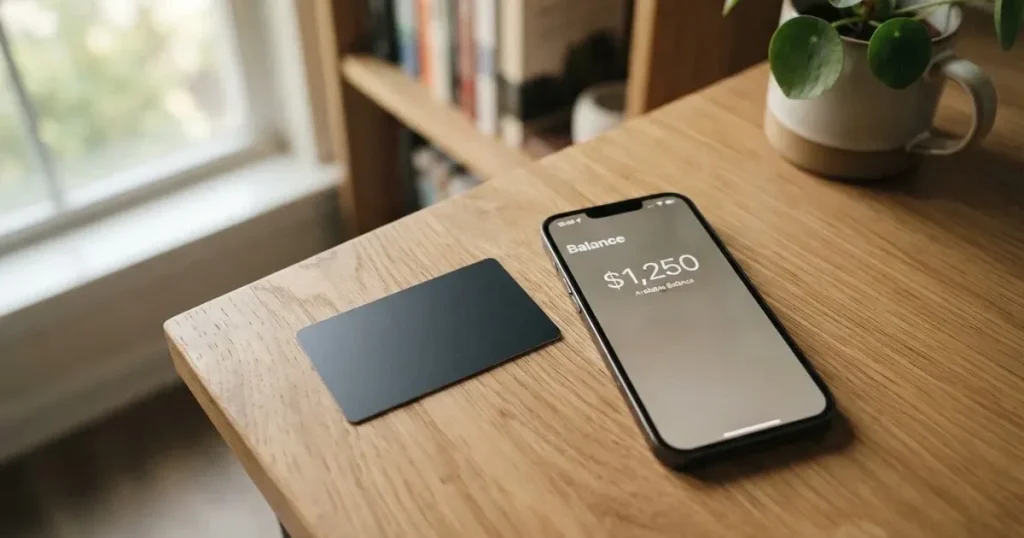
The Bitstack card is a Visa Classic debit card that spends euros from a cash account inside the Bitstack app, while the company behind it is a French crypto-asset service provider registered with the AMF. In practice that means you top up by selling bitcoin in the app, and the card itself never holds crypto. That single design choice explains most of what is good and most of what is frustrating about the product: the user experience is clean and the fees are competitive, but the card is only available to people with a French address, and the list of coins and networks you can deposit is not public.
If you are weighing the Bitstack card against other crypto cards, the key questions are: are you a French resident, are you comfortable selling bitcoin to fund every payment, and does your monthly spending fit inside the limits the card imposes? This review goes through those questions, then the costs in detail, then the risks and the alternatives that exist if Bitstack does not fit your situation.
Conditions on this page are current as of October 28, 2026.
Verdict
Bitstack scores 5.5 out of 10 in this assessment. That is an average of marks for eligibility, cost, top-up options, reliability, and everyday use, weighted by how much each one matters in day-to-day use. The card does well on the things the company controls: registration, the partnership with a regulated French bank, the Bitstack app’s ratings, and the basic fee structure. It does less well on the things the user feels: the residency restriction, the closed list of ways to fund the card, and the way the published pricing page contradicts itself on a couple of important numbers.
| Criterion | Mark | Why it got that mark |
|---|---|---|
| Who can get it | 2 / 10 | France only, including overseas territories, with a gradual rollout and a waitlist for other EU countries |
| Cost | 8 / 10 | No monthly fee, free ATM withdrawals up to EUR 200, free FX up to EUR 1,000 per month, but the pricing page is internally inconsistent on card price and the Plus plan fees |
| Top-up options | 3 / 10 | Card spends euros from a Bitstack cash account, topped up by selling bitcoin in the app; no public list of supported coins or deposit networks |
| Reliability and complaints | 9 / 10 | AMF-registered, partnered with a French bank (BPCE) and a regulated e-money institution (Xpollens), Trustpilot rating of 4.3 out of 5 from 1,417 reviews |
| Everyday use | 5 / 10 | Physical Visa Classic, Apple Pay since 30 June 2026, Google Pay in development, virtual card not yet available |
The card suits French residents who already save in bitcoin and want to spend euros without leaving the Bitstack app. It does not suit anyone outside France, anyone who needs a multicurrency card, or anyone who expects to deposit stablecoins on a public network and have them show up on the card.
Who will they give you the card
Bitstack says the card is available exclusively to residents of France, including the overseas territories. The rollout is gradual: the order option appears in the Cash tab of the app once the account qualifies, and other EU countries sit on a waitlist. Residence is the gate, not citizenship, so the rule is by where you live, not by the passport you hold. That is the one eligibility fact the company states publicly; everything else around identity checks, age, and documents is not stated on Bitstack’s official pages.
A practical point worth flagging: a user report from July 2026 on Trustpilot describes a slow identity verification that ended in rejection, with Bitstack replying that the decision follows regulatory requirements and that specifics are not shared publicly. That tells you two things at once. First, KYC is happening in the background even though the card-ordering page does not list documents. Second, you can be refused without a clear reason, because the rules the company is working under do not require it to publish the detail.
The honest summary is that this is a card for someone who already lives in France, has a French bank account, and is comfortable with the possibility that verification may take a while and may not be explained if it goes wrong. If you are anywhere else, the waitlist is the only door.
How to get it
The signup flow lives in the Bitstack app. You open the Cash tab, choose to order the card, pick a PIN, enter a delivery address, check the total, and pay with your cash account, a bank card, Apple Pay, or Google Pay. The official help article lists the card at EUR 9.99 plus a variable delivery fee, and the pricing page shows Standard at EUR 14.97 or 14.98 with delivery included, a Plus monthly plan at EUR 9.99 with free shipping, and a Plus annual option that includes the card and delivery at no extra cost. The two pages do not agree on the headline price, which is the kind of small thing that erodes confidence in a financial product.
The card is a physical Visa Classic debit card, and a virtual card is planned but not yet available. Card currency is euros in practice: fees are listed in EUR, the cash account is in euros, and foreign-currency spending is converted at the Visa rate. Production usually starts the day after you confirm the order, delivery to metropolitan France takes up to 10 business days after production starts, and overseas delivery can take up to 3 weeks. The delivery fee varies by address and the amount is not stated; the cost of a replacement card is not stated either.
KYC requirements, accepted documents, age limits, and proof of address are not stated on the official pages, which is unusual for a regulated payments product. If you are not prepared to upload documents on request, do not assume the signup will finish in the app.
Fees — what it really costs
The headline numbers are friendly: no monthly subscription, free foreign-currency spending up to EUR 1,000 per month, free ATM withdrawals up to EUR 200 or five withdrawals per month. The fine print is where this card, like most, earns its money. Bitcoin purchase fees depend on your plan and the size of the trade: Standard charges 1.5% under EUR 250, 1.25% from EUR 250 to 1,000, and 1% above EUR 1,000; Plus charges 0.75% flat. Deposits made through Apple Pay or Google Pay carry a 0.70% fee on all plans, and purchases not funded from the cash account carry an extra 0.70% on top.
| Fee or limit | Amount | Notes |
|---|---|---|
| Card issuance | EUR 9.99 (help) / EUR 14.97-14.98 (pricing) | Plus delivery; pricing page lists Standard and Plus options with different totals |
| Monthly subscription | None | “The Bitstack card has no monthly subscription” per the help article |
| Foreign-currency fee | None up to EUR 1,000/month, ~1% above | Conversion at the Visa rate at the time of the transaction |
| ATM withdrawal | Free up to EUR 200/month or 5 withdrawals | Above that, the higher of EUR 1 or 1% per withdrawal; third-party ATM fees may apply |
| Apple Pay / Google Pay deposit | 0.70% | On all plans |
| Bitcoin purchase (Standard) | 1.5% / 1.25% / 1% by tier | Tiered by monthly volume |
| Bitcoin purchase (Plus) | 0.75% flat | |
| Card payment limit | EUR 5,000/month | Cannot be changed |
| ATM limit | EUR 200/week, EUR 1,000/month total | Cannot be changed |
| International payments (Standard) | Up to EUR 1,000/month | |
| International payments (Plus) | Up to EUR 3,000/month |
Three everyday scenarios show how this stacks up. A EUR 40 lunch paid in euros inside France: no FX fee, no ATM fee, no conversion fee, just the bitcoin sale spread and the 0.70% Apple Pay or Google Pay deposit fee if you topped up that way. A EUR 300 hotel in a non-euro country: that single payment is under the EUR 1,000 monthly FX cap, so the only cost is the bitcoin sale spread and any card-deposit fee. A EUR 1,500 flight in dollars in the same month: the first EUR 1,000 is FX-free, the remaining EUR 500 picks up roughly 1% on the excess, on top of the spread. A EUR 250 cash withdrawal at a foreign ATM: that is over the EUR 200 free cap by EUR 50, so you pay the higher of EUR 1 or 1% on the whole withdrawal, and the ATM operator may add its own surcharge shown before you confirm.
There are two plans. Standard has lower monthly fees and lower international payment caps; Plus costs EUR 9.99 per month with free shipping, a higher international cap (EUR 3,000/month versus EUR 1,000), a higher Stackback (up to 1.5% versus 1%), and a lower bitcoin purchase fee (0.75% flat). The pricing page is internally inconsistent about which fees apply to which plan, which is worth verifying in the app before you commit.
Top up — how to fund the card
The card spends euros from a cash account inside the Bitstack app, so topping up the card and topping up the account are the same step. In practice that means you sell bitcoin in the app and the euros land in the cash account, then the card draws on that balance. There is no overdraft and no credit line; when the balance runs out, the card declines. That is the model.
Deposit via Apple Pay and Google Pay costs 0.70% on all plans. The minimum top-up amount, who pays blockchain network fees, and which coins and networks you can deposit are not stated on the card pages. There is no public list of supported deposit networks for the card, and the user-facing deposit flow inside the app is the only place to confirm what actually works. If you are planning to send stablecoins from an external wallet, it is safer not to send anything until you have seen the app accept it once.
The withdrawal path is the other half of funding. Withdrawals back to a bank account are not described on the card pages; Trustpilot users mention bank-transfer withdrawals via support, and neither the fee nor the minimum balance that can be withdrawn is published. If the ability to move money out quickly matters to you, treat that as a question to ask support before you load any meaningful balance.
Paying with it every day
Apple Pay support arrived on 30 June 2026 in app version 3.10.0, and Google Pay is described as in development and not yet available. A virtual card is planned but not yet available. The physical card works anywhere Visa is accepted, including ATMs, and the only spending channels the materials flag as unsupported are the ones in the Stackback exclusion list: person-to-person transfers and top-ups, ATM withdrawals, gambling and cash equivalents, loan repayments, government payments, and some securities purchases. Those are excluded from rewards, not necessarily from spending, but it is worth checking the current policy if any of those categories matter to you.
Stackback is the rewards layer. Bitcoin is paid out once a purchase is fully settled, at a base rate of 0.1% on Standard and 0.15% on Plus, with a minimum payout of 1 satoshi. If you use Bitstack’s automatic savings features (recurring buys and round-ups), the rate can rise to up to 1% on Standard and 1.5% on Plus, capped by the amount you saved the previous month, and then falls back to the base rate once you stop. From 10 August 2026, round-ups count toward the Stackback tier. This is a usable rewards system for someone who already saves in bitcoin, but it is not a cashback card.
The iOS app is rated 4.79 out of 5 from 11,152 ratings on the France App Store, read 2026-10-21; the Google Play rating was not read. The high mark is a positive signal for a financial app, but the rating reflects the French audience that uses it, and Google Pay is not yet supported, so Android users are looking at physical-card use only for now.
If your card is lost or stolen, the official process is: optionally freeze the card in the app first, then call +33 9 69 32 00 61 to block it (state that the card was issued by BPCE), then call +33 9 69 39 03 49 to open a contestation case handled by BPCE. The time frame for raising a dispute is 13 months from the payment settlement date. That sequence is specific, which is good; the wait to reach support is the unknown.
What can go wrong
The card sits on a regulated stack. Bitstack Digital Assets SAS is registered with the AMF as a crypto-asset service provider (registration number A2025-003), is licensed as an agent of Xpollens (an electronic money institution authorised by the ACPR), and the card itself was issued by BPCE. Bitstack’s office is in Meyreuil, France, and the trade register number is 899 125 090 in Aix-en-Provence. The iOS app carries a 4.79 rating, and Trustpilot shows 4.3 out of 5 from 1,417 reviews (read 2026-10-21).
Custodial, not self-custody: Bitstack holds the account credentials, so you must trust the company with the funds in your cash account. Funds are held via regulated payment infrastructure (Xpollens as the e-money partner), every payment needs strong authentication, and there is an instant card-freeze button in the app. There is no built-in insurance, and segregated client funds are not the same as bank deposits and are not covered by deposit guarantee schemes.
The complaint themes in the public reviews are the ones that typically follow a growing fintech: withdrawal and support delays (July 2026), unexplained KYC rejection (July 2026), and card delivery delays (June 2026). There are no official incidents on record. The card freeze step in the dispute process is mandatory by phone, which means a lost phone with the app locked is a real problem, and the contestation process depends on BPCE’s queue rather than Bitstack’s.
The structural risk is the same as for any crypto card: a card network or issuer decision can shut the programme. Visa’s November 2022 termination of its global agreements with FTX and the wind-down of the FTX US debit card are the canonical recent example, and the 2018 WaveCrest suspension is the older one. MiCA’s transitional (grandfathering) period for crypto-asset service providers runs until 1 July 2026 or until a provider is granted or refused a MiCA authorisation, so the regulatory ground under any EU-registered crypto card is shifting through 2026.
Stablecoins are not censorship-proof (Tether has frozen funds tied to illicit activity), and on-chain transfers are irreversible, so a deposit sent on a wrong network can be lost or need manual support recovery with no guarantee. That is a category fact, not a Bitstack fact, but it is worth keeping in mind whenever a card asks you to send coins to an address.
What to take instead
If the French residency requirement rules the card out for you, the alternatives below are the ones that turn up most often alongside Bitstack in this category. Each is a different product, and the score next to it is from the same 10-point system used for Bitstack.
| Alternative | Score | What it is | Why you might pick it |
|---|---|---|---|
| International Visa Card | 6.7 / 10 | U.S.-issued Platinum Visa, virtual, spends in USD | Works in many countries Bitstack does not, with a published list of restricted residences |
| UNi Card | 6.1 / 10 | Multicurrency Mastercard on the UNi.Global account | “No foreign transaction fee”, assets converted at live OTC rates, up to 3% Spend-to-Earn |
| Morse | 7.5 / 10 | Virtual Visa prepaid debit, spends from a Morse Balance in any currency | App in over 140 countries, self-custodial wallet, zero FX markups, USDC and EURC deposits free on Solana |
The International Visa Card is a virtual U.S.-issued Platinum Visa that spends in USD, with virtual card issuance at $5 and no maintenance fee. Plans are Classic (free), Pro ($9/month), and Max ($19/month); card use in USD is free, and foreign currency carries the Visa rate plus a 2% FX fee. Deposits of USDC and USDT into the USD account are free at 1:1, with USD, EUR, SEPA, SWIFT, and FedNow deposits also supported. It is not available to residents of Belarus, mainland China, North Korea, Cuba, India, Iraq, Iran, Israel, Myanmar, Nepal, Nicaragua, Russia, Syria, Turkey, Ukraine, Venezuela, or Vietnam, and purchases are blocked in North Korea, Cuba, Iran, Russia, Syria, Ukraine, and Venezuela; FATF grey-list countries are reviewed case by case.
UNi Card is a multicurrency Mastercard that spends from the UNi.Global account balance. It has no annual fee, no foreign transaction fee, and assets convert at live OTC rates; the Spend-to-Earn reward goes up to 3% with the UNi Card. Physical and virtual form factor, funding source, and residency rules are not stated on the materials read.
Morse is a fully virtual Visa prepaid debit card that spends from a Morse Balance in any currency, with zero FX markups at the real-time Visa rate. The app is in over 140 countries, local add and withdraw are supported in over 70, and the Morse Wallet is self-custodial. Closed-beta countries (American Samoa, Australia, Cape Verde, Guernsey, Hong Kong SAR China, Isle of Man, Japan, Jersey, New Zealand, Serbia, Singapore, Switzerland, Thailand, Türkiye, United Kingdom, Western Sahara) need an invite code, and the card’s own country list is not published. USDC, USDG, and EURC deposits via Solana are free; other tokens and blockchains carry a fee.
If you are outside France and want a card that spends directly from a stablecoin balance, the International Visa Card is the closest to a drop-in replacement. If self-custody matters and you can live with a virtual-only card, Morse covers the most ground. If multicurrency Mastercard acceptance is the priority, UNi Card is the one to look at, once you have confirmed residency and funding in the app.
Who I would recommend it to
The honest read is that the Bitstack card is a good product for a narrow audience. If you live in France, are happy to sell bitcoin to fund every payment, do not need to spend more than EUR 5,000 a month on the card, can live with the EUR 1,000 international payment cap on Standard, and want a card that sits on a regulated stack with a French bank and a French EMI, the Bitstack card is worth ordering. Stackback makes it slightly more rewarding if you also use the savings features, and the free FX up to EUR 1,000 covers most holidays.
If any of that does not apply, the card is not for you. People outside France, people who want to deposit stablecoins from an external wallet, people who need a multicurrency card, people whose monthly spending is over the limits, and people who want a virtual card today will each find a reason to look at the alternatives instead. The pricing page inconsistencies, the lack of a published list of supported deposit networks, and the unexplained KYC rejections reported on Trustpilot are also worth weighing against the regulatory credentials.
The pattern that matters is the one the user feels: this is a French card for French users, and the parts of it that work well work well because the company knows that audience. Outside that audience, the same design choices become friction.
Frequently asked questions
What is the Bitstack card?
The Bitstack card is a physical Visa Classic debit card that spends euros from a cash account inside the Bitstack app. The app is run by Bitstack Digital Assets SAS, a French crypto-asset service provider registered with the AMF, and the card was issued by BPCE.
How does the Bitstack card work?
You hold bitcoin in Bitstack, sell it inside the app, and the euros land in a cash account; the card draws on that balance at the point of sale. There is no overdraft and no credit line, so when the balance runs out the card declines.
Is Bitstack a bank?
No. Bitstack is a crypto-asset service provider registered with the AMF, and the card runs through Xpollens, a regulated electronic money institution, and BPCE, the card-issuing bank. Bitstack itself is not a bank and cash-account funds are not deposit-guaranteed.
Who owns Bitstack?
The card programme is run by Bitstack Digital Assets SAS, registered in Aix-en-Provence (trade register 899 125 090) with an office in Meyreuil, France. Ownership beyond that is not stated in the public materials reviewed.
Is the Bitstack card available outside France?
The official pages say the card is available exclusively to residents of France, including the overseas territories, and that other EU countries are on a waitlist. The order option appears in the Cash tab once the account qualifies.
How do I get a Bitstack card?
Open the Bitstack app, go to the Cash tab, choose to order the card, pick a PIN, enter a delivery address, and pay with your cash account, a bank card, Apple Pay, or Google Pay. Production usually starts the day after confirmation.
Does the Bitstack card require KYC?
Identity checks happen in the background, but the documents, age, and proof of address required are not stated on the official pages. A user report from July 2026 describes a slow KYC that ended in rejection without a published reason.
How do I top up the Bitstack card?
Top up by selling bitcoin in the Bitstack app; the euros land in the cash account and the card spends from there. Deposits through Apple Pay or Google Pay cost 0.70% on all plans; supported coins and deposit networks are not listed publicly.
Is the Bitstack card free?
There is no monthly subscription, but the card itself costs EUR 9.99 plus delivery per the help article (the pricing page shows different totals and is internally inconsistent). Foreign-currency spending is free up to EUR 1,000 a month, and ATM withdrawals are free up to EUR 200 or five withdrawals per month.
Is the Bitstack card safe to use?
The card sits on a regulated stack (BPCE as issuer, Xpollens as EMI, AMF registration for Bitstack) and the iOS app carries a 4.79 rating on the France App Store. Funds are custodial and not deposit-insured, and the public complaint themes are support and delivery delays, plus occasional unexplained KYC rejections.
Top app and neobank cards by score – cryptocardtop
Content created by the «cryptocardtop» team