
A virtual card inside Telegram, priced like a fintech product and governed like an offshore one
 Available in US
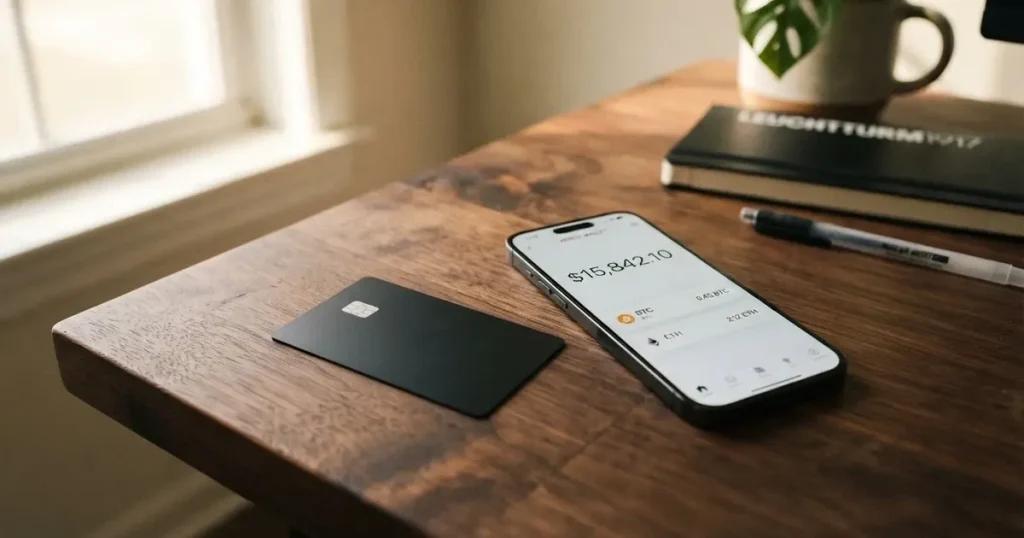
Flowbit is not a bank, and it does not pretend to be one. It is a small company in Dubai that lives inside Telegram and hands out virtual card numbers you load with tether. That combination — instant, app-native, crypto-funded, and light on paperwork — is genuinely convenient for one narrow job. It is also, in the places that matter, less finished than it looks: no physical card, no named issuing bank, no stated network for the deposits it exists to receive, and a dispute fee that is larger than most of the payments you would use it for.
I scored it 5.2 out of 10. That is not a verdict on whether the product works; it is a verdict on how much of what you would need to check before trusting it with money is actually stated. The conditions described here are current as of October 28, 2026.
Verdict: 5.2 out of 10, and it is a specialist tool rather than a general card
The single strongest thing about Flowbit is speed and proximity to Telegram. You register, and a virtual card appears. You send tether, and you can spend it. There is no plastic in the post and no waiting. If you live on Telegram, hold USDT, and want to pay for something online in the next five minutes, nothing else in this category does it more simply.
What you give up for that convenience is visible in the numbers. The card costs money to issue and money per transaction before any exchange rate is involved. The network you must send your tether on is not named on the company’s own pages. The issuing bank is not named either. Support is a Telegram bot. And when something goes wrong with a payment, the Terms charge $45 per disputed transaction and say refunds are not guaranteed.
So: suits you if you want an instant virtual card for USDT, you live inside Telegram, you spend small amounts, and you can afford to treat the balance as spendable rather than as savings. Does not suit you if you need a physical card, a bank you can name, a predictable exchange rate, a real dispute process, or limits high enough for a month of ordinary life.
| Criterion | Mark | Why |
|---|---|---|
| Who can get it | 7 / 10 | Online card “works worldwide”; supported regions “growing”; restricted countries sit in a separate rules document |
| Cost | 3 / 10 | Issue $9.99, transaction $0.25, tether top-up from 3% (4.5% base); unofficial figures also list NFC at $19.99 and Plus at $4.99/month |
| Top-up options | 5 / 10 | Crypto deposits, USDT; the network is not named on the site |
| Reliability and complaints | 6 / 10 | Flowbit Finance LLC-FZ, UAE; not a bank, not an issuer, issuer unnamed; no Trustpilot page found |
| Everyday use | 5 / 10 | Virtual only, instant issue; Apple Pay and Google Pay on the NFC card; no plastic, no ATM |
| Total | 5.2 / 10 | A working convenience product with too much left unsaid |
The audience note is worth stating plainly: this is aimed at Telegram users who want an instant virtual card funded with USDT. That is a real group with a real need, and Flowbit is built for it. The problem is not the fit. It is the gap between what the marketing says and what the documentation commits to.
Will they give you the card
The company’s own answer is broad. The Online card “works worldwide”, and the regions it supports are described as “growing” — a word that means both “more soon” and “we have not drawn the line yet”. Restricted countries are not in the main Terms. They sit in a separate document, “Restricted Countries and Prohibited Use Rules”, which is the place to look before you assume your country is fine.
That is the honest shape of the answer: available in most places, with exclusions published elsewhere. If your country matters to you — for either living in it or holding a passport from it — read that separate rules document yourself, because the headline pages do not carry the list. I am not going to paraphrase a list I have not read, and neither should you take “worldwide” as a promise.
Two more practical constraints, both of them unofficial and therefore worth treating as leads rather than facts. The network the card number rides on is not stated on the site, which matters at the checkout because a card has to sit on a network to be accepted anywhere. And there is an unofficial report that Flowbit issues one card per account, denominated in USD. Neither is confirmed by the company.
How to get it
The signup story is short, which is partly the point. Registration is followed by instant issue of a virtual card — Flowbit Online, and a second product, Flowbit NFC. There is no physical card and no shipping to wait for.
Verification is where the description gets slippery, and you should notice the tension before you start. The site says a “simple verification process” is used for stability and higher limits, and elsewhere that no extra documents are needed. The Terms are more careful: basic use does not require full identity verification in most cases, but extra checks — identity, device, source of funds — may be requested in order to raise limits or to review a dispute. Those are two different promises, and the second one is the one that governs.
Read that as a conditional rather than a reassurance. You can probably register and get a card with little more than a phone number. But the checks you can be asked for are not listed in advance, and the reasons they would be asked for — higher limits, a dispute — are exactly the situations where you would want one.
There is no published set of verification tiers. What you can say with confidence is: light at the start, unspecific about what comes later.
What it really costs: Fees, tier prices and the money left in the middle
Here is where a card like this stops looking cheap. The card’s costs are not one number but a stack: you pay to hold the card, you pay on every purchase, and you pay on the way in. The exchange rate sits between them and is not printed anywhere I could find.

| Fee or limit | Value | Source |
|---|---|---|
| Issue, Flowbit Online virtual card | $9.99 | Site |
| Monthly fee | Plus subscription exists and lowers fees; price not on the site (unofficial: $4.99/month) | Site / unofficial |
| Plus tier | Reduced fees, higher limits, cashback, priority support | Site |
| Transaction fee | $0.25 per transaction | Site |
| Tether top-up fee | From 3% (4.5% base, 3.0% with Plus, per starting data) | Site |
| Card-number transfer out | $1 + 1% | Site |
| FlowID transfer | $1 | Site |
| Exchange rate | Plus reported to improve the rate (unofficial: 89.76 vs 91.49) | Unofficial |
| ATM | Not stated | — |
| Card currency | Not stated on the site (unofficial: USD) | Unofficial |
| Monthly spending limit | $100,000 | Site |
| Maximum single payment | $20,000 | Site |
| Limits with more verification and Plus | Higher; unofficial figures differ sharply from the site’s | Site / unofficial |
Now the part that decides whether this card is worth having. Take three payments you would actually make.
A $30 subscription. The $0.25 transaction fee is under a percent — fine. But if the card holds USDT rather than dollars, the conversion sits between you and the merchant, and no exchange rate is published on the site to tell you what you lost. You are also funding the balance from tether at a top-up fee starting at 3%, so on a $30 balance you have paid roughly $0.90 before the purchase and $0.25 during it, and whatever the conversion takes on top.
A $300 purchase, say a flight or a laptop. Same percentage costs — that is the point of percentage fees. The $20,000 single-payment ceiling is not a constraint here, and neither is the $100,000 monthly one. What you are exposed to is three separate percentage hits, none of which you can quote a number for in advance.
A foreign purchase, or any purchase in a currency other than the card’s. This is the worst case, and the card does not help you. There is no FX fee stated. The card currency is not stated. Any third-party figure suggesting USD is not confirmation from the company. You are paying the network’s or the issuer’s spread on a product that does not publish its own.
The limits are worth one more look, because they are where a published number and a reported number disagree sharply. The site says $100,000 monthly and $20,000 per payment. A third-party source gives a different set entirely: Online at $2,500 a month, NFC at $50,000, NFC Plus at $100,000, payments up to $25,000. Those are not variations on a theme; the monthly Online figure differs by a factor of forty. Treat the site’s numbers as the company’s position and the others as someone else’s measurement, and if a large payment matters to you, find out which applies before you need it.
One thing the Plus subscription does not change: the transaction fee. Unofficial figures say Plus lowers the exchange rate and the top-up fee, and leaves the $0.25 exactly where it was.
How to Top it up: the network question is the whole question
Funding works by crypto deposit — tether, per the starting data — or by transfer from another Flowbit user, either to the card number or to a FlowID. Minimum top-up is $10, the fee starts at 3%, and who pays the network fee for the on-chain transfer is not stated.
The gap that should stop you is this: the site does not name the network. You are invited to send tether to an address, and the page does not say which chain that address lives on. A third-party source says USDT on TRC-20, and also mentions SBP — treat both as unofficial and unconfirmed by the company.
This is not a technicality. Tether exists on several chains, and a transfer sent on a network the provider does not expect, or to an address belonging to a different network, can be lost outright. Blockchain transfers are irreversible: there is no chargeback mechanism at the network level, no way to freeze, no guarantee of recovery. Sending the right coin on the wrong chain is a well-known way to lose money permanently, and it is exactly the mistake a page that omits the network name invites.
There is also no described way to withdraw. The site does not describe one. The Terms say that closure and the return of any remaining balance are subject to the Terms, to obligations, to risk review and to law — and that the Virtual Balance is not a bank deposit. So the money you load is money you have loaded, not money you have banked.
My advice, given as a reader’s caution rather than as a workaround: do not send anything until you have seen the network named on the card’s own screen, at the moment of transfer, and have read back what the app tells you. Third-party lists of networks are a starting point for research, not a substitute for the app telling you at the moment it matters.
Paying with it every day
Day to day, this is a thin product — and in two places it is a good one.
The good part: Apple Pay and Google Pay are supported on the Flowbit NFC card. Adding a virtual number to a phone wallet is a better everyday experience than typing a card number into a checkout page, because the phone substitutes a device-specific token for the real number. (A third-party source also suggests the provider may restrict particular merchant categories, countries, gaming, subscriptions, marketplaces and crypto services. That is unconfirmed by the company, but it is also how these programmes normally work, so expect friction rather than assume universality.)
The thin part: no physical card, so nothing to hand over in a shop that wants to tap or swipe; and no ATM, so cash is not available through this card at all. The site does not describe ATM access, and no ATM fee is stated — which is not the same as saying an ATM is available.
Rewards are modest and simple: 0.25% cashback on every purchase, higher with Plus, plus a referral programme. The app itself runs inside Telegram rather than as a standalone app. Store ratings could not be found, and one unofficial report says Google Play was unavailable while the App Store worked — unconfirmed, but worth checking before you plan around either.
And the dispute position is where everyday use can turn into a real loss. The fee for a disputed transaction is $45. There is no automatic refund. Refunds are not guaranteed and may be reduced by fees. Liability is capped at the lesser of three months’ fees or the available balance.
Read that last set carefully. A $45 charge to contest a transaction is a tax on complaining, and it is charged whether or not the dispute succeeds. If you were trying to recover a $28 payment, the dispute would cost more than the payment. This is the single strongest argument for treating Flowbit as a small-spending card and nothing more.
What can go wrong
Let me go through the risk register honestly, including the parts where the answer is “we could not find out”.
The company is not a bank and does not issue the card. Flowbit is Flowbit Finance LLC-FZ, registered in the UAE, with an address at Meydan Grandstand, 6th Floor, Meydan Road, Nad Al Sheba, Dubai, formation number 2541754. The Terms state that Flowbit is neither a bank nor a card issuer, and that cards are issued by third-party issuers and BIN sponsors. The issuing bank is not named. The site says a partner bank processes transactions.
That chain — you, the programme manager, an unnamed sponsor, a partner bank — is normal for this category, and it also means that when something fails, the person who owes you money may be an entity whose name you cannot find. The Terms are explicit that the Virtual Balance is not a bank deposit, so deposit-guarantee thinking does not apply to it.
Custody is described, but not clearly. The site says Flowbit does not store funds, card details or sensitive personal data, and that a partner bank processes transactions. “Does not store” and “does not hold” are not the same claim, and the note that custody is not clearly stated stands.
Compliance. KYC rules in this industry are not optional: regulated businesses must identify customers, assess risk, monitor transactions and report suspicious activity. Under EU rules, customer due diligence covers identity details, address, date of birth, nationality, documentation, sanctions screening and politically-exposed-person status, and where due diligence cannot be completed the institution must not proceed. In the US, the customer identification programme requires name, date of birth, address and an identification number.
Why this matters to you as a reader: nationality and country of birth are screened separately from where you live. That is why a card can be open to residents of a country but still refuse someone on the basis of a passport. It is also why “no documents” at signup does not mean “no checks ever”.
Market structure. Visa and Mastercard do not issue crypto cards to consumers themselves; they license issuers, and they can suspend a programme. Visa terminated its global agreements with FTX on 13 November 2022 and the FTX US debit card was wound down. WaveCrest, a card issuer that supplied crypto card brands, was suspended by Visa in Europe in 2018, closing all its Visa programmes. Programme closures follow a pattern: a notice period, then loading and spending stop, then users are asked to withdraw remaining balances. So an issuer disappearing is not a hypothetical. It is an industry event with a track record.
Nothing is irreversible at the blockchain. Transfers are one-way. There is no network-level freeze and no network-level refund. This is the practical reason the unstated network in the top-up section is a real risk rather than a documentation quibble.
The card number can be looked up. A card number begins with six or eight digits identifying the issuing institution, and merchants can look it up to see which institution and country issued the card. If that country differs from your billing address, the transaction can attract extra scrutiny. Some merchants decline prepaid or foreign-issued cards for exactly this reason. This is a general property of crypto cards, not a complaint about Flowbit, and it means declines can be a category effect rather than anything you did wrong.
Declines leave holds. A declined authorisation can leave a hold on your funds that stays for days, typically up to seven.
Support is a Telegram bot. Plus subscribers are advertised as getting priority, with 24/7 support claimed. The language it answers in is not stated — worth knowing before you need it.
Complaints and news: not found. I found no official incident, and no Trustpilot page for Flowbit Finance and no Reddit presence. There is also nothing in the record about company news. Absence of complaints from a company that small, that new, or that operates mainly inside a messaging app is weak evidence at best. It is not a clean bill of health.
What I could not check. No store ratings for the app. No published ATM terms. No published exchange rate. No named issuer. No withdrawal process. No list of restricted countries in the main Terms. On balance, the picture is of a young product with a small footprint and a documentation set that has not caught up with the ambition.
What to take instead
If Flowbit is not quite the shape you need, three comparable cards exist. All are virtual, all are crypto-funded, all sit in the same general regulatory weather. Here is how they compare.
| Flowbit | Azul Card | Telecard | OnCards | |
|---|---|---|---|---|
| Score | 5.2 / 10 | 5.3 / 10 | 6.1 / 10 | 4.6 / 10 |
| Card form | Virtual only (Online, NFC) | Virtual only | Virtual Mastercard only | Virtual only |
| Entry cost | $9.99 Online; Plus subscription (unofficial $4.99/month) | $20 one-time, refunded after $2,000 spending; $5 monthly | $5 one-time standard; VIP $49 setup then $19/month; $99 minimum deposit to activate, stated as “NOT a fee” | Not stated |
| Transaction fee | $0.25 | $0.25 | Gas fee 0.5 USDT per successful card transaction | Not stated |
| Top-up | Crypto deposits, USDT; network not named on site | 4% crypto top-up | Deposit fee advertised as 0% | USDT BEP20 |
| Networks | Not named on site | Coins and networks not named in pages read | USDT on Tron (TRC-20) or Ethereum (ERC-20); USDC on Ethereum (ERC-20); Polygon not supported | BEP20; no bank transfers |
| Conversion | 1.5% non-USD payments (Telecard applies its own) | FX fee not stated | Currency conversion 1.5% on non-USD payments; FX and cross-border fees “up to 3% each” | Not stated |
| Rewards | 0.25% cashback, higher with Plus; referral programme | No cashback stated; referral pays “up to 40% of our fees” | Cashback when friends spend; rate not specified | Not stated |
| Eligibility wording | “Works worldwide”, regions “growing”, restricted list published separately | Worldwide except a named list; “restrictions apply regardless of the user’s nationality” | Over 150 countries; Terms bar users sanctioned by the US Government, including OFAC | Not stated |
Read the eligibility column first, because that is where the cards differ most sharply and where the risk sits. Azul publishes an exclusion list: Russia, Belarus, North Korea, Iran, Syria, Cuba, Sudan, Venezuela, Ukraine, and the Crimea, Donetsk, Luhansk, Zaporizhzhia and Kherson regions — and it states that the restrictions apply regardless of the user’s nationality. Telecard’s Terms bar users who are blocked or sanctioned by the United States Government, including OFAC, and its site claims use in over 150 countries without publishing a supported or excluded list. Flowbit points to a separate restricted-countries document. OnCards says nothing on the subject at all.
If you are in one of the places Azul names, that is a closed question, and no amount of verification will change it.
Then look at the cost column, because that is the second real difference. Azul’s headline numbers are $20 to create, refunded after $2,000 of spending, plus $5 a month — heavier entry, lighter running cost, and a transaction fee identical to Flowbit’s $0.25. Telecard is the most expensive to hold at the top end: VIP is $49 setup then $19 a month, and there is a $99 minimum deposit to activate, which the company describes as “not a fee” since it stays in your wallet. But Telecard publishes the thing Flowbit does not: the networks. USDT on Tron or Ethereum, USDC on Ethereum, and an explicit note that Polygon is not supported. It also publishes its conversion cost — 1.5% on non-USD payments, with FX and cross-border fees “up to 3% each”.
OnCards is the thinnest of the four. It says there are “simple and clear fees — no hidden charges” without a single number, it funds only by USDT on BEP20, it does not accept bank transfers, and it makes no statement about who may apply.
My honest ranking for a reader choosing today: Telecard first on published transparency, because naming networks and conversion costs is worth more than a lower headline fee. Azul first if you want the cheapest running cost and are not in an excluded country. Flowbit if Telegram itself is your reason. OnCards last, because you cannot check a fee that is not written down.
One category note that applies to all four, including Flowbit: on-chain network fees for your deposit are charged by the blockchain, not by the card provider.
Who I would recommend it to
I would recommend Flowbit to someone in a fairly specific position: you hold tether, you already live in Telegram, you need to pay for something digital within minutes, and you would be upset if the balance fell below a few hundred dollars. For that person the card does its job and does it fast.
I would not recommend it as your everyday card, and I would not put a month’s money on it. The reasons are all documented above rather than vibes: a $45 dispute fee on transactions that are usually smaller than that, no named issuer, no stated network for the deposit you are asked to make, no ATM, no plastic, no withdrawal route, and an exchange rate that is not published. A prepaid-style card from a company that is candidly not a bank is fine for spending; it is a different proposition to keep money in.
Two things would move my score. The first is publishing the supported network, the exchange rate, and the issuer’s name — three lines of text that would resolve most of what I had to mark down. The second is a dispute fee proportionate to the transaction. If Plus continues to grow and the restricted-countries list becomes visible on the main site, this becomes an ordinary recommendation rather than a cautious one.
Start small. Load the minimum, see how the conversion behaves on a real payment, and only then decide what the balance is allowed to become.
Frequently asked questions
What is the Flowbit card?
The Flowbit card is a virtual payment card issued by Flowbit, a company operating from Dubai, UAE, and delivered inside a Telegram app rather than as a physical product. You load it with tether, it holds a balance, and that balance is what the card spends. It is best understood as a prepaid card with a crypto funding route — the crypto side and the card side are separate arrangements.
How does the Flowbit card work?
You register in Telegram, a virtual card number appears immediately, and you top it up by sending tether or by receiving a transfer from another Flowbit user by card number or FlowID. Each payment spends the loaded balance, with a $0.25 transaction fee, and conversion applies if the underlying holding is not already in the card’s currency. Apple Pay and Google Pay work on the Flowbit NFC card.
Is Flowbit a bank?
No, and the Terms say so directly: Flowbit is not a bank and not a card issuer. Cards are issued by third-party issuers and BIN sponsors, and the issuing bank is not named. The site says a partner bank processes transactions. The balance held on the card is not a bank deposit, so deposit-guarantee schemes should not be assumed to cover it.
How much does the Flowbit card cost?
The Flowbit Online card costs $9.99 to issue, each transaction costs $0.25, and tether top-ups start at 3% against a 4.5% base fee. The Plus subscription lowers fees and raises limits but does not change the transaction fee, and its price is not on the site — an unofficial source puts it at $4.99 per month. Any exchange-rate spread is additional and is not published.
Does the Flowbit card require KYC?
Not fully, at least not at first. The site describes a “simple verification process” and says no extra documents, while the Terms say basic use does not require full identity verification in most cases but that extra checks on identity, device and source of funds may be requested to raise limits or review a dispute. An unofficial source describes light verification, usually phone and email.
How do I top up the Flowbit card?
You send tether, with a $10 minimum and a fee starting at 3%, or receive a transfer from another Flowbit user by card number or FlowID. The important gap: the site’s pages do not name the network to use. An unofficial source says USDT on TRC-20 and mentions SBP. Blockchain transfers are irreversible, so confirm the network in the app before sending anything.
Can I use the Flowbit card in my country?
The company says the Online card “works worldwide” and that supported regions are “growing”. Restricted countries are published separately in the “Restricted Countries and Prohibited Use Rules”, not in the main Terms. Citizenship is screened separately from residence, so read that document yourself if your passport or your country of birth could matter.
Is the Flowbit card safe?
Safer than nothing is not the question; the question is who holds the risk. Flowbit says it does not store funds or card details and that a partner bank processes transactions, though custody is not clearly stated. Add the $45 dispute fee, the absence of a named issuer, no refund guarantee, and support only through a Telegram bot, and the honest answer is that this is a small-spending card, not a place for money you would miss.
Can I add the Flowbit card to Apple Wallet?
Apple Pay and Google Pay are supported on the Flowbit NFC card, which is the version designed for mobile wallets. Adding it means storing a tokenised number on your phone rather than the card number itself. Note that the service is inside Telegram, and one unofficial report says Google Play was unavailable while the App Store worked, so check which app you can actually install.
Is the Flowbit card worth it?
For someone who holds USDT, lives in Telegram and wants to pay for something digital within minutes, yes. For an everyday card, no: there is no plastic, no ATM, a $45 dispute fee, an unnamed issuer, and no published exchange rate. Treat the balance as spendable money and start with the $10 minimum — that is how I would size it.
Top virtual cards by score – cryptocardtop
Content created by the «cryptocardtop» team