
A USDe-backed card for 48 countries, priced fairly but resting on an invite-only beta
 Available in US
If you hold USDe or other crypto collateral and want to spend it like ordinary money — without waiting for a bank to open an account — the Ethena Pay card is built exactly for that. It is a Visa card, mostly virtual, that draws down a stablecoin balance you hold yourself. The cost side is genuinely light: no issuance fee, no monthly fee, no interest on purchases. What you are accepting in exchange is a young product, in beta, from a company that says outright it is not licensed or regulated, and that names no card issuer in its own terms. This review lays out who the card suits, what it charges, how you fund it, and what can go wrong.
The conditions described here are current as of October 28, 2026.
Verdict: 6.7 out of 10
The Ethena Pay card scores 6.7 / 10. That is a middle-of-the-road score, and the reasoning behind it is worth reading rather than just accepting. It is not a bad card; it is an unfinished one. Free to open, free to hold, cheap to spend in dollars, and it pays cashback every day. But the company is unlicenced by its own admission, the physical card is unconfirmed in practice, the top-up story is thin on details, and it is still an invite-gated beta that launched in September 2026.
Who it suits: you already hold USDe or crypto you are willing to use as collateral, you live in one of the 48 countries it serves, and you want a clean Visa card that spends a self-custodied balance. Who it does not suit: anyone who needs a fully regulated, deposit-guaranteed, proven card; anyone in the United States, the EU, the UK, Canada, Switzerland, Taiwan or South Korea (all “coming soon”); or anyone who cannot tolerate the risks of self-custody. The audience this card is plainly built for is holders of USDe and crypto collateral spending across those 48 countries.
| Criterion | Mark | Why |
|---|---|---|
| Who can get it | 7 / 10 | Invite-only beta in 48 countries across Latin America, the Caribbean, Asia and the Middle East, Africa and Oceania; not offered to U.S. persons |
| Cost | 8 / 10 | Virtual card, account opening and maintenance are free; FX on non-USD spends is typically around 1.0% at the network rate; cash withdrawal $1.00 plus 0.65% |
| Top-up options | 5 / 10 | Self-custody wallet with USDe and other assets as collateral, spending debits USDe; partners MoonPay and Iron; coins and networks not named |
| Reliability and complaints | 5 / 10 | Ethena Pay Ltd., Malta, number C114576, states it is not licensed; issuer not named in the terms; unofficial reports point to Third National and Signify (Rain); beta of 400 users, few complaints found |
| Everyday use | 8 / 10 | Virtual card in about a minute, works with Apple Pay, physical cards listed under Standard, Pro and VIP tiers, ATMs available, Google Pay “available soon” |
The tension the score captures is simple: cost and everyday use are strong points, while top-up detail and the regulatory footing are weak ones. Hold those two ends of the scale in mind as you read the rest.
Will They Give You the Card
Availability is the first thing to check, and here it is narrower than the marketing might suggest. The card runs as a beta by invitation in 48 countries: 17 in Latin America (Argentina, Belize, Bolivia, Brazil, Colombia, Costa Rica, Ecuador, El Salvador, Guatemala, Guyana, Honduras, Mexico, Panama, Paraguay, Peru, Suriname, Uruguay), 12 in the Caribbean, 8 in Asia and the Middle East (Hong Kong, Japan, Malaysia, Pakistan, Philippines, Singapore, Thailand, UAE), 9 in Africa (Cote d’Ivoire, Egypt, Ghana, Kenya, Morocco, Senegal, South Africa, Uganda, Zambia), and 2 in Oceania (Australia and New Zealand). If you are a U.S. person, it is simply not offered to you.
There is also a restricted-jurisdictions clause in the terms (4.6) that names Belarus and Russia. Access is restricted for anyone who is located in, ordinarily resident in, established in, or accessing the services from those places. Note the wording: it is about your residence and where you are accessing from, not your citizenship.
So before you get attached to the idea, confirm two things: that your country is on the list, and that you are not in a restricted one. Everything else — the fees, the tiers, the cashback — only matters if you clear those gates.
How to Get It
Getting the card is a short process, but it is not a quick one, because identity verification sits in the middle of it. The steps, as the card describes them: register, pass verification, then generate a virtual card. That last part takes about a minute; the verification before it is the part that takes time and can go wrong.
Verification is carried out by Ethena Pay or by third parties including Sumsub. Under terms 4.8 the provider may request government-issued photo identification, proof of address, and information about your source of funds, and may collect tax details and biometric or liveness data. You must be 18 or older, and only one account is allowed per person. Passing the checks does not guarantee approval — that is not the card’s promise to make, and one third-party report put it that way explicitly. Beyond a single verification route through Sumsub, the card’s pages do not describe tiers of verification or what might loosen or tighten them.
The card itself comes as a virtual card generated in about a minute and added to Apple Pay, running on the Visa network and spending in USD, with USD spending free. Physical cards are listed under the Standard, Pro and VIP tiers. Where physical cards are shipped, how long delivery takes, and what they cost are not stated on the card’s public pages, so if a plastic card matters to you, ask. One unofficial source, CryptoCardHub in September 2026, reported the card as virtual only with no physical option, which contradicts the official page’s tier list; treat the official tiers as the current answer and the single-source report as unconfirmed.
Fees and What It Really Costs
This is where the card scores well. The virtual card is free to issue, free to replace and free to activate; opening the account and keeping it open each month cost nothing; there is no minimum balance and no inactivity fee. Interest on purchases is 0.00%. The fees that do exist are the ones you would expect: a foreign-exchange spread when you spend outside dollars, and a charge if you take cash out of an ATM.
| Fee or limit | Value |
|---|---|
| Virtual card issuance | Free |
| Card replacement | Free |
| Card activation | Free |
| Account opening | Free |
| Monthly maintenance | Free, no minimum balance, no inactivity fee |
| Interest on purchases | 0.00% |
| FX on non-USD transactions | Typically around 1.0%, passed through from the card network at cost (not a cap or guarantee) |
| Cross-border fee | None |
| Domestic USD purchase | No fee |
| Cash withdrawal (ATM) | $1.00 plus 0.65% of the amount; the ATM operator may add its own surcharge |
| Late payment fee | Up to $40 |
| Returned payment fee | Up to $29 |
| Crypto conversion fee | Not stated |
| Third-party fees | Gas and funding-partner fees are separate |
| Physical card fee | By tier, not listed |
Three everyday payments show how these land in practice. First, buying coffee in the United States with your USD balance: no FX spread because the currency matches, no purchase fee, no interest — the cost is zero, plus whatever cashback your tier pays. Second, buying dinner in Europe with the same card: your dollar amount is converted at the network rate and typically around 1.0% is passed on as FX, so a $50 dinner costs roughly $50.50 before the restaurant’s own prices; that 1.0% is a typical figure, not a promised ceiling. Third, taking $100 out of an ATM: you pay $1.00 plus 0.65%, so $1.65, and the ATM operator may add a surcharge on top that the card does not control.
Two more charges to keep in view even though they are not everyday: a late payment runs up to $40 and a returned payment up to $29. On limits, the card publishes no spending limits; the only published cap is on the Daily Boost balance reward, and the terms reserve the right to impose and change transaction limits without notice. One unofficial source reported that the spending limit is dynamic and tied to the value of your collateral, and could even fall to zero — unconfirmed by the card, but it is the kind of behaviour self-custody credit models tend to have, so treat your available balance as something to check before a large purchase rather than something fixed.
How to Top Up
The card is funded the way a self-custody credit card is funded: your crypto is the collateral. You hold the assets in a self-custodial wallet, the wallet holds USDe and supported digital assets as collateral, and when you spend, the USDe balance is debited. Funding partners MoonPay and Iron are mentioned as ways to get value in, though the specific coins and networks they support are not listed. The app launched on Avalanche, according to The Defiant’s headline.
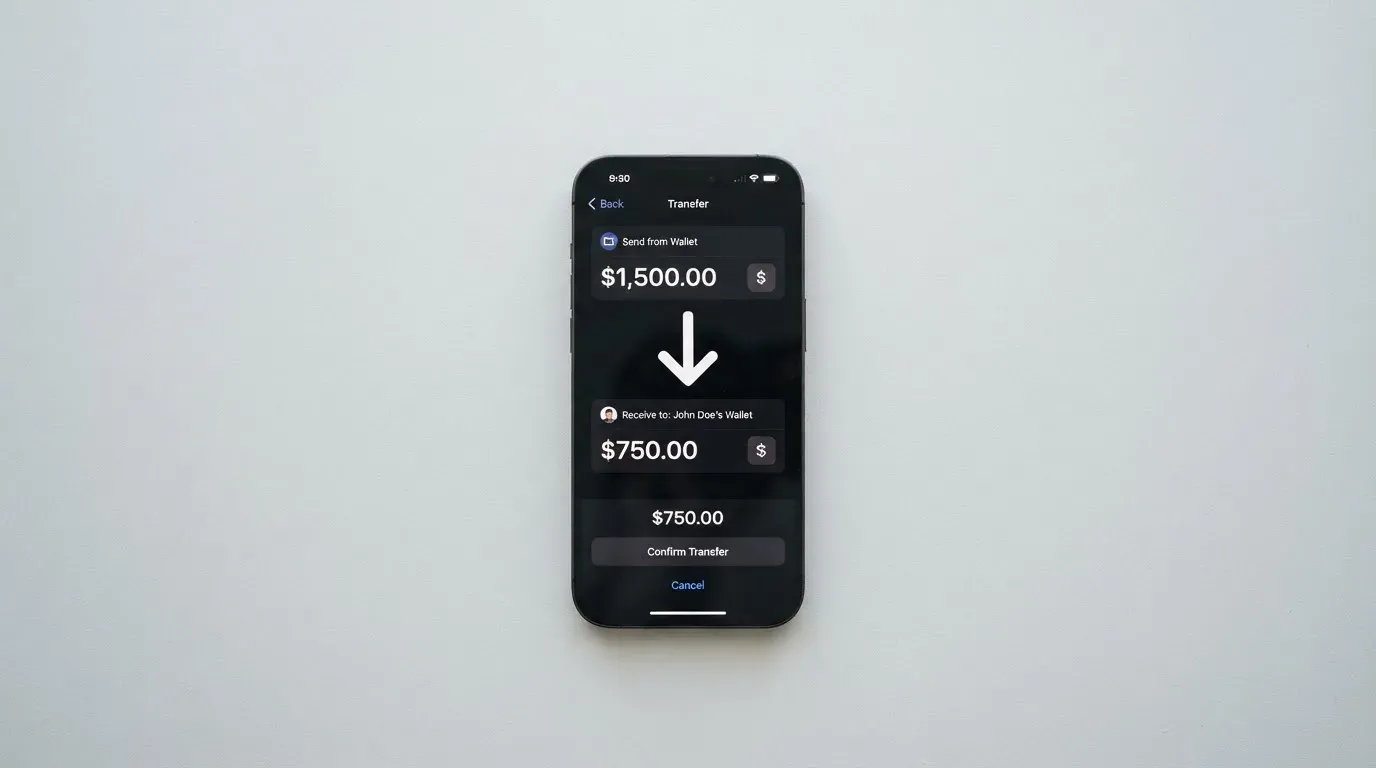
What this means in practice is that topping up is not like topping up a prepaid card at a shop. You are moving assets into a wallet you control, and spending against them. Transfers to other Ethena Pay users are free, no deposit fee is published, and no minimum top-up is stated. But fees from third parties — the funding partners, and network gas for the transfer — are charged separately and are not included in the card’s own pricing.
The honest takeaway is that the top-up side is the least documented part of the product. You should read your own app for the current supported coins and networks before you commit funds, because the card’s public pages do not name them, and sending on the wrong network is the kind of mistake in this category that can be unrecoverable.
Paying With It Every Day
Day-to-day use is the card’s strongest suit after cost. It works with Apple Pay, and Google Pay is “available soon”. You generate the virtual card in about a minute. Physical cards sit under the Standard, Pro and VIP tiers, and ATMs are available to eligible cardholders. The app is an iPhone app in beta.
The daily hook is cashback, and it is paid in AVAX after settlement, every day. How much depends on your tier and how much you spend each month:
| Tier | Monthly spend band | Cashback |
|---|---|---|
| Standard | First $2,500 | 4% |
| Standard | $2,500–$4,000 | 1% |
| Standard | Above $4,000 | 0% |
| Pro | Up to $8,000 | 4.5% |
| Pro | Above $8,000 | then 2%, then 1%, then 0.5% |
| VIP | Up to $20,000 | 5% |
| VIP | Above $20,000 | then 2%, then 1%, then 0.5% |
A few rules make this less generous than the headline band suggests. Transactions under $1.00 earn nothing. Refunded purchases reverse their cashback. And a defined set of activity is excluded from cashback entirely: cash advances, ATM withdrawals, and purchases of crypto, stablecoins, NFTs or securities, plus gambling, gift cards, peer-to-peer transfers and account funding. If you were counting on the ATM or on buying more crypto to earn rewards, that is not how it works. The categories that are blocked outright are not stated, which is a gap worth keeping in mind.
On disputes: a refunded, charged-back or otherwise ineligible purchase reverses its cashback and drops out of your monthly spend count. Chargebacks can be deducted from your balance, and if that takes you below zero, the negative amount remains your liability. Complaints are acknowledged within five business days, with a final response targeted within fifteen; no specific chargeback time frames are stated. On the app, one unofficial report noted the Australian App Store listing showed two ratings, both 5.0, as of 2 September 2026, and that it requires iOS 17 or later with Android planned.
What Can Go Wrong
This is the section to read twice. The card’s structure, not its pricing, is where the risk lives.
Start with the company. Ethena Pay is Ethena Pay Ltd., a Maltese limited company, number C114576, of Ta’ Xbiex, Malta. It states plainly that it is “not licensed, registered, authorized, or otherwise approved” by financial regulators, and that it works through third-party providers. The official terms do not name the card issuer. Unofficial reporting (CryptoCardHub, September 2026, and The Defiant) identifies the issuer as Puerto Rico-chartered Third National, managed by Signify Holdings (Rain) — treat that as reported, not confirmed by the card. What this means for you is that the entity behind your money is not a regulated EU or US bank, and your funds are not the kind covered by a deposit guarantee scheme.
Next, self-custody. Because the wallet is yours, your keys stay with you — the card says it does not hold your funds, keys or seed phrases, and offers no custodial or safeguarding service (terms 4.4). That is a real strength against a platform collapse, and it is a real exposure to your own mistakes: lost keys cannot be recovered, and a compromised seed phrase (typically 12 to 24 words) lets anyone restore the wallet and spend from it. Irreversibility cuts both ways — blockchain transfers cannot be undone, so a deposit on an unsupported network or to a wrong address can be lost, sometimes needing manual recovery with no guarantee. Two-factor authentication and a card-freeze feature are not stated, so do not assume either is there.
Then the beta itself. It launched on Avalanche as an iOS beta with 400 early users, and an invite-gated beta began on 1 September 2026; a later version improved notifications, limits, cashback and verification. Invite-gated means you may be waiting on an invitation you cannot control. On complaints, no official incidents were found, no Trustpilot or Reddit pages surfaced in a search, and the only signals were an editorial rating (SpendNode 3.9 out of 5, September 2026) and a single user report — a Philippines user quoted a $10 charge for a first card, which was treated as isolated and runs against the official “free” issuance. This category has a scar tissue worth knowing: Visa terminated its global agreements with FTX in November 2022, WaveCrest’s European programmes were suspended in 2018, and card programmes do close. The card itself is unleveraged to that specific history, but it is the same model.
Finally, the daily friction. Merchants and issuers can apply extra checks based on where the card was issued, some decline prepaid or foreign-issued cards, and declined authorisations can leave a hold on your funds for several days. 3-D Secure may challenge some online payments. None of this is Ethena Pay-specific, but with a non-US, non-EU issuer and a beta product, expect occasional declines rather than being surprised by them.
What to Take Instead
If the Ethena Pay card’s appeal is spending crypto, it is not alone in that. Here is how the closest alternatives compare, on what each of them publishes.
| Ethena Pay | Sponge | Xplace | ether.fi | |
|---|---|---|---|---|
| Score | 6.7 / 10 | 4.9 / 10 | 7.7 / 10 | 6.7 / 10 |
| Countries | 48 listed; not U.S. | Not stated | Not stated; services not in all jurisdictions | Long listed set, incl. 31 U.S. states; not listed jurisdictions cannot apply |
| Card | Visa, virtual; physical by tier | Virtual, issued by Rain | Visa; virtual and physical (Silver live) | Visa; virtual and physical |
| Annual / one-off cost | Free virtual | Not stated | Basic free; Silver $99/y; Gold $249/y; Platinum $999/y | First virtual card $10 in some countries; one free for core members |
| FX | Typically around 1.0% | Not stated | 0% on Platinum; other tiers not stated | Core 0.5%, Luxe 0.25%, Pinnacle/VIP none |
| Collateral | USDe and supported assets | USDC | BTC, ETH, SOL, USDC, USDT | Any supported token |
Sponge is the thinnest of the four: a virtual card issued by Rain, funded by moving USDC from the wallet, with costs and fees not stated. It is not obviously a step up from Ethena Pay.
Xplace scores highest at 7.7. It is Visa, offers both virtual and physical cards (Silver live, Gold and Platinum coming soon with 7–14 business-day delivery), and has a two-mode design: Cash mode spends a stablecoin balance, Credit mode borrows against your holdings. Borrowing carries no origination fee. Its costs are tiered and not free — Basic is free, Silver is $99 a year, Gold $249, Platinum $999 — but it pays 0% FX on Platinum and cashback by tier (Basic 0.5% up to Platinum 2%, paid in USDC). You can deposit BTC, ETH, SOL, JitoSOL, USDC, USDT and xStocks on Solana. If you are willing to pay an annual fee and want a broader asset list and a clearer credit structure, Xplace is the more polished of the set.
ether.fi matches Ethena Pay’s score at 6.7 and is the closest structural comparison: Visa, virtual and physical, collateral in a Safe, a Direct Pay mode that spends the balance. Its edge is a transparent tiered FX fee (Core 0.5%, Luxe 0.25%, none at Pinnacle and VIP) and cashback in ETHFI. Its cost is that the first virtual card is $10 in regional-pricing countries such as Argentina, Colombia, Mexico, Peru, the Philippines, South Africa and Thailand, and it is issued only in listed jurisdictions — if your jurisdiction is not on the list, you cannot apply.
The honest comparison: Ethena Pay wins on being free and simple, and loses on documentation and regulatory footing. Xplace wins if you can justify an annual fee; ether.fi wins if you want a published FX ladder and a wider jurisdiction list. None of the three is a licensed bank, so the category risk is shared.
Who I Would Recommend It To
I would recommend the Ethena Pay card to a specific person: someone who already holds USDe or crypto they are comfortable using as collateral, lives in one of the 48 supported countries, and wants a free Visa card that spends that balance with a small FX spread and daily AVAX cashback — and who treats it as a self-custodied tool, not as a bank account. If that is you, the appeal is real: no fees to open or hold, 0% interest, and cash from the first dollar of your monthly spend band.
I would steer everyone else elsewhere. If you need a regulated issuer and deposit protection, or you live in the U.S., EU, UK, Canada, Switzerland, Taiwan or South Korea, this is not your card. If you are new to self-custody, the absence of stated two-factor authentication, freeze and safeguarding is a poor place to start. If a physical card in your hand matters, confirm the tier and delivery terms first, because the official pages do not spell them out and one report says there is no plastic at all. And if you cannot tolerate an invite-gated beta from a company that states it is unregulated, wait — the product is young and improving, and that is a reasonable position, not a cautious one.
Frequently asked questions
What is the Ethena Pay card?
The Ethena Pay card is a Visa payment card that spends a self-custodied crypto balance. You hold USDe and other supported digital assets in your own wallet as collateral, and when you buy something, the USDe balance is debited. A virtual card generates in about a minute and adds to Apple Pay; physical cards are listed under the Standard, Pro and VIP tiers. It runs in beta by invitation across 48 countries.
How does the Ethena Pay card work?
It works like a prepaid card backed by crypto collateral rather than a bank account. You fund your own wallet with USDe and supported assets, and spending draws down the USDe balance at the point of payment. Because the wallet is self-custodial, you hold the keys and the card provider does not hold your funds. The card pays cashback in AVAX daily after settlement.
Is Ethena Pay a bank?
No. Ethena Pay Ltd. states that it is “not licensed, registered, authorized, or otherwise approved” by financial regulators and works through third-party providers. Its own terms do not name the card issuer. That means your funds are not the kind covered by a bank deposit guarantee scheme. The card is a payment tool, not a bank account, and you should treat it accordingly.
Who can get the Ethena Pay card?
It is offered in 48 countries — 17 in Latin America, 12 in the Caribbean, 8 in Asia and the Middle East, 9 in Africa and 2 in Oceania — and it is not offered to U.S. persons. The terms also restrict access for anyone located in, ordinarily resident in, or accessing the services from Belarus or Russia, based on residence and location rather than citizenship.
Does the Ethena Pay card require KYC?
Yes. Verification is done by Ethena Pay or third parties including Sumsub, and may require government-issued photo ID, proof of address, source-of-funds information, tax details and biometric or liveness data. You must be 18 or older and can hold one account per person. Passing the checks does not guarantee approval, and the card’s pages do not describe tiers of verification beyond that single route.
How do I top up the Ethena Pay card?
You top it up by holding USDe and supported digital assets in a self-custodial wallet as collateral; spending then debits the USDe balance. Funding partners MoonPay and Iron are mentioned, but the specific coins and networks they support are not listed, and the app launched on Avalanche. Transfers to other Ethena Pay users are free and no deposit fee is published, but third-party funding and gas fees are charged separately.
Is the Ethena Pay card free?
Mostly. The virtual card is free to issue, replace and activate, account opening and monthly maintenance are free, there is no minimum balance or inactivity fee, and purchases carry 0.00% interest. You pay for FX on non-USD spending (typically around 1.0% at the network rate) and $1.00 plus 0.65% for ATM withdrawals. One unofficial report mentioned a $10 charge for a first card in the Philippines.
Is the Ethena Pay card safe?
It carries real but shared category risk. The wallet is self-custodial, so lost keys cannot be recovered and a leaked seed phrase lets anyone spend your funds — that responsibility is yours. The provider states it does not hold your funds and is unregulated. Two-factor authentication and a card-freeze feature are not stated. As with any crypto card, programme closures happen in this industry, so do not treat it as a bank.
Can I use the Ethena Pay card in my country?
You can use it where it is issued and accepted, but check two things first: that your country is on the 48-country list, and that you are not accessing from a restricted jurisdiction such as Belarus or Russia. The card runs on Visa, so it is accepted wherever Visa is accepted, though some merchants decline prepaid or foreign-issued cards.
How do I add the Ethena Pay card to Apple Wallet?
The virtual card is generated in about a minute and added to Apple Pay directly in the app. Google Pay is “available soon” rather than available now. Because Apple Pay stores the card as a device-specific token rather than the raw number, using it this way is the most secure way to pay with it day to day.
Top credit and cashback cards by score – cryptocardtop
Content created by the «cryptocardtop» team