
A Nigerian virtual dollar card built for subscriptions, not everyday spending
 Available in US
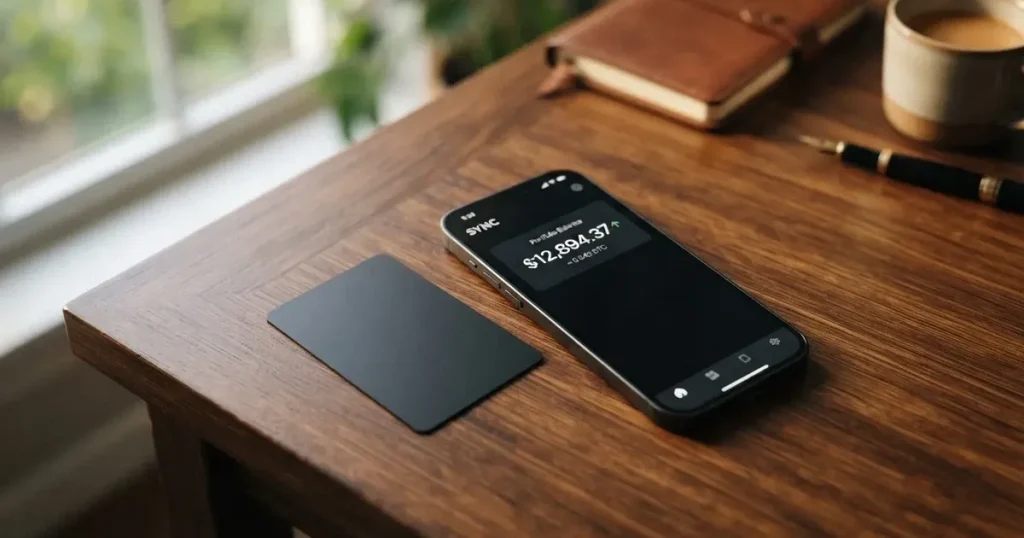
Ecstasy is a payment card from a company called Ecstasy Data Nigeria Limited, and it does something narrow but specific: it lets you convert USDT on the Tron network into Nigerian Naira inside an app, then move that balance into a dollar wallet and spend it with a virtual VISA card in US dollars. The card is virtual only, there is no physical or metal version, and the product sits firmly in one corner of the crypto-card market — Nigerian users paying for online subscriptions and dollar-priced services from a crypto balance.
Conditions are current as of October 28, 2026.
I went through the App Store listing, the developer’s site and the privacy policy, and pulled together what is actually known about the card and what is not. A lot of the basic card details — fees, limits, KYC requirements, the issuing bank — are simply not stated in any of those sources, and that gap is itself the most important finding of this review.
The conditions described here are current as of 2026.
Verdict
Ecstasy lands at 3.6 out of 10, and that score reflects two things working against it at once. The product is genuinely useful for the audience it was designed for — Nigerians paying for dollar subscriptions from a USDT TRC20 balance — and outside that narrow use the offering is so thin, and so lightly documented, that it is hard to recommend with any confidence. The score breaks down like this.

| Criterion | Score | Why |
|---|---|---|
| Who can get it | 2 / 10 | Nigeria only in practice; the issuer is Ecstasy Data Nigeria Limited and the app converts to Naira. No country list, no citizenship or residence rule and no statement about users in Russia, Belarus or anywhere else. |
| Cost | 5 / 10 | No issuance, monthly, conversion, FX or ATM fee is published. |
| Top-up options | 4 / 10 | USDT TRC20 converts to Naira in the app, then a dollar wallet is funded. Networks, fees and minimums are not stated. |
| Reliability and complaints | 4 / 10 | The issuer is Ecstasy Data Nigeria Limited and no licences are named. The App Store rating is 2.7 out of 5 from 9 ratings, and recent reviews mention freezes after updates and at login. |
| Everyday use | 3 / 10 | Virtual VISA cards in USD only, for online and subscription payments. No Apple Pay or Google Pay. No ATM. |
| Total | 3.6 / 10 |
If you are a Nigerian user with a USDT TRC20 balance who needs to pay Netflix, a SaaS subscription or another dollar-priced service, Ecstasy can do the job. If you want a card you can use in shops, at an ATM, abroad or in a wallet on your phone, the product as described here does not do any of those things, and the small print is not detailed enough to tell you where the edges really are.
Who they will give the card to
The single most concrete fact about Ecstasy’s eligibility is the name on the App Store developer account: Ecstasy Data Nigeria Limited. That tells you the issuer is a Nigerian company, and the app’s job is to convert USDT on Tron into Naira, which is the currency you top up from and the currency you see in your balance. The whole product is built around that one currency corridor.
Beyond that, the public sources are unusually quiet. There is no published list of supported countries, no statement about who is allowed to sign up, no separate rule for residents versus citizens, and no comment on users in Russia, Belarus, the European Union, the United Kingdom, the United States or anywhere else. For a card aimed at “anyone who has trouble getting an ordinary bank card”, as the reader profile frames it, that is a meaningful gap: you cannot tell from the App Store page whether the app will work for you until you download it, and even then the App Store privacy section only says the app collects payment information, your name, an email address, a phone number and photos or videos — without spelling out which documents it requires or what it does with them.
What that means in practice: if you are in Nigeria, you are clearly in the intended audience. If you are anywhere else, the company has not made its position clear. The fact that the issuing entity is a Nigerian private company, with no banking or e-money licence provided, also means there is no passport-portable framework — like a MiCA authorisation in the EU or a US state money-transmitter licence — that would tell you the card is regulated to a known standard wherever you happen to open the app.
How to get it
The signup story is short, because the card is short. Ecstasy is a virtual card only: the App Store description says the app generates virtual dollar cards on the VISA network, in USD, and there is no mention anywhere of a physical card, a metal card or even a printed card with a CVV you can read off a piece of plastic. There is no delivery step, because there is nothing to deliver.
The KYC story is even shorter, because the public pages do not tell it. The KYC level, the documents the app asks for, the time it takes to approve an account, and whether there are tiered limits that unlock at higher verification levels are all not stated. The only documented piece of identity-related behaviour is what the App Store privacy section says the app can collect — payment information, name, email, phone number, and photos or videos. That is consistent with a standard KYC flow (a photo of an ID document, a selfie, an email and a phone number for verification codes), but it is also consistent with much less, and the developer has not been specific.
The app itself is available on iPhone and iPad through the App Store and on Android through Google Play. As of the latest version (2.8.2, dated 24 September 2026), the App Store rating is 2.7 out of 5, drawn from a small pool of 9 ratings. An older unofficial snapshot, from a third-party site called mwm.ai and based on version 2.7.7, lists a Google Play rating of 3.5 out of 5 from 54 ratings — the two figures disagree, and I am flagging the second as unofficial and unconfirmed by the App Store. The Google Play rating on the live listing was not readable when I checked.
What it really costs
This is the section where Ecstasy is hardest to assess, because the developer has not published a fee schedule. The App Store description does not list an issuance fee, a monthly fee, a conversion fee, a foreign-exchange margin or an ATM fee, and the developer site and privacy policy do not fill in those blanks either. The table below shows what I was able to find; everything else is genuinely unknown, not hidden behind a paywall or a “log in to see prices” link.
| Fee or limit | Value |
|---|---|
| Issuance fee | not stated |
| Monthly / annual fee | not stated |
| Conversion fee (crypto to fiat) | not stated |
| FX fee (USD transactions) | not stated |
| ATM withdrawal fee | not stated (no ATM access — virtual card for online and subscription payments only) |
| Daily spending limit | not stated |
| Monthly spending limit | not stated |
| Card tiers | not stated |
The reason the cost score is 5 out of 10 rather than 0 is that there is at least no monthly or annual fee visible in the public materials, the card is virtual only so there is no card-shipping fee, and the only confirmed cost to the user sits on the blockchain side: the network fee for sending USDT on Tron, which is paid by the sender on the Tron network and not by Ecstasy. Inside the app, what you actually pay when crypto turns into Naira and then into USD is a number nobody has published.
To make the cost picture concrete for the everyday case the card is built for, here is what three common payments would look like, given only what is in the public sources.
A Netflix or Spotify subscription paid in US dollars with the virtual card. Ecstasy charges a conversion fee and a foreign-exchange fee to get from a USDT TRC20 balance to a USD charge at a US merchant, but neither of those fees is disclosed. On top of that, the merchant may itself decline foreign-issued or prepaid BINs, in which case you pay nothing — because the transaction does not go through — but you also do not get the subscription. There is no way to estimate the cost of this case from the published fees.
A domain or hosting bill in dollars (Namecheap, a small VPS, a SaaS tool). Same picture: the virtual USD card is exactly the kind of instrument these merchants expect, so the transaction is more likely to approve than a consumer debit card from an unusual issuer, but the fees between your USDT and the merchant’s invoice are not disclosed. If the merchant declines, Ecstasy’s dispute process is also not stated, so there is no published route to recover a payment that goes wrong.
A one-off online purchase from a US retailer that requires AVS (Address Verification System). Many US merchants will not accept a foreign-issued prepaid card at all, and Ecstasy has not published a shipping-address policy or an AVS workaround. The realistic outcome is that the transaction declines, and you have paid the on-chain fee to send USDT on Tron without anything to show for it.
Across all three cases, the honest answer is: the cost is whatever the app tells you at the moment of conversion, and the public documentation does not let you check that number in advance.
Top up
Topping up Ecstasy is a two-step process that reflects the product’s Nigerian focus, and it is the part of the flow that is best documented in the App Store description.
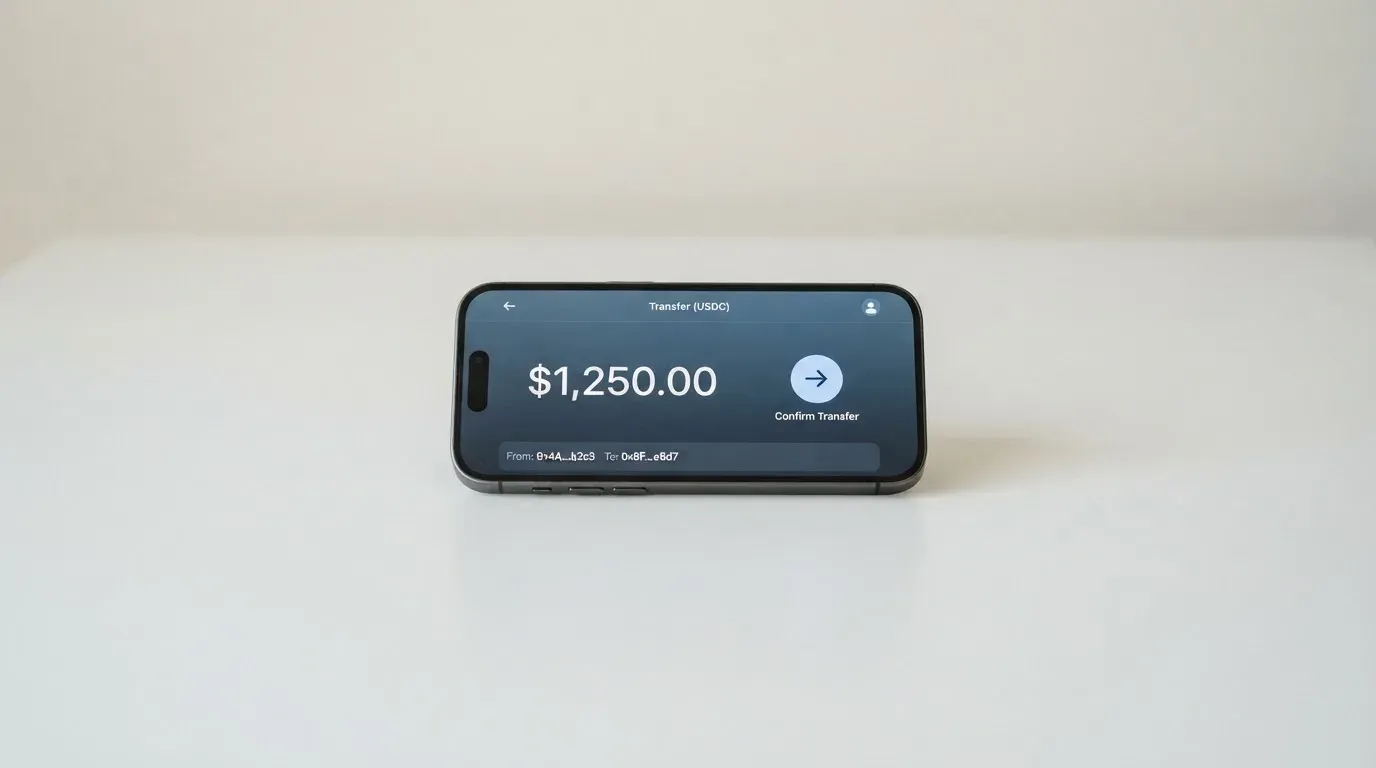
You start by sending USDT on the Tron network (USDT TRC20) to a deposit address inside the app. The app then converts that USDT into Nigerian Naira — that is the currency the app’s main balance is held in. From there, you fund a separate dollar wallet inside the app, and that dollar wallet is what the virtual VISA card spends from. So the path is: on-chain USDT TRC20 → Naira balance → USD wallet → virtual VISA card.
The dollar wallet itself has a top-up button, a transfer history and a transaction log, which is enough to confirm that the wallet is a real, working balance and not a placeholder. What is not stated, and what you would normally want to know before relying on a top-up flow, is the fee for the Naira conversion, the fee for moving Naira into the dollar wallet, the minimum top-up amount, the maximum top-up amount, the time it takes for a top-up to clear, and which fiat top-up options (if any) exist alongside the crypto route. The developer has not published any of those figures.
A few practical warnings worth keeping in mind, drawn from how crypto top-ups tend to work rather than from anything Ecstasy has said specifically. USDT on Tron is a real network with its own resource system (bandwidth and energy, often paid by burning TRX), and you need a small amount of TRX in the same wallet to actually send a USDT transaction. If you send USDT on a different network — Ethereum, Solana, BNB Chain, anything that is not Tron — to the address the app gives you, that transfer is, as a rule, irreversible. The funds are not coming back, because blockchain transactions cannot be undone by the receiver, and the developer has not stated that they offer manual recovery for wrong-network deposits.
A second warning is about the broader category rather than this card: stablecoins are not, despite the name, guaranteed to hold their value. Tether’s USDT and Circle’s USDC, the two largest dollar stablecoins, have both seen short depegs in the past, and the value of your top-up is exposed to that risk during the conversion window. Ecstasy has not published anything about how it prices the conversion or how it handles a depeg while your USDT is in flight.
Paying with it every day
The day-to-day reality of Ecstasy is that you have a virtual VISA card, denominated in US dollars, that you can use for online payments and subscriptions, and that is the entire surface area. The card is not issued in physical form, so there is no plastic to tap at a shop, no card to hand over at a restaurant, and no card to insert into an ATM. There is no Apple Pay and no Google Pay support visible in the public materials, which is consistent with a card that is only meant to exist as a 16-digit number, an expiry date and a CVV that you type into a checkout form.
That narrow focus is what the card is for. The intended use case is paying for Netflix, Spotify, a SaaS subscription, a domain renewal, an app store top-up in another country, or any other US-dollar-priced online service that would otherwise need a foreign card or a Nigerian domiciliary account. For those payments, the virtual card sits in a sweet spot: it looks like a US-dollar Visa to the merchant, it is prepaid so it cannot overdraw, and it does not require a US bank account to fund.
Outside that use case, the product does not do anything. There is no card-present spending, no contactless, no ATM access, no cashback rate published, and no rewards programme beyond a referral feature inside the app (the App Store description mentions referral rewards, but the actual cashback rate is not stated). For a reader who wants a card for everyday life — groceries, transport, dining out, a holiday abroad — Ecstasy is not the product, because it is not trying to be.
The user experience is also where the app’s poor reviews come in. The App Store rating is 2.7 from 9 ratings, and two recent reviews specifically mention the app freezing after an update and at login. With 9 ratings that is a thin sample, but the pattern is the kind of thing that matters for a card product, where the whole point is that the app works when you need to pay for something in the next five minutes.
What can go wrong
The risks with Ecstasy are mostly the risks of using a lightly documented product from a small issuer, and they fall into a few groups.
The first group is the regulatory and counterparty risk. The card is issued by Ecstasy Data Nigeria Limited, a Nigerian private company; there is no named banking partner, e-money licence, payment-institution registration or other regulatory status. In a more established market, that is the kind of detail a card issuer publishes on its website, because the licence is the only protection the customer has if the company stops operating. Without it, the customer is exposed to the full credit risk of a small, private issuer.
The second group is operational risk. The app is the entire product — there is no physical card to fall back on, no wallet on your phone, no web portal, and no support link in the App Store listing. Apple billing support is the only support entry on the App Store page. The developer site is ecstasynigeria.com and the privacy policy is at ecstasynigeria.com/privacy, but neither is described as a support channel. If the app stops working after an update, the user reviews suggest that is a real possibility, and the only documented way to reach the developer is through the App Store. There is no dispute process published, no chargeback procedure, and no published phone number or email for urgent issues.
The third group is the standard crypto-card risk. USDT is a stablecoin issued by Tether, and Tether has stated that it disables tokens held in wallets on the OFAC sanctions list and has frozen funds tied to illicit activity, so the balance is not censorship-proof in the way some crypto users assume. The Tron network has its own fee dynamics, and as a rule crypto transfers are irreversible: a wrong-network deposit to Ecstasy, or a deposit to the wrong address, is not recoverable by the user. The general category of prepaid cards also tends to be blocked from certain merchant categories, including gambling, and Ecstasy has not said which categories it blocks or allows.
The fourth group is the long history of crypto-card programmes shutting down. The category has lost programmes before: Visa terminated its global agreements with FTX in November 2022 and the FTX US debit card was wound down by its issuer, and WaveCrest, a Visa card issuer that supplied several crypto card brands, was suspended by Visa in Europe in 2018, closing every programme it ran. The lesson from those closures is that a crypto card is only as durable as the issuer behind it, and Ecstasy has not published the kind of detail — issuer bank, licence, scheme status — that would let a customer judge that durability in advance.
What to take instead
If Ecstasy’s narrow Nigerian, USDT-on-Tron, virtual-card-only profile does not match what you need, three alternatives in the same general space are worth a look. None of them is a like-for-like swap, because Ecstasy is a specific product for a specific audience, but each one addresses a different part of the gap.
| Card | Score | Card type | Funding | Cost highlights | Best fit |
|---|---|---|---|---|---|
| CardFlow | 4.9 / 10 | Virtual USD Mastercard, created in about 3 minutes | Bitcoin, USDT, ETH, or Naira bank transfer | Creating a virtual card is free; monthly and FX fees not stated | Users who want a quick virtual Mastercard funded from crypto or Naira |
| HyperCard | 4.7 / 10 | Prepaid “HyperCard” in USD or EUR (network not stated on the App Store page) | USDT, BTC, ETH in the app; networks not stated | App Store page lists no fees; other fees not stated | Users who want a multi-currency prepaid balance funded from crypto |
| Card.fi | 6.6 / 10 | Virtual and physical cards in Classic, Premium and metal tiers; ships to “200+ countries” (terms bar sanctioned countries) | 32 coins across 5 networks, including Ethereum, Base, BNB Chain, Solana and Kaanch | Virtual Classic $49 once, Virtual Premium $249 once; top-up Classic 1.5% + $1, Premium 1%; FX Classic 3.5%, Premium 2.5%; cashback 0.8% to 2% on spending | Users who want a fuller feature set with published fees and broader country coverage |
A few notes on each, in the same order. CardFlow is the closest in spirit to Ecstasy: a virtual USD Mastercard aimed at Nigerian users, with funding from Bitcoin, USDT, ETH or a Naira bank transfer, and a free creation flow. It is a slightly stronger product on paper, with a higher review score, but it is also lightly documented on fees and the same general caution about undisclosed costs applies.
HyperCard is a prepaid card with USD or EUR balances, funding from USDT, BTC or ETH, and a much wider acceptance footprint — the App Store says the card works in more than 176 countries. “Works in” here means merchant acceptance, not eligibility, and the official pages do not list which countries can sign up. The published fees are also thin.
Card.fi is the most fully featured of the three. It offers both virtual and physical cards (including a metal option in stainless steel), supports 32 coins across 5 networks, publishes its fees in plain numbers rather than hiding them, and ships to “200+ countries” subject to sanctions rules. It is also the most expensive to enter: a Virtual Classic is $49 once, a Virtual Premium is $249 once, and physical and metal prices are not listed. For a user who needs the broader feature set and is willing to pay for it, Card.fi is the more complete product; for a user who only needs a quick virtual USD card from a USDT balance, the $49 entry fee is a real cost.
Who I would recommend it to
Putting the verdict, the costs and the risks together, the recommendation comes down to a fairly tight audience. If you are a Nigerian user with a USDT TRC20 balance who needs to pay for dollar subscriptions or dollar-priced online services, and you understand that you are trusting a small Nigerian company with no public regulatory status to hold your balance and to keep the app working, Ecstasy is a usable tool for that specific job. The conversion path is straightforward, the card is the right type for the merchants in question, and the virtual-only model means there is no plastic to lose.
If you fall outside that audience — if you are not in Nigeria, if you need a physical card, if you want contactless or mobile-wallet payments, if you need an ATM, if you need to know your fees in advance, or if you want an issuer with a named banking or e-money licence — Ecstasy is not the right product, and one of the alternatives above is a better starting point. CardFlow is closer in spirit, HyperCard has a wider acceptance footprint, and Card.fi is the most fully featured option if you can absorb the up-front card cost.
The honest summary is that Ecstasy is a small, narrow product from a small, lightly documented issuer, and it scores the way it does because the public materials do not give a reader enough information to be sure about cost, eligibility, support or what happens if something goes wrong. The product may well work fine for the people it is built for. The reviewer’s job is to flag what is and is not on the page, and on the page there is more missing than there is present.
Frequently asked questions
What is the Ecstasy card?
Ecstasy is a virtual payment card issued by Ecstasy Data Nigeria Limited. The card is denominated in US dollars, runs on the VISA network and is generated inside the Ecstasy mobile app. The app converts USDT on the Tron network into Nigerian Naira, then lets the user fund a dollar wallet that the virtual card spends from. It is intended for online and subscription payments in dollars, not for in-store spending or ATM withdrawals.
How does the Ecstasy card work?
You download the app, create an account, send USDT TRC20 to the deposit address shown inside the app, and the app converts that USDT into Naira. You then move money from the Naira balance into a dollar wallet, generate a virtual VISA card, and use the card details at online checkout. The card is prepaid, so it spends only the balance you have loaded and cannot overdraw.
Is Ecstasy a bank?
No, Ecstasy is not a bank. The card is issued by Ecstasy Data Nigeria Limited, a Nigerian private company, and the public sources do not name a banking partner, an e-money licence or a payment-institution registration. That means the card balance is not a bank deposit and would not be covered by a deposit guarantee scheme in the usual sense.
Who owns Ecstasy?
The App Store developer name is Ecstasy Data Nigeria Limited, which is the issuer named in the public materials. The company is registered in Nigeria, and no parent company, group structure or individual owner is disclosed. The developer site is ecstasynigeria.com and the privacy policy is at ecstasynigeria.com/privacy.
Is the Ecstasy card available in my country?
The public sources do not say. The issuer is a Nigerian company and the app’s main balance is in Nigerian Naira, which points to Nigeria as the primary market, but the company has not published a list of supported countries, a citizenship rule or a residence rule. There is also no statement about users in Russia, Belarus, the European Union, the United Kingdom, the United States or anywhere else. You would need to download the app and create an account to find out whether the service is actually available where you are.
Does the Ecstasy card require KYC?
The KYC requirements are not stated in the public materials. The App Store privacy section says the app can collect payment information, your name, an email address, a phone number and photos or videos, which is consistent with a standard ID-and-selfie verification flow, but the developer has not published the specific documents, the verification levels or the limits that apply at each level.
How do I top up the Ecstasy card?
You top up by sending USDT on the Tron network (USDT TRC20) to the deposit address shown inside the app. The app converts the USDT into Nigerian Naira, and you then move money from the Naira balance into the dollar wallet that the virtual card spends from. The fees for the Naira conversion, the minimum and maximum top-up amounts, the time it takes to clear and any fiat top-up options are all not stated.
Is the Ecstasy card free?
The public materials do not list any issuance fee, monthly fee or annual fee, but the conversion fee between USDT and Naira and the foreign-exchange margin on USD spending are not disclosed either. The only confirmed cost to the user is the on-chain network fee for sending USDT on Tron, which is paid to the Tron network and not to Ecstasy.
Can I add the Ecstasy card to Apple Pay or Google Pay?
The public materials do not mention Apple Pay or Google Pay support. The card is a virtual VISA card in USD, with no physical or metal version, so on the published description it is meant to be used by typing the card number into an online checkout form, not by tapping a phone.
How do I delete my Ecstasy account?
The account-deletion process is not stated in the public materials. There is no support link in the App Store listing beyond Apple’s own billing support, and the developer site does not describe a deletion flow. In practice, users typically reach the developer through the App Store’s “Report a Problem” link or by emailing the address listed in the app’s privacy policy, but the developer has not published a documented deletion procedure.
Top virtual cards by score – cryptocardtop
Content created by the «cryptocardtop» team