
A crypto card that reads your passport, not your address — and charges you for the difference
 Available in US
If you are looking for an ordinary payment card and your bank has been unhelpful, or if you hold a passport from outside the usual issuing countries, the Rizon card is worth putting on your shortlist — but only after you have read two things carefully: who it will issue to, and what it charges when you spend outside dollars. I read the card’s own pages, its help centre and its fee tables, then weighed them against what reviewers and users have reported. Here is what I found, including the parts that are not flattering.
The conditions described here are current as of October 28, 2026.
The short version: Rizon is a well-built, cheap-to-run card that is genuinely pleasant to pay with, wrapped in an eligibility rule that is narrower and stranger than the marketing suggests, and sitting on top of an issuer with a thin public track record. If your nationality is on its 44-country list and you mostly spend in dollars or at home, you will like it. If you are outside that list, no amount of good intentions will get you an account.
Verdict: 6.7 out of 10
My score for the Rizon card is 6.7 / 10. That is a genuinely average result for a card that does several things very well and one important thing quietly, in the background, that could stop you before you ever see those good things.
Here is how the score breaks down, criterion by criterion, with my reasoning in my own words.
| Criterion | Mark | Why |
|---|---|---|
| Who can get it | 6 / 10 | Eligibility runs on citizenship, not residence: 44 passports are accepted, including the US, Japan, Singapore, the UAE, Brazil and Mexico. The card page, however, claims 122+ countries by residence. The two statements contradict each other. |
| Cost | 6 / 10 | Maintenance and top-ups are free, and spending in dollars is free. Spending in other currencies costs 1.7% plus $0.10, an ATM withdrawal is $1 plus 0.65%, and the price of the card itself is only discoverable by opening the app. The Emerald subscription starts at $5.59 a month. |
| Top-up options | 9 / 10 | The best section of this card. On-chain deposits in Arbitrum, Solana, Base, Polygon, Optimism, Avalanche and BSC carry no deposit fee. Third-party reviews add USDC and USDT, though the card’s own pages do not name the coins. |
| Reliability and complaints | 5 / 10 | The issuing entities are Signify Holdings and Nimbus LLC (Rain). Trustpilot shows 8 reviews, mostly one-star, and user reports describe a fee charged before KYC finished and manual checks running past 24 hours. |
| Everyday use | 9 / 10 | A virtual card and a physical Visa Platinum, Apple Pay and Google Pay, and ATM withdrawals up to $250 each. This is the section where Rizon is hard to fault. |
Who this suits: holders of Latin American or Asian passports who want a card that spends from a crypto balance, need Apple Pay, and mostly pay in dollars or in their home country. The list of 44 accepted nationalities runs heavily through Latin America — Argentina, Brazil, Colombia, Costa Rica, the Dominican Republic, Ecuador, El Salvador, Guatemala, Guyana, Honduras, Mexico, Panama, Paraguay, Peru, Suriname, Uruguay — and through Asia — Japan, Malaysia, the Philippines, Singapore, Thailand, Pakistan — plus the United States, the UAE, Australia, Egypt, Morocco, Ghana, Senegal, Uganda, Zambia, New Zealand, and a long tail of Caribbean states.
Who it does not suit: anyone whose passport is not on that list, including Russian and Belarusian citizens, who are explicitly absent. It also does not suit you if you need to know what the card costs before you sign up, if you travel constantly across many currencies and care about the foreign-exchange line, or if you want a physical card in a country outside the 49 where it is said to be available.
Will they give you the card?
Eligibility is decided by your passport, not by where you live — and the card’s own marketing says otherwise. This is the single most important thing to understand before you spend ten minutes on an application.
The card page describes services as “intended for people who live in and are domiciled in” the United States or LATAM countries, and adds that access may be restricted elsewhere. It also claims 122+ countries supported. Read that, and a resident of, say, Spain might reasonably apply.
The help centre tells a different story. There, availability is based on citizenship — your passport — not residence, and 44 nationalities are listed: Antigua and Barbuda, Argentina, Australia, Bahamas, Barbados, Bangladesh, Belize, Brazil, Cayman Islands, Colombia, Costa Rica, Dominica, Dominican Republic, Ecuador, Egypt, El Salvador, Ghana, Grenada, Guatemala, Guyana, Honduras, Japan, Malaysia, Mexico, Morocco, New Zealand, Pakistan, Panama, Paraguay, Peru, Philippines, Saint Kitts and Nevis, Saint Lucia, Saint Vincent and the Grenadines, Senegal, Singapore, Suriname, Thailand, Turks and Caicos Islands, Uganda, UAE, United States, Uruguay, Zambia.
Russia and Belarus are not on that list.
So the honest answer to “will they give me the card” has two parts. The marketing language points at where you live; the actual gate is which passport you hold. If you are a citizen of one of the 44 listed countries and live somewhere else entirely, you are inside the system by the rule that matters. If you live in a listed country but hold a passport from outside it, the marketing suggests you are fine and the help centre suggests you are not. That contradiction is unresolved on the public pages, and I would not build a plan around the friendlier reading of it.
Why do passports matter more than addresses here? It is not an arbitrary choice. Nationality is recorded and screened separately from residence because sanctions screening and issuer risk policy apply to citizenship and country of birth as well as to the country of address. A card issuer that cannot screen a customer against sanctions lists will not issue to them, regardless of where they live.
How to get it
Applying is a standard passport-plus-selfie identity check, and the two outcomes you can get in the app are very different in meaning.
The card page itself does not state its KYC requirements — that is one of several things the public pages simply do not say, and I will flag those gaps as I meet them rather than guess. What the help centre does say is that identity verification is required, that eligibility follows citizenship rather than residence, and that there are exactly two outcomes in the app:
- “KYC Declined” — your application was flagged by Rizon’s KYC/AML provider. The decision is final and Rizon says it cannot override it. There is no appeal path described.
- “Verification Incomplete” — a typo, an unclear document photo or a poor selfie. You may simply retry.
That distinction matters more than it first appears. One is a door closing; the other is a form being filled in badly.
On how long it takes, the card’s own pages state no processing time. Third-party sources disagree sharply, and I would treat both with caution. One review site reports passport verification with a selfie clearing in two minutes in the writer’s own test, in October 2026. Another aggregator reports manual KYC running beyond 24 to 48 hours, against advertised times of minutes. Unofficial, not confirmed by the card — but consistent with the user complaints I will come to later.
The card itself comes in three forms: a virtual card, a physical card, and a metal card marked as coming soon. It is a Visa Platinum. The card’s own currency is not stated; USD and EUR accounts exist, but that is not the same thing as a card that spends in either currency automatically.
Delivery, where you can get it at all, is global according to the card page with an average of three days, while a help article puts physical cards at 49 countries and territories — including the US, Australia, Japan, Singapore, Brazil, Mexico, South Africa and the UAE, with the US covered in only 31 states. Neither the delivery cost nor the replacement cost for a lost card is stated. The page’s answer is “Check app for the price.”
What it really costs
The card is free to keep and free to spend in dollars, and genuinely expensive in two specific places: currency conversion and card issuance — the last of which you can only price by opening the app.
Fees and limits
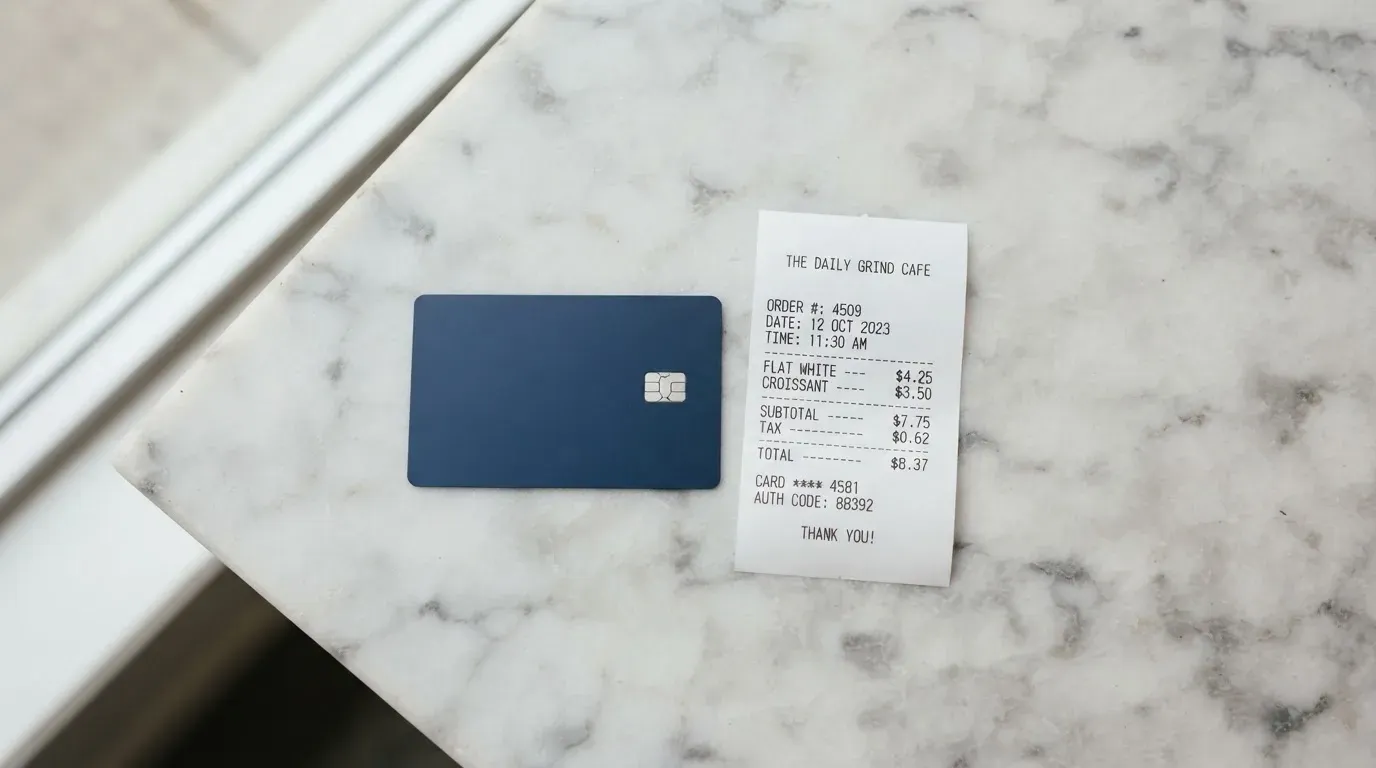
Here is everything the card’s fee pages state, plus the help centre’s figures where they fill a gap. Values are as published; where a figure is not stated, I say so rather than estimate.
| Fee or limit | What the card publishes |
|---|---|
| Virtual card issuance | “Check app for the price” |
| Physical card issuance | “Check app for the price” |
| Additional or replacement card | “Check app for the price” |
| Account maintenance | Free |
| Deposit | Free |
| Card spend in USD | Free |
| Card spend in a non-USD currency | 1.7% + $0.10 (Emerald listed as 1.02%; the page is garbled — verify) |
| Trading fee | 1.7% (Emerald 0.85%) |
| ATM withdrawal | $1 plus 0.65% of the amount, up to 3 withdrawals per 24 hours, maximum $250 per withdrawal |
| International send | Network fee + 0.1% |
| On-chain withdrawal | Network fee + 0.1% |
| Send to another Rizon user | Free |
| Emerald subscription | From $5.59 per month |
| Limits: deposit, card spend, sends | “No limit” |
| Limits: ATM | Up to $250 per withdrawal, 3 per 24 hours |
Two lines in that table deserve your attention, because they are where money quietly disappears.
First, the 1.7% plus $0.10 foreign-exchange charge is charged on every purchase denominated in something other than dollars, and it stacks on top of whatever spread the network or issuer takes. Emerald is listed as cutting this to 1.02%, and the trading fee to 0.85%, for a subscription from $5.59 a month — a halving of fees, in exchange for a recurring charge. Whether that trade pays off depends entirely on how much you spend outside dollars.
Second, ATM access has both a fee and a hard ceiling: $250 per withdrawal, three per day. That is workable for a cash top-up in an emergency and useless as a way of living. If you expect to need real cash regularly, this is the wrong card.
Three everyday payments, priced
To make the table concrete, here is what three ordinary transactions would cost on a Standard plan.
Coffee in your home country for $4, paid in your local currency. This is the case that hurts. You are billed 1.7% plus $0.10, so roughly $0.17 of the $4. On a small purchase that percentage is most of the margin the merchant works on, and no amount of convenience fixes that.
A $30 online subscription billed in dollars. Free. The card’s best behaviour, and the reason many people keep it as a second card rather than their only one.
**$1 withdrawn from an ATM in a foreign country costs $1 plus 0.65% of $1, and you are withdrawing at most $250 at a time. Note also that many issuers and networks place a hold on a declined authorisation that can persist for several days, so an ATM or point-of-sale attempt you cannot complete may still tie up funds briefly.
What the third parties say, and why I discount it
Third-party reviewers publish prices the card will not state. Unofficial, and not confirmed by Rizon: a Standard virtual card at $10 one-off, Gold and Emerald virtual cards free, a Standard physical card at $49.99, Gold at $24.99 and Emerald included; plans at Standard free, Gold $3.99 a month, and Emerald $6.99 a month with a three-month minimum. The same source notes the terms are internally inconsistent on the international fee, showing both 1.7% plus $0.30 and 1.5% plus $0.30 in different places.
That the card’s own page tells you to check the app for the price, while a review site publishes a table, is the honest summary of this section: you cannot fully price this card from its public pages.
How to top up
Top-ups are the strongest part of Rizon: on-chain deposits on seven networks at no deposit fee, with no stated ceiling.
The card states a free deposit fee and no limit, and lists on-chain deposits through Arbitrum, Solana, Base, Polygon, Optimism, Avalanche and BSC. The help centre confirms those networks, describing them as Solana and EVM-compatible.
What the public pages do not say, and I will not guess at, is which specific coins are accepted, what the minimum deposit is, or who pays the network fee. The card page says only that you can “deposit money multiple ways” without specifying the methods.
Third-party sources fill some of that gap — unofficial, not confirmed by the card: USDC and USDT on Polygon, Optimism or Arbitrum, plus US bank transfer and credit card. The official help centre lists more chains than that review mentions, so I would treat the coin list as broader than the unofficial one.
One thing to internalise before your first transfer: on-chain network fees are charged by the blockchain, not by Rizon, and blockchain transfers are irreversible. A deposit sent on a network the provider does not support, or to an address belonging to a different network, can be lost entirely or need manual recovery with no guarantee. Getting the network right is not a formality.
Two practical mechanics: on Ethereum-standard tokens, gas is paid only in ETH, so a wallet holding USDT but no ETH cannot send. And withdrawals out are not free — on-chain withdrawal and international send both cost the network fee plus 0.1%, while sending to another Rizon user is free.
Paying with it every day
This is where Rizon scores highest, and it is why the card still interests people whose applications succeed.
The forms. A virtual card, a physical card, and a metal card still marked as coming soon after its public launch window. The card is a Visa Platinum. Card currency is not stated anywhere.
The wallets. Apple Pay and Google Pay are supported, on the virtual card. Unofficial, and not confirmed by the card: virtual cards provision into the wallet immediately. Which merchants block the card is not stated — and that gap is worth knowing about before you rely on it, because some merchants decline prepaid or foreign-issued card numbers on the basis of the issuer lookup alone.
The cashback. 2.5% back on eligible purchases, online, in stores and at ATMs, redeemable from a cashback balance, with RizPoints accruing on spending. The payout currency is not stated. Here is a caution: a third-party review describes Gold cashback as 1%, capped at the plan fee, which conflicts with the 2.5% on the official card page. Take the lower figure as the one to plan around.
The apps. iOS and Android apps, linked from the card page. The card’s own site shows no ratings, and the store listings were not available to me to check. Unofficial and possibly dated: the Google Play listing, “RIZON: Stablecoin Finance” (com.rizon.app), sits at about 4.3 out of 5 from roughly 3,500 ratings, and the App Store listing at 4.0 from 144 ratings.
Disputes. The public pages contain no dispute or chargeback article. That is a real absence, not a judgment. A chargeback is a refund ordered by the issuer to settle a dispute — fraud, duplicate billing, goods not received — and prepaid-card coverage varies by scheme and should never be assumed. For a card that behaves like a prepaid balance rather than a debit card linked to a bank account, the absence of published dispute terms is the kind of thing to ask about before you rely on it.
What can go wrong
The weakest part of this card is not the product — it is the thinness of the published safety net around it. Four things concern me, in ascending order of how much they should change your decision.
1. Onboarding complaints, and a fee charged before you are cleared. Reports gathered through a third-party aggregator — user-reported, unverified, with the underlying forum threads not opened by me — describe a virtual card issuance fee of around $3.50 being charged before eligibility or KYC was complete; manual KYC review running past 24 hours against advertised times of minutes; slow recovery on a deposit sent to the wrong network; and refund requests stuck in chatbot loops. The aggregator says Rizon acknowledged an onboarding flaw and planned to add a country-selection step.
The onboarding complaint is the one to sit with. A fee taken before the check that decides whether you get the card at all is a bad pattern, independent of how large the fee is.
2. A very thin public reputation. A Trustpilot profile for Rizon shows roughly 2.4 out of 5 from 8 reviews, mostly one-star, with the complaint themes above. Treat this carefully: the profile name collides with an unrelated IRC network, and eight reviews is not a sample. But there is no meaningful body of satisfied public feedback to balance it against either, which is its own kind of information.
3. Issuance you cannot independently verify. Rizon Technologies, UAB makes the products available. Card issuance is by Signify Holdings Inc. and its subsidiary Nimbus LLC (Rain). Medium posts and aggregators name Third National as the issuing bank, which the card’s own pages do not confirm.
4. Self-custody means your problem is your problem. Rizon is non-custodial: you keep full control and you are responsible for the recovery phrase. That is a genuine improvement over a custodial platform, and it is also a transfer of risk. A seed phrase — typically 12 to 24 words — is an unencrypted form of your private key; anyone who obtains it can restore the wallet and spend the funds. Crypto transfers are irreversible and a stolen key has no recovery path, because the network cannot freeze or return funds. For context on the other side of that trade: custodial platforms have a documented history of failure, including Mt. Gox at about US$350 million reported stolen between 2011 and 2014, Coincheck at about US$400 million in 2018, and the Ronin Network at US$625 million in 2022.
The card does ship with sensible safeguards: biometric login, what it calls smart fraud protection, and the ability to lock and unlock a physical card from the app. Two-factor authentication and insurance are not mentioned.
5. Regulators, licences and the sector’s own history. Nothing dated was found on Rizon’s licences, issuer changes or fines in 2025 to 2026, which is neutral rather than reassuring. The wider category has taught the industry what programme failure looks like: Visa terminated its global agreements with FTX on 13 November 2022 and the FTX US debit card was wound down; Visa suspended WaveCrest in Europe in 2018, closing all WaveCrest-issued Visa programmes. Programme closures typically give notice, then stop spending and loading, then ask users to withdraw. Neither Visa nor Mastercard issues crypto cards to consumers directly — they license issuers and can suspend a programme.
Support is a help centre and a contact email, with the address obfuscated on the page. Phone and live chat are not mentioned, and hours are not stated.
6. Tax, mentioned only so you do not meet it cold. In the US the IRS treats digital assets as property, so exchanging them for goods or services generally produces a taxable gain or loss, measured in local fiat currency at the fair market value on the date of the transaction. Each card payment funded from crypto may therefore be a separate disposal. I am not giving you tax advice — I am telling you the mechanic exists so you can find a qualified answer where you live.
What to take instead
If Rizon’s passport rule locks you out, or the 1.7% conversion charge stings, these are the three alternatives with published terms worth comparing. Scores are mine, from the same 10-point scale.
| Rizon | TokenPocket | MetaMask | KAST | |
|---|---|---|---|---|
| Score | 6.7 / 10 | 5.8 / 10 | 7.1 / 10 | 6.1 / 10 |
| Who qualifies | Citizenship-based: 44 passports | Visa for a list of European countries; Mastercard for Australia, Canada, Hong Kong, Japan, Taiwan, New Zealand, Singapore, South Korea, UK, among others; Americas planned | Sign-up open in 45 listed countries; others waitlisted; US and UK temporarily closed | Residence-based list shown at KYC, not published; citizenship and ID also matter |
| Card | Virtual, physical Visa Platinum, metal coming soon | Mastercard/Visa debit, Fiat24 cards virtual | Mastercard virtual, Metal pre-orderable | Visa Platinum, Infinite metal, gold plated; up to 10 cards |
| Card cost | “Check app for the price” | Small NFT creation fee partly covered by TokenPocket | Virtual free; Metal $199/year | Standard $0; Premium $1,000/year; Private $10,000/year |
| FX fee | 1.7% + $0.10 (non-USD) | Not stated; 1% on crypto deposit | No foreign transaction fee; Mastercard rate | 0.5%–1.75% by country; 0.10 USD under 25 USD |
| Funding | Arbitrum, Solana, Base, Polygon, Optimism, Avalanche, BSC | Crypto from TokenPocket wallet; networks not listed | Linea, Base, Monad, Solana | USDT, USDC, PYUSD, RLUSD on Ethereum, Solana, Polygon, Arbitrum, TRON |
| Cashback | 2.5% on eligible purchases | None stated; 1% deposit fee refunded via rewards | mUSD: Virtual 1%; Metal 3% capped at first $10,000 then 1% | USD: 1.5% / 2% / 3% on tiered monthly spend caps |
MetaMask is the one I would look at first if you want the cleanest published terms. Sign-up is open in 45 listed countries — Andorra, Argentina, Brazil, Canada, Mexico, Germany, France, Spain, Uruguay among them — with proof of residency required, and other regions on a waitlist. It matters that ineligible regions limit sign-up, not spending. A virtual Mastercard is issued instantly and free, with no annual or maintenance fee; the Metal card is $199 a year. Fees are described as minimal per transaction with no additional MetaMask fees and no foreign-exchange fee, though the amount is not stated on the pages I read. It spends straight from your connected wallet on Linea, Base, Monad and Solana. Its catch is scale: one card per user, and US and UK sign-ups are temporarily closed.
KAST is the most generous on the numbers and the most demanding on structure. Fees are genuinely low: 0% to top up in stablecoins, 0% to spend in dollars, 0.5% to 1.75% for non-dollar transactions depending on your country and card programme, and $0.10 on non-dollar transactions under $25. Cashback is tiered at 1.5%, 2% and 3% on monthly spending caps of $2,000, $10,000 and $40,000. Against that: annual membership is $0, $1,000 or $10,000 per year, billed annually upfront, and its eligibility test is stricter than its unpublishable country list suggests — if you live in a supported country but hold an ID from a restricted region, you may still fail KYC, and a VPN does not help. Its own terms name USDT and USDC as the acceptable tokens, conflicting with the PYUSD and RLUSD the app lists.
TokenPocket ranks last of the three, at 5.8. Its economics are opaque in the wrong way: a 1% fee on crypto deposits that is refunded later through rewards or reduced transaction fees, no stated FX fee, and the promise of no other charges without detail. It runs on Arbitrum, with Fiat24 cards described as virtual and no physical card mentioned. The Americas were planned for Q2 2025, which is either a promise or a disappointment depending on when you are reading this.
Who I would recommend it to
I would recommend Rizon to you if you hold a passport from one of its 44 listed countries, you want a card that spends from a crypto balance without handing a third party your keys, you pay in dollars or in your own currency most of the time, and you want Apple Pay and a virtual card today rather than a plastic card next week. I would also say: keep it as the card you use for subscriptions and everyday spending, not as your only card, until you have priced the foreign-exchange line for your own travel.
I would not recommend it to you if you are outside that passport list, if you need a physical card in a country not among the 49 where it is said to ship, if you travel across multiple currencies and the 1.7% plus $0.10 would decide where you eat, or if you plan to rely on cash — $250 per withdrawal, three a day, is an emergency tool, not a lifestyle.
And I would not recommend it on the strength of its reviews, in either direction. Eight Trustpilot reviews mostly at one star tell you almost nothing statistically, and the absence of positive public feedback tells you almost nothing either. What convinced me was the product: free dollar spending, free deposits on seven networks, a physical Visa Platinum with wallets, and a non-custodial design. What holds it back is the eligibility rule that is not honestly stated on the front page, a card price the company will not publish, and an onboarding process that some users report charging them before clearing them.
Six point seven. A good card wrapped in unclear terms — and the terms are the part worth arguing with the company about.
Frequently asked questions
What is the Rizon card?
The Rizon card is a Visa Platinum that spends from a crypto or stablecoin balance rather than from a bank account. It comes as a virtual card, a physical card, and a metal card that the company still lists as coming soon. It is non-custodial: you keep control of your funds and your recovery phrase. Spending in dollars is free, spending in other currencies costs 1.7% plus $0.10.
Who can get the Rizon card?
Eligibility follows citizenship, not residence, and the help centre lists 44 accepted nationalities — including the United States, Japan, Singapore, the UAE, Brazil, Mexico and much of Latin America, the Caribbean and Southeast Asia. Russia and Belarus are not on the list. The card’s own marketing page claims 122+ countries by residence, which contradicts the help centre’s passport rule. If your passport is not among the 44, assume you cannot open an account.
How does Rizon card work?
You top up a balance, then the card spends that balance much like a prepaid card — it cannot overdraw. Top-ups arrive on-chain through Arbitrum, Solana, Base, Polygon, Optimism, Avalanche and BSC, with no deposit fee and no stated limit. Because it behaves like a prepaid card rather than a debit card linked to a current account, published dispute and chargeback terms are thinner than you would want to assume.
Is Rizon a bank?
No — not by the look of its own pages. Rizon Technologies, UAB makes the products available, while card issuance is handled by Signify Holdings Inc. and its subsidiary Nimbus LLC (Rain). Some posts and aggregators name Third National as the issuing bank, which the card does not confirm. Visa and Mastercard never issue crypto cards to consumers themselves; they license issuers, and can suspend a programme.
Does Rizon card require KYC?
Yes. Identity verification is required, and the app gives one of two results: “KYC Declined”, which is final and cannot be overridden by Rizon, or “Verification Incomplete”, which happens on a typo or an unclear document photo and can simply be retried. The company states no processing time. One review site reports clearing in two minutes; another reports manual checks beyond 24 to 48 hours. Both unofficial.
How much does the Rizon card cost?
Maintenance and dollar spending are free, and deposits are free with no limit. Non-dollar spending is 1.7% plus $0.10, ATM withdrawals are $1 plus 0.65% capped at $250 each and three per day, and trading costs 1.7%. The price of the card itself is not published — the page says to check the app. Third-party sites quote $10 for a Standard virtual card and $49.99 for Standard physical, but Rizon does not confirm those figures.
Is Rizon card safe?
The design is safer than average for the category: it is non-custodial, has biometric login, fraud protection, and instant card locking from the app. The risk sits elsewhere. You are fully responsible for your recovery phrase, and blockchain transfers are irreversible, so a deposit on the wrong network can be lost or need slow manual recovery. Reports also describe fees charged before KYC completed, and there is no published dispute policy.
How do I top up the Rizon card?
Send crypto on-chain to the networks Rizon supports: Arbitrum, Solana, Base, Polygon, Optimism, Avalanche or BSC. The deposit fee is free and the card states no limit. The company’s pages do not name which coins are accepted or who pays the network fee; third-party sources say USDC and USDT, with US bank transfer and credit card also offered. Check the network twice — a wrong-network transfer cannot be reversed.
Can I use the Rizon card in my country?
You can spend the card wherever Visa is accepted, but you may not be able to open the account. Eligibility is by passport, not by where you live, so a resident of a listed country holding an unlisted passport is in a genuinely unclear position. Physical cards are said to be available in 49 countries and territories, with the US covered in 31 states. Where in doubt, check the help centre list before applying.
Is the Rizon card worth it?
For spending in dollars or your home currency, yes: free maintenance, free dollar purchases, seven deposit networks and working Apple Pay and Google Pay are hard to beat. For travel-heavy or multi-currency use, the 1.7% plus $0.10 conversion charge and a $250 ATM ceiling argue against it. The Emerald subscription from $5.59 a month roughly halves those fees, which pays off only if you spend enough to justify it.
Top wallet cards by score – cryptocardtop
Content created by the «cryptocardtop» team