
Zeal looks tidy on paper, but the card programme underneath it is closing
 Available in US
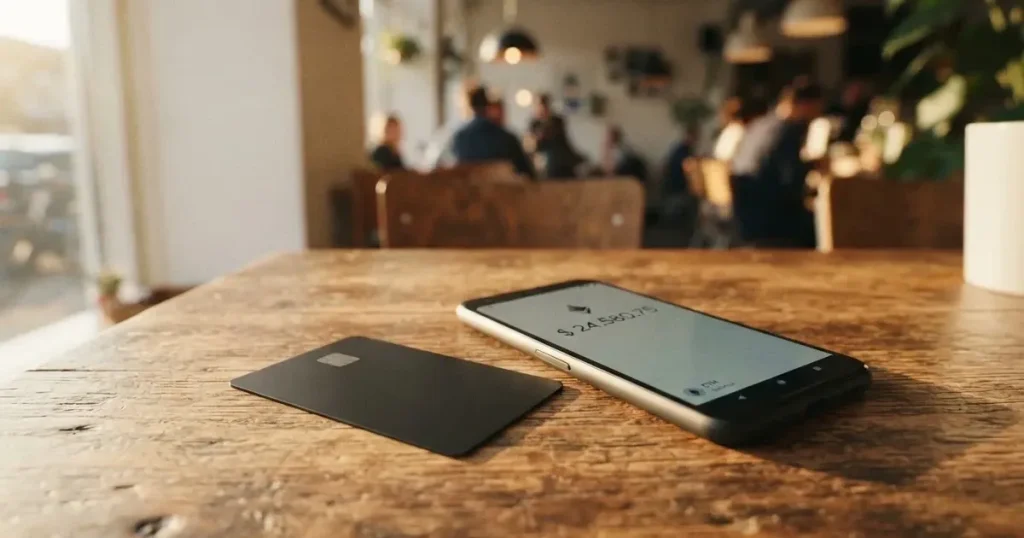
If you have ever had a bank card application refused, frozen, or simply never existed in your country, the Zeal card is the kind of product you look at twice. It spends stablecoin balances straight from a wallet you hold the keys to, it works across 150+ countries, and on paper it charges you nothing to hold. That is the pitch, and for the first half of this review I could mostly confirm it.
Then you get to the part that decides whether I would put real money behind this card today: the company that runs the card programme, Gnosis Pay, has announced that it is closing its consumer card and web app at 23:59 UTC on 2026-12-20 and moving to business customers. The GNO cashback that was the main reason to hold a balance ends on 2026-09-30. The card you are reading about is being retired out from under the product.
I gave Zeal 6.1 out of 10. That is not a rounding of “quite good, but”. It is a card that does several things better than most of its category and one thing that has already been decided for it.
The conditions described here are current as of October 28, 2026.
My verdict: 6.1 out of 10
Here is how the score is made up, criterion by criterion, so you can disagree with my weighting rather than just my total.
| Criterion | Mark | Why, in my words |
|---|---|---|
| Who can get it | 7 / 10 | Spending in 150+ countries, but issuance depends on eligibility and regional availability; the programme runs in the EU, UK, Brazil, Colombia, Mexico, Japan, Singapore, the Philippines, Indonesia and Thailand |
| Cost | 8 / 10 | No official figures published at all; Zeal adds no FX fee, and unofficial listings say ordering and shipping are free, replacement is 4.99, monthly fee 0 |
| Top-up options | 5 / 10 | It spends Safe balances in EUR, USD and GBP stablecoin accounts on Gnosis Chain and Celo, but the card’s own page names no coins |
| Reliability and complaints | 2 / 10 | The issuer is closing the consumer card at 23:59 UTC on 2026-12-20, cashback ended 2026-09-30, there was an exploit on 2026-06-01, and Trustpilot scores are 3.5 and 2.3 |
| Everyday use | 8 / 10 | Virtual and physical Visa, Apple Pay, ATM possible on Gnosis Pay tariffs, and unofficial sources say Google Pay is supported too |
Who this suits: someone who already keeps self-custody, who wants to spend EUR, USD or GBP stablecoins in more places than their home country offers, and who is comfortable treating a payment card as a temporary tool rather than a service they will rely on for years. Who it does not suit: anyone who needs a card they can count on after the current year, anyone whose main worry is getting their money back if something goes wrong, and anyone who has been put off by card applications before and does not want another one that might close.
Will they give you the card?
Sometimes, yes — but the honest answer is that Zeal does not simply say “here is who we serve”. The card’s own page says spending works in 150+ countries, while issuance “depends on eligibility and regional availability”. Those are two very different sentences and the gap between them is where most of the disappointment lives.
What is published: the Gnosis Pay card programme is live in the EU, the UK, Brazil, Colombia, Mexico, Japan, Singapore, the Philippines, Indonesia and Thailand. Zeal’s own update notes mention Mexico, Colombia and Bolivia.
What is not published anywhere official: the eligibility criteria themselves. The card says availability depends on eligibility and regional availability, and stops there. That is not stated in a way you can check before you try.
Third-party trackers fill the gap, and you should treat them as leads rather than answers:
- One listing puts EEA and the UK as the requirements and shows an order screen offering EU, Switzerland, Iceland and Norway, with unavailability in the US and much of APAC. It counts 36 countries available and 21 restricted, and lists Latin America entries including Argentina, Brazil, Colombia and Mexico. It also lists Bolivia as both supported and coming soon at the same time, which tells you how much precision to expect.
- Another asks people to run the country list themselves: if your country is not listed at signup, the service is not there.
None of that is confirmed by Zeal. The one thing I would tell you plainly is that if you live in the United States, the picture looks bleak in every unofficial account, and if you live in the EU or UK the odds look decent. Everywhere else, you are guessing.
How to get it
The route is short, and short routes usually hide their length in the last step. You install the app, sign in with your Ethereum wallet, and the card side of the journey begins from there.
Here is what is stated. The application developer is grwth lbs ltd. The card is a Visa, issued by Monavate Limited together with Gnosis Pay Co Ltd, offered as both a virtual and a physical card. The virtual card is for online use and can be added to Apple Pay. Accounts are held in EUR, USD and GBP through Gnosis Pay. The app runs on iPhone with iOS 16.2 or later, and on Mac with M1 or later.
Here is what is not stated, and I want to be exact about this because it is the part people get wrong. Zeal’s own pages do not say what identity verification involves. KYC is not stated on zeal.app. Zeal points you to Gnosis Pay, whose onboarding includes KYC after a Sign-In with Ethereum, with verification handled through Sumsub. The documents required, the minimum age, the KYC tiers, how long processing takes, and the reasons an application can be refused — none of these are published. Delivery time and delivery cost for a physical card are also not stated, even though the app says physical cards are offered.
What unofficial sources add, offered as unconfirmed: full identity and address verification, an age of 18 or over, a government ID or passport plus proof of address issued within the previous three months, verification through Sumsub, and a warning that uploading documents does not guarantee approval. A further note says physical shipping is free but gives no delivery time; an older fee page, of unclear date, mentions delivery within 10 days of shipping verification.
So the sequence I would expect: install, sign in with a wallet, pass verification, receive a virtual card in the app, optionally add a physical one. Where the rubber meets the road is verification, and that is exactly where the card publishes least.
Fees: what it really costs
Zeal does not publish a fee schedule. There is no fee table on zeal.app or in the App Store listing. What the card does state is that it charges no additional FX fee and converts at the Visa wholesale rate, and that Gnosis Pay fees — for example on ATM withdrawals — may still apply. Limits are likewise not stated: the app points to Gnosis Pay’s fees and limits documentation, which is not retrievable.
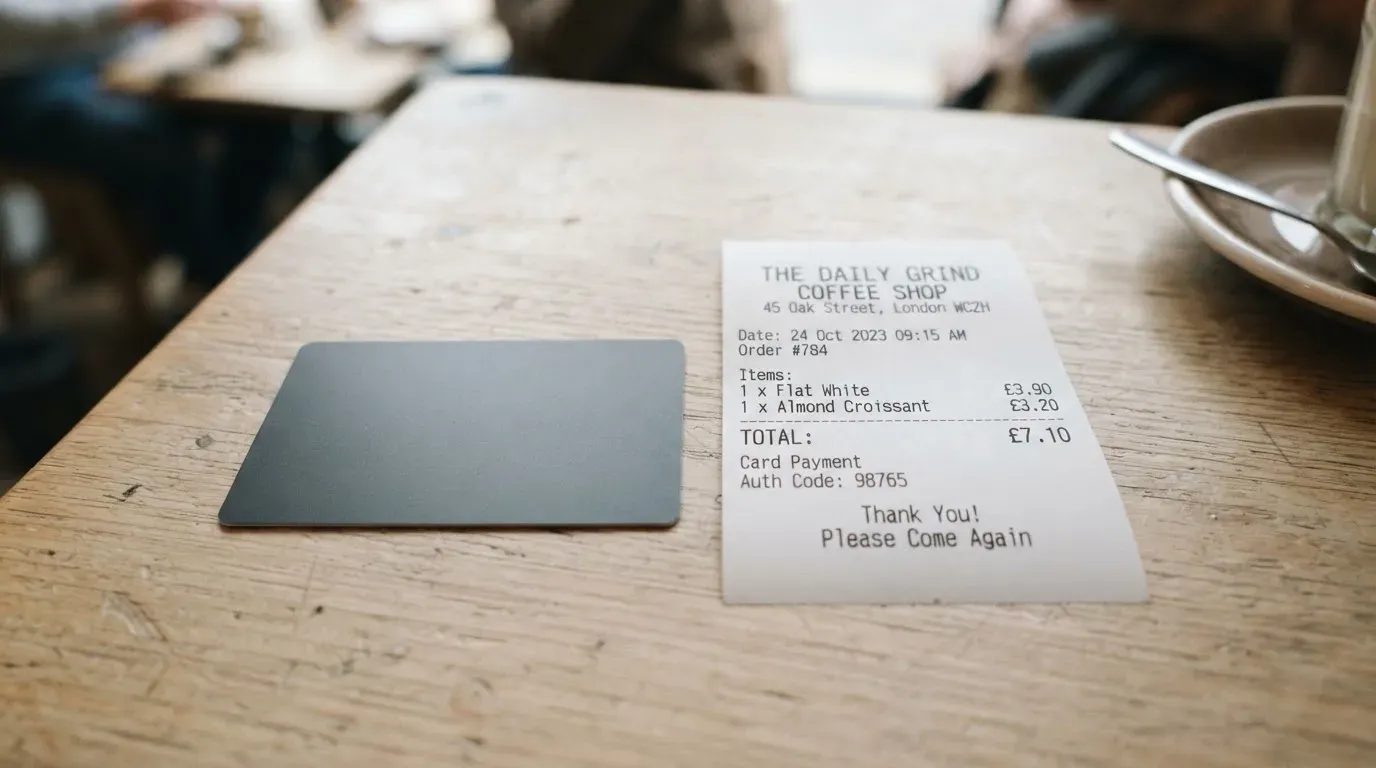
I am not going to invent numbers to fill that gap. But unofficial trackers published in August and September 2026 do list figures, and you should read them as unconfirmed:
| Fee or limit | What unofficial sources report |
|---|---|
| Card order | Free |
| Physical shipping | Free |
| Replacement card | 4.99 |
| Monthly or annual fee | 0 |
| FX | No additional fee from Zeal; Visa mid-market rate |
| ATM | First 5 withdrawals or 200 units per month free, whichever comes first, then 2% per withdrawal; 250 per withdrawal; 500 per day |
| Transaction limit | 5,000 per transaction; 8,000 per rolling 24 hours, in EURe, GBPe or USDCe |
One older Gnosis Pay fee page, of unclear date, lists a card purchase fee of EUR 30.23 including shipping and delivery within 10 days. This is unofficial and unconfirmed by Zeal, and it directly contradicts the free-ordering information found elsewhere. The free-ordering claim is newer and matches Zeal’s own silence-plus-no-fee-page picture, so the EUR 30.23 figure likely refers to a different or older version of the product.
There is one card product, no paid tiers, and no monthly charge. The one number the card itself does put a figure on is cashback: up to 4%, depending on the GNO you hold in the card Safe, and the app store listing also advertises up to 5% variable APY on EUR and USD balances. Rates can change — and as I will come to, this one has already been changed by a date.
Three everyday payments, so the numbers mean something:
- A coffee bought in Lisbon while your balance is in EURe. No FX conversion fee from Zeal, no card fee, no monthly fee. The Visa rate applies. This is the case the card is genuinely good at.
- A subscription bought online in a country that does not use the euro. Your balance is converted at the Visa wholesale rate with nothing added by Zeal, but you still depend on Gnosis Pay’s own fees and limits, which are not published in a form you can check.
- A cash withdrawal at an ATM. This is where the cost concentrates. Unofficial figures say the first 5 withdrawals or 200 units a month are free and after that 2% per withdrawal, with a cap of 250 per withdrawal and 500 per day. If those numbers are right, ATMs are a small convenience, not a feature to plan around.
Top up
Topping up is the part of Zeal that makes sense if and when you can get funds in, and it starts with a transfer to the right network — which is the whole difficulty.
The card spends from balances held in your own Safe: EUR, USD and GBP stablecoin accounts, on Gnosis Chain and Celo according to the Gnosis Pay documentation. The exact coins Zeal supports are not stated. That omission matters: a card that holds “stablecoin accounts” without naming the tokens leaves you guessing which ones you can actually send, and a transfer on the wrong network is the classic way to lose money in this category.
Bank transfers are handled by two companies: EUR transfers by Monerium ehf, other transfers by Unblock LT UAB. Neither the fees nor the minimum top-up are stated. Crypto top-up network fees are also not stated. Unofficial figures suggest SEPA top-up arriving in 1-2 business days, conversion, off-ramp and gas fees of 0%, and that bridging on Ethereum still costs gas.
Two things are stated and both matter more than they first look:
- It is self-custodial. Funds stay in your own wallet or Safe. Nobody holds them for you.
- Earn balances in USD or EUR can be withdrawn 24/7 with no lockups. For the card balance itself, the withdrawal steps and fees are not stated, and what happens to a balance still on the card when it closes is not stated by Zeal.
That second bullet deserves a moment. “No lockups” on the Earn side is a genuinely good feature. Silence on the card side during a programme closure is not.
Paying with it every day
Everyday use is where this card scores well, and I want to separate what I confirmed from what I inferred.
Confirmed by the card: Apple Pay works with the virtual card. A physical Visa card exists. ATM withdrawals are possible subject to Gnosis Pay fees and allowances, though neither amount nor allowance is stated. The app is iPhone-only in practice — iOS 16.2 or later, Mac with M1 or later, and Vision Pro — and it rated 4.5 out of 5 in the UK App Store from 17 ratings when I looked on 2026-10-20, with the latest version 0.33.3 dated 1 September. The Google Play rating was not read, so I will not pretend to know it.
Not confirmed: Google Pay. Zeal does not state it; unofficial sources say both Apple Pay and Google Pay are supported and that Google Pay is not subject to the physical-card contactless limit. Which merchants are blocked is not stated anywhere. And on the subject that people care about most when a payment goes wrong — disputes — zeal.app and the App Store listing say nothing at all. Zeal replied on Trustpilot that card disputes take time, which is a statement about duration, not about outcomes.
For a self-custody card the app-level safety features matter more than usual, because there is no bank to call. What is listed: biometric passkey authentication, real-time transaction alerts, the ability to freeze the card in the app, a wallet that has been audited with its security policy on GitHub, Safety Checks, and transaction previews. Also listed: deposits are not insured, and “Your principal is at risk” is the card’s own wording.
That combination — strong local controls, no counterparty insurance — is the trade you are making, and it is a coherent one. It is just not a comfortable one.
What can go wrong
Start with the largest thing, because it is not a risk of the card. It is a decision about the card.
Gnosis Pay announced that it will close its consumer card and web app at 23:59 UTC on 2026-12-20 and move to business customers. The notice to cardholders is dated 2026-09-21, with other outlets reporting it on 2026-09-25. Users are to move to partner apps for replacement cards, MiniPay being named. Safe funds stay accessible, the web app stays in a limited form for withdrawals, and GNO cashback eligibility ends 2026-09-30. One secondary report says Zeal has not confirmed its own future plans; I looked and could not find a Zeal statement. I am reporting what is stated by the issuer and flagging what is not confirmed by the card.
Then the smaller things, which still add up:
- An exploit affecting an ERC-1271 module and Card Safes, reported on 2026-06-01. One source. I am not going to inflate it into a catastrophe, but an exploit touching card Safes on a self-custody product is not a trivial footnote.
- Complaints. Trustpilot for zeal.app shows 3.5 out of 5 from 17 reviews (the page also displays 3.7). A January 2026 one-star review describes support requests going unanswered for weeks, with Zeal apologising publicly. A 2026 review describes a scam transaction with slow dispute handling, and the company replied that card disputes take time. App Store reviews mention problems transferring from balance to card and slow support. These are individual, unverified reports — but a transfer-from-balance problem is exactly the failure mode you cannot fix yourself with self-custody.
- The issuer’s own score. Gnosis Pay, the card issuer, sits at 2.3 out of 5 from 38 reviews on Trustpilot, with 58% one-star and slow or unanswered tickets, per one source dated 8 August 2026.
- No published incident on Zeal’s side that I could find, which is worth noting in its favour, and worth almost nothing in the face of a closure notice.
One more, general to the category rather than to Zeal: a card programme ending is normal. Visa terminated its global agreements with FTX on 13 November 2022 and the FTX US debit card was wound down by its issuer. WaveCrest, a Visa issuer that supplied several crypto card brands, was suspended by Visa in Europe in 2018, closing every programme it had issued. Closures typically run in a familiar order — a notice period, then loading and spending stop, then you are asked to withdraw what is left. That order is the reason to read the closure notice carefully rather than assume your balance is safe by inertia.
What to take instead
If the closure changes your calculation — and for most readers it should — here is what else is on the table, with the same care about what is stated and what is not.
| Card | Score | Stated availability | Cost as published |
|---|---|---|---|
| Zeal | 6.1 / 10 | Programme live in EU, UK, Brazil, Colombia, Mexico, Japan, Singapore, Philippines, Indonesia, Thailand; no fee schedule published | Nothing published officially; unofficial: order and shipping free, replacement 4.99, monthly 0 |
| TokenPocket | 5.8 / 10 | Visa debit for a list of European countries and territories; Mastercard debit for Australia, Canada, Hong Kong, Japan, Taiwan, New Zealand, Singapore, South Korea, UK, among others; Americas “planned for Q2 2025” | No card fee stated; a 1% fee on depositing cryptocurrency, refunded later via rewards |
| MetaMask | 7.1 / 10 | Sign-up open in 45 listed countries and territories; other regions on a waitlist; US and UK sign-ups temporarily closed per the FAQ | Virtual card free; metal card $199/year |
| KAST | 6.1 / 10 | Residence list shown at KYC, countries not published; restricted-region IDs can still make you ineligible | Standard 0 USD/year; Premium 1,000 USD/year; Private 10,000 USD/year; inactivity fee 1 USD/month after 12 months |
A few differences worth naming rather than leaving in a table.
MetaMask is the one I would look at first, at 7.1 and with no closure attached to what I read. It issues a Mastercard, virtual first and instant, with a metal card you can pre-order afterwards, one per user, issued by Monavate with Crypto Life as card provider. It spends directly from the connected wallet on Linea, Base, Monad and Solana, naming mUSD, wETH, EURe, GBPe, USDC and USDT among its tokens. Cashback is paid in mUSD: 1% on the virtual card, and on the metal card a headline 3% with a footnote limiting 3% to the first $10,000 spent and 1% after that. Fees are described as “minimal” per transaction with no MetaMask addition and no foreign transaction fee — amount not stated on the pages I read.
KAST is the opposite trade: tiers that cost real money, Standard 1.5% cashback on the first 2,000 USD a month rising to 3% on Private’s first 40,000 USD, and an unusually explicit fee list — 0% stablecoin top-up, 0% card spend in USD, 0% for Apple and Google Pay, but a non-USD FX fee of 0.5% to 1.75% depending on where you live and where you are spending, 0.10 USD on non-USD transactions under 25 USD, and 0.50 USD for a declined transaction. It also names its supported coins as USDT, USDC, PYUSD and RLUSD, while its Terms say acceptable tokens are “currently USDT and USDC” — a conflict worth noting rather than resolving.
TokenPocket is the weakest of the four on the published material: a 1% deposit fee, no cashback of its own, virtual-only cards as far as the pages say, and an Americas timeline phrased as a plan.
Who I would recommend it to
I would recommend Zeal to someone who already lives in a wallet. If you keep your own keys, you already know what a seed phrase is, you already know that an address typed wrong is money gone, and you already know that “your principal is at risk” is not a disclaimer but a description. For that person this card does something ordinary cards will not do for them: spend EUR, USD and GBP stablecoins in 150+ countries with no FX fee added on top and no monthly charge, with Apple Pay, and with the ability to freeze the card from the phone.
I would not recommend it as a primary card to anyone. Not because the fees are bad — on unofficial figures they are among the better in the category — but because its issuer has announced the consumer programme closes at 23:59 UTC on 2026-12-20, the cashback that justified holding a balance ended 2026-09-30, and neither Zeal’s own fee schedule nor its limits page nor its dispute process is published. A card you cannot price, cannot limit-check and cannot dispute through, attached to a programme with a fixed end date, is a tool. Use it like one.
If you are in the EU or UK and want something with more published detail and no closure attached to it, MetaMask at 7.1 with a free virtual Mastercard is where I would start reading. If you want physical metal and cashback above 1%, it costs $199 a year and the 3% rate stops after $10,000 of spending.
What I would not do is keep reading reviews of Zeal as if the question were whether the card is good. The card is fine. The question is what happens to it in December, and Zeal has not published an answer.
Frequently asked questions
What is the Zeal card?
The Zeal card is a Visa debit card, virtual and physical, issued by Monavate Limited together with Gnosis Pay Co Ltd, that spends balances held in your own self-custody wallet rather than a bank account. It draws on EUR, USD and GBP stablecoin accounts in your Safe, on Gnosis Chain and Celo. Zeal itself is software made by grwth lbs ltd, not a bank.
How does the Zeal card actually work?
You convert or top up a stablecoin balance in your own wallet, and the card spends that balance like a prepaid card, so it cannot overdraw. Payments are processed as ordinary Visa transactions, converted at the Visa mid-market rate with no additional FX fee from Zeal. When you hold GNO in the card Safe you qualified for cashback of up to 4%, paid in GNO — though that eligibility ended 2026-09-30.
Is Zeal a bank?
No. Zeal is a self-custodial software wallet, not a regulated financial institution, and the card is issued by Monavate Limited, an FCA-authorised e-money institution, under licence from Visa Europe, through Gnosis Pay Co Ltd. Zeal holds none of your money because the money never leaves your wallet.
Who owns Zeal?
The app is published by a developer named grwth lbs ltd. The card itself sits with Gnosis Pay Co Ltd, registered in the UK under number 14919639, and Monavate Limited as issuer. Ownership of the company behind the app is not something I could confirm from the pages I read.
Does the Zeal card require KYC?
Zeal’s own pages do not say — KYC is not stated on zeal.app. It points to Gnosis Pay, whose onboarding includes KYC after signing in with Ethereum, verified through Sumsub. Unofficial sources describe full identity and address verification, age 18+, a government ID or passport plus proof of address from the previous three months, and no guarantee that uploading documents means approval.
Where can I use the Zeal card?
The card says spending works in 150+ countries. The card programme is live in the EU, UK, Brazil, Colombia, Mexico, Japan, Singapore, the Philippines, Indonesia and Thailand, and Zeal’s update notes add Bolivia. Issuance itself “depends on eligibility and regional availability”, and the criteria are not published.
How do I top up the Zeal card?
You send stablecoins to your own Safe on a supported network — Gnosis Chain or Celo — or transfer fiat, with EUR handled by Monerium ehf and other transfers by Unblock LT UAB. Fees and minimums are not stated. Unofficial figures say SEPA arrives in 1-2 business days with conversion, off-ramp and gas at 0%, though bridging on Ethereum still costs gas. Sending on an unsupported network can lose the funds.
Is the Zeal card safe to use?
It is self-custodial, so no bank or company can freeze or seize your funds — and equally, lost funds are unlikely to be recoverable. Listed protections include passkey authentication, real-time alerts, in-app card freeze, transaction previews and an audited wallet. Deposits are not insured, the card says “Your principal is at risk”, and there was an ERC-1271 module exploit affecting Card Safes on 2026-06-01.
Is the Zeal card free?
Officially, nothing is stated — there is no fee schedule on zeal.app or in the App Store listing. Zeal does state it charges no additional FX fee. Unofficial sources say ordering and shipping are free, replacement is 4.99, and there is no monthly or annual fee. An older Gnosis Pay page of unclear date lists EUR 30.23 including shipping, which contradicts that.
What is happening with Gnosis Pay closing its consumer card?
Gnosis Pay announced it will close its consumer card and web app at 23:59 UTC on 2026-12-20 and move to B2B, with a cardholder notice dated 2026-09-21. Users are directed to partner apps such as MiniPay for replacement cards; Safe funds stay accessible and the web app stays in limited form for withdrawals. GNO cashback eligibility ended 2026-09-30. One report says Zeal has not confirmed its own plans.
Top wallet cards by score – cryptocardtop
Content created by the «cryptocardtop» team