
The card that tells you little, and charges in rubles
 Available in US
Somewhere in your life you have had an ordinary bank card stop working. Not the balance — the card itself. It was issued by a bank that decided your nationality was too complicated, or your address was too far, or you moved, or the paperwork got out of date. What you wanted was not cryptocurrency. What you wanted was a card number that a shop will accept.
Conditions are current as of October 28, 2026.
That is the pitch Worldwide makes, and the pitch is aimed at you: the card is marketed as working “where Russian cards are not accepted”, across “150+ countries”, ordered and funded “from Russia without a VPN”. I read the card’s own pages carefully, because a card you depend on deserves more than a slogan. Here is what I found.
I scored this card 4.2 out of 10. The score is not a punishment for the card being small or young. It is a description of a product where the public pages tell you the annual price and the top-up mechanics with real precision, and leave you guessing about almost everything else that decides whether your money arrives and stays safe.
The single sentence that best explains my verdict: Worldwide’s published prices are specific, its published rules are not, and its ownership chain ends in an unnamed foreign issuer. That combination is not unusual in this category — but it means you are the one filling the gaps, and you should decide whether you are comfortable doing that with your own money before you load it.
This review is current as of October 20, 2026.
Who the card suits, and who it does not
It suits you if you are a speaker with a working bank card, you need a small Visa-or-Mastercard-shaped thing for subscriptions and everyday online payments that your own bank will not provide, and you are content to hold the balance in dollars or euros rather than rubles. It is aimed at people topping up a card through SBP, the Fast Payment System, and the pricing is built around rubles — the tiers are priced in rubles, the top-up limits are ruble limits.
It does not suit you if you need a physical card. Worldwide is virtual only. It does not suit you if you want to pay in cash at an ATM; no cash withdrawal terms are stated at all. It does not suit you if you plan to hold a large balance for a long time, or if you are the kind of person who reads a licence name before depositing. On that last point, this card will disappoint you: the operator is not named, the issuer is described only as “a licensed foreign issuer”, and the licences themselves are not stated.
Here is the score broken down the way I marked it.
| Criterion | Mark | Why |
|---|---|---|
| Who can get it | 5 / 10 | Eligibility rules and countries of issue are not described; marketing says “150+ countries” and the app appears in App Store storefronts including US, CA, UK and TR, but the app says nothing about where the card is issued |
| Cost | 5 / 10 | Standard from 2,900 RUB/year, Premium from 3,900 RUB/year, Promo 2,390 RUB issue and 0 RUB maintenance in the first year, operations 0.00 USD, top-up 0%; the conversion markup is not disclosed |
| Top-up options | 3 / 10 | The website says top-up only via SBP, with crypto “not offered”; the App Store app lists USDT TRC-20 |
| Reliability and complaints | 3 / 10 | The issuer is an unnamed “licensed foreign issuer”, the app developer is URUS – FZCO; there are no reviews to read, and one App Store rating of 1.0 out of 5 is marked “scam” and is unverified |
| Everyday use | 4 / 10 | Virtual Mastercard only; Apple Pay and Google Pay on Premium and Promo; no physical card and no ATM |
Total: 4.2 / 10.
Will they give you the card?
Short answer: probably yes, because the sign-up is deliberately low-friction, and that is exactly what should make you slow down.
Everything about the onboarding is built to avoid friction. The site describes a Russian-language Telegram mini-app card that is ordered and topped up “from Russia without a VPN”. Activation takes about 5 minutes through that mini-app. There are “no queues or courier meetings” because there is no courier at all: the card is virtual, issued and ready inside the app, and Mastercard is named in the site’s FAQ. The site says no visits, paperwork or passport are needed — that is marketing wording, and I would not treat it as a statement about the verification that may happen later.
Here is the problem with a frictionless sign-up in this category. Identity verification rules exist whether or not a front page mentions them. Regulated businesses are required to identify their customers and assess risk as part of anti-money-laundering and counter-terrorism-financing law, including ongoing transaction monitoring and suspicious-activity reporting. In the EU that customer due diligence covers name, address, date of birth, nationality, identity documents, a sanctions check, the purpose of the relationship, and whether you are a politically exposed person. In the US the customer identification programme requires name, date of birth, address and an identification number, and electronic systems also check proof-of-address documents. When due diligence cannot be completed, EU rules require the institution to stop rather than proceed, and to end existing relationships where necessary — which is the usual reason an account is frozen pending documents.
The card’s own pages do not state the KYC steps or required documents. The App Store app offers biometric unlock and says nothing about KYC. Verification is not described; no tiers of checks, no rejection reasons, no mention of what happens if you are unlucky.
What about eligibility? Citizenship versus residence is not stated. There is no list of countries where the card can be issued, and the app’s presence in many storefronts is not the same as being issued there. Prepaid and debit cards are generally available to adults aged 18 and up, and some issuers set higher limits.
So the honest position is this: the card looks easy to open, and the pages give you no basis for asking the harder question of who exactly is opening it for you. If your situation is one where you would be uncomfortable being screened — and plenty of people in that position are the ones this card targets — then “you can’t ask what the rules are” is itself the answer.
How to get it
The route the site describes is straightforward, and I will walk you through it in the order the pages give.
You start inside Telegram with the mini-app. There is no downloadable card app linked on the card page itself; the app you find in the App Store is a separate thing, listed as “Worldwide: Wallet USDT Card” for iPhone and iPad, iOS 16.0 and later, free, 18.3 MB, in nine languages including Russian. Its version history runs from 1.0 on 30 June to 1.3.12 on 1 October. It is not on Google Play — the listing was not found there when I looked.
Inside the mini-app you choose a tier and activate. The card is virtual, Mastercard, and the tiers are Standard, Premium, Promo and Business. Promo runs on a USD account. The App Store app describes a “virtual card” with top-up functionality but does not name the network.
What you are not doing is queueing, meeting a courier, or visiting anyone. That is genuinely convenient, and it is the strongest practical argument for the product. It is also why the identity question above matters more here than it would for a card that arrives in an envelope: there is no physical step at which anyone looks at you.
Before you finish, check three things for yourself. Which app you are actually inside — the Telegram mini-app and the App Store app are described differently and list different top-up methods. Which tier you are on, because Apple Pay and Google Pay exist only on Premium and Promo. And what the card currency will be, which the top-up page gives as USD and EUR, with rubles converted to the balance currency.
Fees and what they do to a real payment
The headline numbers are good. That is the part of this card that is genuinely well presented, and I want to give it its due before I turn to the gaps.
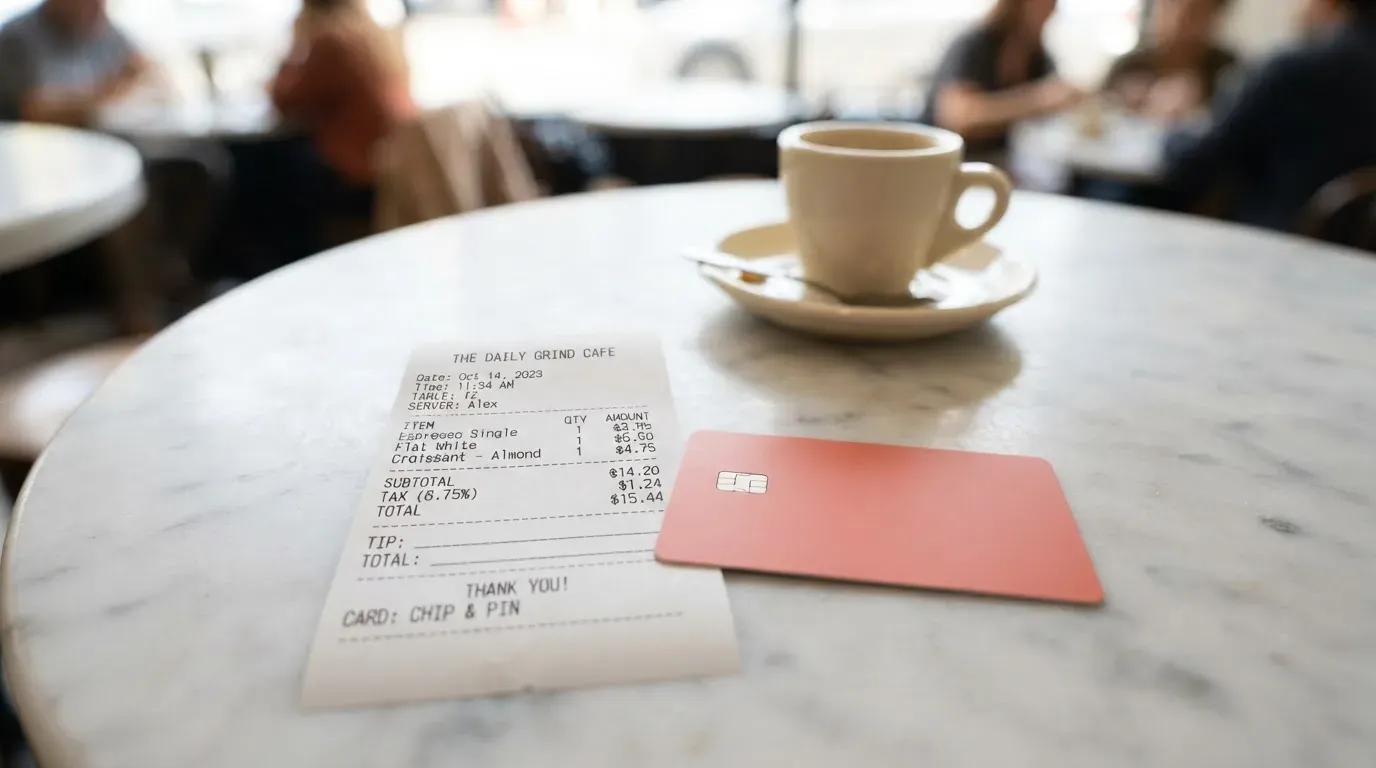
A card operation costs 0.00 USD. An SBP top-up carries no transfer fee and 0%. The first year of Promo maintenance is free, against a 2,390 RUB issue fee. That is a fair price for a virtual card that costs nothing to use.
The gaps are all in the same place: conversion.
| Fee or limit | What the card’s pages say |
|---|---|
| Standard | from 2,900 RUB/year |
| Premium | from 3,900 RUB/year |
| Promo | 2,390 RUB issue, 0 RUB maintenance in the first year |
| Business | from 12,900 RUB/year |
| Card operation | 0.00 USD |
| SBP top-up | no transfer fee, 0% |
| Crypto top-up fee | Promo tier lists 0% top-up; App Store fee terms shown on deposit/top-up screens |
| Currency conversion | Central Bank rate plus a markup; the amount is not stated |
| FX on purchase in another currency | not stated |
| ATM withdrawal | not stated |
| Minimum top-up | 500 RUB |
| Maximum per SBP transfer | 200,000 RUB (the Central Bank SBP limit) |
| Spending limits | no numeric limits published |
Now let me take three ordinary payments through this, because that is where the missing markup stops being an abstraction.
A coffee. You have topped up a typical daily amount. The card balance is in USD or EUR. You buy something priced in USD. The card states the conversion happens at the Central Bank rate plus a markup whose size is not disclosed. On a small purchase the absolute cost of an unknown percentage is small, and the card’s own blog warns that a foreign-currency charge can come out slightly above the ruble amount — so leave yourself a buffer rather than topping up to the exact kopek.
A subscription. Here the card is at its best. Online subscription payments are exactly what Standard is described as being for, the operation fee is 0.00 USD, and chat support is included. If your problem is a recurring payment that a Russian bank will not authorise, this is the card’s clearest use.
Anything in a third currency. Here I stop being able to help you. Spending in a currency other than the card currency is not stated, and the FX fee is not stated. It could be nothing, because there may be nothing beyond the undisclosed markup; it could be a separate line. With this card I cannot tell you which, and neither can the pages.
One more number to keep in your head: on-chain network fees for a crypto deposit are charged by the blockchain, not by the card provider. If you ever fund through the USDT route, the TRON network fee is real and it is not their line item.
How to top up
Top-up is the part of Worldwide that is clearest, and it is also where the product is essentially two different things wearing one name. Read carefully, because the two halves do not match.
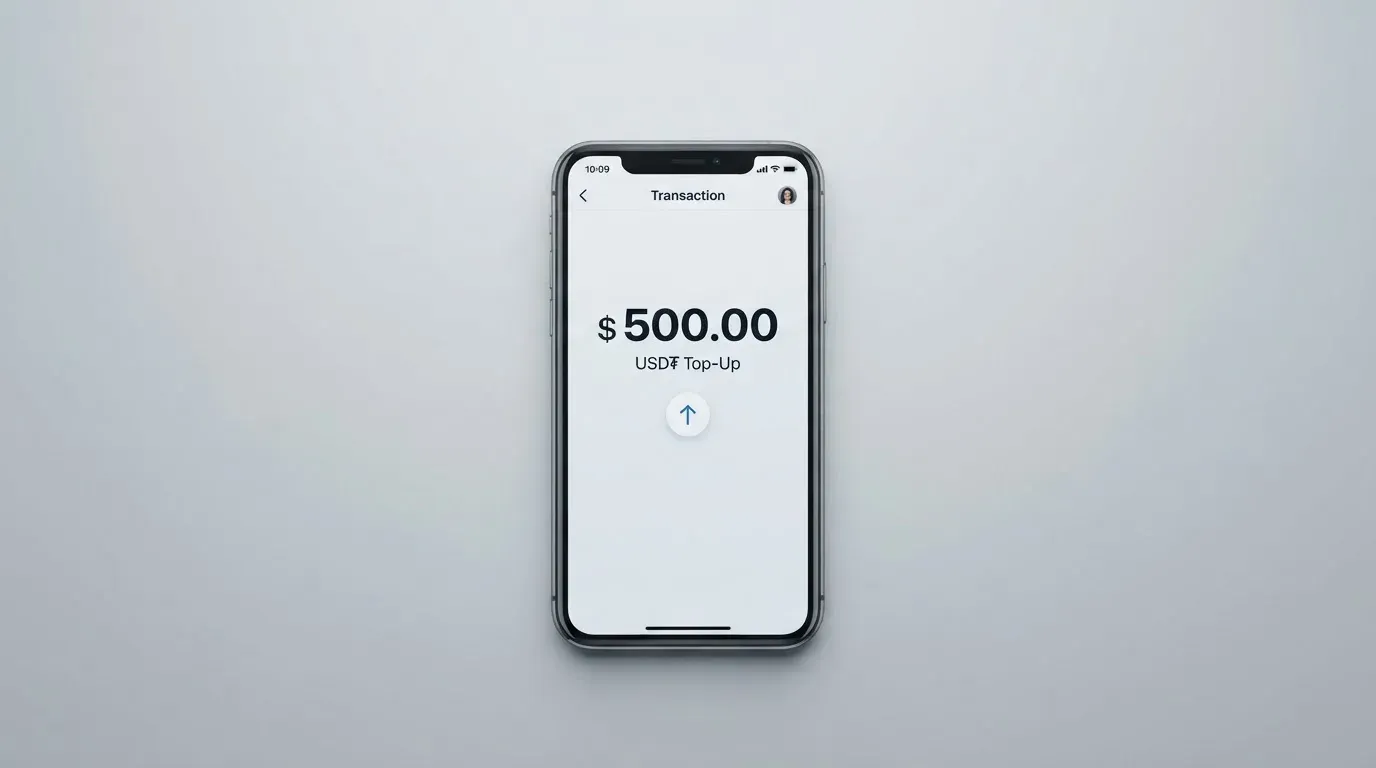
On the card page, top-up is by SBP only — QR or payment details inside your banking app, from any Russian card or account. The rate is displayed before the transfer. The minimum is 500 RUB and the maximum is 200,000 RUB per transfer, which is the Central Bank’s SBP limit. The credit time is 1 to 3 minutes, sometimes up to 15. And on the top-up page, crypto is “not offered”. The card’s blog says the top-up commission is minimal or absent.
On the App Store app, top-up is USDT on TRC-20, plus top-ups from the account balance, with fee terms displayed on the deposit and top-up screens.
So: one front door takes rubles through a Russian instant-payment rail, and the other takes dollars through Tron. If you are topping up with rubles from a Russian bank card, you are using SBP and the crypto question does not arise. If you hold USDT, you are looking at the other product, and its timings and limits are not the ones in the table above.
Some practical notes on the crypto side, since they are general to the category rather than to this card. USDT has been issued on networks including Ethereum, Tron, Solana, Polygon and Avalanche. Tether describes it as backed 1-to-1 by reserves, but stablecoins are not necessarily stable: TerraUSD collapsed in May 2022 and USDC temporarily lost its peg in March 2023. Tron prices fees through bandwidth and energy, often burning TRX. Blockchain transfers are irreversible — a deposit sent on a network the provider does not support, or to an address belonging to another network, can be lost or need manual recovery with no guarantee. Check the deposit screen for the network and address before you send, because the interface is the only place the answer lives.
Withdrawal is not stated for the card. The App Store app supports USDT withdrawals over TRC-20. What happens to a balance if you close the card is not stated either, and that is the question I would ask before loading anything you care about keeping.
Paying with it every day
Everyday use is where Worldwide is at its most constrained, and you should plan around that rather than discovering it.
It is a virtual card. There is no physical card and no metal card — metal is simply not mentioned. Apple Pay and Google Pay are listed for Premium and Promo only, so if you pay by phone, the cheap tiers do not include it. The card’s blog is looser than the site, saying the card works with Apple Pay and Google Pay generally and that the network is “Mastercard or Visa”, which contradicts the site’s own FAQ naming Mastercard; I would plan on Mastercard.
Beyond that, several things you would reasonably want to check are simply absent. Blocked merchants and merchant category codes are not stated — and this matters more than it sounds, because a merchant category code is the four-digit number that classifies a business, MCC 7995 covers gambling, and many issuers block that category on specific cards by policy rather than by law, with the blocked list differing by issuer. If gambling or similar is something you would want the card to decline, you cannot tell whether it declines. Spending limits: no numeric limits are published, and the marketing instead says Premium has “purchases without restrictions” and Business has “unlimited turnover” — marketing wording, not numbers. ATM access: nothing stated. Rewards or cashback: not stated.
What does work reasonably is how failures are handled. If a payment fails, the funds return to the card balance automatically. If the problem is on the service’s side rather than yours, Telegram support will help and can return funds via SBP. The formal chargeback procedure is not described, which is worth noting because chargebacks are the issuer-ordered refund with reason codes such as fraud, duplicate billing or goods not received, and their availability on prepaid cards varies and should not be assumed.
Two things that bite people with foreign-issued virtual cards, worth knowing before your first decline. A merchant can look up the BIN — the six or eight digits identifying the issuing institution — and apply extra scrutiny if the issuer country differs from your billing address, which is exactly what this card looks like everywhere it does not fit. And some merchants decline prepaid or foreign BINs for that reason. Separately, Address Verification Service compares numeric parts of your billing address with issuer records, is mainly offered in the US, Canada and the UK, and is generally unavailable for foreign-issued cards, which can cause declines on ordinary online checkouts.
What can go wrong
This is the section where I am bluntest, because the answer is not about fees at all. It is about who holds your money and whom you would call.
You cannot name the people responsible. The site’s operator is not named. The card is described as issued by a “licensed foreign issuer” — unnamed. Licences: not stated. The App Store developer is URUS – FZCO, a UAE free-zone company type. That is a real company form, and it is also the kind of entity that many readers will not be able to check in any register they have access to. None of that makes the card illegitimate; it makes the card opaque.
The one review that exists is bad. The App Store listing shows 1.0 out of 5 from a single rating, with the text “not safe and probably a scam” and a claim of a “20 usdt card fee” — unverified, and one person’s account is not evidence. Searches for reviews on Trustpilot, Reddit and Otzovik returned nothing for this product; the only related hits were an unrelated old Worldwallet complaint page and Kazakh CardB news. Related but different services, such as “Plati po miru”, are not attributable to this one. So the honest reading of the evidence is not “this is a scam”. It is that there is no public track record either way.
The programme underneath can disappear. Card programmes in this space close. Visa terminated its global agreements with FTX on 13 November 2022 and the FTX US debit card was wound down by its issuer. WaveCrest, a Visa issuer that supplied crypto card brands, was suspended by Visa in Europe in 2018, closing all WaveCrest-issued Visa programmes. Closures follow a pattern: a notice period, then loading and spending stop, then users are asked to withdraw. That is why “what happens to my balance if this shuts down” is the right question, and why the card’s silence on balance on closure is the most consequential silence in this review.
Custody is unstated, and that is a choice. The card page mentions 3-D Secure and “modern encryption” but does not describe the custody model, freeze or spending controls. Control of crypto belongs to whoever holds the private key or seed phrase; with a custodial wallet the provider holds the credentials and you must trust them completely, and a seed phrase is an unencrypted form of the private key that anyone who obtains it can use to restore the wallet and spend from it. Custodial platforms have a record of failures: Mt. Gox, about US$350 million reported stolen 2011–2014; Coincheck, about US$400 million in 2018; Ronin Network, US$625 million in 2022. Transfers are typically irreversible with no built-in recovery. The App Store app says the “Assets” positions are internal products and that the company is “not an exchange, broker or investment adviser” — a fair disclosure, but also a reminder that these are internal products, not a regulated market.
Sanctions and rules can move underneath you. The developer is in a free zone, the issuer is foreign and unnamed, and nationality is screened separately from residence because sanctions screening and issuer risk policy are often applied to citizenship and country of birth as well as country of address. Tether states it disables tokens in wallets on the OFAC sanctions list and has frozen funds tied to illicit activity, so stablecoins are not censorship-proof. Under MiCA, e-money tokens may be issued only by a credit institution or an electronic money institution, and a crypto card often depends on two licences — one for the payment side, one for the crypto side.
Support is chat, in Russian, around the clock. The site describes Telegram support as 24/7 with live staff: chat for Standard, priority for Premium, a personal manager for Business. If a transfer does not arrive, support checks the receipt and credits manually. The site is Russian-language and the app lists Russian among its nine languages. If you do not read Russian, that is a service constraint the card does not advertise.
Tax treatment is your problem, not theirs. The IRS treats digital assets as property, so exchanging them for goods, services or dollars generally produces a taxable gain or loss, measured in local currency at fair market value on the date of the transaction — which can make each card payment funded from crypto its own disposal. That is a fact about how digital assets are treated, not advice; what it applies to you depends on where you live and what you are doing, and you should take your own advice on it.
What to take instead
I looked at three alternatives in the same category. None of them is a recommendation; I am showing you the trade-offs, and the first one is the one I would actually weigh against Worldwide.
| Alternative | Score | Card | Cost | Top-up |
|---|---|---|---|---|
| Worldwide | 4.2 / 10 | Virtual Mastercard | from 2,900 RUB/year | SBP only on the site; USDT TRC-20 in the app |
| Azul Card | 5.3 / 10 | Virtual only, works where Mastercard is accepted | $20 creation, refunded after $2,000 spending; $5/month | Crypto sent to the card in Telegram |
| Telecard | 6.1 / 10 | Virtual Mastercard, instant | $5 one-time basic; VIP $49 then $19/month; $99 minimum deposit, “NOT a fee” | USDT TRC-20 or ERC-20, USDC on Ethereum |
| OnCards | 4.6 / 10 | Virtual Mastercard/Visa in Telegram | not stated | USDT BEP20; no bank transfers |
Azul Card is the one with an actual country list. It works everywhere except Russia, Belarus, North Korea, Iran, Syria, Cuba, Sudan, Venezuela, Ukraine and the Crimea, Donetsk, Luhansk, Zaporizhzhia and Kherson regions, and — this is the part that matters — “the restrictions apply regardless of the user’s nationality”. That sentence does more work than any marketing Worldwide has. It tells you the rule, it tells you the rule is about place rather than passport, and it lets you check yourself against it. Azul is more expensive: $20 to create, refunded after $2,000 in spending, then $5 a month, crypto top-up 4% and $0.25 per transaction, with the FX fee not stated. Its referral programme pays “up to 40% of our fees from every transaction made by your referrals”; no cashback is stated. First top-up up to 10 minutes, then 1 to 5. Coins and networks are not named on the pages I read — which is its own kind of problem.
Telecard scores highest of the four, and it publishes the most complete rule set. Its terms bar users who are “blocked or sanctioned by the United States Government, including OFAC” — a named, checkable list, unlike Worldwide’s “150+ countries”. It claims usability in over 150 countries wherever Mastercard is accepted and says identity check is “available in most major regions”. But it also publishes no list of supported countries, so I would not read the claim as permission. The pricing is the most complex of the group: $5 one-time for the standard plan; VIP at $49 setup then $19 a month with a $15 reissuance; a $99 minimum deposit to activate which it insists is “NOT a fee” because it stays in the wallet. Conversion runs 1.5% on non-USD payments, gas is 0.5 USDT per successful transaction, and FX and cross-border fees are “up to 3% each”. It supports USDT on Tron or Ethereum and USDC on Ethereum, not Polygon, with bank transfers “coming soon”. The rewards are unusual: a referral unit called Fiorini, 1 USDT to 100 Fiorini, cashback rate not specified.
OnCards I can barely assess, and I would not fault you for skipping it. It states no country rules, no fees, and no rewards. Its one usable fact is the funding rail: USDT on BEP20, no bank transfers. Its own site sells it on “simple and clear fees — no hidden charges” without a single number.
Who I would recommend this to
If you can hold the balance small, keep it in USD or EUR, and pay for online subscriptions and services that would decline a Russian-issued card — then the free operations and the zero-fee SBP top-up make Worldwide a plausible tool. Load a few thousand rubles, test it, and treat it as a working budget rather than a place to hold money. That is a reasonable use, and the fact that top-up arrives in 1 to 3 minutes is a genuine convenience.
If you want a physical card, or cash withdrawals, or to know the name and licence of the institution holding your funds, or a published fee schedule you can predict to the kopek — I would not choose this card. The information you need to make that decision is not published, and my inability to find it is the review.
And if what you need is to hold crypto and spend it, understand what you are holding. Custody is unstated here. The general rule is worth carrying with you wherever you look next: on a self-custody-linked card the funds stay in your own wallet until the moment of payment and you bear sole responsibility for key loss, phishing and clipboard-hijacking malware that swaps copied addresses; on a custodial card you gain convenience and take on counterparty and hack risk. Those are different products wearing similar logos.
The card’s currency mechanics deserve one last line of attention. The card currency is USD and EUR per the top-up page, rubles are converted to the balance currency, and the blog warns that a foreign-currency charge may exceed the ruble amount slightly. If you are paid in rubles and think in rubles, every purchase has a hidden exchange-rate step between you and the price tag.
Frequently asked questions
What is Worldwide card?
It is a virtual payment card marketed to people whose ordinary Russian-issued cards stop working abroad. The card is presented as a Telegram mini-app with a Mastercard (per the site’s FAQ), sold in four tiers — Standard, Premium, Promo and Business — that claim to work in “150+ countries” and “where Russian cards are not accepted”. A separate App Store app, “Worldwide: Wallet USDT Card”, offers USDT top-ups over TRC-20.
Is Worldwide a bank?
The card does not say it is one, and it does not name one. The site describes the card as issued by a “licensed foreign issuer” without naming it, and the operator behind the site is not named either. The App Store developer is URUS – FZCO, a UAE free-zone company type. Whether Worldwide is a bank, an e-money institution or a programme manager is not stated on the pages I read.
Who owns Worldwide?
Ownership is not stated. What is stated is the app developer, URUS – FZCO, and the unnamed foreign issuer. Licences are not listed. The most recent dated item on the blog is a post from 19 September 2026, and the app’s first version is dated 30 June with no year shown.
Can I get Worldwide card in my country?
Nobody can tell you from the public pages. There is no eligibility rule and no list of issuing countries; the marketing number is “150+ countries” and the App Store app is listed in many storefronts, including the US, Canada, UK and Turkey, but that says nothing about where a card is issued. Citizenship versus residence is also not stated.
How do I get the Worldwide card?
You open the Telegram mini-app, choose a tier and activate — the site says it takes fully online, with no queues, courier meetings or visits. The card is virtual, so there is nothing to wait for physically. Note that KYC steps and required documents are not stated, and the site claims no passport is needed, which is marketing wording rather than a documented policy.
Does Worldwide card require KYC?
Not stated, and that is the honest answer. The page gives no KYC steps, no documents, no verification levels and no rejection reasons. The App Store app mentions biometric unlock and one account per user, and says nothing about KYC. Since regulated businesses are generally required to verify customers under anti-money-laundering law, the absence of detail is worth asking about directly.
What does Worldwide card cost?
Standard is from 2,900 RUB a year and Premium from 3,900 RUB; Promo is 2,390 RUB to issue with the first year of maintenance free; Business is from 12,900 RUB a year. Each card operation costs 0.00 USD and SBP top-up is 0% with no transfer fee. What is not disclosed is the markup added to the Central Bank conversion rate, which is the cost that actually touches your money.
How do I top up Worldwide card?
On the card’s own website, only by SBP from any Russian card or account — QR or payment details in your banking app — with a 500 RUB minimum and a 200,000 RUB maximum per transfer, credited in 1 to 3 minutes and sometimes up to 15. Crypto top-up is “not offered” on that page. The App Store app is the one that takes USDT over TRC-20, with fee terms shown on its screens.
Is Worldwide card safe?
I cannot tell you that, and I will not tell you it is unsafe either. There are no published reviews to weigh: nothing on Trustpilot, Reddit or Otzovik, and a single App Store rating of 1.0 out of 5 marked “scam” that is unverified. The issuer is unnamed, licences are not stated, custody is not described, and balance on closure is not stated. Card programmes in this space do close — FTX’s card in 2022, WaveCrest’s in 2018.
How do I add Worldwide card to Apple Wallet?
Only if you are on the right tier. Apple Pay and Google Pay are listed for Premium and Promo only; Standard and Business do not have them in the published tier descriptions, and the App Store app merely mentions an Apple Pay setup screen on the card page. When you tokenise a card, the phone stores a device-specific number rather than your card number, each payment uses a one-time code, and the issuer can restrict the tokenised number to certain channels.
Top virtual cards by score – cryptocardtop
Content created by the «cryptocardtop» team