
The card that spends your crypto balance, and the country list that decides everything
 Available in US
The Binance card is not really a bank account. It is a prepaid Mastercard that draws on money sitting in your Binance wallet, and almost everything about whether it is useful to you is decided before you ever tap it in a shop: whether you live in a country where it is actually issued, whether the crypto you hold converts into your local currency without a fee that eats the purchase, and whether you are comfortable that the balance is held by a platform rather than by a bank you can complain to. That is the short version. Everything below is the long version, with the numbers as the card’s own pages and reputable third-party trackers state them, and with a clear line drawn between the two.
The conditions described here are current as of October 28, 2026.
Verdict: 5.7 out of 10
I scored this card 5.7 out of 10. That is not a bad card — it is a competent prepaid card with a genuinely strong everyday-use story, attached to a company and a country list that will decide for you whether it is relevant at all.
Who it suits: Brazilian residents who already keep their crypto on Binance and want to spend it at an ordinary shop without first moving it to a bank. If that is your situation, the interesting parts of this review are the cashback tiers, the Apple Pay and Google Pay support, and the fact that BRL payments were launched with a zero-fee promise. You are already inside the ecosystem; the card is a wallet with a card number attached.
Who it does not suit: anyone outside the supported countries. Officially, one country: Brazil. If you are reading this in Europe, the UK, the US, Australia, New Zealand or Peru, you need to know before you download anything that the official position is much narrower than the list circulating on comparison sites, and that EEA and UK card support ended in December 2023. That alone should end the enquiry for most readers outside Brazil.
| Criterion | Mark | Why |
|---|---|---|
| Who can get it | 3 / 10 | Officially one country: Brazil. Unofficial trackers add Australia, New Zealand and Peru; EEA and UK support ended in December 2023 |
| Cost | 6 / 10 | Officially a 0.9% conversion fee and 1-2% FX. Unofficial: issuance and monthly fee 0, FX 2%, two free ATM withdrawals a month then 1.50 |
| Top-up options | 7 / 10 | Unofficial: Binance Funding and Spot balances, BNB, BTC, ETH, USDT, USDC, FDUSD, SOL, ADA, LTC, LINK, XRP, payment priority across 3-12 assets |
| Reliability and complaints | 5 / 10 | Issuer named as Dock in the 2023 release; unofficial: Immersve Limited, and Pomelo in Brazil. Trustpilot disabled its Binance score over fake reviews; complaints on Reclame Aqui |
| Everyday use | 9 / 10 | Unofficial: virtual and physical in Brazil, Apple Pay and Google Pay, two free ATM withdrawals a month |
| Total | 5.7 / 10 | A good spend experience attached to a narrow country list and a platform balance |
A 9 out of 10 for everyday use next to a 3 out of 10 for availability is the whole tension in this review. I have broken the rest of it down in the order that matters when you are deciding.
Will they give you the card?
Officially, only in Brazil. That is the answer from the card’s own pages, and it is the answer you should act on. The launch coverage described it as open to Binance users in Brazil with a valid national ID.
Everything beyond that is unofficial, and unofficial is worth exactly that here. Third-party trackers, in August 2026, report Brazil, Australia, New Zealand and Peru as verified, and record that EEA and UK card support ended in December 2023 and that the US never had it. Another aggregator, also in August 2026, lists Armenia, Brazil, Colombia, Mexico and Peru as available with most of Europe restricted. Notice that these two lists do not even agree with each other: one includes Australia and New Zealand, the other includes Armenia, Colombia and Mexico. When two trackers covering the same month disagree about which countries exist, that is a signal about both trackers, not about the card.
So the practical version: assume Brazil only, and treat everything else as unconfirmed. If you are in Peru or New Zealand and someone tells you it works, the thing to do is check inside your own Binance app, because that is the only place where the answer can be current for you.
How to get it
The route runs through the Binance app, and identity checks are part of the process rather than something you can skip. The issuer requires KYC as part of registration — photos and documents — and the card’s own pages do not state the levels, the documents accepted or how long it takes.
Officially, what is stated is a valid Brazilian national ID. Not stated: proof of address, age requirements, the step-by-step. Third-party sources in October and August 2026 fill in some of that gap for Brazil: a CPF, a photo ID and a selfie.
The card itself is described as a prepaid Mastercard. The launch release title is “prepaid crypto card”; whether you get virtual or physical, and in which currency, is not stated officially. Unofficial trackers, in August 2026, put it as: prepaid Mastercard; globally the programme is virtual only and denominated in USD, while in Brazil there is a virtual and a physical card in BRL. That is the version I would plan around, with the caveat that it is not the card speaking.
Delivery is also not stated on the official pages. Unofficial: a Brazilian physical card takes about 14 days, a virtual card is instant. That is convenient enough that it is worth checking whether the virtual card is the only one you actually need — but I would not order a physical card on the strength of a tracker alone.
Fees: what it really costs
Here is where this card is more honest than most. The card’s own material gives two numbers: a 0.9% conversion fee and 1-2% in FX. The launch release adds something better — BRL payments at zero fee, with 0.9% conversion on crypto payments. That is a genuinely attractive structure for someone spending in Brazil from a crypto balance.
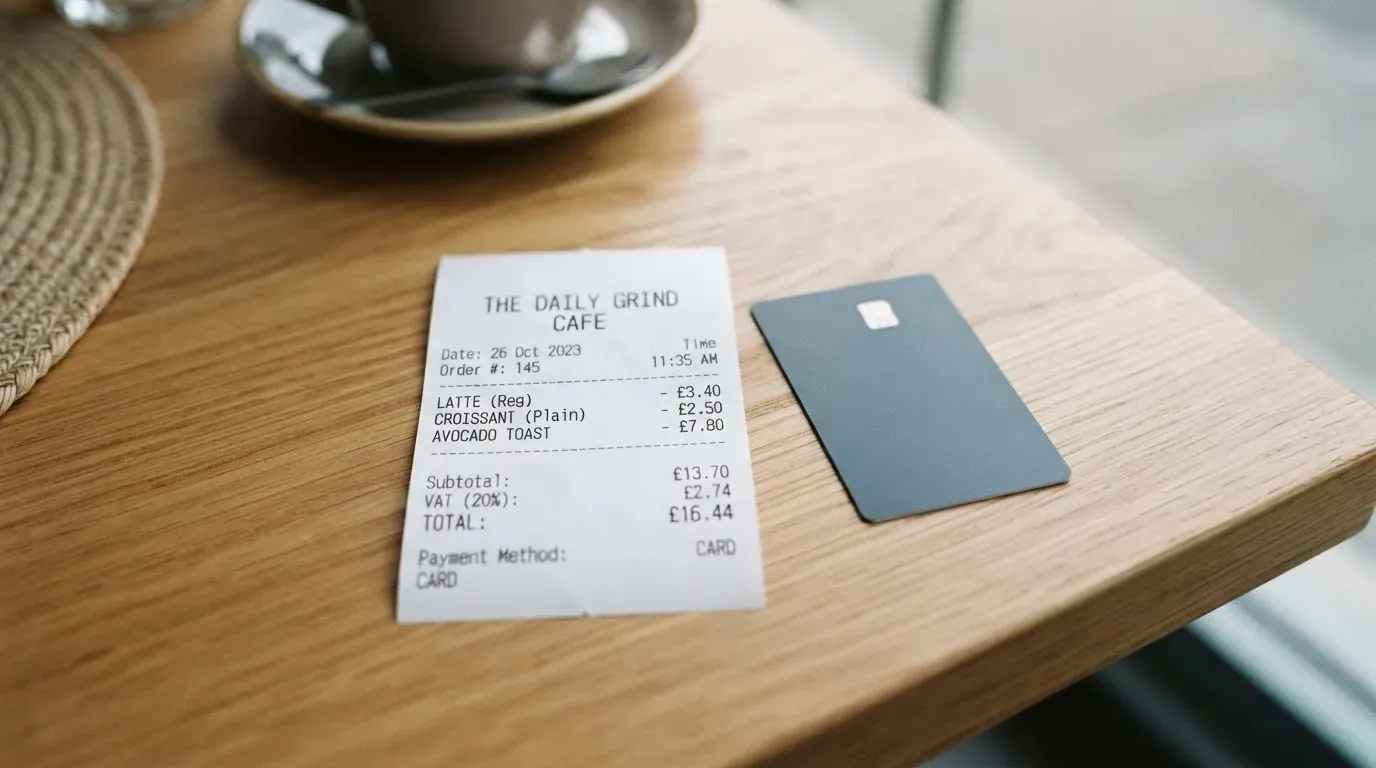
Unofficial detail, in October and August 2026, goes further: issuance and monthly fees are 0; the first Brazilian physical card is free if you hold a 10 USDT-equivalent balance, and costs 30 BRL if you cancel it within the first year; conversion is 0.9% with 0.1% for USDC; the FX fee is 2% in Brazil and most countries and 3% in New Zealand, while one aggregator puts it at 1-2% on non-BRL payments; fees are not refunded, and refunds are paid in USDC. On ATM withdrawals, the launch release promised zero fees with a footnote that third-party or network fees may apply, and the current terms are not stated. Trackers in August 2026 say two free withdrawals a month and 1.50 each after that.
Read the refund line twice. Fees not refunded, refunds in USDC: if you pay 3% FX on a purchase, return the item, and get USDC back, you have eaten the fee and possibly changed currency. That is a small thing that only matters when something goes wrong, which is exactly when it matters most.
| Fee or limit | What the sources say |
|---|---|
| Issuance | Officially not stated. Unofficial: 0; Brazilian physical card free with a 10 USDT-equivalent balance, 30 BRL if cancelled within the first year |
| Monthly fee | Officially not stated. Unofficial: 0 |
| Crypto conversion | 0.9%; launch release: 0.9% on crypto payments, BRL payments at zero fee. Unofficial: 0.1% for USDC |
| FX fee | Officially 1-2%. Unofficial: 2% for Brazil and most countries, 3% in New Zealand; 1-2% on non-BRL |
| ATM withdrawal | Officially: zero fees promised at launch, third-party and network fees may apply; current terms not stated. Unofficial: 2 free per month, then 1.50 each |
| Daily spend | Not stated officially. Unofficial: 25,000 BRL for Brazil across KYC levels 1, 2 and 3; another tracker: $20,000 daily |
| Monthly spend | Not stated officially. Unofficial: 50,000 BRL at levels 1 and 2, 150,000 BRL at level 3; another tracker: $20,000 monthly |
| Yearly spend | Not stated officially. Unofficial: 200,000 BRL at level 1, 450,000 at level 2, 600,000 at level 3; another tracker: $100,000 annual |
That spend table is worth pausing on, because the two unofficial sources disagree by an order of magnitude. One is in reais and tiered by verification level, the other in dollars and untiered. An older Binance FAQ excerpt suggests $3,000 per day, and separate EEA figures appear in the same older material — 870 EUR virtual, 8,700 EUR physical — for a programme that ended years ago. So: no published limit on the official pages, two trackers that do not agree, and a historical figure that is a decade of crypto cards away from current practice. If a limit decides something for you, ask support and get the answer in writing.
How to Top up the card
Officially, the card’s public pages say nothing about top-ups. That is worth stating plainly: the card’s own materials do not describe how to fund it. What follows is from third parties, in August 2026.
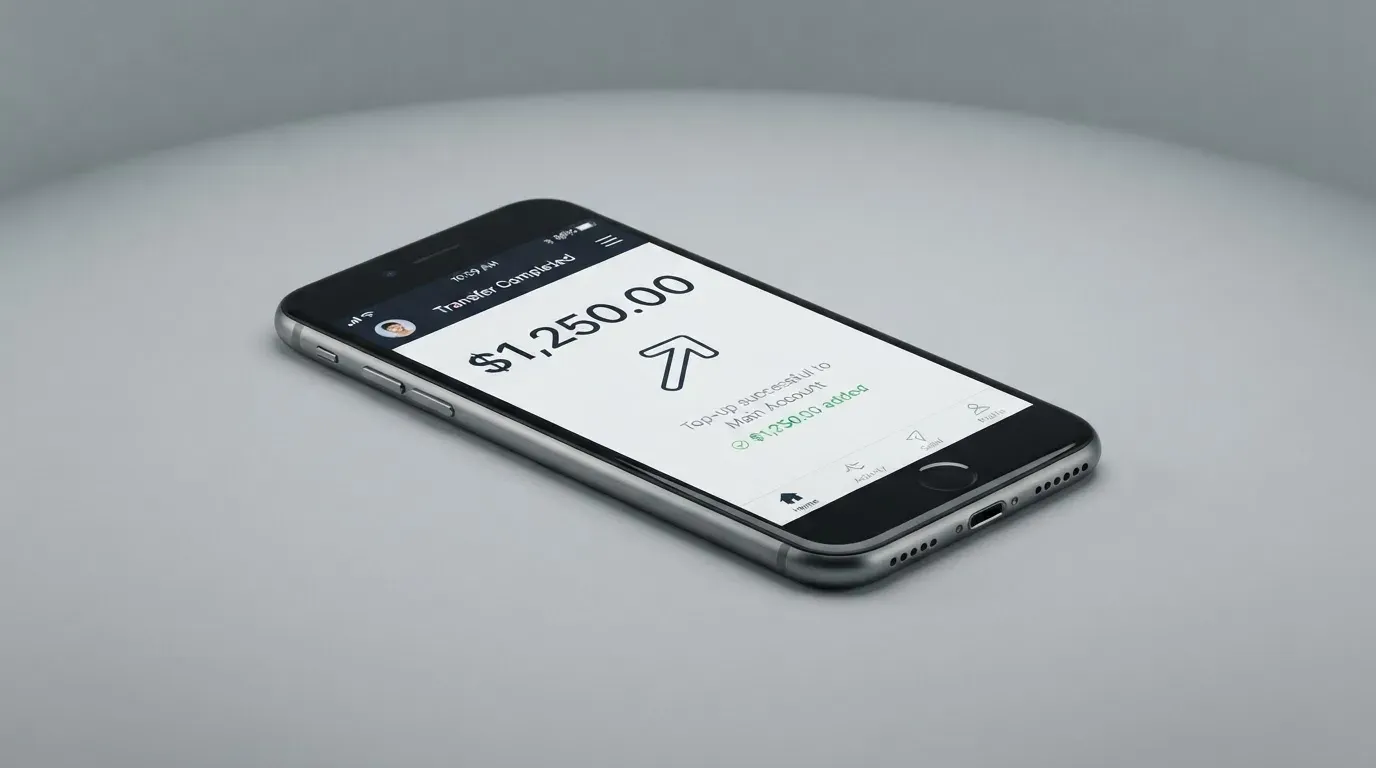
You fund the card from your Binance balances — Funding and Spot, with Flexible Earn in some versions — and you can pay with a list of assets: BNB, BTC, ETH, USDT, USDC, FDUSD, SOL, ADA, LTC or LINK, XRP.
Two practical points follow, and neither is a small one. First, the card is not fed from a bank transfer in the ordinary sense — it draws on what you already hold on the exchange, so topping up is really “make sure your Binance balance is in an asset the card will spend.” Second, if you move money to Binance over a blockchain to do it, you are making an irreversible transfer, and network fees are charged by the blockchain rather than by the card provider. Send on the wrong network and the money is simply gone; a deposit on a network the card provider does not support can need manual recovery from support, with no guarantee.
That is the whole top-up story, and it is fine — as long as you are already on Binance. If you are reading this hoping to solve a problem you have with moving money onto an exchange, this card does not solve it, and the network-fee layer adds a step rather than removing one.
Paying with it every day
This is where the card is strongest, and the score says so.
Unofficial, in August 2026: Apple Pay and Google Pay are supported in Brazil, along with Mercado Pago and 99Pay. That last detail is more interesting than it looks — those are the wallets Brazilian people actually use for everyday spending, and a card that plugs into them stops feeling like a crypto product and starts behaving like a normal one.
Cashback is the other half. The current official figure is up to 3%. The 2023 launch release said up to 8% in crypto cashback, and that is outdated — if you have read 8% somewhere, it is four years old. The official advice is to check the rate in the app. Unofficial, in Brazil: 1.5% under 500 BRL monthly, 2% between 500 and 4,999.99 BRL, 3% from 5,000 BRL, capped at 500 BRL a month and paid in BRL. Another source describes it paid in USDC with three tiers — 1.5% at the base, 2% from $100, 3% from $1,000, credited by the 10th. A third describes up to 3% in BNB for Brazil and other regions, and up to 2% across Latin America and CIS. Again, unofficial, and again they do not agree — but every one of them lands in the same region, which tells you the shape is right and the details are not settled.
Worth knowing: the old 8% cashback-in-BNB tier system ended on 20 December 2023 along with the Visa programme. There are no longer KYC-independent tiers; the cashback tiers are tied to how much you spend.
The Binance app itself rates 4.7 out of 5 on the App Store across 117.4K ratings — and that is the exchange app, not the card, so treat it as a proxy for nothing more than general app quality. The card’s own pages show “24/7 Chat Support” and a Support Center link, though that is general Binance support rather than a card channel. Third-party trackers in August 2026 list no card-specific support channel at all, which is a real gap worth knowing about before you need it.
If something goes wrong with a payment, the official guidance is clear enough: for an unauthorised transaction, contact Binance Support immediately with an explanation, transaction records and receipts. For disputes and refunds, the card transactions FAQ says contact Customer Support. Time frames are not stated. And the Binance Terms are the part to read before you need them: you are liable for credited amounts in the event of a chargeback, and a chargeback can lead to suspension or restriction of your account.
What can go wrong
The honest list, in rough order of how likely it is to matter to you.
Platform risk is the big one, and it is structural. Your balance is not in a bank deposit. It sits with a platform, and you are trusting the platform. That is not a criticism of Binance specifically — it is the shape of every custodial exchange. For context, custodial platforms have a documented history of failure: Mt. Gox with about US$350 million reported stolen between 2011 and 2014, Coincheck with about US$400 million in 2018, and the Ronin Network bridge with US$625 million in 2022. A self-custody-linked card avoids that by keeping the funds in your own wallet until the moment of payment — and moves the risk to key loss, phishing, and clipboard-hijacking malware that swaps an address you copied.
The country list can shrink. Card programmes close. It has happened across this category: Visa terminated its global agreements with FTX on 13 November 2022 and the FTX US debit card was wound down by its issuer; WaveCrest, a Visa issuer that supplied several crypto card brands, was suspended by Visa in Europe in 2018 and all its Visa programmes closed. The pattern in a closure is a notice period, then spending and loading stop, then users are asked to withdraw remaining balances. A secondary source reported a 2026 closure where new loads ended on 8 July and spending stopped on 8 August — single source, unconfirmed, but it shows how little warning you can get.
Who actually issues your card. This is messier than it should be. The Mastercard 2023 release named Dock as issuer on the Mastercard network. Unofficial sources say the global programme issuer is Immersve Limited under Mastercard Global Reach, with Pomelo Payment Institution for Brazil. The official figure is four years old and the unofficial ones contradict each other and it. Binance’s ADGM entities — Nest Exchange Limited, Nest Clearing and Custody Limited, Nest Trading Limited, the last regulated by the FSRA — are listed on binance.com, but the page does not say which of them serves the card. So you are not quite able to answer “who is my bank here,” and for anyone treating this as a financial account rather than a spending tool, that is not a small gap.
The complaints record is genuinely messy. Trustpilot disabled its Binance TrustScore after detecting fake reviews. In August 2025 a review described a payment partner charging for a failed crypto purchase. Reddit results were only pinned support threads. And a tracker reports that some Reclame Aqui complaints cite uncredited promotions, unauthorised charges and dispute handling — those are allegations, not findings. The point is not that Binance is a bad company; it is that the public signal about card complaints is thin and contested, so you cannot lean on it either way.
Practical declines and holds. If the issuer country differs from your billing address, a merchant can look up the BIN and apply extra scrutiny — the card number starts with six or eight digits identifying the issuing institution, and the rest is an account identifier and check digit. This is exactly why a Brazilian-issued card can look “foreign” in another country. Some merchants decline prepaid or foreign-issued cards for that reason alone. Address verification is mainly offered in the US, Canada and UK and is generally unavailable for foreign-issued cards, which causes declines. Declined authorisations can leave a hold on funds that lingers for several days, typically up to seven.
Gambling and chargebacks. Merchant category 7995 covers casinos, betting and lotteries; many issuers block it on specific cards by policy rather than law, and the list varies by issuer. And note that 3-D Secure can shift liability for a fraudulent online payment away from the merchant and toward you or your bank. On the other side, a chargeback is a refund ordered by the issuer, and under the Binance Terms you are liable for credited amounts and risk account suspension. In the US, debit reversal rights come from Regulation E and credit card rights from Regulation Z; prepaid-card coverage varies and should not be assumed.
Tax. I am not going to advise you here, only flag the mechanic. In the US the IRS treats digital assets as property, so exchanging them for goods, services or dollars generally produces a taxable gain or loss; gain is measured in local fiat at fair market value on the date of the transaction, which means each card payment funded from crypto may be a separate disposal. If you spend from crypto balances regularly, that is a bookkeeping question worth taking to a professional in your own country.
Regulation, briefly. MiCA is the EU’s markets-in-crypto regulation and took legal effect in June 2023, with rules for stablecoins from 30 June 2024 and the crypto-asset service provider provisions from 30 December 2024. Its grandfathering period ran until 1 July 2026 or until authorisation, whichever came first. A CASP authorised in one member state can serve the EU. But a card is a payment service regulated separately, so a crypto card often depends on two licences. In the US, FinCEN guidance treats administrators and exchangers as money transmitters while ordinary users buying things are not.
One more thing about stablecoins. USDT and USDC hold about 90% of stablecoin market capitalisation between them, per the BIS in July 2025. Circle says USDC is redeemable 1:1 for USD and fully backed by cash and cash equivalents. But “despite the name, stablecoins are not necessarily stable”: TerraUSD collapsed in May 2022 and USDC lost its peg briefly in March 2023. And they are not censorship-proof — Tether says it disables tokens in wallets on the OFAC sanctions list and has frozen funds tied to illicit activity. Irreversibility cuts both ways.
What to take instead
I looked at three cards that are live and comparable enough to be useful here.
Coinbase Card scores 6.4 out of 10 and is the most straightforward of the three. It is available in all US states except Hawaii, under the USA PATRIOT Act identity rules, and no other countries — so its availability problem is the mirror image of Binance’s. It is a Visa prepaid debit card, virtual or physical, spending cash or crypto, with every crypto converted to US dollars at the point of purchase or ATM withdrawal. “Zero spending fees and no annual fees,” with all fees disclosed in the Cardholder Agreement. Funding is a linked bank account or a paycheck deposit at zero fees. Rewards are optional, variable, shown in the app, and US-only. If you are in the US, this is the cleaner proposition; if you are not, it does not exist for you.
OKX scores 6.2 out of 10 and is the most recent: launched 28 January 2026 for the EU plus Norway, excluding Iceland and Liechtenstein, under the EEA user of OKX Europe Ltd., a MiCAR-licensed entity. It is a euro-denominated virtual Mastercard debit card linked to OKX Pay, issued through an unnamed European licensed payment provider; no physical card is mentioned. Card fee none, no transaction fee, no OKX FX fee, and a conversion spread given as 0.1% by an explainer in May 2026 versus 0.4% in the launch press release — a conflict, with the explainer being newer. You hold USDC or USDG in OKX Pay, other coins must be converted first, there is no auto top-up, and a payment is declined if the balance is short. Cashback only on USDG purchases, with monthly euro caps: Regular 2% capped at 10, VIP1 4% at 300, VIP2 4.5% at 450, VIP3 5% at 1,000, VIP4+ 10% at 1,000. Compare that with Binance’s 0.9% conversion and 2% FX: on a conversion, OKX’s spread is thinner; on cashback, Binance’s Brazilian tiers are better and OKX’s cashback only applies to one of two stablecoins.
Young Card also scores 5.7 out of 10. Almost everything about it officially is not stated — availability, card type, cost, fees, funding — and the one documented feature is that cashback is paid in YNG tokens at a rate set by Club tier: Essential 0.1%, Gold 1.8%, Platinum 3.6%, with Bronze and Silver not stated. I include it because being paid in a platform token rather than your local currency is the thing to notice, not because I can tell you much else.
| Binance Card | Coinbase Card | OKX | Young Card | |
|---|---|---|---|---|
| Score | 5.7 / 10 | 6.4 / 10 | 6.2 / 10 | 5.7 / 10 |
| Official availability | Brazil only | All US states except Hawaii | EU plus Norway | Not stated |
| Card | Prepaid Mastercard | Visa prepaid debit | Virtual Mastercard | Not stated |
| Annual or monthly fee | Not stated; unofficial 0 | None | None | Not stated |
| Conversion or FX | 0.9% conversion; 1-2% FX | No Coinbase fee, spread applies | 0.1% spread (May 2026) vs 0.4% (launch) | Not stated |
| Cashback | Up to 3%; unofficial Brazil tiers | Optional variable, US only | USDG purchases only, tiered caps | In YNG tokens, by Club tier |
| Rewards paid in | BRL (unofficial) | Crypto, chosen in app | Not stated | YNG tokens |
If you are outside Brazil, the table above is more useful than anything else I could write: the comparison for you is not Binance versus Coinbase versus OKX, it is whether any of them serves your country at all.
Who I would recommend it to
In one sentence: to a Brazilian resident who already holds crypto on Binance, spends it regularly in reais, and is comfortable that the balance is a platform balance rather than a bank deposit — take it, and start with the virtual card.
I would not recommend it to someone whose main problem is not being able to open an ordinary bank account and who expects this to fix that. The KYC is the same kind of KYC, the balance is on an exchange, and the country list is narrow.
I would not recommend it to anyone outside the officially supported country, or to anyone choosing between this and Coinbase or OKX while living in the US or the EEA respectively — those two are purpose-built for their markets and this one is not.
And I would ask anyone in Brazil to check three things in their own app before committing: the current cashback rate, since the official figure is “up to 3%” and everything more precise is unofficial; the current spend limits, since the trackers disagree wildly and the official pages say nothing; and what the refund terms are today, since the reported position is that fees are not refunded and refunds arrive in USDC.
Frequently asked questions
What is the Binance card?
The Binance card is a prepaid Mastercard that spends money from your Binance balance rather than from a bank account. When you pay, crypto in your balance is converted and loaded as spendable balance. The card was launched as a prepaid crypto card on Mastercard, and the card’s own current pages do not state further detail about its format.
How does the Binance card work?
It works like a stored-value card. You hold crypto on Binance, the card converts what you spend into local currency, and the converted amount is deducted. Because it draws on a stored balance rather than an account, it cannot overdraw. Conversion is charged at 0.9% per the card’s material, with BRL payments launched at zero fee.
Who owns Binance?
Binance is a privately held cryptocurrency exchange, not a bank. Several Binance entities regulated in the Abu Dhabi Global Market are listed on binance.com, including Nest Exchange Limited, Nest Clearing and Custody Limited and Nest Trading Limited, the last regulated by the FSRA. That page does not say which entity serves the card.
Is the Binance card available in my country?
Officially it is available in Brazil only, open to Binance users there with a valid national ID. Third-party trackers in August 2026 list Brazil, Australia, New Zealand and Peru, and another lists Armenia, Brazil, Colombia, Mexico and Peru — the two disagree. EEA and UK support ended in December 2023. Check inside your app, since that is the only current answer.
Does the Binance card require KYC?
Yes. The issuer requires KYC as part of registration, involving photos and documents, and the official pages do not state the levels, accepted documents or processing times. Third-party sources for Brazil describe a CPF, a photo ID and a selfie. Separately, spend limits are tiered by verification level, which shapes how much you can pay in a day, month or year.
How do I top up the Binance card?
From your Binance balances — Funding and Spot, with Flexible Earn in some versions — using assets including BNB, BTC, ETH, USDT, USDC, FDUSD, SOL, ADA, LTC, LINK or XRP. The card’s own pages do not describe top-ups at all; this comes from third-party trackers. Moving crypto in over a blockchain adds network fees and irreversible-transfer risk.
Is the Binance card free?
Not stated officially, which is itself worth knowing. Unofficial trackers report issuance and monthly fees of 0, and that a Brazilian physical card is free with a 10 USDT-equivalent balance but costs 30 BRL if cancelled within the first year. What is stated is the 0.9% conversion fee and 1-2% FX, plus two free ATM withdrawals a month and 1.50 each after that, according to the same unofficial sources.
Is the Binance card safe?
It is as safe as the platform holding your balance, which is the real question. Card safeguards exist — 3-D Secure, tokenised Apple Pay and Google Pay, app-based two-factor authentication — but your crypto sits with a custodial platform, and such platforms have failed before, including Mt. Gox, Coincheck and Ronin Network. Card programmes have also been wound down: Visa terminated its FTX agreements in November 2022.
Can I add the card to Apple Wallet?
Unofficial sources from August 2026 say Apple Pay and Google Pay are supported in Brazil, along with Mercado Pago and 99Pay. Apple Pay replaces your card number with a device-specific number stored in the phone’s Secure Element, so the real card number is not shared. The Binance app itself rates 4.7 out of 5 across 117.4K App Store ratings, though that is the exchange app rather than the card.
Is the Binance card worth it?
For a Brazilian resident already holding crypto on Binance, yes: up to 3% cashback, wallets they actually use day to day, and 0.9% conversion with BRL payments launched at zero fee. Elsewhere the country list decides it, and third-party trackers disagree enough that I would verify in the app first. Also weigh the reported refund terms — fees not refunded, refunds paid in USDC.
Top exchange cards by score – cryptocardtop
Content created by the «cryptocardtop» team