
A prepaid card built on crypto rails, with fees that add up faster than they look
 Available in US

If you are weighing Volet because a normal bank card is awkward for you to open, or because you hold your money in crypto and want to spend it directly, then this page is for you. Volet is not a bank and it does not behave like one. It is an electronic wallet that issues payment cards drawing on a balance you load in advance — a prepaid model. That single fact explains almost everything you will like and almost everything you will not: the card can work in places a bank card would be refused, but it cannot overdraw, it pays no interest, and its costs are spread across issuance, top-up, conversion and withdrawal rather than one tidy monthly fee.
My overall mark is 6.0 out of 10. That is not a dismissal and not an endorsement — it is a card with a real job done competently and a cost structure that punishes casual use. Below I take it apart region by region, because Volet does not sell one card but a small family of them, and the fees differ between them in ways that matter.
The conditions described here are current as of October 28, 2026.
The verdict
Volet scores 6.0 / 10. It suits you if you already have money in the Volet wallet — in dollars, euros or stablecoins — and want a prepaid Mastercard or Visa that works online and in shops without opening a bank account, especially in the Asia-Pacific and Europe programmes. It does not suit you if you plan to use it as your primary everyday card, if you want predictable all-in costs on small purchases, or if the idea of funds sitting with a provider rather than in your own wallet makes you uneasy. There is one tier only; no premium version buys you better rates.
Here is how the score breaks down, criterion by criterion, with my reasoning.
| Criterion | Mark | Why |
|---|---|---|
| Who can get it | 8 / 10 | Service in 180+ countries; Global digital Mastercard in 150+ countries, plus regional cards for Asia-Pacific and Europe |
| Cost | 4 / 10 | Issuance: Digital global $5, Asia-Pacific plastic $5, Europe Virtual 1 USD/EUR; e-wallet-to-card load 2.5% + $1 on Digital global, 1% + 1 USD/EUR in Europe; wallet card-to-card top-up 3.5% |
| Top-up options | 6 / 10 | The card loads only from the fiat Volet e-wallet; USDT, USDC, BTC, ETH and others are deposited and converted to USD or EUR; networks not named |
| Reliability and complaints | 5 / 10 | Issuer and legal entity not named, regional agreements; Trustpilot 4.1 of 5 from 965 reviews, with complaints about high fees, verification limits and cards not sent |
| Everyday use | 7 / 10 | Digital and plastic Mastercard and Visa, Apple Pay and Google Pay on some cards; ATM terms not officially disclosed |
The pattern to notice: the card is widely available (8) and fine for daily spending (7), but the cost column is where it loses ground (4). A card you load through two steps — crypto into the wallet, then wallet into the card — can charge a fee at each step. Reviewers have calculated the full chain at up to 11% in one case. Reliability sits in the middle for a specific reason: the company is not the issuer, and that is normal for this category, but it means the entity standing behind your money is not named on the card’s own pages.
Will they give you the card?
The service operates in “180+ countries”, but availability depends on your region rather than on your citizenship. That distinction matters: the card pages speak of “region”, and residence versus citizenship is not stated. In other words, the page does not tell you whether your right to the card follows where you live or what passport you hold. If your situation is unusual in that respect — a resident of one country with a passport from another — you should assume nothing and ask support directly before you plan around the card.
There are three programmes. The Global digital Mastercard is available in 150+ countries and is denominated in USD. The Asia-Pacific programme issues a plastic Mastercard in USD. The Europe programme covers Europe, Turkey and Israel, and offers both Virtual and Plastic cards on Visa or Mastercard in USD or EUR.
Unofficial sources, which the card’s own pages do not confirm, add detail. They list 51 countries as available and 29 as restricted, with the United States, United Kingdom, Puerto Rico, Cuba, Iran, Syria and North Korea among the restricted. For Europe, the cards are described as available to EU residents plus Switzerland and Norway, with Turkey and Israel served through Visa. For Asia-Pacific the list given is Australia, Cambodia, Japan, Malaysia, New Zealand, Philippines, Singapore, South Korea, Thailand and Vietnam. Treat that list as a lead to verify, not as a promise — it comes from third-party guides (CryptoCardHub, August 2026), not from Volet.
The single fact worth knowing before anything else: the United States and the United Kingdom are named as restricted in those unofficial sources. If you are in either, a Global Mastercard is very likely not available to you and your realistic choice is a European-style prepaid card from another provider.
How to get it
Basic wallet functions need no identity verification at all. This is the part of Volet that surprises people: you can hold and convert balances without KYC, which is why it circulates widely in places where a bank would ask for documents. Cards themselves, however, require full verification — as do all features and higher limits. Volet says that verification “usually takes only a few minutes”. The levels, the rejection reasons and the exact documents are not stated.
What you should know about the checks that do apply: identity documents, a selfie or liveness check, proof of address and information about where the money came from are all described in unofficial sources as part of the process, depending on the programme. Asia-Pacific reportedly requires proof of residential address in a named country (CryptoCardHub, August 2026). Volet itself publishes none of this detail, so treat it as “expect to be asked”.
On delivery: plastic cards exist for Asia-Pacific and for Europe, Turkey and Israel. Delivery is described only as “free or express” — no timeframe, no express price, no replacement cost on the official pages. Unofficial sources give replacement prices of $19.95 for Digital, €/$1 for a Europe virtual card or €/$5 for plastic, and $120 for Global Plus (CryptoCardHub, August 2026). A Global Plus replacement at that price is worth thinking about before you travel with the card.
One account-level point that reviewers raise: your bank-statement PDF has been rejected as proof of address, and Volet has said in that case that the issuing partner decides. If your address evidence is unusual, expect that decision to be outside your control.
Fees: what it really costs
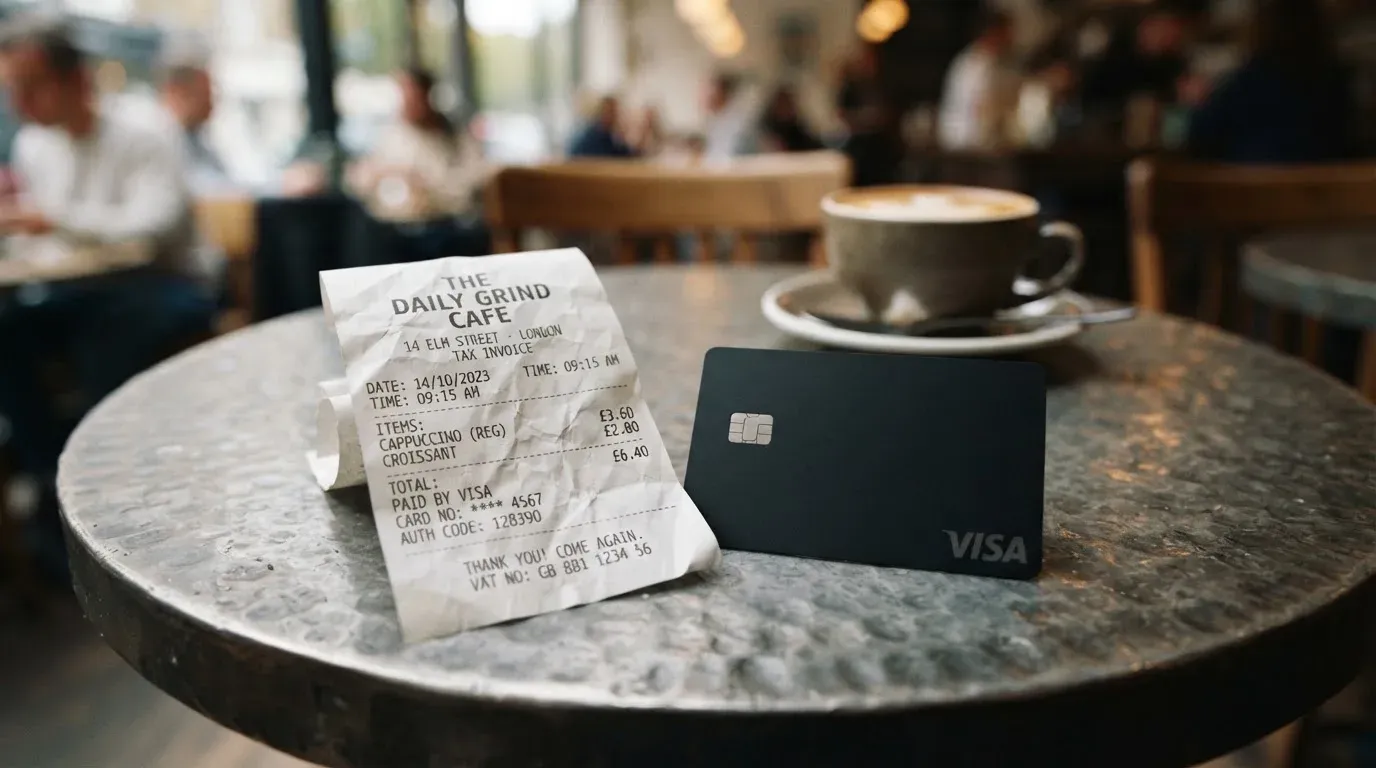
Here is the whole price list as Volet states it, and it is worth reading twice — because there is no monthly fee but there are fees everywhere else.
| Fee or limit | Value |
|---|---|
| Issuance, Global Digital | $5 |
| Issuance, Asia-Pacific plastic | $5 |
| Issuance, Europe Virtual | 1 USD/EUR |
| Issuance, Europe Plastic | $5 / EUR 5 |
| Monthly fee | Not listed; FAQ says no monthly fees |
| Load from e-wallet, Digital global | 2.5% + $1 |
| Load from e-wallet, Asia-Pacific | 1.5% + $1 |
| Load from e-wallet, Europe | 1% + 1 USD/EUR |
| POS / FX surcharge | No extra fee (Mastercard rate); Europe “no POS fee” |
| Crypto deposit to wallet | Free |
| Auto-conversion to fiat/stablecoin | $1 for USDT/USDC; free for BTC/ETH/others |
| Fiat card top-up to e-wallet | 3.5% |
| ATM fee | Not stated |
| Purchase limit, Digital global | Up to $50,000 per purchase |
| Purchase limit, Asia-Pacific | Up to $22,000 per purchase; $6,500 load per day |
| Purchase limit, Europe | Not listed |
| Monthly caps | Not stated |
Now let us follow three ordinary payments through that table, because fees in this product attach to the movement of money, not to the purchase itself.
A coffee at 5 dollars, Global Digital card. You already hold the balance, so the purchase itself costs you nothing extra — no POS fee, Mastercard’s own rate applies for any currency conversion. That is the good case, and it is the case the product is built for.
A 5 dollar top-up from crypto, then a 20 dollar purchase. The crypto deposit into the wallet is free, but converting USDT or USDC to a fiat or stablecoin balance costs $1. Loading the card from the e-wallet costs 2.5% plus $1 — on a 5 dollar load that is 1.25 dollars of percentage alone. Then the purchase. In one review a reader calculated the whole chain at up to 11% of the amount moved. On small and frequent loads this is where the cost mark of 4 out of 10 comes from.
A 100 euro purchase on a Europe Virtual card. Loading from the e-wallet costs 1% plus 1 EUR, and Europe carries no POS fee. The one-time issuance is 1 EUR. On a card you use repeatedly with a loaded balance, Europe is the cheapest of the three programmes to run — which is the opposite of what the headline prices suggest.
What nobody publishes officially: the ATM fee and the monthly caps. Unofficial sources (CryptoCardHub, August 2026) give ATM fees of €/$1.99 domestic in Europe and €/$2.99 outside it, $2.99 in Asia-Pacific ($1.99 in Australia), and $2 plus 1% on Global Plus with another 2% for non-USD. ATM withdrawal and monthly limits are given as $500 per withdrawal, $500 per day, $2,000 per month on Digital; €/$500 per withdrawal and €/$2,500 per day in Europe; $550 per withdrawal and $1,650 per day in Asia-Pacific. None of this is confirmed by Volet. If cash machines matter to you, this is the first thing to ask support about in writing.
Top up: how the money gets in
The rule is short and it is the single most important thing to understand: the card loads only from the fiat Volet e-wallet. There is no direct “card top-up” from a crypto wallet. Crypto — USDT, USDC, BTC, ETH and others — is deposited into the wallet first and then converted to USD or EUR, and the card draws on that. Networks are not stated by Volet.
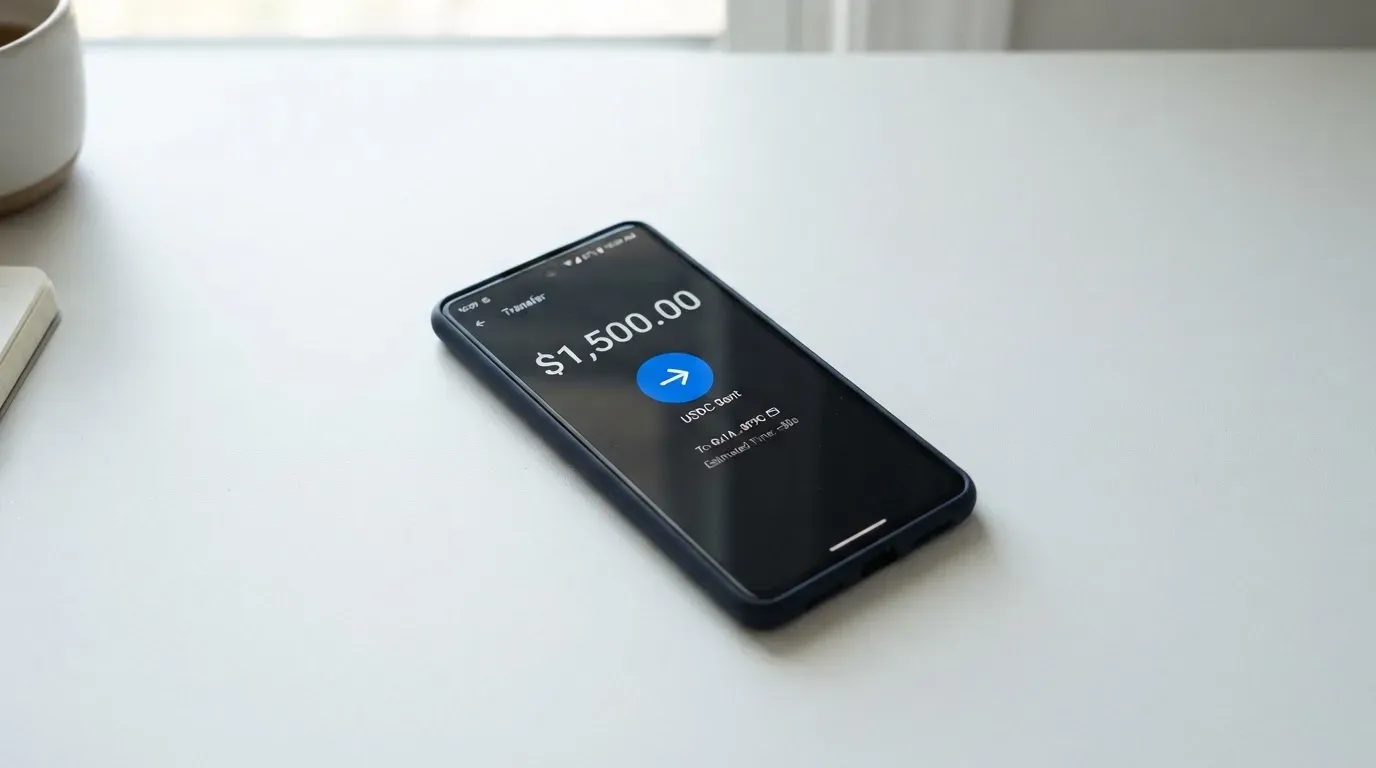
The steps, then:
- Deposit crypto to the wallet. Deposits are free.
- If you want the card to hold dollars or euros, convert. USDT and USDC conversion costs $1; BTC, ETH and others are free to convert.
- Load the card from the e-wallet balance: 2.5% + $1 (Digital global), 1.5% + $1 (Asia-Pacific), 1% + 1 USD/EUR (Europe).
- Alternatively, top up the wallet itself with a fiat card (Visa, Mastercard) for 3.5%, then load the card from the balance.
The minimum top-up is not stated, and neither are SEPA or bank-transfer top-up fees.
There is one more fee type on the other side that people forget: withdrawals out. From the fiat balance, to a Volet card costs from 1%, to a Visa or Mastercard 3%, SWIFT 1% + 25 USD, SEPA from 1%, a local bank from 1%, and P2P is free. Crypto out from the crypto wallet is 3.5 USDT for USDT TRC-20, 0.5 for USDT/USDC on other chains, and the network fee for BTC/ETH; from the fiat or stablecoin balance it is 0.5% + 3.5 USD for USDT TRC-20, and 0.5% + 0.5 USD on other chains. What happens to a leftover balance if you close the account is not stated.
Two practical warnings on the crypto side. Sending on a network the provider does not support, or to an address belonging to another network, can lose the funds or need manual support recovery with no guarantee — blockchain transfers are irreversible. And reviewers report sending funds to an old wallet address in August 2026. Copy addresses from inside the app each time; do not reuse a saved one.
Paying with it every day
For everyday use Volet is better than its cost mark suggests. The cards are Mastercard and Visa, digital and plastic, and some of them can be added to Apple Pay or Google Pay — which card supports which is stated only in the individual card descriptions, and the official list of supported wallet cards is not set out in one place. Unofficial sources say Apple Pay and Google Pay work on the Digital and Spend Virtual cards, are not advertised for Europe, and are not supported for Asia-Pacific or Global Plus.
Currencies follow the card: Global digital Mastercard in USD, Asia-Pacific in USD, Europe cards in USD or EUR. On Global there is no extra FX fee beyond the Mastercard rate. The wallet exchanges fiat balances at “near-market” rates with no figure published, and multi-currency balances are not stated.
No cashback is mentioned anywhere. A referral programme is listed as “coming soon”: 2 USD/EUR per activated digital card, 5 USD/EUR per activated plastic card — worth noting only because “coming soon” is exactly the status of a programme you cannot yet use.
The app is the weak spot. Google Play and App Store badges are shown, but the page also says “iOS coming soon” — the iOS app is not yet available. Store ratings are not stated, and so are blocked merchant categories and the dispute process.
What can go wrong
Nothing official. I found no official incident, no announced outage and no regulator statement about Volet. That is worth saying plainly, because the absence of a public incident is not the same as evidence of a safe product.
The real exposures are structural. Volet is a custodial e-wallet: your funds are held on Volet’s side, so you are trusting a company you did not choose from a list, in a jurisdiction that may not be yours. The background is worth keeping in mind — custodial platforms have a record of failure, from Mt. Gox and Coincheck to the Ronin Network bridge, and a stolen private key has no recovery because the network cannot freeze or return funds. Volet describes its own protections as “multi-layer security, encryption, access controls and continuous monitoring”, with PCI-DSS, GDPR, SSL and ISO badges. Whether 2FA, in-app card freeze and spending controls exist is not stated, and neither is any safeguarding or insurance of balances.
The company layer is the second exposure. The issuer is not named on the card or personal pages; the footer says only “Volet.com”. Agreements are published per region — there is an “Agreement Canada” and an “Agreement Costa Rica” — so the contracting entity can differ by region, and licences are not stated. Unofficial sources say Volet was formerly ADVcash and that the issuers are not publicly named, with licences still empty as of August 2026. So: before you put a large balance in, find out which entity your agreement names and which regulator licenses it. In the EU, ESMA maintains an interim register of authorised providers; other jurisdictions have their own equivalents.
Support is the third. Volet advertises “24/7 live support” through support.volet.com and a Contact us page, and the site runs in about 20 languages. That is genuinely useful if you are in a region where English is not the working language of the institutions you deal with.
And then the reviews. Trustpilot shows 4.1 out of 5 from 965 reviews (read 2026-10-20; 72% five-star, 16% one-star). The recurring themes:
- High fees. June 2025; August 2026, “fees to get euros in are somewhat high”; February 2026, a review calculating up to 11% wallet-to-card cost.
- Verification and withdrawal limits. A September 2026 UK user could not fully verify.
- Transactions blocked from India in January 2026 without justification given.
- Funds sent to an old wallet address, August 2026.
- Cards not sent, September 2026, one-star.
- A bank-statement PDF rejected as proof of address, March 2025; Volet says the issuing partner decides.
Read that list as a map of where things go wrong — cost, identity, delivery, address networks — rather than as 965 individual verdicts. None of it is established fact about the company; it is what users reported.
What to take instead
If Volet does not fit — you want lower top-up fees, a named issuer, cashback, or a card for your country rather than a list that excludes it — here is how the alternatives I scored compare, and the honest reason each of them is also imperfect.
| Alternative | Score | Card | Cost and funding | Rewards |
|---|---|---|---|---|
| Volet | 6.0 / 10 | Mastercard and Visa, digital and plastic, by region | $5 or €1–5 issuance; load from wallet 1–2.5% + fixed fee; wallet top-up 3.5% | None; referral “coming soon” |
| CardFlow | 4.9 / 10 | Virtual USD Mastercard, created in about 3 minutes | Creating a virtual card is free (site FAQ); fees not stated; funds by Bitcoin, USDT, ETH or Naira bank transfer | Not stated |
| HyperCard | 4.7 / 10 | Prepaid “HyperCard”; network not stated on the App Store page; balance in USD or EUR | Fees not stated on the pages I could read; deposit crypto such as USDT, BTC, ETH in the app, converted to USD or EUR | Not stated |
| Card.fi | 6.6 / 10 | Virtual Classic and Premium, physical Classic and Premium, metal; every physical order includes a virtual card; issued under licence from the relevant card schemes (Visa/Mastercard not named) | Virtual Classic $49 one-time, Virtual Premium $249; no monthly, annual, inactivity or minimum-balance fee; top-up Classic 1.5% + $1.00, Premium 1%; FX Classic 3.5%, Premium 2.5% | Cashback on spending: Classic 0.8% (cap 10 USDT/month), Premium 1%, Metal 1.2% (cap 100 USDT/month, 5,000 USDT) or 2% (cap 250 USDT/month, 20,000 USDT) |
CardFlow is aimed at Nigeria — it calls itself “Nigeria’s smartest fintech card platform” and addresses “Nigerians and global users” — and states no country list or exclusions. Its virtual card is free to create, which is the single most attractive fact about it, and the most important thing missing is that its fees are simply not stated on the pages I could read. A free card with unpublished fees is not a cheaper card.
HyperCard’s official pages state no country list. Its App Store page says the card works in “more than 176 countries” — but that is where the card is accepted, not who may hold it, and the two are not the same question. It is a prepaid card with a USD or EUR balance funded by crypto. Again, no fees stated.
Card.fi is the strongest of the four on paper and the one I would point you at first if cashback and a wide funding list matter to you. Cards ship to “200+ countries”, though its terms bar residents of, or orders from, “a country subject to sanctions that would prohibit the service”. It takes 32 coins across 5 networks — Ethereum, Base, BNB Chain, Solana, Kaanch — including USDT, USDC, ETH, BNB, SOL and KAANCH, converted at market rate on arrival, with a separate deposit address per card. Its catch is the entry price: $49 for a virtual Classic, $249 for a virtual Premium, with physical and metal prices not listed. It is the only one of the four that pays cashback on spending. One serious warning applies to it and to any multi-chain option: sending on the wrong chain risks permanent loss.
None of these is a bank. None of them is safe in the way a regulated account is. What you are choosing between is different cost structures and different disclosures. Treat the risks of a custodial balance as an unavoidable feature of this category.
Who I would recommend it to
I would recommend Volet to you if three things are true. You are in a region its cards actually serve, and not one of the restricted countries. You already hold money in the Volet wallet or are willing to treat it as your main balance, so the top-up fee is paid rarely rather than weekly. And you want a prepaid card to handle online payments and shops abroad, with 24/7 support in a language you read, more than you want a bank account with an overdraft, interest or a chargeback scheme.
I would not recommend it as your one and only card. The cost structure works against small and frequent top-ups; the ATM terms are not officially published; the issuer is not named on the pages; and on Trustpilot the recurring complaints are about fees, verification and delivery. If any of those would land badly on you, the alternative comparison above is where I would start.
Whichever you pick, do three things before you rely on it: read the agreement for your own region, because the contracting entity differs; find out who licenses the issuer; and send a small test amount before you move anything you cannot afford to have a week stuck. And if you are in the United States or the United Kingdom, check the eligibility question first, because those countries are the ones most often named as restricted.
Frequently asked questions
What is Volet card?
Volet is a payment card issued through the Volet electronic wallet, drawing on a balance you load in advance rather than on a bank account. The cards are Mastercard and Visa, in digital and plastic form, split into Global, Asia-Pacific and Europe programmes. It is a prepaid product from an e-money provider, not a bank account, so there is no overdraft and no interest on the balance.
How does Volet card work?
You load money into the Volet wallet, then move it from that wallet onto the card, and the card spends that balance like any other payment card. Crypto deposited into the wallet is converted to USD or EUR first. Because it is a pre-loaded balance model, the card cannot go negative — the worst outcome is that you are refused, not that you owe money.
Is Volet a bank?
No. Volet’s own pages do not name the issuer or the legal entity, and publish agreements per region — for example an “Agreement Canada” and an “Agreement Costa Rica” — so the contracting party depends on where you are. Licences are not stated. It behaves like an electronic money institution: funds are held for you on the provider’s side, not at a bank in your own name.
Who owns Volet?
Volet does not say on its card or personal pages; the footer shows only “Volet.com”. Unofficial sources (CryptoCardHub, August 2026) say Volet was formerly ADVcash and that the card issuers are not publicly named, with licences still empty as of that date. Before you hold a large balance, look at which entity your own regional agreement names and check its regulator’s register.
Does Volet card require KYC?
Basic wallet functions do not — no verification at all, which is part of why the service is widely used where a bank would ask for documents. Cards, all features and higher limits do require full verification, which Volet says usually takes a few minutes. The exact documents and the rejection reasons are not stated officially; third-party guides describe ID, a selfie, proof of address and source-of-funds questions.
How much does Volet card cost?
There is no monthly fee, but there are several other charges: issuance of $5 for the Digital and Asia-Pacific plastic cards and 1 USD/EUR for Europe Virtual; loading the card from the wallet 2.5% + $1 on Digital global, 1.5% + $1 in Asia-Pacific and 1% + 1 USD/EUR in Europe; a fiat card top-up into the wallet 3.5%; and $1 to auto-convert USDT or USDC. Reviews have calculated the full chain at up to 11%.
How do I top up Volet card?
Only from the fiat Volet e-wallet. Deposit crypto (USDT, USDC, BTC, ETH and others) into the wallet — free — then convert to USD or EUR if you want dollars or euros, then load the card from the balance at the rates above. Alternatively top the wallet itself up with a Visa or Mastercard for 3.5% and load from there. Volet does not state the networks, the minimum top-up, or SEPA and bank top-up fees.
Is Volet card free?
Not quite. The FAQ says there are no monthly fees, and creating the Europe Virtual card costs 1 USD/EUR, but the Global Digital and Asia-Pacific plastic cards each cost $5 on issuance, and every load, conversion and withdrawal carries a fee. The Europe Virtual is the closest thing Volet has to a free card.
Can I add Volet card to Apple Wallet?
Some cards support Apple Pay and Google Pay, but which ones is stated only in the individual card descriptions and not collected in one official list. Unofficial sources (CryptoCardHub, August 2026) say the wallets work on the Digital and Spend Virtual cards, are not advertised for Europe, and are not supported for Asia-Pacific or Global Plus. Check the description of your specific card before you rely on it.
Is Volet card safe?
No card is safe in the way a bank deposit is, and Volet is custodial: your money sits with the provider, so you carry counterparty and hack risk. Volet cites multi-layer security, encryption, access controls and continuous monitoring with PCI-DSS, GDPR, SSL and ISO badges, but does not state whether 2FA, in-app freeze or balance insurance exist. There is no official incident I found, and Trustpilot shows 4.1 of 5 from 965 reviews, with recurring complaints about fees, verification and delivery.
Top virtual cards by score – cryptocardtop
Content created by the «cryptocardtop» team