
A virtual crypto-funded card with some real gaps in the fine print
 Available in US

VCCPRO is one of the more interesting corners of the crypto-card market, mainly because it does almost nothing that a regular bank would do. There is no app, no plastic card, no monthly statement, and no chatty onboarding. You pick a virtual card from a web shop, pay with Bitcoin or USDT, and a card number lands in your inbox, often within half an hour. That simplicity is also the whole pitch. If you have crypto and you want a card number you can type into a checkout, VCCPRO says it can hand you one. The question I sat down to answer is whether the rest of the experience is solid enough to trust with your money, or whether the rough edges on the official site and the complaints piling up on Trustpilot mean you should look elsewhere.
I went through the official pages line by line, the terms, the refund policy, the support channels, and the public reviews. I also compared VCCPRO to three alternatives aimed at the same kind of user. Below is what I found, what the numbers actually say, and who I think this card is really for.
The conditions described here are current as of October 28, 2026.
Verdict: 6.1 out of 10
VCCPRO lands in the middle of the pack. The score reflects a real trade-off: the card is easy to get and accepts users almost anywhere, but the company publishes very little about its fees, its issuer, or its security, and the public feedback is split.
| Criterion | Score | Why it got that mark |
|---|---|---|
| Who can get it | 9 / 10 | Marketed as accepted worldwide, with BINs from the US, UK, EU and Asia, and no list of excluded countries on the site |
| Cost | 6 / 10 | $4.99 to issue, $5.00 (2.0%) to load, no monthly fee, but the conversion spread and FX fee are not disclosed |
| Top-up options | 5 / 10 | Bitcoin and USDT are named, with a vague “such as” hinting at other coins, plus Perfect Money, but no networks are published and the per-transaction cap is $1,000 |
| Reliability and complaints | 4 / 10 | Run by VCCPRO Ltd in Poole, UK, which is explicit that it is not a bank, no issuer or licence named, Trustpilot sits at 3.5 from 294 reviews, with recurring complaints about undelivered orders and slow support |
| Everyday use | 5 / 10 | Virtual-only Visa and Mastercard, with an NFC variant that claims full Apple Pay and Google Pay support, no plastic, no ATM information, no published blocked categories |
The short version: VCCPRO works as a quick virtual card for online payments, paid in crypto. It is not a card to load with serious money or to rely on as your everyday payment tool, because too much of what a normal card user takes for granted is either missing or unstated.
Who VCCPRO will issue a card to
The single biggest thing VCCPRO has going for it is openness. The homepage says the cards are “Accepted Worldwide By Top Global Platforms” and that the BINs come from the US, UK, EU and Asia. There is no published list of excluded countries, and the terms do not single out any specific nationality or residence. In a market where many crypto cards shut out whole regions, that is unusual.
The same openness is also a soft spot, because the terms leave a lot of room for the company to ask for documents after the fact. The Terms say “Identity verification, sanctions screening, and PEP screening may be required, depending on service providers, issuing partners, or applicable law”. A PEP is a politically exposed person, someone who holds a prominent public function; the screening rules around PEPs are part of standard anti-money-laundering practice. So you can place an order today, and a check might still be applied to you, your order, or your card balance tomorrow, depending on who is on the other end.
The site is also quiet on the basic eligibility questions: no per-country list, no tiered verification, no published thresholds above which checks kick in. From the official pages, the only stated age rule is 18+.
If you are in a country where most crypto cards say no, that breadth is the main reason to look at VCCPRO. If you are in a country where mainstream cards are easy to get, VCCPRO has to compete on the rest of the package, and on that side the picture is less generous.
How to get a VCCPRO card
The sign-up flow is short, which is part of the appeal. You browse the shop, pick a card from one of the product lines (Cheap Visa and MasterCard, NFC Contactless Virtual Card, Reloadable Premium Cards, Platinum High-Limit Visa, Premium VCC, Exclusive BINs), pay for it with crypto at checkout, and the card details come back to you, usually in 30 minutes to 6 hours, occasionally up to 24 hours. The About page is even more direct: “Cards are issued instantly.”
There is no app, no account dashboard to register for in advance, no separate identity step you have to clear before paying. You pay, you wait, you get a card number. That is the entire path on a normal day.
A few things follow from this design that are worth knowing up front. First, the product names are descriptive, not separate SKUs with published prices and benefits. The “Platinum High-Limit Visa” page, for example, is a navigation link rather than a tier with a clearly stated limit. The shop tells you what to pay at checkout, not what each line gets you in caps. Second, the moment of delivery is the moment everything is “final” in the company’s eyes, which I come back to in the disputes section. Third, even though the homepage does not mention KYC, the terms reserve the right to ask for it later, and the refund policy mentions failed identity checks as a reason to refuse money back. So “no KYC” should be read as “no KYC on the front page”, not as a permanent promise.
The card itself is virtual only. There is no physical card, no shipping address to provide, and no plastic on the way. Inside the virtual range you get a Visa or a Mastercard, and one of the product lines is an NFC Contactless Virtual Card that the FAQ says “fully supports Apple Pay and Google Pay integration”. The currency the card balance runs in is not stated.
Fees: what it really costs
Cost is where the picture is half-clear. Two fees are written in plain numbers, and the rest are missing.

The costs table, with the published numbers and the ones the site does not state:
| Fee or limit | Amount |
|---|---|
| Issuance fee | $4.99 |
| Monthly or annual fee | None stated |
| Top-up (dynamic load) fee | $5.00 (2.0% of the load) |
| Crypto conversion spread | Not stated |
| FX fee on non-USD spending | Not stated |
| ATM withdrawal fee | Not stated (no physical card) |
| Minimum load per transaction | $10 |
| Maximum load per transaction | $1,000 |
| Daily spend limit | Not stated |
| Monthly spend limit | Not stated |
| ATM limit | Not stated |
To make the issuance-plus-first-load price concrete, VCCPRO’s own example on the pricing page is: a $250 load, with the dynamic load fee on top, comes to an estimated $259.99. The issuance fee is separate.
A few everyday situations, and what you actually pay:
You are topping up $200 in USDT to spend online. You pay the $4.99 issuance fee the first time, then a $5.00 load fee on every top-up, so $5.00 here. Whether the conversion between USDT and the card’s balance is at the market rate, slightly worse, or noticeably worse is not disclosed. If you load again next week, you pay another $5.00, regardless of size. Below $10 you cannot load, above $1,000 you cannot load in a single transaction.
You are paying a $60 subscription billed in euros from a card loaded with USDT. The FX fee for converting dollars to euros is not published, so the only number you can know in advance is the load fee you already paid to put the dollars on the card in the first place. If the spread on the euro side is, say, 1.5% in addition to a network fee, that is real money and you cannot see it before the charge.
You want to use the card in a country whose currency is neither dollars nor euros. The site mentions “USA, UK, and European currencies” only as a place where users “save”, which is closer to marketing than to a fee table. There is no per-currency schedule and no published cross-rate.
The bottom line on cost: VCCPRO is cheap to keep and predictable to start, but the two fees that often matter most on a payment card, conversion and FX, are not on the page. You can budget the issuance and the load, and nothing else.
How to top up VCCPRO
Top-up is by crypto or by Perfect Money only. There is no bank transfer, no card top-up, and no PayPal option; the site is explicit that PayPal is not accepted.
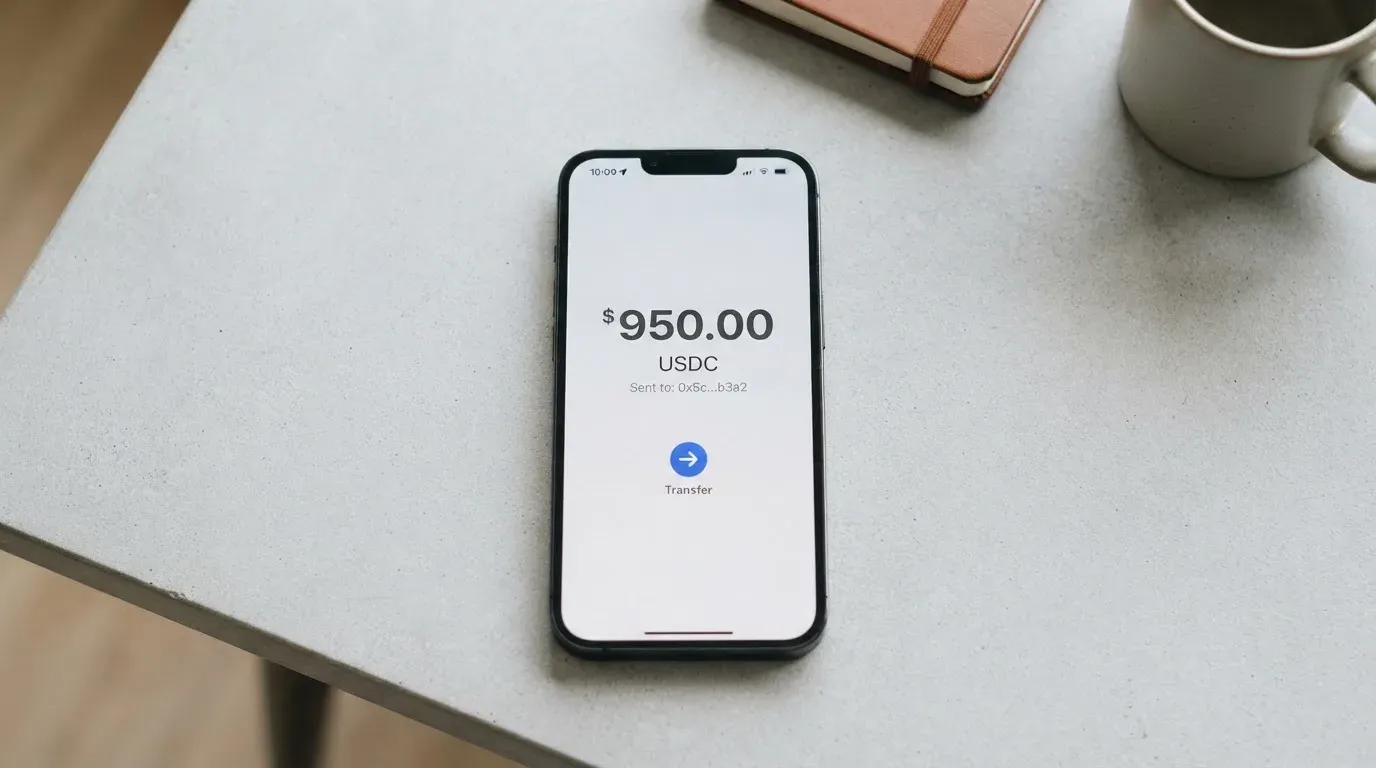
Bitcoin and USDT are the only two coins named. The site adds “such as” before other cryptocurrencies, which is the kind of wording that means “more may work” rather than “these specific coins work”. The networks those coins run on are not stated, so the practical question, do I send USDT on Ethereum, on Tron, on Solana, on something else, is one the user has to figure out at the moment of payment, and the refund policy is unforgiving if you get it wrong.
Perfect Money is a digital payment system that the site lists as an alternative way to pay at checkout. If you have a Perfect Money balance, that path works. If you do not, it is not really a competing option; it is a side door.
The mechanics: a single load can be anywhere from $10 to $1,000, and you pay a $5.00 (2.0%) fee each time. The site does not say who pays the network fee on a crypto deposit; the chain charges gas, and it is fair to assume the user pays that, but it is not stated in writing on the public pages I could see.
A few things that are easy to misread:
- “Such as” is not a list. VCCPRO names Bitcoin and USDT. Anything else is at your own risk until you see the deposit address and confirm the chain the company is actually expecting.
- Stablecoin networks are not interchangeable. If you send USDT on the wrong chain, the funds can be lost, and the company has no obligation to recover them. The refund policy says orders are final once the card is issued and delivered, and it does not address what happens to a mistaken top-up that never made it to a card.
- The Refund Policy says approved refunds are generally processed within 5 business days. It does not say what happens to a balance left on a card if the card is closed.
If you are new to crypto cards, the safest habit is to make a small first top-up, see the deposit address, ask support which network the address is for, and only then send the larger amount. With VCCPRO, where networks are not published, that habit matters more than usual.
Paying with VCCPRO every day
Once the card is on file, the experience is similar to any prepaid virtual card. You type the number into a checkout, the merchant either approves or declines, and your balance drops by the amount of the purchase plus any FX the merchant’s bank applies. Where VCCPRO is unusual is on the mobile wallet side and the mobile wallet side only.
The NFC Contactless Virtual Card is the product line that the FAQ describes as supporting Apple Pay and Google Pay “fully”. The way mobile wallets work, the real card number is replaced by a device-specific number stored in your phone, and each transaction uses a one-time dynamic code, so the underlying card number is not shared with the merchant. That is standard wallet behaviour, and the same protection applies here. What the company can additionally do is restrict the tokenised version, for example block it on certain channels, but I did not see a published list of which channels the tokenised card works on.
Beyond that, several everyday questions have no public answer:
- Blocked merchant categories. The Refund Policy mentions “prohibited or high-risk merchants” as a reason to refuse a refund, which implies some merchants are off-limits, but the list is not published.
- Rewards, cashback, or any spend-based incentive. Nothing on the site mentions one.
- A mobile app. There is no app; everything happens through the web shop and the support channels.
- Disputes and chargebacks. There is a process for reporting a problem, but it is a complaint process run by VCCPRO, not a chargeback right under a card network’s rules. I expand on this below.
If you use the card for a regular online subscription, a one-off digital purchase, or to add to a mobile wallet, it should work the way any prepaid card works, with the same basic protections and the same basic limits. If you need a card for in-store contactless, ATM withdrawals, or a real piece of plastic, VCCPRO is not the product, because none of those are on offer.
What can go wrong with VCCPRO
This is the section I wish were shorter, because the product is a fairly simple virtual card. Two areas carry most of the risk: who is on the other end of the transaction, and what recourse you have if something goes wrong.
The company behind the card is VCCPRO Ltd, registered at Lytchett House, 13 Freeland Park, Wareham Road, Poole, Dorset, BH16 6FA, UK. VCCPRO describes itself in plain language as “a technology platform and is not a bank, electronic money institution, or card issuer”. The cards are issued by unnamed licensed third-party providers, and no issuer name, no licence number, and no company registration number are on the public pages I could read. The terms do not carry a date.
That phrasing matters. When a regulated bank or an electronic money institution holds your card balance, your funds are usually segregated and may be protected by safeguards; with a “technology platform” that hands the issuing to a partner, the protection depends on who the partner is and under which regulator, and VCCPRO does not tell you that. The site’s job here is to put a real issuer and a real licence on the page, and it does not do that job.
The public feedback reflects that gap. On Trustpilot, VCCPRO has 3.5 out of 5 from 294 reviews, with roughly 70% five-star and 22% one-star, read on 2026-10-21. The themes from the negative reviews, going back to late 2025 and into 2026, are consistent: paid orders that were never delivered, or that sat “on hold” for days or weeks; slow or no support response; accusations of scam behaviour, which the company has publicly disputed as a campaign by one person. None of this is the same as a regulator finding a problem, but it is what real users are saying.
A few things follow from the official documents that the company does not say out loud but you should know:
- Refund policy is short and final. Once a card is issued and delivered, the order is considered final. Refunds within 24 hours of delivery are possible if you report the issue with the Order ID, the email used, a description, and screenshots. Even then, the policy excludes refunds for user error, prohibited or high-risk merchants, change of mind, normal use of the card, and failed identity checks.
- Chargebacks are not addressed. A chargeback is a refund ordered by the card issuer through the card network, with reason codes like fraud, duplicate billing, or goods not received. VCCPRO’s policy describes an internal complaint process, not the card network’s process, and does not say whether you can go around VCCPRO to the issuer.
- Security is not described. The site does not say whether balances are custodial, whether there is two-factor authentication, whether you can freeze a card, or what record retention looks like. The terms mention “secure user account” and record retention for fraud prevention, which is the floor, not the ceiling.
- Support is reachable but narrow. WhatsApp on +447723833291, Telegram on @worklinkx, and a contact form on /contact-us/. Hours and languages are not stated.
- A regulatory headline is missing. There is no news about the company, no licence announcement, and the Terms carry no date, which means the public record of who VCCPRO is, and is regulated by, is thin.
The single most useful thing a reader can do, before sending serious money, is open the contact form, ask which entity issues the card, ask which regulator oversees that entity, and ask what happens to the balance if VCCPRO or the issuer stops operating. If the answers do not come back, that is information too.
What to take instead of VCCPRO
Three cards sit close to VCCPRO on the spectrum, and each one trades something for something else. The scores below come from the same kind of review pass.
CardFlow, 4.9 out of 10. CardFlow is positioned as “Nigeria’s smartest fintech card platform”, aimed at Nigerians and global users. It offers a virtual USD Mastercard created in about 3 minutes, funded with Bitcoin, USDT, ETH, or a Naira bank transfer. Creation is free, the monthly fee is not stated, and the other fees are not stated. CardFlow is the pick if you are Nigerian or send Naira often, and you can live with the lack of published fees.
HyperCard, 4.7 out of 10. HyperCard is a prepaid card available through an app, with balances in USD or EUR. The App Store page says the card is accepted in more than 176 countries, which is an acceptance claim, not an eligibility claim; the official pages do not list countries. You deposit USDT, BTC, or ETH, the app converts to USD or EUR, and you spend. Costs are not stated on the pages I could read, which is the same complaint as VCCPRO, only with a real app in the way.
Card.fi, 6.6 out of 10. Card.fi is the strongest of the three for the reader who wants a fuller product. It offers virtual and physical cards, including a metal (stainless steel) version, with cards shipped to 200+ countries and a clear sanctions rule rather than a vague “worldwide” claim. Costs are stated: Virtual Classic $49 one-time, Virtual Premium $249 one-time, no monthly, annual, inactivity, or minimum-balance fee. Top-up fees are 1.5% plus $1.00 for Classic and 1% for Premium, FX is 3.5% on Classic and 2.5% on Premium, and the conversion fee is shown before each top-up. Funding covers 32 coins across 5 networks, including USDT, USDC, ETH, BNB, SOL, and KAANCH. Cashback is published: 0.8% on Classic, 1% on Premium, up to 2% on Metal, with caps, plus a 10% headline at coffee shops capped at 10 USDT a month, and balance-earnings of up to 18% on Metal, which is variable. The catch is the right-network risk: the deposit address is per card, and sending on the wrong chain can mean a permanent loss.
The simplest way to compare:
| Card | Score | Best for | Weak spot |
|---|---|---|---|
| VCCPRO | 6.1 | Quick virtual card, crypto checkout, broad country reach | Conversion/FX not published, issuer not named, complaint volume |
| CardFlow | 4.9 | Nigerian users, Naira top-up | Fees not published |
| HyperCard | 4.7 | App-first, USD or EUR balance | Fees not published, country rules vague |
| Card.fi | 6.6 | Readers who want fees, cashback, and clear rules | Higher upfront card cost, network risk on top-up |
If you are choosing on the basis of who says the most about themselves, Card.fi wins on disclosure and on product depth. If you are choosing on the basis of who will hand you a card number the fastest without asking for your ID, VCCPRO is the closest to that experience among the four. If you want a card with a real app and a published balance currency, HyperCard is closer to a normal prepaid product.
Who I would recommend VCCPRO to
Putting it all together, VCCPRO is a fit for a fairly specific reader, and a poor fit for a few other kinds of reader that the marketing might attract.
It is a fit if you need a virtual Visa or Mastercard number, you are happy to pay in Bitcoin or USDT, you do not have access to mainstream cards where you live, you understand that the load fee is part of every top-up, and you plan to keep the balance small and the use case narrow, the kind of one-off online payment where a $5 fee to load is cheaper than the alternative. It is also a reasonable fit if you specifically want an NFC virtual card for Apple Pay or Google Pay, since that is the one product line where VCCPRO publishes a real claim.
It is not a fit if you need a physical card, if you want to use an ATM, if you plan to load thousands of dollars and expect the FX to be transparent, if you want cashback or rewards, if you need a card with a clear chargeback path under a card network’s rules, or if you want to know who is issuing the card and which regulator oversees them before you load it. For any of those cases, the alternatives above, and especially Card.fi, are more honest about what they offer.
The honest line: VCCPRO does the small thing it sets out to do, and it does it cheaply. It does not do the bigger things a payment card usually does, and the public pages do not promise that it does. If you stay inside the small use case, you will probably be fine. If you step outside it, the gaps start to show.
Frequently asked questions
What is the VCCPRO card?
VCCPRO is a virtual-only Visa or Mastercard sold through a web shop, paid for in crypto such as Bitcoin or USDT or with Perfect Money, and delivered as a card number you can use for online payments. One product line, the NFC Contactless Virtual Card, is designed to work with Apple Pay and Google Pay.
How does the VCCPRO card work?
You choose a card in the shop, pay the $4.99 issuance fee and a load in crypto, and the card number is delivered to you, usually within 30 minutes to 6 hours. The card works like a prepaid virtual card: you load a balance, you spend it, and the balance drops by the amount of each purchase.
Is VCCPRO a bank?
No. The company’s own description says VCCPRO is “a technology platform and is not a bank, electronic money institution, or card issuer”. Cards are issued by unnamed licensed third-party providers, and no issuer name or licence number is published on the public pages.
Who owns VCCPRO?
The company behind the site is VCCPRO Ltd, with a registered address at Lytchett House, 13 Freeland Park, Wareham Road, Poole, Dorset, BH16 6FA, UK. The site does not publish a company registration number or an issuer name, so who sits on top of the operation is partly a matter of public record and partly not.
How do I get a VCCPRO card?
Pick a card line in the shop, pay the issuance fee and your first load in crypto, and wait for the card details, which usually arrive within 30 minutes to 6 hours and occasionally take up to 24 hours. There is no separate sign-up form and, on the front page, no identity step.
Does VCCPRO require KYC?
The homepage does not mention identity checks, but the Terms say “Identity verification, sanctions screening, and PEP screening may be required, depending on service providers, issuing partners, or applicable law”. So a check can still be applied after you have paid, and the refund policy lists failed identity checks as a reason to refuse a refund.
How do I top up a VCCPRO card?
You send crypto, either Bitcoin or USDT (the two coins named on the site) or another coin the site hints at, to the address you are given at checkout, with Perfect Money as an alternative payment method. Each load is between $10 and $1,000, costs $5.00 (2.0%), and the network you send on is not published, so confirming the chain before sending is on you.
How do I add VCCPRO to Apple Pay or Google Pay?
The FAQ says the NFC Contactless Virtual Card product line “fully supports Apple Pay and Google Pay integration”, which means you add the card to the wallet of your phone the way you would add any other card. Once tokenised, the wallet replaces the real number with a device-specific number, and each payment uses a one-time dynamic code.
Is the VCCPRO card safe?
The site mentions a “secure user account” and record retention for fraud prevention, but it does not publish whether balances are custodial, whether two-factor authentication is offered, or whether you can freeze a card. The lack of a named issuer and the volume of negative reviews about undelivered orders mean safety is best treated as “use a small balance, see how it goes” rather than as a settled question.
Is the VCCPRO card worth it?
Worth depends on what you need. For a quick virtual number, paid in crypto, with broad country reach and a $4.99 entry cost, VCCPRO is competitive. For a card with published fees, a clear issuer, cashback, a physical version, or a real chargeback path, Card.fi, HyperCard, and CardFlow each cover part of that ground, and Card.fi covers the most.
Top virtual cards by score – cryptocardtop
Content created by the «cryptocardtop» team