
VCCHQ — a low-friction virtual card paid in USDT, with the trade-offs that come with it
 Available in US
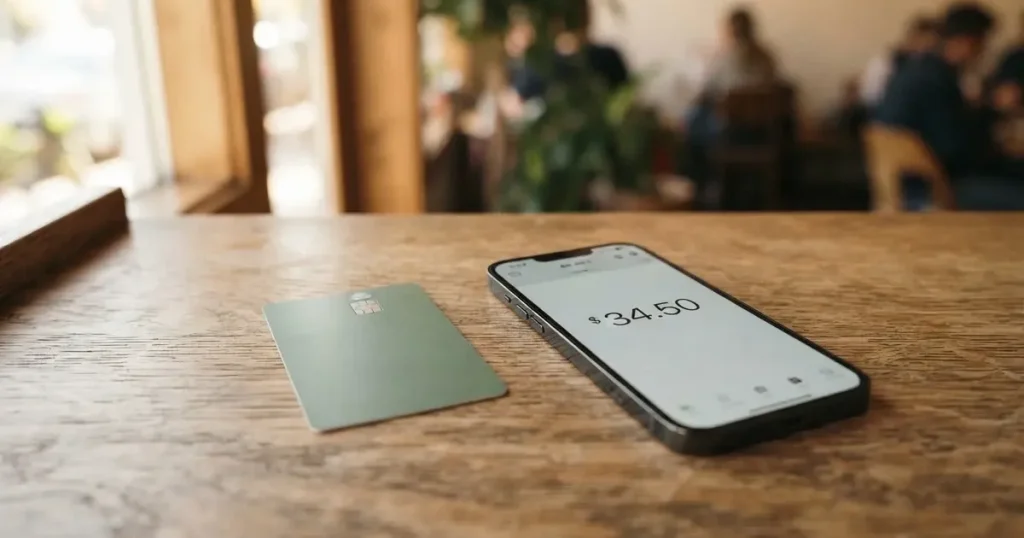
The VCCHQ card is a no-KYC virtual Visa or Mastercard that you pay for in USDT and load with USDT. The pitch is straightforward: no identity documents, no country list, no waiting days for approval. You pick a card tier, send Tether to a wallet address the site shows you, paste in the transaction hash (TXID), and a virtual card number lands in your inbox once support verifies the transfer. That low-friction setup is the reason people look at VCCHQ. It is also the reason this review spends time on what the service does not say: the legal entity behind it, who actually issues the card, what the conversion spread looks like beyond the headline 8% load fee, and whether a card you fund with USDT alone is workable for everyday spending.
Conditions are current as of October 28, 2026.
This is a review for anyone who has trouble getting an ordinary bank card or who specifically wants a card paid for and topped up in crypto. The card is described as “Global” and lists no country exclusions, but that does not mean the card works the same way everywhere: merchants, networks and your bank (if you have one) can still decline what they do not recognise. The conditions described below are current as of 2026-10-20.
Verdict: 4.9 / 10
VCCHQ scores 4.9 out of 10 in my weighing of who can get it, what it costs, how it tops up, how reliable it appears and how it works day to day. The high mark is for accessibility: there is genuinely no KYC, no country wall, and a virtual card arrives after a single USDT transfer. The low marks come from everything that surrounds that convenience: a steep load fee, a single funding coin, no app, no disclosed issuer, and a complaint footprint on Trustpilot that is small but unflattering.

This card suits a specific kind of reader. If you are outside the mainstream banking system, do not want to hand over identity documents, only need a virtual card for a limited amount of online spending, and are happy to work in USDT on TRC20 or BEP20, VCCHQ is built for that use case. If you want a card that you can tap in a shop, freeze from your phone, top up with anything other than USDT, or fall back on when a customer service line goes quiet, this is not it.
Here is how the score breaks down across the criteria I checked.
| Criterion | Mark | Why |
|---|---|---|
| Who can get it | 9 / 10 | “Global”, no country list, no KYC, virtual delivery by email |
| Cost | 2 / 10 | Load fee 8% plus a flat $2, plus issuance ($3–$15) on top |
| Top-up options | 6 / 10 | USDT only, TRC20 or BEP20, minimum load $5 or $30 |
| Reliability and complaints | 4 / 10 | No legal entity, no issuer named, Trustpilot at 3.5 from a handful of reviews |
| Everyday use | 3 / 10 | Virtual only, no app, no disclosed wallet support or mobile pay |
The accessibility and the cost work against each other: the easier it is to get, the more you pay for it, and that trade-off is the spine of this review.
Who will they give you the card
VCCHQ describes its service as “Global” and does not publish a country list or any country-specific exclusions. There is no KYC at any point: you do not upload a passport, a utility bill, a selfie, or anything else. The order flow is choose a card tier, enter an email address, pay with USDT, submit the transaction hash, wait for support to verify, and receive the virtual card details. Because no identity documents are collected, there is also no age check that the site describes. If an age minimum applies, it is not stated on the public pages.
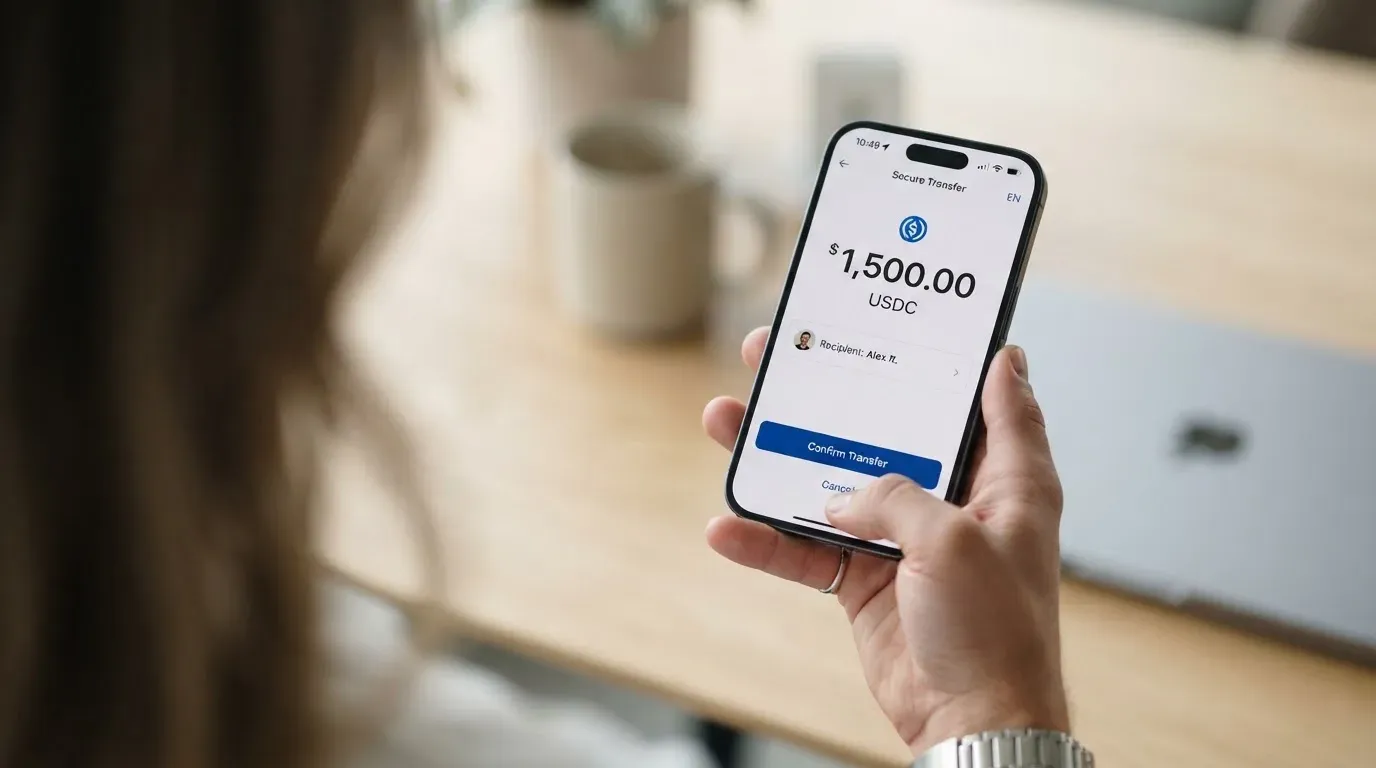
That setup is the main reason this card exists. People who cannot open a bank account in their country, who do not have a passport or proof of address that a regulated issuer would accept, or who simply do not want their crypto spending tied to their real name, can in principle order a card. The flip side of that openness is that the card sits in a legal grey zone: an unlicensed or undisclosed issuer cannot offer the same protections as a regulated one, and the wider your country of residence, the more likely a merchant or a payment processor is to treat a card from an unknown issuer with caution.
There is a real difference between “no country list” and “works the same everywhere.” A virtual Visa or Mastercard is accepted at most online merchants that take those networks, but the merchant’s payment processor decides whether to accept a given BIN (the six- or eight-digit prefix that identifies the card issuer). Some merchants block prepaid cards, some block foreign-issued cards, and some apply extra checks when the issuer country in the BIN does not match the customer’s billing address. The card itself does not change those rules; you simply inherit them.
In short: the card is easy to get and hard to qualify for, in the sense that nothing about you is checked. That can be exactly what you need, or exactly what makes you uncomfortable. It depends on what you are comparing it to.
How to get it
The process is the same for every tier. You pick Standard, Premium or Ultra Premium, give an email address, pay the issuance fee in USDT, and send the on-chain USDT transfer to a wallet address the site shows you for that order. After the transfer confirms on the network, you submit the transaction hash to support. Support verifies the payment and emails the virtual card details. The site calls this “Instant Delivery” once the TXID is verified.
What you get is a virtual Visa or Mastercard number, expiry and CVV. The Premium and Ultra Premium tiers are described as “Enhanced Approval BINs” and “Elite Flagship BIN 428842” respectively, which is the only public hint that VCCHQ is willing to tell you which BIN range you will end up in. Whether a specific merchant accepts a specific BIN is a separate question and not something VCCHQ can guarantee.
There is no app, no account dashboard in the sense most people mean, and no in-browser wallet to manage balances. Communication is by email, plus Telegram (@worklinkx), WhatsApp (+44 7723 833291) or [email protected]. There are no published support hours or languages. If you have ever ordered a no-KYC virtual card before, this is the same shape: email plus a chat channel, with the issuer’s identity left unstated.
There is no KYC level system, no upgrade path from virtual to physical, and no Apple Pay or Google Pay tokenisation described anywhere on the public pages. If you need a card on your phone’s wallet, this is not that.
What it really costs
The headline numbers look small. The compounding makes them less small. Issuance is $3 for Standard, $6 for Premium and $15 for Ultra Premium (BIN 428842). The load fee is 8% of the top-up amount, plus a flat $2. The site’s own example is that a $30 top-up costs $34.40 in fees-loaded total, which lines up with $2 plus 8% of $30.
| Fee or limit | Standard | Premium | Ultra (BIN 428842) |
|---|---|---|---|
| Issuance (one-off) | $3 | $6 | $15 |
| Monthly fee | Not stated | Not stated | Not stated |
| Load fee | 8% + $2 | 8% + $2 | 8% + $2 |
| FX fee | Not stated | Not stated | Not stated |
| ATM | Not stated | Not stated | Not stated |
| Minimum load | $5 | $30 | $30 |
| Daily / monthly limits | Not stated | Not stated | Not stated |
Three concrete scenarios make the cost picture easier to hold in your head.
A small online purchase, say a $10 domain name paid with a Standard card you just loaded. The minimum load is $5, so you load $5 to cover it. The 8% + $2 fee on a $5 load is $2.40. You paid $2.40 in fees to spend $5. If you load $30 instead, the fee is $4.40 and you have $25.60 to spend.
A $100 subscription for a year of a service. You load $100 in one go (above the Standard minimum of $5). The fee is $2 + $8 = $10, so the card balance is $90 and you have spent $110 of effective money. The annual fee of the subscription has gone from $100 to $110, a 10% markup before any FX conversion the merchant’s bank applies.
A $1,000 lump sum for a more substantial online purchase. You load $1,000, the fee is $2 + $80 = $82, and the card balance is $918. The percentage cost drops, but the absolute fee is now $82 — and that is before any FX cost. The site does not state an FX fee, which means the network or issuer’s spread will still apply when the merchant settles in a currency other than the card’s base currency. Whatever the card’s base currency is, it is not stated on the public pages.
If a monthly fee exists, the site does not say so. ATM withdrawals are not described at all. There is no published daily or monthly spending limit, which sounds like freedom but is more accurately a sign that the public pages do not document the product fully. Every figure in this section is a stated fee or a worked example from those fees; I have not added estimates or summed anything the site did not show.
How to top it up
Funding is USDT only, on either TRC20 (Tron) or BEP20 (BNB Smart Chain). The wallet address is shown per order, which is sensible: it ties the deposit to a specific card purchase or top-up rather than to a generic company wallet. The minimum load is $5 for Standard and $30 for Premium and Ultra. There is no published maximum, and the network fee (the gas you pay the blockchain to move your USDT) is not stated. The blockchain charges that fee, not VCCHQ, but the site does not tell you what to expect.
A few practical points that come from how USDT on these networks actually works. On Tron, transfers are usually cheap (fractions of a cent) but bandwidth and energy rules apply, and if your sending wallet does not have TRX for the small resource fee, the transfer can stall. On BEP20, you need a small amount of BNB in the sending wallet to pay gas; if you send USDT without BNB, the transaction cannot complete. The card provider has nothing to do with this, but the top-up cannot land until the network confirms it, so a wallet with only USDT and no native gas token is a common way to lose time. Stablecoin transfers are irreversible, and sending USDT to an address for a network the card does not support can mean the funds are lost, with no guarantee support can recover them.
Because there is no app and no in-wallet conversion, “top up” here means “send USDT to the address shown for that order.” There is no on-ramp from a bank, no card-to-card top-up, no Apple Pay or Google Pay funding path, and no published way to withdraw a balance back to a bank or to crypto. If a withdrawal or refund path exists, it is not stated on the public pages. There is a Refund Policy linked in the footer, but the text of that policy is not on the pages I could read.
Paying with it every day
What the card can do in practice is narrower than the marketing implies. It is a virtual card, so there is no plastic to tap, insert or hand over. There is no app, which means no in-phone card management, no instant freeze, no spending charts, and no Apple Pay or Google Pay tokenisation. Whether a merchant accepts prepaid or foreign-issued cards is up to the merchant’s payment processor; the card programme cannot override that.
The BIN itself is interesting. Premium and Ultra Premium are explicitly attached to BIN 428842, which VCCHQ calls an “Elite Flagship BIN.” That wording is a marketing term, but it suggests the higher tiers are aimed at merchants or platforms that are stricter about which card ranges they accept. Whether a given merchant will treat BIN 428842 better than a Standard card is something you find out by trying, not by reading.
Because there is no mobile wallet, online checkout is the realistic use case. The card behaves like a prepaid card at checkout: you type the number, expiry and CVV, and the merchant’s processor either approves or declines. Some online merchants will decline prepaid cards outright, and some will decline a card whose BIN country does not match the billing address. The address you give at checkout can be a real address or an address you can reliably receive mail at, but with no KYC there is no on-file address tied to the card itself, so address verification at the issuer end is unlikely to help.
Cashback, rewards, staking yields or any form of return on the balance are not stated. There is no app-based 2FA, no in-app card freeze, and no tokenised wallet to add the card to. If you lose the card details, recovery is through support on the channels above. If the card details leak, there is no self-service freeze button.
What can go wrong
The biggest single risk is structural: the public pages do not name a legal entity, a registered address, or the card issuer. The footer says “© 2018 – 2026 VCCHQ”, which dates the brand but not the company behind it. The Visa or Mastercard programme that issues these cards is not stated. That is unusual for a card product, and it shifts the trust question onto the operator in a way most readers will not be set up to evaluate.
The complaint footprint is small but pointed. On Trustpilot the brand scores 3.5 from 5 reviews, with no reviews in the last twelve months as of 2026-10-21. The one specific complaint in the public record is from December 2021 and concerns a delayed order. A small sample size is not a verdict, but combined with the missing legal disclosures it is a fair signal that the public evidence of how the operator behaves in a dispute is thin.
The next layer of risk is operational. There is no app, so there is no in-app freeze and no biometric login. There is no insurance or safeguarding disclosure, which is what a regulated e-money institution would publish. The site’s security practices are not stated. The 2FA mechanism, if any, lives in the email account you used to order the card, so the security of the card is the security of that email.
The next layer is the stablecoin layer. The card is funded with USDT only. Stablecoins are described as stable in name only; they have depegged before (TerraUSD in May 2022, USDC briefly in March 2023) and can do so again. USDT specifically has been the subject of regulatory action and reserve concerns, and Tether states that it disables tokens in wallets on the OFAC sanctions list and has frozen funds tied to illicit activity. If your USDT gets frozen at the address you sent it to, the card top-up will not arrive and recovery is a support ticket, not a legal process.
The final layer is the network layer. Sending USDT on the wrong network, or to an address for a network the order did not specify, can mean the funds are lost. Blockchain transfers are irreversible. The site does show a per-order address, which is the right shape, but a copy-paste error or a clipboard-hijack malware that swaps the address in your wallet at the moment of sending is exactly the kind of failure that no-KYC crypto flows cannot undo.
None of this is a specific incident at VCCHQ; it is the shape of risk for any card that is paid for in crypto, is funded in a single stablecoin, and does not publish the kind of regulatory details that mainstream cards do. The question is whether the operator is set up to handle those failures, and the public information does not let you answer that with confidence.
What to take instead
Three alternatives that look adjacent to VCCHQ, with the same kind of low-friction promise. None is a direct substitute; the differences are what you should weigh.
| Card | Score | Cost | Funding | KYC and reach |
|---|---|---|---|---|
| CardFlow | 4.9 / 10 | Virtual card creation stated as free; monthly fee not stated | BTC, USDT, ETH or Naira bank transfer (networks not stated) | Aimed at Nigeria and Nigerians, with “global users” mentioned; no country list or exclusions stated |
| HyperCard | 4.7 / 10 | Issuance not stated; App Store page lists no fees | Deposit crypto such as USDT, BTC, ETH in-app; converted to USD or EUR on the card; networks not stated | No country list on official pages; App Store says the card works in “more than 176 countries” (acceptance, not eligibility) |
| Card.fi | 6.6 / 10 | One-time: Virtual Classic $49, Virtual Premium $249; top-up fee Classic 1.5% + $1, Premium 1%; FX fee Classic 3.5%, Premium 2.5%; physical and metal prices not listed | 32 coins across 5 networks (Ethereum, Base, BNB Chain, Solana, Kaanch), converted at market rate on arrival | Cards ship to “200+ countries”; terms bar residents of sanctioned countries; cards issued “under licence from the relevant card schemes” |
CardFlow is the closest in spirit: it is aimed at users who are not well served by mainstream cards, with a free virtual USD Mastercard. The site says it can be created in about 3 minutes. The cost profile looks lighter than VCCHQ on the creation side, but the public pages I could read do not state load or FX fees, and the country reach is not stated beyond “Nigeria and global users.” If you are in Nigeria, this is the obvious comparison; if you are elsewhere, the lack of a published country list is the same shape of uncertainty as VCCHQ.
HyperCard is a prepaid card you fund from crypto in the app, with balances in USD or EUR and a published acceptance footprint of more than 176 countries. The score is similar to VCCHQ’s, and the public pages I read do not state fees. The upside is that there is an app, which VCCHQ does not have. The caveat is the same as for VCCHQ: “no country list on the official pages” is a description of what is published, not a guarantee of who can use it.
Card.fi is the most expensive on issuance but the cheapest to run. A Virtual Classic at $49 has a 1.5% + $1 top-up fee and a 3.5% FX fee, while a Virtual Premium at $249 has a 1% top-up and 2.5% FX. Card.fi also accepts 32 coins across 5 networks, which solves the USDT-only problem, and explicitly states that cards ship to “200+ countries” while barring residents of sanctioned countries. Cashback on card spending is published (0.8% to 2% depending on tier, with a 10% headline at coffee shops capped low). The fee structure is much more transparent than VCCHQ’s, and the cost only makes sense if you plan to spend enough that the per-load fee is a smaller share than the $49 or $249 entry price.
If you do not need the no-KYC angle and want the cleaner cost structure, Card.fi is the obvious step up. If the no-KYC angle is the whole point, CardFlow is the closer comparison. HyperCard sits in the middle and adds an app, which VCCHQ does not have.
Who I would recommend it to
I would recommend VCCHQ to a narrow set of readers. If you need a virtual card for a small amount of online spending, do not want to share identity documents with a card issuer, are comfortable working in USDT on TRC20 or BEP20, and can absorb an 8% plus $2 load fee as the cost of that access, the card does what it says. The minimum load on Standard is $5, so a one-off online purchase is workable.
I would not recommend it as a primary card. The undisclosed issuer, the missing legal entity, the lack of an app, the absence of published FX fees, and the unstated withdrawal path are not small caveats for a product you might use over months. The load fee is steep enough that anything beyond a single small purchase is expensive relative to the alternatives. If a merchant declines the card, you have no in-app fallback, no tokenised wallet to try, and no documented dispute process. The Trustpilot footprint is small and is not a sample you can draw conclusions from, but the missing legal disclosures mean the rest of the trust case has to be built from your own judgement of the operator.
A short checklist before you decide. Is the no-KYC angle essential, or would a regulated virtual card with a small issuance fee work? Is your spending small enough that the 8% + $2 load fee is acceptable? Are you set up to send USDT on TRC20 or BEP20 from a wallet that holds the right gas token? Do you have an alternative if the order is delayed, the card is declined at checkout, or support does not respond? If those answers line up, VCCHQ is a workable tool for a narrow job. If any of them is a “no”, one of the alternatives above will probably fit better.
Frequently asked questions
What is the VCCHQ card?
The VCCHQ card is a virtual Visa or Mastercard you order online with no identity verification, paid for in USDT, and topped up with USDT on the TRC20 or BEP20 networks. The site describes its service as “Global” with no country list. Card details are emailed after the USDT payment is verified by support.
How does the VCCHQ card work?
You pick a card tier, enter an email, pay the issuance fee in USDT, and send USDT to a per-order wallet address. You submit the transaction hash (TXID) to support. Once verified, a virtual card number, expiry and CVV are emailed. To top up later, you send more USDT to the address shown for that order. There is no app and no in-browser wallet.
Is VCCHQ a bank?
The public pages do not describe VCCHQ as a bank and do not name a legal entity, a registered address or the institution that actually issues the Visa or Mastercard. There is no banking licence disclosed, no safeguarding statement, and no regulator named. The footer reads “© 2018 – 2026 VCCHQ”.
Does the VCCHQ card require KYC?
No. The order flow is email plus USDT payment plus TXID. No identity documents are collected, no KYC levels are described, and no on-file address is tied to the card. That is the main reason people look at the card, and it is also the reason a regulated card will offer more consumer protection than this one does.
How do I top up the VCCHQ card?
You send USDT to a wallet address shown per order, on either TRC20 (Tron) or BEP20 (BNB Smart Chain). Minimum load is $5 for Standard and $30 for Premium and Ultra. There is no published maximum. Network fees are charged by the blockchain, not by VCCHQ, and the site does not state what to expect. Sending on the wrong network or to the wrong address can mean the funds are lost.
How do I add the VCCHQ card to Apple Wallet or Google Pay?
The public pages do not describe Apple Pay, Google Pay or any other tokenised wallet integration, and there is no app to add a card to. If mobile wallet support is essential, the card as described does not provide it, and one of the alternatives above is likely to fit better.
Is the VCCHQ card safe?
The card relies on the operator’s honesty and operational competence in a way most regulated cards do not. There is no app-based 2FA, no in-app freeze, no published security practice, no safeguarding disclosure, and no named regulator. On Trustpilot the brand scores 3.5 from a small number of reviews, with no reviews in the last twelve months and a December 2021 complaint about a delayed order. “Safe” here is a judgement about the operator, and the public information is thin.
Where can I use the VCCHQ card?
Anywhere a virtual Visa or Mastercard is accepted online. Some merchants decline prepaid cards, some decline foreign-issued cards, and some apply extra checks when the issuer country in the BIN does not match the billing address. Physical in-store use, ATM withdrawals, and tokenised wallet use are not described on the public pages.
Is the VCCHQ card free?
No. Issuance is $3 (Standard), $6 (Premium) or $15 (Ultra Premium, BIN 428842). Each top-up carries an 8% fee plus a $2 flat fee. The site gives a worked example: a $30 top-up costs $34.40. A monthly fee, FX fee, ATM fee and daily or monthly limits are not stated.
How do I withdraw money from the VCCHQ card?
The public pages do not describe a withdrawal path back to a bank account or to crypto. There is no app, and the refund process is handled through support on the channels listed in the footer. If a withdrawal or refund path exists, it is not documented in the pages I could read.
Top virtual cards by score – cryptocardtop
Content created by the «cryptocardtop» team