
A Peruvian Mastercard for crypto and soles, with more unknowns than it should have
 Available in US
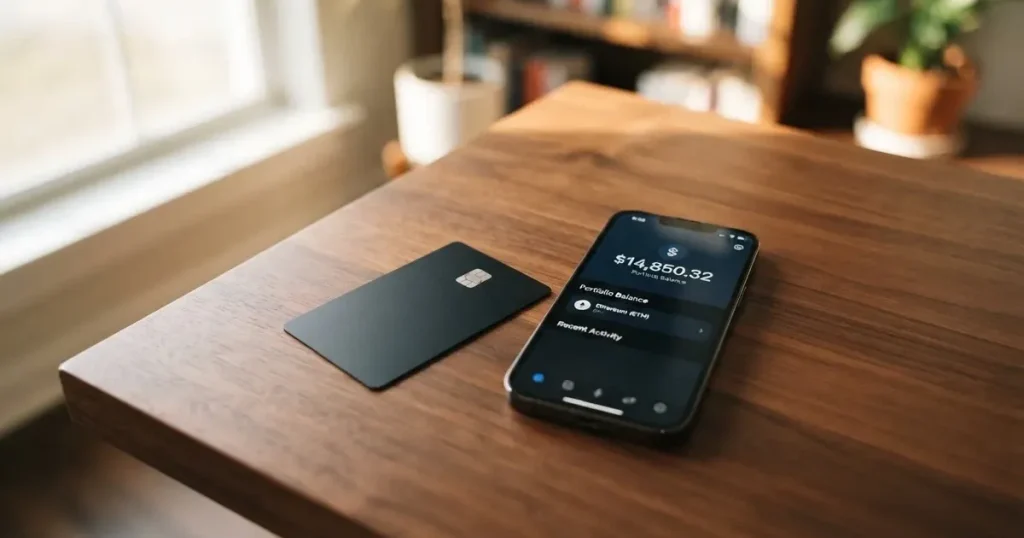
The Tulkit card is a Mastercard prepaid card from a Peruvian fintech. It promises a fee-free account, free physical and virtual cards, top-ups in soles through Yape and Plin or in crypto, and up to 2% back in Bitcoin on purchases. It is, in its own words, “the first payment card in Peru that can be paid for with your crypto balance.” The product is real, the company is registered, and the e-money licence behind the card is held by a regulated Peruvian institution. What the public pages do not give you, however, is most of what a careful reader would want to know before signing up: conversion fees, ATM charges, supported coins and networks, KYC thresholds, and the licence number of the institution that actually issues the card.
Conditions are current as of October 28, 2026.
I went through the card’s pages, the public company information, and the regulator’s framework for Peru, and compared Tulkit with three alternatives. The score that came out of that work is 5.5 out of 10. The verdict and the rest of the review explain why, and what Tulkit is and is not good for. Conditions are current as of 2026-10-20.
Verdict
Tulkit is a Peruvian-only product with a free Mastercard and a 2% Bitcoin cashback that sounds generous until you realise that almost every concrete number a cardholder would compare it on — conversion fee, FX margin, ATM fee, daily limits beyond QR, supported coins, supported networks — is not published. The score below reflects the gap between what Tulkit says and what it shows. If you live in Peru, top up with Yape, Plin or bank transfer, and rarely need cash, the no-monthly-fee structure is genuinely attractive. If you travel, need an ATM, want to spend in dollars, or need to know exactly what you will pay to convert Bitcoin into a coffee, you should look elsewhere.
| Criterion | Mark | Why I scored it this way |
|---|---|---|
| Who can get it | 1 / 10 | Peru is the only country named; the physical card is delivered only in Peru. |
| Cost | 8 / 10 | No monthly or annual fee, free issuance for both card types, but the crypto conversion fee and the FX margin are not stated. |
| Top-up options | 5 / 10 | Yape, Plin, bank transfer and crypto, 24/7, but the coins, networks and minimums are not listed. |
| Reliability and complaints | 7 / 10 | E-money issued by GMoney S.A. under SBS supervision in Peru; no licence number on the public page and no third-party complaints I could find. |
| Everyday use | 7 / 10 | Mastercard virtual and physical, 12 designs, free delivery in Peru, 2% Bitcoin cashback; Apple Pay, Google Pay and ATM access are not mentioned. |
| Total | 5.5 / 10 | The card is cheap and well regulated, but it is closed to most of the world and quietly uninformative on fees. |
Who Tulkit suits: residents of Peru who want a free Mastercard and who top up mostly with Yape, Plin or a local bank transfer, and who are happy to spend only in soles.
Who Tulkit does not suit: anyone outside Peru, anyone who needs a multicurrency card, anyone who relies on contactless mobile wallets, anyone who takes out cash often, and anyone who needs to know the exact cost of converting crypto before they spend.
Will they give you the card
The single most important fact in this whole review is also the shortest: Tulkit names Peru as the only country where the card is available, and the physical card ships only within Peru. If you read no further than this paragraph, read it: this is not a card you can apply for from abroad and have mailed to you. The card and the account it lives on are built around one country’s rails.
The public pages say registration is open to “foreigners with a valid Peruvian immigration card,” which is consistent with the way Peruvian financial institutions normally handle non-citizens. The card issuer behind Tulkit is GMoney S.A., a Peruvian electronic-money institution authorised and regulated by the SBS (Superintendencia de Banca y Seguros), which is Peru’s financial supervisor. The card programme is operated by Tulkit Pay S.A.C., a Peruvian company that handles the conversion between fiat and crypto. No licence number is given on the public pages; the regulation is described but not documented with a reference you can verify yourself.
The practical reading is that the card is intended for residents of Peru, with foreign residents in Peru eligible if they hold a valid Peruvian immigration card. If you are a Peruvian citizen abroad, you cannot have a Tulkit card sent to you; the card does not travel. The restriction is unusually tight for a Mastercard product, and it is what dragged the “who can get it” score down to 1 out of 10: a great deal of the world’s population is excluded by design.
One thing the card does not say publicly is how strict the identity check is beyond “take a few photos.” I could not find a list of accepted documents, a stated minimum age, or any tiered KYC levels. The general rule for prepaid and e-money cards in most jurisdictions is that you need to be at least 18, but Tulkit does not state this itself. Treat age and document requirements as confirmed only at the moment you actually go through the sign-up flow.
How to get it
The sign-up story is the one part of Tulkit that the public pages tell cleanly. Registration takes “minutes, no paperwork, under 2 minutes, no credit check.” Identity verification is described as “take a few photos,” which is the standard selfie-plus-ID pattern that most crypto on-ramps use. There is no application fee, no paperwork to print and no credit check, which is consistent with the card being prepaid rather than credit.
Once you are in, the virtual Mastercard is issued “instantly.” The physical card is “shipped free within Peru,” with 12 designs to choose from. The card page does not give a delivery time or a replacement cost, so I cannot tell you whether you will see the card in three days or three weeks, and what it costs to replace if you lose it. The reasonable assumption is that replacement is not free, because most prepaid programmes charge for it, but Tulkit does not commit to a number.
The prepaid cards settle only in soles, which is the same statement made two ways: the card has a soles balance, and any conversion happens at the moment of spending. Mastercard itself is global, but a soles-only balance is not.
A practical note on the gap between what the marketing copy says and what you will actually experience: a sub-two-minute sign-up, with KYC done in a few photos, is the kind of promise that depends entirely on the document and photo quality. If the ID scan or the selfie fails, you can find yourself in a longer review process with manual checks. This is not Tulkit-specific, but it is worth knowing before you set your expectations.
What it really costs: fees and the everyday examples
The cost story is the most attractive part of Tulkit on paper, and the part where the missing numbers hurt the most. The card has “no monthly or annual fee.” Opening the account and requesting both the physical and the virtual card is free. The full schedule is in a separate “Tarifario Tulkit Card” PDF that the public pages link to, and that is the only place you will see complete fee numbers.
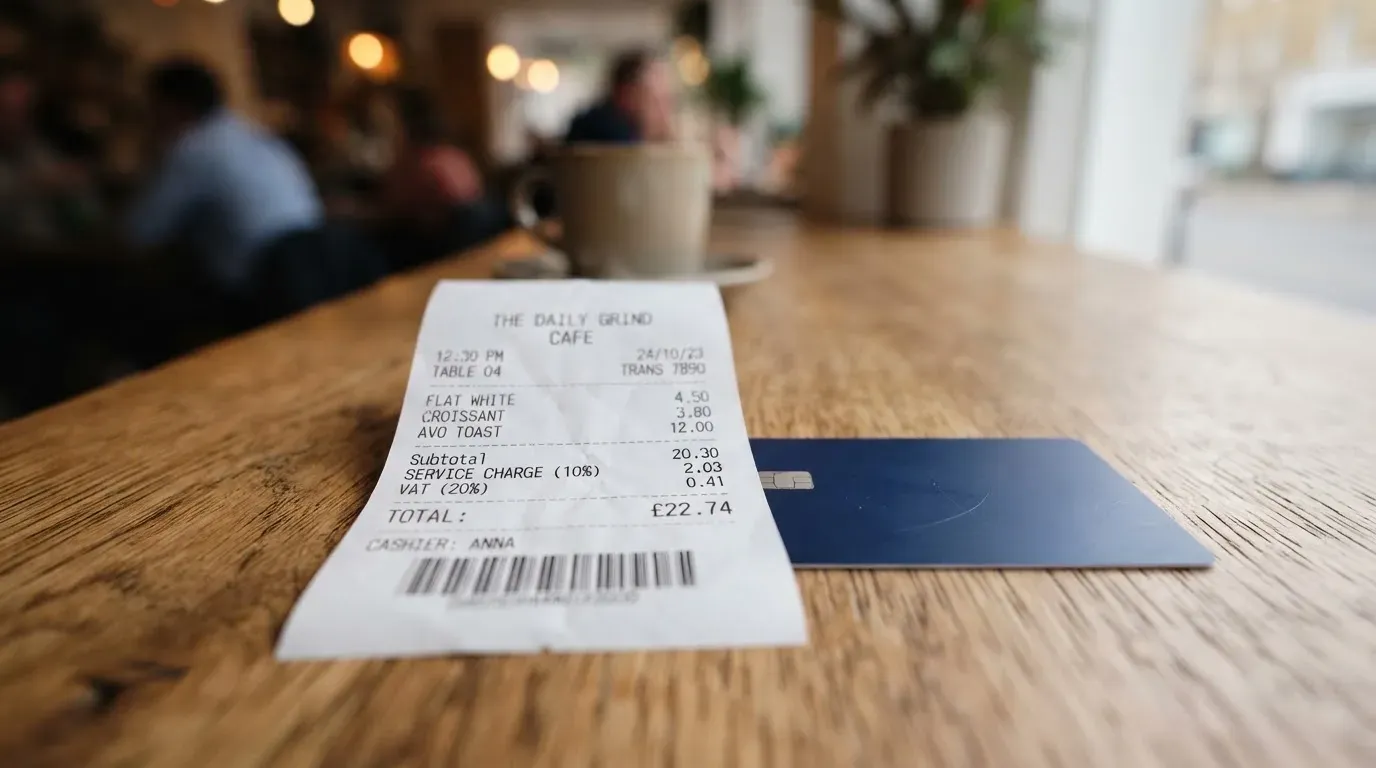
The exchange rate is described as “one of the best on the market” without a number, and the crypto-to-fiat conversion fee and the FX fee are not stated in the public pages. Soles sent or received through Yape, Plin and local banks are free. Cashback is “up to 2% in Bitcoin on each purchase,” with no further conditions published. QR payments are capped at S/5,150 per day; card limits can be set in the app, but no default numbers are published for ATM withdrawals, contactless payments or online purchases.
| Item | What the card says | What is missing |
|---|---|---|
| Issuance | Free for virtual and physical | — |
| Monthly fee | None | — |
| Annual fee | None | — |
| Card-to-card soles (Yape, Plin, bank) | Free | — |
| Crypto conversion fee | Not stated | The percentage taken when BTC, ETH, USDT, etc., are converted to soles |
| FX fee (card used abroad) | Not stated | The margin added when a soles card is used in a foreign currency |
| ATM withdrawal fee | Not stated | Whether ATM access is offered at all, and the fee if so |
| QR payments | Capped at S/5,150 per day | — |
| Other card limits | Settable in the app | Default values for ATM, online, contactless |
| Currency | Soles (prepaid settles only in soles) | Multicurrency FAQ answer is not present |
| Cashback | Up to 2% in Bitcoin | Cap, qualifying merchants, exclusions |
To make this concrete, let me walk through three everyday payments. The numbers below are scenarios, not Tulkit’s published numbers; the only published inputs are the S/5,150 daily QR cap, the 2% cashback, and the lack of a stated conversion or FX fee.
A coffee in Lima, paid in soles from a Yape top-up. Soles were topped up for free, and soles are spent in soles, so neither a conversion fee nor an FX margin applies. You would receive the published 2% in Bitcoin on the soles amount, credited in BTC. This is the case Tulkit is best at: soles in, soles out, no currency edge to think about. The only uncertainty is how the Bitcoin is valued when it is paid out and what the minimum payout threshold is, neither of which is published.
A coffee in a tourist town that prices things in US dollars, paid with a Tulkit card. The card holds soles only, so a dollars transaction is converted to soles at the moment of authorisation, with Mastercard’s rate plus whatever Tulkit adds. The page does not state that margin. The merchant sees a soles authorisation, your receipt shows the soles amount, and you do not know what the spread cost you. Until Tulkit publishes an FX number, the only safe assumption is that there is one.
A supermarket checkout that needs a PIN or contactless, paid with a Tulkit card. The soles balance is debited; whether the card supports contactless at all is not stated; what the per-transaction limit is, is not stated; what happens when the contactless is refused and you have to insert the card, is not stated. The published limit is the S/5,150 daily QR cap, which is QR-specific.
The honest summary of Tulkit’s cost story: the no-monthly-fee, no-issuance-fee structure is genuinely good for a card that gives you 2% back in Bitcoin. The honest criticism is that the conversion fee and the FX margin are the two numbers that decide whether the 2% cashback actually benefits you, and neither is on the page. Before you fund the card heavily, ask the support email for the Tarifario PDF and read the conversion and FX lines.
Top up and funding
Tulkit advertises top-up 24/7 through four rails: Yape, Plin, bank transfer and crypto. Yape and Plin are the two dominant Peruvian instant-payment apps, so this is a real answer to “how do Peruvians actually pay each other.” Soles funded through Yape, Plin or local bank transfer are free, with no fee on the Tulkit side. Crypto top-up, the page says, is 24/7, and crypto can be withdrawn at any time, with transfers described as “instant.”
What the page does not say is more interesting than what it does. The supported coins are not listed. The supported networks are not listed. Minimum and maximum top-up amounts are not stated. Network fees (gas, bandwidth) are charged by the blockchain, not by the card, so a Bitcoin or Ethereum deposit will always carry a network cost — but whether Tulkit also adds a percentage on top is not stated. The card page hints at “BTC, ETH, USDT etc.” but that is a starting list, not a published schedule.
The closure-balance question is also open. Crypto you have not spent stays available for withdrawal “at any time” and transfers are “instant,” but Tulkit does not state the fee for that withdrawal, the minimum withdrawal amount, or how long a “closure” withdrawal takes to settle when you close the account. This is again information the Tarifario PDF is supposed to hold, and information you should confirm before you move meaningful amounts of crypto into the card.
A few practical warnings that come from the wider category, not from Tulkit specifically. Stablecoin and token transfers on a blockchain are irreversible; if you send USDC on a network Tulkit does not support, or to an address of another network, recovery is at best manual and at worst impossible. ERC-20 tokens on Ethereum require a small balance of ETH to pay gas, so a wallet that holds only USDT cannot send. Tron has its own resource system, with fees often burning TRX. If you decide to top up Tulkit in crypto, ask support which coin and which network, and test with a small amount first.
Paying with it every day
In daily use, Tulkit is a Mastercard prepaid card with a soles balance. You get a virtual card immediately, a physical card shipped free in Peru, and up to 2% in Bitcoin cashback on each purchase. The card page does not mention Apple Pay or Google Pay, and does not mention ATM access; I treat both as “not stated” rather than “no.” The Tulkit Pay app is on iOS and Android.
Two things are worth understanding about what the card does and does not do. First, the card is prepaid and soles-only, which means the card cannot overdraw, and any foreign-currency transaction is converted to soles by Mastercard at the time of authorisation. Second, the cashback is in Bitcoin, not in soles, which means the cashback itself behaves like a tiny Bitcoin position: it is volatile, and its realised value depends on when and how you sell it. 2% in Bitcoin at the time of purchase is not 2% in your pocket at the end of the year.
A few useful details from the wider category that apply to any Mastercard. Apple Pay, if supported, replaces the card number with a device-specific Device Account Number stored in the Secure Element, never on Apple’s servers, and each payment uses a one-time dynamic security code. The card issuer can restrict a tokenised number, for example block it on magnetic-stripe transactions. 3-D Secure adds an identity check to online payments: the issuer either approves frictionlessly or challenges you with a one-time code or biometric. Address Verification Service is mainly offered in the US, Canada and the UK, and is generally unavailable for foreign-issued cards, which can cause declines. A declined authorisation can leave a hold on the funds for several days, typically up to seven. None of this is Tulkit-specific, but it is the backdrop against which any prepaid Mastercard in Peru operates.
The cashback deserves a second look. “Up to 2%” is the kind of phrase that, on most reward cards, hides a tier: 2% on a category, a lower rate on everything else, a cap per month, an exclusion list, or merchants that drop out. The card page does not give the conditions, so the safe reading is that the published 2% is a maximum, not a default. Tulkit should be asked, before you sign up, what share of typical spend earns the full rate and whether any merchant categories earn nothing.
What can go wrong
The risk picture is short, which is itself a finding. I could not find a third-party complaint about Tulkit Pay or the underlying card programme. There is no Trustpilot page for tulkitpay.com that I could verify, and no dated adverse event in the public record. That is unusually clean for a young crypto card, and it is part of why the reliability score is 7 rather than lower.
The company behind the card is Tulkit Pay S.A.C. The card itself is e-money issued by GMoney S.A., described on the card page as “authorised and regulated by the SBS.” The SBS is Peru’s financial supervisor, the equivalent of the FCA in the UK or BaFin in Germany. The page does not, however, give GMoney’s licence number, and the page does not link to the SBS register entry, so a reader cannot verify the licence from the card site. That is a small but real gap: in a category where issuer solvency is the thing that decides whether you get your money back, the licence number should be one click away.
Security is described as “bank-level,” with encryption, 90% of assets held offline, card lock and unlock, in-app freeze, in-app card limits, and a report-account-theft form. The “90% offline” claim is a cold-storage claim, which is standard for custodial crypto platforms; it does not say where the rest of the funds sit, who the custodian is, or whether customer funds are segregated from the company’s own funds, as an electronic-money institution in many jurisdictions is required to do. The page does not say whether customer balances are safeguarded under Peruvian rules, and does not name an insurer or a backup custodian.
Support is by email only: [email protected] for the card, [email protected] for the issuer, and a “Consultas y Reclamos” complaints book on the website. There is no phone number. The WhatsApp link on the page is a placeholder, which means the WhatsApp channel is not actually open. Hours are not stated. The complaint process is the one the regulator prescribes, which is the right way to do it, but it is not a fast path for a cardholder who is locked out at midnight.
The wider category has its own risks, and Tulkit is not insulated from them. In November 2022, Visa terminated its global agreements with FTX and the FTX US debit card was wound down by its issuer. In 2018, Visa suspended WaveCrest in Europe, which closed all WaveCrest-issued programmes overnight. Programmes typically give a notice period, stop loading, then stop spending, and ask users to withdraw. The risks on the crypto side are different and older: Mt. Gox, Coincheck, Ronin, and a long list of custodial failures. Holding funds with a custodian carries counterparty and hack risk. None of this is specific to Tulkit, but it is the reason a reader should care about the licence number, the safeguarding, and the exit path before funding the card.
One last point. Tulkit’s pages are quietly silent on the things a careful reader would compare: ATM fees, foreign-currency fees, supported networks, the FX margin, the conversion fee, the exact KYC list, and the closure-balance process. The silence is not the same as “no fee” or “no restriction.” A product that does not publish its numbers is one where the numbers will be set at the moment you transact, and you will only see them on the receipt.
What to take instead
The three alternatives below are the cards the cardholder next to me on the page is most likely to consider. Each is chosen because it covers a different gap in Tulkit’s offer: one for an international US-dollar Visa, one for a multicurrency Mastercard with no FX fee, and one for a self-custody-friendly crypto card.
International Visa Card
This is a US-issued Visa programme with a virtual card now and a physical card described as “coming soon.” It accepts deposits in USDC and USDT into a USD account, plus USD, EUR, SEPA, SWIFT and FedNow rails. Card use in USD is free on all plans; foreign currency carries the Visa exchange rate plus a 2% FX fee, which is the kind of number Tulkit should be publishing. Virtual card issuance is $5 one-time, and the plans are Classic (free), Pro ($9.00/month) and Max ($19.00/month). Cashback is not stated.
The country rules are the opposite of Tulkit’s. The card is not available to residents or legal registrants of Belarus, mainland China, North Korea, Cuba, India, Iraq, Iran, Israel, Myanmar, Nepal, Nicaragua, Russia, Syria, Turkey, Ukraine, Venezuela or Vietnam, and FATF grey-list countries are reviewed case by case. Purchases are blocked in North Korea, Cuba, Iran, Russia, Syria, Ukraine and Venezuela. The rule is by residence or registration, not by citizenship. The score is 6.7 out of 10.
The trade-off with this card is the monthly fee on the paid plans: Pro at $9 a month is a yearly cost that exceeds Tulkit’s whole “no monthly fee” structure. The card is for someone who needs an international US-dollar Visa, who is outside the blocked-country list, and who is willing to pay for it.
UNi Card
The UNi Card is a multicurrency Mastercard that spends from a UNi.Global account balance, in any currency. There is no annual fee and no foreign transaction fee; assets are converted at “live OTC rates” with “no hidden exchange fees.” Cashback is described as “Spend-to-Earn rewards” up to 3%. The card page does not state the issuance fee, the physical or virtual split, or the funding options. The score is 6.1 out of 10.
The trade-off with this card is the missing detail: top-up options and KYC rules are not published, and the cashback rate is the headline, not the schedule. It suits a reader who wants a multicurrency Mastercard with no FX fee and is willing to ask the issuer for the conditions on funding, limits and rewards.
Morse
Morse is a fully virtual Visa prepaid debit for now, spending from a Morse Balance in any currency. The card is free to use online and contactless, with “zero foreign exchange fees or markups” at the real-time Visa rate, and conversions on Morse at the real exchange rate with no markup. Deposits by debit card, stablecoin transfer, and Account Details in USD, EUR, MXN, COP and BRL (the last with a Brazilian CPF) are supported; USDC, USDG and EURC over Solana are free, other tokens and blockchains carry a fee; Bitcoin, USDT, Ethereum and other tokens can be deposited. The Morse Wallet is self-custodial, which means the user holds the keys. The card page says “Fees may apply. See Cardholder Agreement” and does not state issuance or monthly fees on the card page itself. Cashback is not stated on the card pages.
Country coverage is wide but tiered: the app is available in over 140 countries for P2P, with local add and withdraw in over 70. Eligibility is by residence, not citizenship: at least 18, a resident in a supported country. Sanctions issued by the US, UK, EU and UN apply, and a list of closed-beta countries (American Samoa, Australia, Cape Verde, Guernsey, Hong Kong SAR China, Isle of Man, Japan, Jersey, New Zealand, Serbia, Singapore, Switzerland, Thailand, Türkiye, the United Kingdom and Western Sahara) need an invite code. The card is “available only in certain countries” and the list is not published. The score is 7.5 out of 10.
The trade-off with Morse is the self-custody responsibility: the user, not the provider, holds the seed phrase, and a stolen seed phrase has no recovery on the blockchain. The other trade-off is the closed-beta list, which excludes large English-speaking markets like the UK, Australia and New Zealand, and large Asian markets like Japan, Singapore and Hong Kong. It suits a reader outside the closed-beta list who wants a self-custody card with no FX margin.
How the three compare
| Card | Network | Currency model | FX margin | Monthly fee | Cashback | Where it works |
|---|---|---|---|---|---|---|
| Tulkit | Mastercard | Soles-only prepaid | Not stated | None | Up to 2% in BTC | Peru only |
| International Visa Card | Visa | USD-led, multicurrency deposits | Visa rate + 2% FX | $0 to $19 | Not stated | Most countries outside the blocked list |
| UNi Card | Mastercard | Multicurrency account | “No hidden exchange fees” | None stated | Up to 3% | Not stated |
| Morse | Visa | Self-custody multicurrency balance | Real Visa rate, no markup | Not stated | Not stated | 140+ countries, closed-beta list applies |
Who I would recommend it to
Tulkit is a fit for a specific reader. If you live in Peru, you already use Yape or Plin, you want a free Mastercard to replace a bank debit card or to layer on top of one, you want Bitcoin-denominated cashback rather than soles, and you do not travel, do not need cash, and do not care about Apple Pay or Google Pay, Tulkit is a sensible option. The fee structure is genuinely attractive, the card is regulated through a Peruvian e-money institution, and the daily QR limit of S/5,150 covers the kind of spending most Peruvians do at point of sale.
Tulkit is not a fit for almost everyone else. The country restriction alone rules out the rest of Latin America, Europe, North America, Asia and Africa. The soles-only balance rules out a cardholder who travels, buys in dollars, or pays subscriptions in foreign currency. The unpublished conversion fee and FX margin rule out anyone who needs to know what they are paying. The unstated KYC list and the missing licence number rule out the most cautious readers. The email-only support and the placeholder WhatsApp rule out anyone who needs a fast human answer at the wrong time of day.
My recommendation, in two sentences, is this: if you are a Peruvian resident who already uses Yape and Plin, treat Tulkit as a low-cost Mastercard with a Bitcoin-cashback angle, but read the Tarifario PDF before you fund it, and ask support for the conversion fee, the FX margin, the supported coins and networks, the ATM policy, and the closure-balance process. If you are not in Peru, look at one of the three alternatives above, each of which covers a different part of what Tulkit does not.
Frequently asked questions
What is the Tulkit card?
The Tulkit card is a Mastercard prepaid card issued in Peru. It is operated by Tulkit Pay S.A.C., and the e-money on the card is issued by GMoney S.A., an electronic-money institution regulated by the SBS, Peru’s financial supervisor. The card can be paid for with soles or with a crypto balance, and offers up to 2% in Bitcoin cashback on each purchase. There is a free virtual card issued instantly and a free physical card shipped within Peru.
How does the Tulkit card work?
The Tulkit card works as a prepaid Mastercard with a soles balance. You top up the card through Yape, Plin, a local bank transfer, or a crypto transfer, and the card spends that balance. When you pay with crypto, the card converts the crypto into soles at the moment of purchase. Cashback, where it applies, is paid in Bitcoin, not in soles. The card cannot overdraw, because the balance is the balance.
Is Tulkit a bank?
Tulkit is not a bank. The card programme is operated by Tulkit Pay S.A.C., a Peruvian fintech, and the e-money is issued by GMoney S.A., a Peruvian electronic-money institution regulated by the SBS. E-money institutions are not banks: they can issue electronic money and payment cards, but they cannot take deposits in the way a bank does, and customer funds are not covered by a deposit guarantee scheme in the same way as bank deposits.
Who owns Tulkit?
Tulkit Pay S.A.C. is the company that operates the card programme. The owner and the shareholder structure of the company are not described on the public card pages. The e-money on the card is issued by GMoney S.A., a separate Peruvian company. For a more complete ownership picture, the Peruvian company registry (SUNARP) is the right place to look, not the card’s marketing pages.
Is the Tulkit card available in my country?
According to the card’s public pages, the Tulkit card is available in Peru only, and the physical card is shipped only within Peru. Foreigners with a valid Peruvian immigration card can register, which suggests the product is open to foreign residents in Peru. The card does not describe an out-of-country application path or an international shipping option, and it does not say whether residents of other countries can hold the card.
Can I use the Tulkit card in another country?
The card is a Mastercard, so Mastercard acceptance works in any country where Mastercard is taken. The card balance, however, is soles-only, and any foreign-currency transaction is converted to soles by Mastercard at the time of authorisation, with whatever FX margin Tulkit adds. That margin is not published. Travelling with a soles-only prepaid card is therefore possible, but the cost of every foreign-currency transaction is not stated on the card pages.
How do I top up the Tulkit card?
You top up the Tulkit card through Yape, Plin, a local bank transfer, or a crypto transfer, 24/7. Soles funded through Yape, Plin or a bank transfer are free of charge on the Tulkit side. Crypto top-up is also 24/7, but the supported coins, supported networks, minimums and Tulkit-side fees are not listed. Crypto is also available for withdrawal at any time, with transfers described as instant, and again without a published fee.
Does the Tulkit card require KYC?
Yes. The card’s public pages describe identity verification as “take a few photos,” which is the standard selfie-plus-ID pattern. The full list of accepted documents, the minimum age, the KYC tiers and the review times are not published. The general rule for prepaid and e-money cards is that you need to be at least 18, but Tulkit does not state this itself, so the actual conditions are confirmed at the moment of sign-up.
How do I add the Tulkit card to Apple Wallet or Google Pay?
The Tulkit card’s public pages do not mention Apple Pay or Google Pay. I treat this as “not stated” rather than “not supported,” because the absence of a statement is not the same as a no. If mobile wallet support matters to you, ask [email protected] before you sign up, and ask for the issuer confirmation rather than a marketing answer.
Is the Tulkit card safe?
Tulkit is a prepaid card with a soles balance, so it cannot overdraw. The company describes its security as “bank-level,” with encryption, 90% of assets held offline, in-app card lock and freeze, in-app card limits, and a report-theft form. The licence number of the e-money institution, the safeguarding arrangements for customer funds, and the identity of the cold-storage custodian are not published. The lack of published third-party complaints is a positive signal, but the lack of a verifiable licence number is a gap. Treat the safety picture as “reasonable but unverified” until the issuer publishes its licence number and its safeguarding statement.
Top app and neobank cards by score – cryptocardtop
Content created by the «cryptocardtop» team