
Spritz charges nothing to spend but charges you to load
 Available in US
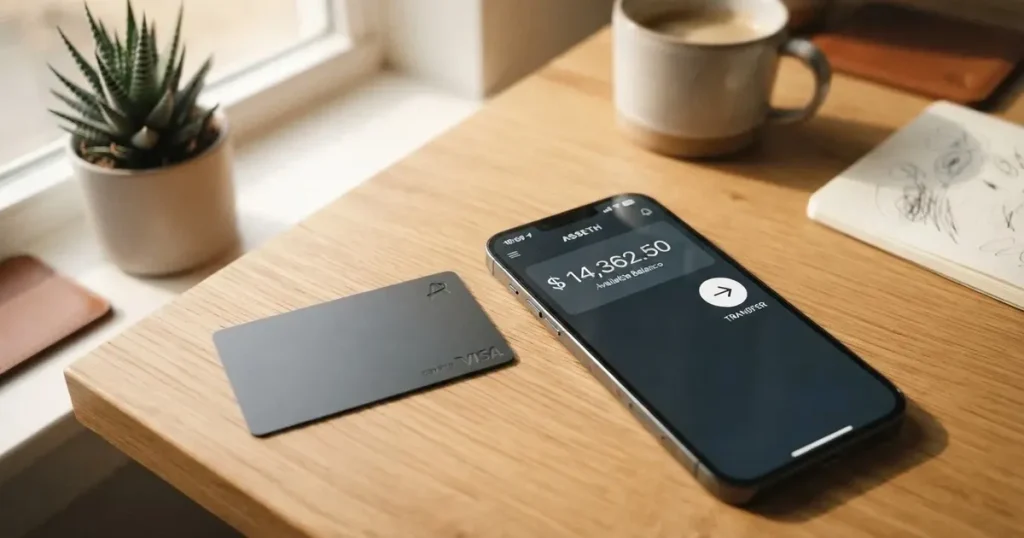
The Spritz card is a Visa payment card you fund yourself from a crypto wallet. It is not a bank account, and it is not a credit card: you convert crypto into a dollar balance, and the card spends that balance until it is gone. On the card’s own pages, spending and account maintenance carry no fees. The cost lives almost entirely in loading the card — a base 1 % load fee with a $2 minimum, plus per-network adjustments that range from zero extra for USDC on several chains to 2 % for SUI on Sui. That single shape explains most of what follows.
I rate it 7.4 out of 10. It suits people who already hold self-custodied stablecoins, mainly USDC and USDT, on several chains at once, and who want a plain Visa card that spends that balance — with Apple Pay and Google Pay, a virtual card you can activate in minutes, and a $10,000 daily limit. It does not suit anyone who needs to pull money back out, who wants a card that accepts every token on every network cheaply, or who needs a physical card in the mail with a published delivery schedule and replacement fee. Once funds land on the card, Spritz says plainly that it cannot return or transfer them; they must be spent.
The conditions described here are current as of October 28, 2026. Where the card’s own public pages do not say something, I say so rather than filling the gap.
Score breakdown
| Criterion | Mark | Why |
|---|---|---|
| Who can get it | 7 / 10 | Residence-based, not citizenship; many countries and territories, Nigeria needs conditional approval, 42 countries per a third party including the US in 30 states |
| Cost | 8 / 10 | No fees on card spend or account upkeep; load fee 1 % base with a $2 minimum and network adjustments; issuance and FX not disclosed |
| Top-up options | 9 / 10 | 50,000+ tokens across 5 chains, USDC and USDT named on the main networks |
| Reliability and complaints | 6 / 10 | Issuer not named officially; loaded funds cannot be returned; Trustpilot 4.0/5 from 319 reviews, App Store 3.2/5 from 11 ratings, per third parties |
| Everyday use | 7 / 10 | Apple Pay and Google Pay, virtual and physical card types, physical card in limited release per a third party |
| Total | 7.4 / 10 |
The strongest mark is top-up breadth, and it is deserved: the fee table covers Arbitrum, Avalanche, Base, Optimism, Polygon, Solana, Ethereum, Sui, BSC, Ripple, Tron, Bitcoin and DASH, and the blog describes more than 50,000 tokens across five chains. The weakest is reliability, for a structural reason rather than a scandal — the issuing institution is not named on the card’s own pages, and the money you load is money you can only spend.
Will they give you the card
Eligibility follows where you live, not what passport you hold. The card’s own wording is that Spritz works off your residence versus your citizenship, and its blog says many international countries and territories, with the list kept in a help-centre table. Nigeria needs conditional approval. Countries not on that list are unsupported.
That distinction matters if you are a citizen of one country living in another. Residence is the gate; citizenship is not what the card tests against its own published rule. Sanctions screening is a separate matter and is applied by regulated institutions as part of their own risk policy, so a residence-based answer does not promise a clean approval.
Third-party reporting, unofficial and not confirmed by the card, puts availability at 42 countries including the United States in 30 states, with restricted countries listed as Belarus, Cuba, Iran, North Korea, Russia, Syria and Venezuela. I would treat the help-centre table as the answer for your country and the third-party list as an orientation.
Minimum age is 18. The card is described as “the premium Spritz Card”, Visa, with Visa Signature benefits. Virtual and physical card types both appear in the API documentation. Funds are held in dollars. There are no tiers — one card, no paid upgrades.
How to get it
Sign-up is a verified account plus card activation in the app. The card’s own requirement is 18 or over and a verified account, which means uploading an ID; the card says manual verification is possible through support. Once verified, you activate the card at app.spritz.finance/card, which the card describes as taking “in minutes”.
What the card requires by ID upload: an identification document, checked against your details. Unofficial reporting, from a third party and not confirmed by Spritz, lists a fuller set — government photo ID, phone number, legal name, date of birth, ID number, address and a live face check, with a partner that may add citizenship, passport and address checks. Treat that as the shape of a standard financial-institution onboarding rather than as a promise, but expect it to be more than a single selfie.
Two things the card does not publish, and I would want to know before I commit: any KYC tiers, and the processing time or rejection reasons for verification. The pages I could read do not state either. Neither do they state a physical-card delivery schedule, an issuance fee, or a replacement fee. If the physical card matters to you, that silence is itself an answer — check with support before you load money.
Fees: what it really costs
Spending on the card and maintaining the account carry no fees, according to the card. The costs table in full:

| Fee or limit | Value |
|---|---|
| Card spend | No fee |
| Account maintenance | No fee |
| Issuance fee | Not stated |
| FX fee | Not stated |
| ATM | Not stated officially; no help-centre article |
| Load fee, base | 1 % (0.5 % base + 0.5 % virtual card load), $2 minimum |
| USDC on Arbitrum, Avalanche, Base, Optimism, Polygon, Solana | +0 % |
| Other tokens on those networks | +0.5 % |
| Ethereum, all tokens | +0.5 % |
| Sui: USDC / SUI | +1 % / +2 % |
| BSC, all tokens | +1 % |
| XRP | +1.5 % |
| Tron: USDC / USDT | +0.5 % / +1.5 % |
| Bitcoin | +1.5 %, $5 minimum |
| DASH | +1.25 % |
| Daily limit | $10,000 |
| Maximum card balance | $10,000 |
| Currency | All funds denominated and stored in USD |
| Bank off-ramp | Only for crypto sent via Off-Ramp, not for card balance |
Three ordinary payments, with the fees that actually apply:
- A $30 subscription on a recurring streaming service. No Spritz fee on the spend itself. If the merchant bills in dollars, nothing extra. If it bills in euros, the FX cost is not stated by the card, so you are relying on the network’s exchange rate — and one third party reports no Spritz fee on card purchases with exchange rates applying abroad, which is unofficial and not confirmed.
- A $60 dinner out of town, paid by tapping your phone. Apple Pay and Google Pay are supported, so no load fee applies at the moment of payment — the fee already happened when you loaded. The risk here is not a fee but a decline: the card’s help article notes declines can come from merchant restrictions or 3-D Secure, and a declined authorisation can leave a hold on funds for several days.
- A $200 top-up in USDC on Base. The cheapest common route: 1 % base load fee, no network adjustment for USDC on Base, so $2 on $200, right at the $2 minimum. The same $200 sent as USDT on Tron would cost 1 % base plus 1.5 %, so $5. That gap, not any monthly charge, is what the load table is really about.
The load fee breakdown matters more than it first looks. The base 1 % is itself two parts: 0.5 % base and 0.5 % to load the virtual card. So loading is cheap only when you already intend to use the virtual card, and the fee is charged on the load, not on the spend.
One timing note: the blog says loading fees were waived for the first 30 days after launch. That is a launch promotion with an end, not a standing rate — judge the card on the fee table above.
Top up: how the money gets in
You fund the card from your own wallet. The blog describes more than 50,000 tokens across five chains; the help article names Bitcoin, DASH, and USDT and USDC on TRON, plus the networks in the fee table: Arbitrum, Avalanche, Base, Optimism, Polygon, Solana, Ethereum, Sui, BSC, Ripple, Tron and DASH. The crypto is converted to dollars via a quote and lands as a card balance.

The mechanics matter more than they sound. Network gas fees are yours, and the help centre deliberately separates them from Spritz’s own fees — a top-up is a blockchain transaction first and a card load second. Minimum amount: not stated. Fiat top-up: not stated; there is a separate on-ramp at a flat 1 %.
The part you should plan around is the way out. The card says: “Once funds are on your Spritz Card we cannot return or transfer them.” There is a bank off-ramp, but it applies to crypto sent through the Off-Ramp feature, not to a card balance. So a top-up is a one-way door. If you are experimenting, load small; the load fee itself is partly a brake on that.
One transfer detail that catches people out: blockchain transfers are irreversible, so sending on a network the card does not support, or to an address belonging to another network, can lose the deposit or force a manual support recovery with no guarantee. Check the network twice before you confirm.
Paying with it every day
The card works as a Visa, with Apple Pay and Google Pay supported for online, in-store and mobile payments. Card statuses are active, frozen, not activated and cancelled, with cancellation permanent. PIN and card details are described as end-to-end encrypted. Custody and safeguarding arrangements are not stated on the pages I could read.
Refunds should process back to the card within seven business days, after which the card’s own advice is to use the support chat. There is no separate chargeback process described. Unofficial reporting says merchant refunds can take up to 30 business days — a useful thing to know if you are disputing something, but treat it as unconfirmed.
Rewards are where the published detail is thinnest. Cashback is not stated officially. What the card does name is Visa Signature benefits: lounge access, travel insurance and purchase protection. A third party describes a “Shopping Sprees” promotion — 5 % on airlines, hotels, restaurants and travel agencies within a three-day window, capped at $20 per merchant and $40 per spree, up to $80 a month, paid as withdrawable Spritz Credits. That is unofficial, dated August 2026, and I would not build a spending plan around it.
The app is a web app at app.spritz.finance plus an iOS app. I could not read the official store pages. Third-party app-store ratings disagree slightly and both are small samples: 3.2 out of 5 from 11 ratings in one listing from 2026-10-21, and 3.4 out of 5 from 10 ratings from August 2026. Eleven ratings is not a verdict on an app, but it is also not nothing when you are signing in with your identity documents.
The app is where you will actually feel the product. That is worth weighing against the low price of loading.
What can go wrong
No incidents are published by the card itself. The complaints that do exist cluster around the same design decision, and third-party user reports from August 2026 list: loaded funds cannot be withdrawn back to crypto, Spritz Points not yet redeemable, limited cashback, and a physical card in limited release.
The issuer is not named officially. Spritz Finance is the company behind the card. Unofficial reporting says the Visa Signature card is powered by Rain and issued through licensed partners by jurisdiction, without naming the institution. That is normal for this category — many crypto card brands are programme managers rather than issuers — but it means the entity whose name would appear on your statement is not the brand you chose.
Reviews, unofficial and dated August 2026, show Trustpilot at 4.0 out of 5 from 319 reviews in the text, against 3.8 out of 5 from 253 in the rating box. The recurring themes match the design: no withdrawal of card balance to crypto, Points not redeemable, physical card limited.
Three risks specific to how you would use it:
- Loaded money is spent money. Not a fee — a direction. If you need that money for something else after you top up, the only route is spending it.
- Network choice is your responsibility. Irreversible transfers, wrong-network deposits, and stablecoin-specific quirks all land on you. Circle stopped supporting USDC on Tron in February 2024, so “USDC over TRC20” is not a native option; use USDT there. On Ethereum you need ETH for gas, so a wallet holding USDT and nothing else cannot send.
- Third-party ratings are thin and split. The App Store sample is 11 ratings. Treat both the app score and the Trustpilot number as signals, not verdicts.
Support is reachable at [email protected], through a support chat, and via a “Book a call” form. Hours are not stated.
What to take instead
Two reasonable comparisons, both scored by the same method as Spritz.
| Card | Score | Card type | Card cost | Load or spend fee | Notes |
|---|---|---|---|---|---|
| Spritz | 7.4 / 10 | Visa Signature, virtual and physical | Not stated; no annual fee per third party | 1 % base load, $2 minimum, network adjustments 0–2 % | 50,000+ tokens across 5 chains; $10,000 daily and balance cap |
| MetaMask | 7.1 / 10 | Mastercard, virtual then metal | Virtual free; metal $199/year | “Minimal fee for each transaction”, amount not stated; no foreign transaction fee | Spends directly from the connected wallet; 45 listed countries/territories; cashback 1 % virtual, 3 % on the first $10,000 on metal |
| KAST | 6.1 / 10 | Visa, virtual and physical, up to 10 cards | Standard 0 USD; Premium 1,000 USD/year; Private 10,000 USD/year | Stablecoin top-up 0 %; non-USD FX 0.5 %–1.75 % | USD cashback 1.5 % / 2 % / 3 % by tier on capped monthly spend; residence list not published |
| TokenPocket | 5.8 / 10 | Visa or Mastercard debit, virtual | Small NFT creation fee partly covered; no additional fees stated | 1 % on crypto deposit, said to be refunded later via rewards | European coverage for Visa, a wider Asia-Pacific list for Mastercard; runs on Arbitrum |
MetaMask is the closest in spirit and the closest in score: it spends straight from your own wallet, has no foreign transaction fee, and if you are a US or UK resident the sign-up is currently closed per its FAQ. KAST is the cheapest to load — 0 % on stablecoin top-ups — but it publishes a residence list with no countries named and charges $1,000 a year for its cashback tier. TokenPocket sits at the bottom of this group largely because it does not publish its networks or a fee table in the same detail.
If your problem is specifically that an ordinary bank card is hard to get, note that all four of these require verified accounts, and all four gate access by residence rather than citizenship.
Who I would recommend it to
I would recommend Spritz to someone already holding USDC or USDT in their own wallet across more than one chain, who wants a Visa number they can add to Apple Pay or Google Pay and use this week, and who treats the card as a spending instrument rather than a store of value. The load fee is low on the networks that matter most, the $10,000 daily and balance caps are generous for ordinary life, and there is no monthly charge to forget about.
I would not recommend it if any of these are true of you: you need to get money back out; you plan to hold a balance and manage it; you need a physical card with a known delivery date; you want cashback as a stated feature rather than an unofficial promotion; or you are in a country not on the help-centre table, or Nigeria without conditional approval.
One last thing to check before your first load, because the card does not publish it: ask support who the issuing institution is and what happens to your balance if the programme is wound up. Programmes in this category do close — Visa terminated its agreements with FTX in November 2022, WaveCrest’s Visa programmes were suspended in Europe in 2018, and closures typically mean a notice period, then loading stops, then spending stops, then a withdrawal request. Spritz tells me what happens with your money once it is on the card. It does not tell me what happens if the issuer changes. That is the question I would want answered.
Frequently asked questions
What is the Spritz card?
Spritz is a Visa payment card funded from crypto you already hold. You convert crypto from your own wallet into a dollar balance, and the card spends that balance like a prepaid card. It is offered by Spritz Finance, described as “the premium Spritz Card” with Visa Signature benefits, in virtual and physical forms. It is not a bank account and it offers no credit.
How does Spritz card work in practice?
You load it, then spend it. Crypto sent from your wallet is converted to USD via a quote and credited to the card; each purchase comes out of that balance. Spending and account upkeep carry no fees; the cost sits in the load fee of 1 % with a $2 minimum plus per-network adjustments. Funds on the card cannot be returned or transferred — they must be spent.
Is Spritz a bank?
No, and the card does not name its issuing institution on its own pages. Spritz Finance is the company behind the product; third-party reporting says the Visa Signature card is powered by Rain and issued through licensed partners by jurisdiction. In this category the brand is often a programme manager while a licensed institution holds the card programme, so the name on your statement may not be Spritz.
Who can get one, and does citizenship matter?
Residence, not citizenship — the card says it works off your residence versus your citizenship, and covers many international countries and territories, with Nigeria needing conditional approval. Minimum age is 18. Unofficial third-party reporting gives 42 countries including the US in 30 states, and a restricted list including Belarus, Cuba, Iran, North Korea, Russia, Syria and Venezuela.
How much does it cost to use?
Spending and account maintenance are free on the card’s own pages, and an issuance fee is not stated. Loading costs 1 % (0.5 % base plus 0.5 % for the virtual card) with a $2 minimum, then a network adjustment: +0 % for USDC on Arbitrum, Avalanche, Base, Optimism, Polygon and Solana, up to +2 % for SUI on Sui. FX fees and ATM fees are not stated.
Can I get my money back out of the card?
No, and this is the single most important thing to understand. The card states that once funds are on a Spritz Card they cannot be returned or transferred. A bank off-ramp exists only for crypto sent through the Off-Ramp feature, not for a card balance. What happens to a card balance if you close the account is not stated either.
Does Spritz require KYC, and what does it check?
Yes. You need to be 18 or over with a verified account, which means uploading identification, and manual verification is possible through support. Unofficial third-party reporting lists government photo ID, phone, legal name, date of birth, ID number, address and a live face check, with a partner possibly adding citizenship and passport checks. Spritz does not publish KYC tiers, processing times or rejection reasons.
Is the Spritz card safe to use?
The card describes end-to-end encryption for PIN and card details, and statuses for freezing or cancelling the card — though cancellation is permanent. It does not state its custody or safeguarding arrangements, and it does not name the issuer. Loaded funds cannot be withdrawn, transfers are irreversible, and a wrong-network deposit can be lost. Use small loads until you have tested the flow.
What do users complain about?
The card publishes no incidents. Third-party user reports from August 2026 list loaded funds that cannot be withdrawn to crypto, Spritz Points not yet redeemable, limited cashback, and a physical card in limited release. Trustpilot is shown as 4.0 out of 5 from 319 reviews in the review text and 3.8 from 253 in the rating box. App Store ratings are small-sample: 3.2 from 11.
Is Spritz worth it compared with alternatives?
Against MetaMask (7.1), Spritz (7.4) offers broader networks and a clearer load-fee table, while MetaMask spends straight from the wallet with no foreign transaction fee but its US and UK sign-ups are closed. KAST (6.1) charges 0 % on stablecoin top-ups but costs $1,000 a year for its cashback tier. Spritz’s edge is breadth; its weakness is that loaded money is one-way.
Top wallet cards by score – cryptocardtop
Content created by the «cryptocardtop» team