
A no-KYC crypto card that charges heavily and names few partners
 Available in US

The Sovrae card promises something unusual: a Visa and Mastercard payment card that asks for no identity documents at all. You buy it, you send it USDT or USDC, and you can spend. There is a virtual card that appears instantly and a physical one that arrives in five to seven days. For anyone who cannot open a normal bank account, or who simply refuses to hand over a passport scan to a crypto product, that is a genuinely useful thing.
What you get for that convenience is a card that costs $89 as a virtual product or $349 in physical form before a single payment is made, a top-up fee of 2% or 1.5%, and an FX plus transaction fee on every purchase that the public pages never put a number against. The card is issued by partners in Hong Kong and Singapore, and no licences are named. Nobody outside the company has written a review of it that I could find.
I scored it 6.5 / 10. It is not a bad card for its stated audience. It is a card with almost no independent history, a high entry price, and a fee structure you can only see inside the app after you have already committed money.
The conditions described here are current as of October 28, 2026.
Verdict: 6.5 out of 10
Before the details, the score itself, broken into the criteria I used. Every mark is out of 10 and the total is 6.5.
| Criterion | Mark | Why |
|---|---|---|
| Who can get it | 9 / 10 | Open worldwide except a list of restricted countries: Afghanistan, Belarus, Cuba, Iran, North Korea, Syria, Venezuela, Russia, Ukraine, Myanmar, Somalia, Yemen, “among others” |
| Cost | 2 / 10 | Issuance $89 virtual, $349 physical; top-up 2% virtual, 1.5% physical; FX and transaction fees with no amounts published |
| Top-up options | 9 / 10 | USDT or USDC on BEP-20, ERC-20, TRC-20; other coins via in-app swap; permanent deposit address per card |
| Reliability and complaints | 5 / 10 | Cards issued by partners in Hong Kong and Singapore, no licences named; no KYC, and no complaints or reviews found |
| Everyday use | 9 / 10 | Virtual card instantly, physical card in 5–7 days, Apple Pay and Google Pay on both, ATM on the physical card |
| Total | 6.5 / 10 |
Two of those marks are generous precisely because the card is straightforward to obtain and easy to fund. One of them is very low because the cost of getting in is steep and the running costs are undisclosed. The 5 for reliability is not a criticism of something that went wrong. It is the absence of anything to trust, which for a card handling your money is its own kind of risk.
So who is this for? The audience the card is actually built for is people who are privacy-minded and want a virtual or physical card without KYC. If that is you, and you are prepared to pay a premium for the privacy and the access, the card does what it says. If you are simply looking for the cheapest way to spend crypto, or you want a card with a published fee schedule you can check before committing, this is not it.
The bigger question for almost every reader is where the money sits and who is responsible for it. I come back to that in the risks section, and I would read it before you read the fees section.
Will they give you the card
Yes, to almost anyone. The card’s stated position is worldwide availability except a set of restricted countries, and the reason given is Visa and Mastercard policy rather than anything Sovrae chose. The named exclusions are Afghanistan, Belarus, Cuba, Iran, North Korea, Syria, Venezuela, Russia, Ukraine, Myanmar, Somalia and Yemen, with “among others” after them, so the list is longer than the one printed. The full list is available on request by email or Telegram.
One thing the card’s public pages do not settle: whether the rules apply to your citizenship or to where you live. The page says global except restricted countries and attributes the restriction to the card networks, but it does not spell out the difference. If your citizenship is of one country and you reside in another, that is exactly the case you would want answered before you pay $89, and you will have to ask. Support is on Telegram at @sovrae_io, on X at @Sovrae_io, and by email at [email protected]; the languages they answer in and their hours are not stated on the pages I read.
Also not stated: whether there is an age requirement, and what documents, if any, are asked for. The site says none are, which is the subject of the next section.
How to get it
The whole process is two steps. Buy the card, then fund it with USDT or USDC. There is no application form, no identity verification, and no document upload. The card is described as “pre-verified upon purchase”, and the company states that personal details are “never passed to third parties” — which, given that no details are collected in the first place, is a promise the absence of paperwork makes fairly easy to keep.
You choose between two forms of the card:
- Virtual — activates instantly and is valid for three years.
- Physical — valid for four years.
Both are “Visa & Mastercard worldwide”, Apple Pay and Google Pay work on both, and the physical card carries no name on it by default, with personalisation available on request. Which currency the cards run in is not stated on the public pages, which matters more than it sounds: a card with no published currency will apply some currency to every transaction and convert it, and that conversion is where fees hide.
The physical card arrives in five to seven days. Where it ships and what delivery costs are not stated, and the cost of a replacement card is not stated either. If you lose the physical card or it is swallowed by a postal box in a country where it took a week to arrive, you will be guessing at the price.
No verification tiers exist on this card, because there is no verification at all.
Fees: what it really costs
The cost table below uses only what the card publishes. Where a figure is not published, I say so rather than filling the gap, because a fee you cannot see before you buy is a fee you should price into your decision as if it were large.
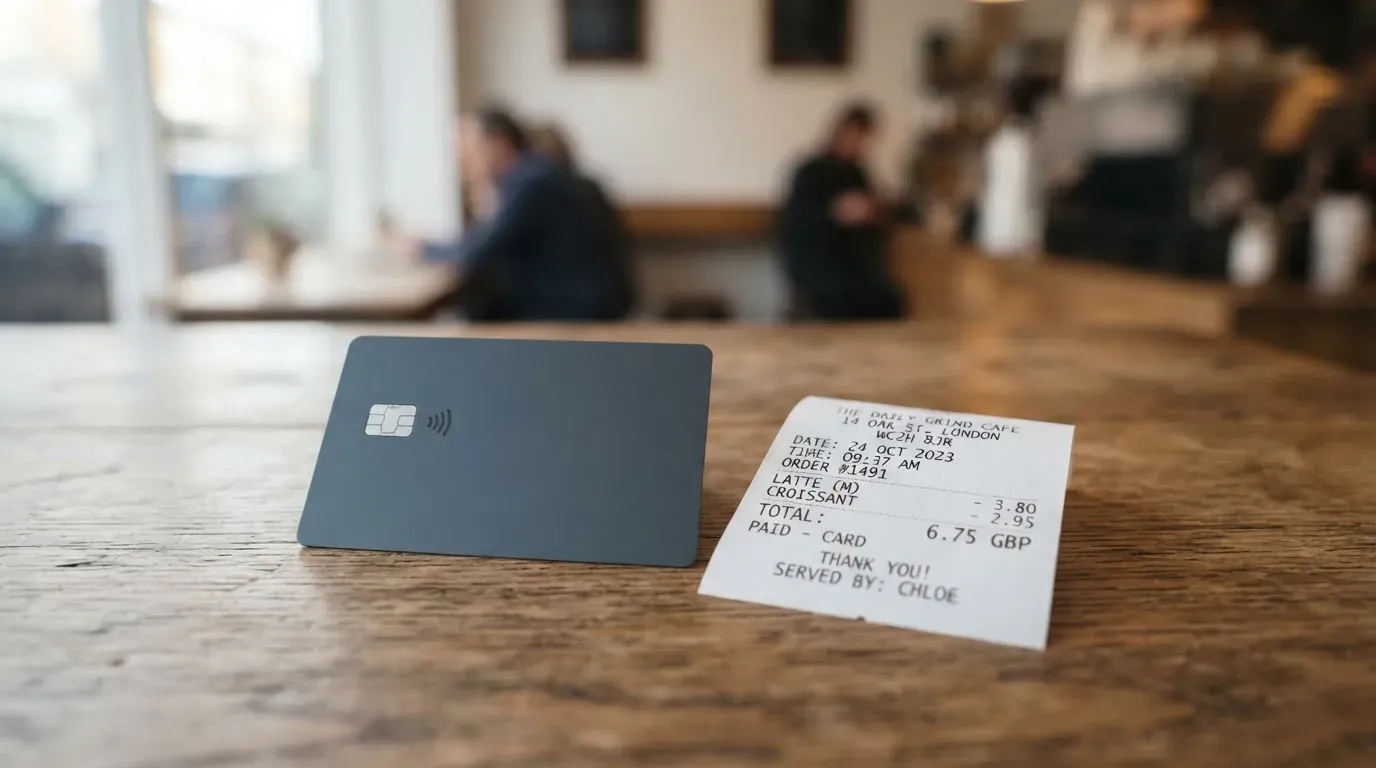
| Fee or limit | Virtual card | Physical card |
|---|---|---|
| One-time issuance | $89 | $349 |
| Monthly fee | none listed | none listed |
| Top-up fee | 2% | 1.5% |
| Foreign exchange fee | charged per transaction, amount not given | charged per transaction, amount not given |
| Transaction fee | charged per transaction, amount not given | charged per transaction, amount not given |
| ATM | not available | available, ATM fee not stated |
| ATM limits | not applicable | $3,750 daily, $80k monthly |
| Spending limits | $80,000 per transaction, $1M daily | $80,000 per transaction, $1M daily |
Read that table twice. The entry price is high: $349 for the physical card is more than many people pay for a year of banking. Then there is the 2% or 1.5% every time you load, and then an FX fee plus a transaction fee on every single payment, with no numbers attached to either. The card says the “full breakdown is shown in the app”, which is honest and also means the real running cost of this card cannot be calculated before you start using it. Anyone who tells you the effective cost of a Sovrae transaction from the outside is guessing.
Let me follow three ordinary payments through, using only the published figures, so you can see which fees attach to what.
Paying for a coffee. Say you have topped up, and you tap for a $4 coffee. The top-up fee was already taken at 2% (virtual) or 1.5% (physical) — that is 8 cents or 6 cents on $4. At the moment of payment, an FX fee and a transaction fee apply, in amounts not published. If your balance is not in dollars, or the coffee shop’s country differs from the card’s issuing country, an additional conversion sits inside that FX fee. So the published cost of a $4 coffee is between 6 and 8 cents plus two unknown fees.
Paying for a monthly subscription. A streaming service at $12 a month, same structure: $0.24 top-up fee at 2% if you reload monthly, plus the two unpriced per-transaction fees. The difference between reloading monthly and reloading once a year is the top-up fee repeated twelve times instead of once, which on $144 of annual spending is $2.88 against $2.88 — the same in proportion, but spread over time. The point is only that the top-up fee scales with how much you move, not with how many times you move it.
Withdrawing cash at an ATM. Only the physical card does this. The ATM fee is not stated. The published limits are $3,750 a day and $80,000 a month. The FX fee and transaction fee still apply on top, and the ATM operator sets its own rate on top of everything else. This is the costliest thing this card does and the one where the card tells you the least.
The limits themselves are generous to the point of being uninformative: $80,000 per transaction and $1M daily for spending, on both cards, with no tiers to scale them. Those are not credit lines and they say nothing about what the card will actually approve; they are ceilings. Since there is no KYC, there is no KYC level that raises them, and no tier structure either — two card types, no tiers.
Top up: how to fund the card
Funding is the part this card does well, and it is where the 9 out of 10 comes from. You load with USDT or USDC on any of three networks: BEP-20, ERC-20 or TRC-20. Other coins can be converted through the swap built into the app. Each card has a permanent crypto deposit address, so you are not generating a new address per deposit and juggling it.
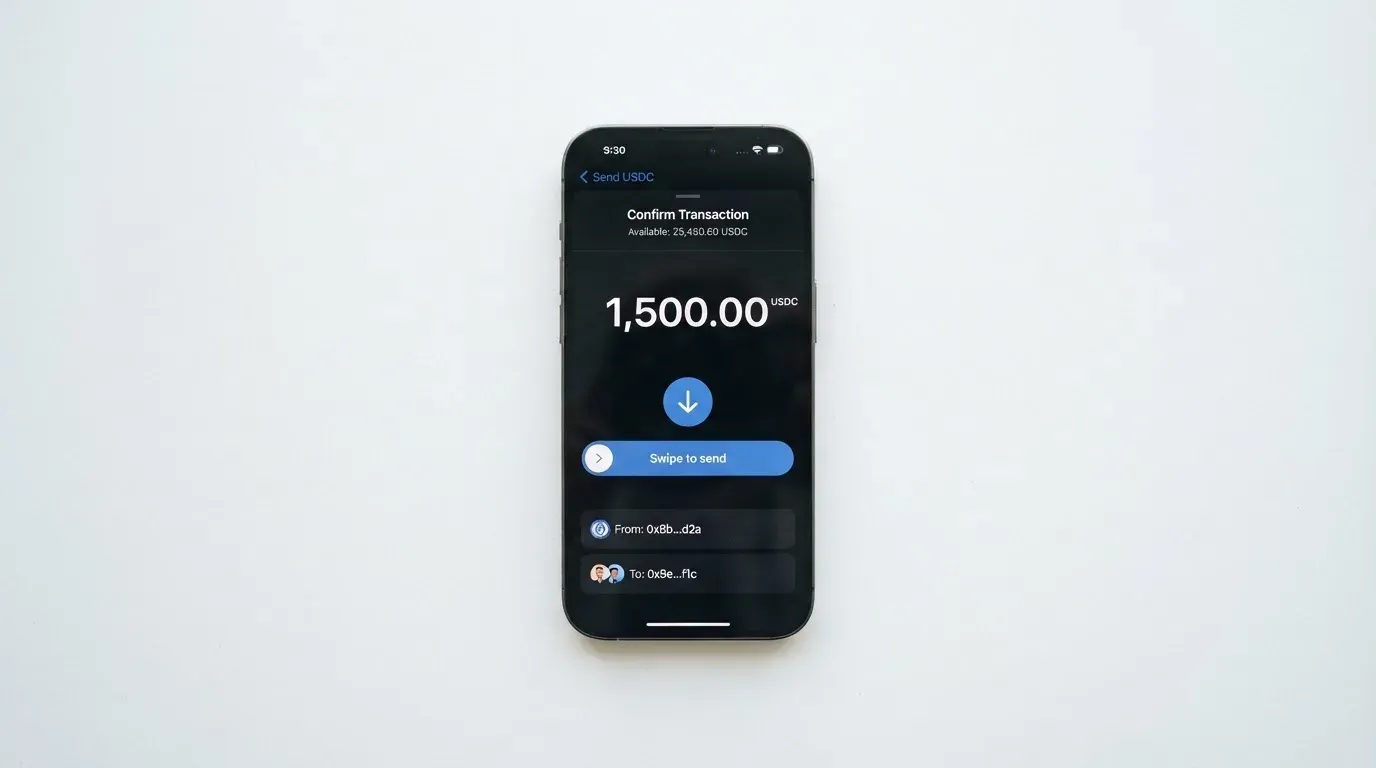
Three details matter more than they first appear.
First, the permanent address means a saved address can be intercepted. Malware that swaps a copied address in your clipboard is a real and common theft method against crypto users, and an address that never changes is exactly the kind that gets swapped once and drained. Check the address on the screen of the sending app before you confirm.
Second, the network must match. Sending on a network the card provider does not support can lose the funds outright or need manual recovery with no guarantee, because blockchain transfers do not reverse. The card names BEP-20, ERC-20 and TRC-20; sending anything else is a mistake with expensive consequences. Note also that ERC-20 gas must be paid in ETH, so a wallet holding USDT and no ETH cannot send it on that network at all.
Third, the top-up fee is 2% or 1.5% and the card describes the top-up as instant, with funds reflecting in minutes. What is not stated: the minimum top-up, who pays the on-chain network fee, and whether there is any fiat route at all. The card’s public pages describe crypto in, and say nothing about paying from a bank account. Withdrawal is not stated either — the card describes spending and loading, and does not describe getting money back out to a wallet or a bank. For a reader whose whole plan is “move value out and back”, that is the question to ask before buying anything.
One point in your favour: the funds stay in a non-custodial wallet until you top up. They are not sitting in the company’s account while you decide.
Paying with it every day
Day to day, the card behaves like a prepaid card. You load a balance, you spend that balance, and it cannot overdraw. Apple Pay and Google Pay both work on both card types, which is the practical detail that decides whether the virtual card is more than a curiosity: most people pay with a phone, and a virtual card you can add to a wallet is usable in a way a virtual card you cannot is not.
Some merchant categories are blocked. The listed ones are petrol, betting, crypto, military supplies, gaming credits, non-profits and government agencies. Petrol is the one that will bite an ordinary user: no fuel with this card, anywhere. Betting is blocked, which is common across the category and not unusual; crypto purchases being blocked means you cannot use the card to buy more crypto, which some people find surprising and useful.
Rewards are thin. No cashback is listed. There is a referral programme of up to $50 per card bought by a referred user, across three levels — so the money here is in recruiting, not in spending.
Two things the pages do not cover at all: there is no app listing to be found, so I cannot tell you what the app looks like or which stores carry it, and there is no dispute or chargeback policy published. That second gap is the one I would want closed before this card held money I cared about.
What can go wrong
This is where I would want you to be honest with yourself, because the card’s structure moves risks rather than removing them.
No track record at all. I found no complaints about Sovrae and no reviews of it. Searching for reviews turned up nothing about this card. That is not evidence of a clean sheet. It is evidence that almost nobody outside the company has used it, and a card with no public history is a card whose failure modes have not been written about yet.
No named licences. The cards are issued by partners in Hong Kong and Singapore. The company does not name those partners and does not name any licence. In a category where a card sits on top of two regulatory layers — the crypto side and the payment-services side — an unnamed issuing partner is a gap, not a formality. The company behind the card is Sovrae, © 2026 Sovrae. Who owns Sovrae is not something the pages answer.
Where the money is. Before you top up, funds are in a non-custodial wallet, which is the good part. After that, the card states funds are held in segregated accounts with providers. Segregated is a real word with real meaning in payments, but those funds are not bank deposits and would not carry deposit guarantee protection. Whether there is an in-app freeze or two-factor authentication is not stated.
Nobody to complain to, yet. There is no Trustpilot page and no published dispute process. If a payment goes wrong, the recourses you would normally reach for — a chargeback from the issuer, a complaint with a named regulator — depend on a relationship with an unnamed partner.
Prices. USDT and USDC are dollar-pegged and stablecoins can and do break their peg: TerraUSD collapsed in May 2022, and USDC lost its peg briefly in March 2023. Buying a card priced in dollars with a stablecoin means carrying that risk on top of everything else.
Blocked categories and declines. Merchant category codes can be blocked by policy rather than law, and the list varies by issuer. Declined authorisations can leave holds on your balance for several days, sometimes up to seven. Some merchants decline prepaid or foreign-issued cards because the card’s country shows up in the lookup. This is the everyday friction that does not show up in a feature list.
Tax. The IRS treats digital assets as property, so converting crypto into dollars and spending them generally produces a taxable gain or loss measured in local currency at the value on the date. Every payment funded from crypto can be a separate disposal. That is a matter for a tax professional in your own jurisdiction, not for me, and I am not going to guess at what you owe.
What to take instead
Three alternatives came up in the same category. They are not better in every way — they are better in different ways, and the comparison is worth making before you pay $89.
CardFlow scores 4.9 / 10 here. It is aimed squarely at Nigeria, describing itself as “Nigeria’s smartest fintech card platform” and serving “Nigerians and global users”, and it publishes no country exclusions at all. Its virtual USD Mastercard is created in about three minutes, and creating a virtual card is stated to be completely free. Fees beyond that are not stated. It is funded with Bitcoin, USDT, ETH or a Naira bank transfer, with networks not specified.
HyperCard scores 4.7 / 10. It is a prepaid card in USD or EUR, no network named on the page I read, and the App Store description says it works in “more than 176 countries” — that is acceptance, not eligibility. No fees are listed. You deposit crypto such as USDT, BTC or ETH in the app and it converts to the card balance. Networks not stated.
Card.fi scores 6.6 / 10 — slightly above this card on my scale, though on a very different philosophy, because it does ask for verification. Cards ship to “200+ countries” and the terms bar residents of, or orders from, a country subject to sanctions that would prohibit the service. It has four card types across virtual and physical, Classic and Premium, plus a stainless steel metal card, and every physical order includes a virtual card. Issuance runs $49 for Virtual Classic and $249 for Virtual Premium, with no monthly, annual, inactivity or minimum-balance fee — and here the fee schedule is published: top-up 1.5% plus $1.00 on Classic or 1% on Premium, FX 3.5% on Classic or 2.5% on Premium, with the conversion fee shown before each top-up. It funds from 32 coins across 5 networks. And it pays cashback on spending: 0.8% Classic capped at 10 USDT a month, 1% Premium, up to 1.2% or 2% on Metal.
| Sovrae | CardFlow | HyperCard | Card.fi | |
|---|---|---|---|---|
| Score | 6.5 / 10 | 4.9 / 10 | 4.7 / 10 | 6.6 / 10 |
| Identity checks | none | not stated | not stated | yes |
| Virtual card price | $89 | free | not stated | $49 (Classic) |
| Physical card price | $349 | not stated | not stated | not listed |
| Top-up fee | 2% / 1.5% | not stated | not stated | 1.5% + $1.00 / 1% |
| FX fee | charged, amount not given | not stated | not stated | 3.5% / 2.5% |
| Cashback | none listed | not stated | not stated | 0.8%–2% on spending |
The trade is straightforward. If you cannot or will not do identity checks, CardFlow and HyperCard are the ones to look at alongside this card, and CardFlow’s free virtual card is a hard number to argue with. If you can pass verification and want your costs in advance, Card.fi publishes more and charges a lower entry price for its entry-level card, at the price of handing over documents. Sovrae is the one that asks the least of you and charges the most to start.
Who I would recommend it to
I would recommend the Sovrae card to someone in a situation I recognise: no access to an ordinary bank card, or a firm decision not to give a crypto company their passport, who needs to spend USDT or USDC today and can afford to treat the card as a disposable tool rather than a financial relationship. For that person, a card that activates instantly, funds in minutes, works in Apple Pay and Google Pay, keeps your money in your own wallet until you load it, and needs no documents is a real solution to a real problem — and the 9s on access, funding and everyday use reflect that.
I would not recommend it to you if any of these are true. If you want to know what a payment costs before you make it, you cannot, because the FX and transaction fees are unpublished. If you spend heavily, the 2% top-up on a virtual card compounds against you and the $89 entry has to earn its place. If you cannot tolerate an unnamed issuer in Hong Kong or Singapore and a company with no public track record, then no. If you need a card for petrol, or need a dispute process, or need to withdraw money, the gaps are too wide. And if you are someone for whom $349 is real money, I would think very hard.
The card is not a scam on the evidence available. It is also not yet something I would trust with a significant balance, purely because there is so little to judge.
Frequently asked questions
Is Sovrae a bank?
No, and it does not present itself as one. Sovrae is described as a company — © 2026 Sovrae — that sells cards issued by partners in Hong Kong and Singapore. The issuing partners and their licences are not named on the public pages. Card services like this usually sit under e-money or payment-services regulation rather than banking law, and the card’s pages do not say which applies to it.
Does the Sovrae card require KYC?
No. There is no identity verification, no document upload and no application form. Cards are described as pre-verified upon purchase, and the company says personal details are never passed to third parties. Because there is no verification, there are also no verification tiers that raise your limits as you build a history with the card.
How much does a Sovrae card cost?
$89 for the virtual card and $349 for the physical card, as one-time issuance fees, with no monthly fee listed. Then the running costs begin: a top-up fee of 2% on the virtual card or 1.5% on the physical one, plus a foreign exchange fee and a transaction fee on every payment. The two per-transaction fees have no published amounts — the card says the full breakdown appears in the app.
How do I top up the Sovrae card?
Send USDT or USDC to the card’s permanent deposit address, on the BEP-20, ERC-20 or TRC-20 network. Other coins can be converted through the in-app swap. The card calls the top-up instant and says funds reflect in minutes. Make sure the network matches what the card supports — a transfer on the wrong network can be lost, because blockchain transfers do not reverse.
Can I use the Sovrae card in my country?
Most likely, but check the exclusions first. The card is available worldwide except restricted countries, which it attributes to Visa and Mastercard policy: Afghanistan, Belarus, Cuba, Iran, North Korea, Syria, Venezuela, Russia, Ukraine, Myanmar, Somalia, Yemen, “among others”. The pages do not say whether the rule follows your citizenship or your residence, so ask support if your situation is unusual.
Can I add a Sovrae card to Apple Wallet?
Apple Pay is supported on both the virtual and the physical card, and Google Pay works on both too. That matters most for the virtual card, since a virtual card you can add to a phone wallet is one you can actually use at a terminal. The physical card also works as a contactless card, and carries no printed name by default.
Is the Sovrae card safe?
It has good structural features — no KYC, a non-custodial wallet until you top up, funds in segregated accounts after — and no public incident that I could find. But there is no independent review of the card at all, no named issuing partner, no published licences, and no dispute policy. Safety here is mostly a matter of trust in a company with no track record, which is different from safety by design.
What can I not buy with a Sovrae card?
Petrol, betting, crypto, military supplies, gaming credits, non-profits and government agencies are all blocked categories. Petrol is the one most people notice first. You also cannot use the card to buy more crypto, and blocked categories can vary by issuer, so a merchant that accepts other prepaid cards may still decline this one.
Is the Sovrae card free?
No. The closest it comes is CardFlow’s free virtual card, which is a different product. Sovrae charges $89 for the virtual card and $349 for the physical card up front, and no monthly fee is listed, so the cost is front-loaded and then continues through top-up and transaction fees. Budget for the entry price plus the running costs, not just one or the other.
How do I get money off the Sovrae card?
The public pages do not describe it. Withdrawal is not covered — the card explains loading and spending, and says nothing about transferring value back to a wallet or a bank account. If your plan depends on moving money out as well as in, ask support directly before you buy, because that is not something you want to discover after the $89.
Top virtual cards by score – cryptocardtop
Content created by the «cryptocardtop» team