
A euro Mastercard from a crypto platform, priced on the high side
 Available in US
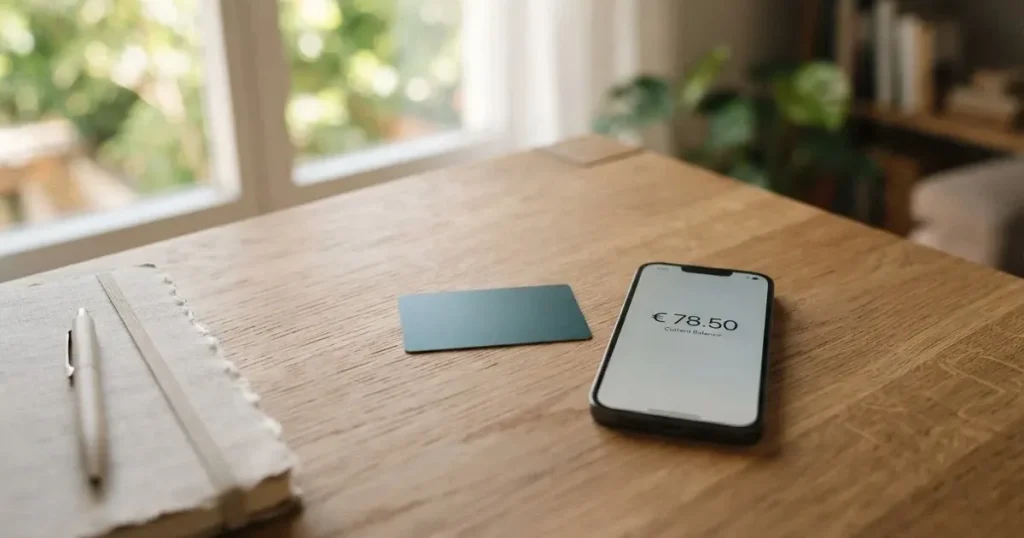
The SharPay card is a Mastercard debit card that spends from a balance you load yourself, in euros, from a payment account or from crypto held on the platform. It is issued by UAB Walletto, a Lithuanian e-money institution, and the payments are processed by SPEKA Payments Corp in Canada. The card opens in EUR, works in Apple Pay and Google Pay, and comes in a virtual form you can use seconds after ordering and a plastic one that arrives in about fifteen working days. What it does not do is look cheap: opening the payment account costs 10 EUR, keeping the card costs 3 EUR a month, loading it card-to-card costs 2.00 EUR plus 1.99%, and spending outside the euro area adds a 2.99% mark-up. On top of that, the crypto side is closed to EU residents, which removes the largest natural customer base for this kind of product.
Conditions described here are current as of October 28, 2026.
My score for the card is 5.9 out of 10. That is a middling number, and it sits in the middle of the field: this is not a card I would tell you to avoid, and it is not one I would build a routine around. It is a usable euro card for a specific person — a non-EU resident who wants a Mastercard with Apple Pay and can live with the loading and currency fees — and a poor choice for almost everyone else.
My score, criterion by criterion
The table below is the whole of the arithmetic behind that 5.9. Each row is a criterion I scored out of 10, with the reason in my own words.
| Criterion | Mark | Why |
|---|---|---|
| Who can get it | 5 / 10 | The rule is by residence, and residents of restricted or prohibited countries are excluded; the crypto services are closed to EU residents, and the number of countries served is not disclosed |
| Cost | 3 / 10 | Payment account opening 10 EUR, card issuing 1 EUR, service 3 EUR; card load 2.00 EUR plus 1.99%; 2.99% FX mark-up |
| Top-up options | 6 / 10 | EUR, USDT, USDC, BTC, ETH, XRP, LTC, BCH, also DAI and TUSD; the FAQ does not name the networks, and a USDC deposit by Mastercard or VISA costs 4% |
| Reliability and complaints | 8 / 10 | The card is issued by UAB Walletto (Lithuania, Bank of Lithuania licence no. 33) and payments run through SPEKA Payments Corp (FINTRAC MSB M22046940); I found no complaints or reviews either way |
| Everyday use | 9 / 10 | A virtual card available immediately after ordering, a physical card in about 15 working days, Google Pay and Apple Pay, and ATM withdrawals possible |
| Total | 5.9 / 10 | A solid everyday card wrapped in an expensive, limited funding setup |
The 9 for everyday use is deserved and worth dwelling on, because it is the part of this card that is genuinely good. Get past the funding stage and the card itself behaves like an ordinary Mastercard. The 3 for cost drags the total down harder than any other line, and the 5 for eligibility is what will decide whether you are in scope at all before you read a single fee.
Will they give you the card
Short answer: it depends on where you live, not on what you hold. The card states that you must not be a resident of a restricted or prohibited country. That prohibited list comes from a SPEKA Payments Corp document and includes Russia and Belarus, plus Crimea, DNR, LNR, Kherson and Zaporizhzhia, Iran, Cuba and Syria among others. Separately, the crypto services are described as not to EU residents.
That second point is the one that catches people out. You can hold an EU citizenship and still be refused the crypto side if your address is in the EU. And if you are outside the EU, the verification route depends on your documents: citizens of other countries verify with a foreign passport, while EU citizens can use a passport or an ID card. There is no separate citizenship rule stated beyond that.
So the practical sequence for you is: your country of residence decides whether you are eligible, and your citizenship decides which document you show. Check your residence against the prohibited list before you start, because that list is not something the card page reproduces in full, and discovering it halfway through an application wastes days. What I cannot tell you is how many countries are covered — the card does not disclose a count, so if your country is somewhere unusual, the only real test is the application itself.
One more thing worth knowing before you gather papers: the rule is about residence, and it is enforced that way for regulatory reasons. Sanctions and issuer risk policy get applied to where you live and often to citizenship and country of birth as well. If you have a connection to a sanctioned region that your current address does not reflect, expect questions rather than an instant approval.
How to get it
The application is a normal onboarding flow with a crypto-brand level structure attached, and the documents are stricter than the sign-up form suggests.
The order of operations is:
- Register with phone, email and password.
- Complete Level 1 verification, then Level 2.
- Order the card in the app.
Level 1 is the standard verification: a passport, full page, good quality, plus bank statements in English. Cropped copies are rejected. There is also a questionnaire covering turnover, the source of your funds, and any links to politically exposed persons or US persons. Then a video selfie.
Level 2 is the one that matters if you want a fiat account and cards, and it carries an additional check that takes up to 5 days. Document review itself runs from 1 to 72 hours.
There is a short list of things that get an application rejected, and it is worth reading twice because each item is avoidable:
- Cropped copies of the passport.
- Anything that is not a passport.
- A video selfie in poor light.
- A video selfie with a hat, glasses or filters.
Age is not stated on the pages I read, so I cannot give you a minimum age figure for this card — in this category prepaid and debit cards are generally available to adults from 18, some issuers set higher limits, but treat that as background rather than as a SharPay rule.
On the card itself: you get a Mastercard debit, issued as a Flex Mastercard Debit card by UAB Walletto. The virtual card is active immediately after ordering; the plastic one is typically shipped within about 15 working days, though delivery times vary by destination and the countries served and any delivery charge are not stated. You can hold up to 5 cards per account, which the app store listing and the homepage both claim. The card currency is EUR.
If something goes wrong with the virtual card, replacement costs 1.00 EUR. What a physical replacement costs is not stated, which is one of those small gaps that only matters if you lose the plastic.
Fees: what it really costs
Here is the honest version: the fee schedule is not competitive, and the loading fee in particular is the one that will show up in your monthly statement again and again.
| Fee or limit | Amount |
|---|---|
| Payment account opening | 10 EUR |
| Crypto account | free |
| Card issuing (virtual) | 1.00 EUR |
| Virtual card replacement | 1.00 EUR |
| Monthly card service | 3.00 EUR per card |
| Chargeback handling | 40 EUR |
| Card load (card-to-card) | 2.00 EUR + 1.99% |
| FX mark-up on a personal card | 2.99% (1.00% on payments) |
| Purchase fees shown on the fee page | none (“-”) |
| USDC deposit via Mastercard/VISA | 4% |
| USDC withdrawal via Mastercard/VISA | 3% |
| Other coins | network fee |
| Card POS and e-commerce daily limit | 10,000 EUR |
| Card POS and e-commerce monthly limit | 30,000 EUR |
| SEPA crypto transactions | max 14,500 EUR per day |
| Crypto purchases by card | monthly limits, amounts shown in the app |
Note the shape of that table. Opening the payment account is a one-off 10 EUR; the recurring part is 3 EUR a month per card. Add loading at 2.00 EUR plus 1.99% and you are paying a fixed fee plus a percentage every time you move money in, before you have bought anything. The 2.99% FX mark-up on a personal card is the figure to hold in your head for anything you buy outside the euro area; on payments the mark-up is 1.00%.
There are no card tiers or plans to choose between. Pricing is per product, and that is it.
Let me run three ordinary payments through, so you can see which lines actually bite.
Buying coffee in a euro shop, for 4 EUR. No purchase fee is listed, the currency is EUR so no FX mark-up applies, and the card service of 3 EUR a month is already sunk whatever you spend. This is the case the card is built for, and it is clean.
Buying something for 100 EUR in a shop that prices in dollars. The 100 EUR converts at the network rate, then the 2.99% personal-card FX mark-up applies. Note the odd detail in the schedule: payments carry 1.00%. If the schedule means what it reads, spending abroad is materially cheaper than converting and loading — but you should confirm how the provider classifies each transaction rather than assume, because a card load and a card purchase are priced separately in that table and it is not clear that “payments” covers a foreign-currency purchase.
Withdrawing cash at an ATM. Withdrawals are possible — the pages mention them — but no fee and no allowance are listed on the fee page. So the true cost of cash is something I genuinely cannot tell you. Budget for it as an unknown.
Beyond that 2.99% mark-up, the spread on purchases in other currencies is not stated, so treat the headline percentage as the floor rather than the ceiling.
Top up: getting money onto the card
The supported list is long, which is the good news. The detail is thin in places, which is the annoying news.
You can load with EUR, USDT, USDC, BTC, ETH, XRP, LTC and BCH. The price page adds DAI and TUSD. So most of what a crypto user holds will work.
What the card does not publish is the network list. The FAQ tells you to select the currency and the network, which is a step rather than an answer, and the minimum top-up amount is something you read in the top-up input field in the app rather than on the page. Both of those are things I would want to know before sending a transfer, because:
- Sending on a network the provider does not support, or to an address belonging to a different network, can lose the funds or need manual support recovery with no guarantee. Blockchain transfers are one-way.
- On Ethereum, fees are paid only in ETH. A wallet holding USDT and no ETH cannot send it.
- On Tron, fees are paid through bandwidth and energy resources and often burn TRX.
- Circle stopped supporting USDC on Tron in February 2024, so USDC over TRC20 is not a native option.
If you send XRP or Stellar you need the memo or tag. That is a small step that people skip and then spend a week untangling.
Loading by card, card-to-card, is 2.00 EUR plus 1.99%. Depositing or withdrawing USDC by Mastercard or VISA is 4% and 3% respectively. Crypto sent in another currency is “automatically exchanged at the system exchange rate” — which is the exchange rate in the app, not a rate you get to see beforehand and compare.
On the way out, transfers go to SEPA, cards, e-wallets and crypto, processed “from 1 to 60 minutes”. Card transfers are only possible if the card was previously topped up. Closing the account costs 25.00 EUR for a personal account and 100.00 EUR for a business one, and what happens to the balance on closure is not stated.
That last line is the one that stops me. A closure fee is normal. A closure fee plus no stated answer on what happens to your money is the combination I would want in writing before I ever opened the account.
Paying with it every day
This is where the card earns its 9, and if you read nothing else, read this part.
You can pay contactless. You can add the card to Google Pay and Apple Pay, and Apple Pay’s version of that is the well-built one: the card number is replaced by a device-specific account number held in the Secure Element rather than on Apple’s servers, and each payment uses a one-time dynamic code. You can also block and unblock the card from the app.
Apple Pay is the practical advice for anyone using this card abroad, and not only for the security architecture. A tokenised mobile wallet payment can look different from a foreign-issued card at the terminal, and tokenisation is one of the reasons it goes through.
Where it does not work is a specific list. The prohibited-activities list behind the merchant blocking covers illegal gambling services including illegal online casinos and sports betting, and adult content. Merchant category codes are the mechanism — a four-digit code classifying a business under ISO 18245 — and gambling sits under MCC 7995. Issuers block these by policy rather than by law, and the list varies by issuer, so what is refused on one card can go through on another.
Three more everyday things you should know:
- Cash withdrawals are possible, at an unstated cost, as covered above.
- There is no cashback or rewards stated anywhere on the pages I read. Not weak rewards — none stated.
- If your account is debited twice for one payment, the money is returned automatically. There is a refund policy document linked, and a chargeback handling fee of 40 EUR, which is steep enough that I would think twice before filing a dispute for a small amount.
The app is the SharPay Wallet on Google Play and Apple App Store. Store ratings and the number of ratings were not shown in the text I read on 2026-10-20, so I cannot give you a score or a review count. The homepage claims “15k +” users.
On foreign cards generally: the number on a card begins with a 6 or 8 digit issuer identification number, and any merchant can look it up to see which institution and country issued it. If that country differs from your billing address, extra scrutiny is possible, and some merchants decline prepaid or foreign-issued cards outright. Address verification is mainly offered in the US, Canada and the UK and is generally unavailable for foreign-issued cards, which causes declines of its own. This is background, not a SharPay defect, but it explains the occasional failed payment at a shop you have never had trouble with before.
What can go wrong
Five things, roughly in order of how likely they are to matter to you.
You are in the wrong country. The residence rule and the EU restriction on crypto services are hard gates, not preferences. Get this wrong and no amount of good documents helps.
You send crypto on the wrong network. Unreversible, provider-dependent, and the FAQ does not publish the network list. This is the most expensive mistake available on this card and it is entirely avoidable if you check the app before sending rather than after.
The card costs more to run than you expect. 10 EUR to open, 3 EUR a month, and 2.00 EUR plus 1.99% every time you load it. If you load weekly, the fixed part alone is the most visible line in your statement.
The provider holds your money, and holds your key. This is a custodial account: the private keys sit with the provider, so you trust them completely. A seed phrase is typically 12 to 24 unencrypted words, and anyone who obtains one can restore the wallet and spend the funds — there is no built-in recovery, and the network cannot freeze or return anything. Custodial platforms have a real record of failure: Mt. Gox at about US$350 million reported stolen between 2011 and 2014, Coincheck at about US$400 million in 2018, and Ronin Network at US$625 million in 2022. Safeguarding or insurance arrangements are not stated for SharPay. Note also what custodial e-money means at EU level: such funds must be safeguarded, segregated or insured, but they are not bank deposits and are not covered by a deposit guarantee scheme.
The programme ends. Visa and Mastercard do not issue crypto cards themselves — they license issuers, and they can suspend a programme. Visa terminated its global agreements with FTX in November 2022, and WaveCrest, a Visa issuer that supplied crypto card brands, was suspended by Visa in Europe in 2018, closing all of its European Visa programmes. Closures typically mean a notice period, then loading and spending stop, then you are asked to withdraw. Combined with the 25.00 EUR closure fee and the unstated treatment of the balance, that is the scenario I would think about hardest before I loaded anything substantial.
On the more reassuring side: I searched for complaints and found nothing — no Trustpilot page for SharPay, no complaint themes, and the one dedicated search returned only unrelated brands. Official sources state nothing either. That is genuinely ambiguous: a new or small product with no complaints looks identical to a product nobody has used hard yet. The homepage’s “15k +” claim is not a substitute for a complaint history, and I would not read the absence of complaints as evidence of safety.
Who you are dealing with matters, so the specifics. GTM Exchange Ltd (Cyprus) designs and operates the sharpay website and app. The card is issued by UAB Walletto (Lithuania, Bank of Lithuania e-money licence no. 33) and the crypto-side services run through SPEKA Payments Corp (Canada, FINTRAC MSB M22046940), described as outside the EU and not to EU residents. No dated enforcement events found.
The verification side has its own protections: OTP or two-factor codes at login, 3-D Secure 2.0 on online payments, card freeze and unfreeze in the app, and the provider may request proof of funds. Under 3-D Secure, liability for a fraudulent online payment can shift from the merchant to your bank, though critics argue it can land with the cardholder.
Support is a phone line on +357 2503-09-49, email addresses that are obfuscated on the page, a website widget, and social channels on Facebook, X, Instagram and LinkedIn. The site is in English, Ukrainian and German. Opening hours are not stated.
One regulatory point worth knowing, because it will shape how EU-based readers think about the whole category: MiCA, the EU’s markets-in-crypto-assets regulation, took legal effect in June 2023; the rules on asset-referenced and e-money tokens applied from 30 June 2024 and the remaining provisions including crypto-asset service provider rules from 30 December 2024. Under MiCA, e-money tokens may be issued only by a credit institution or an electronic money institution. The transitional period lets providers already operating under national law continue only until 1 July 2026 or until they are authorised or refused, whichever comes first. ESMA keeps an interim public register of authorised providers, white papers and non-compliant entities, and that register is where I would look first if you are weighing any provider. Also worth keeping separate in your head: a card is a payment service under e-money and payment-services law, while MiCA covers the crypto side, so a card like this often rests on two licences rather than one.
What to take instead
Three alternatives came up in my research, and I scored them on the same basis. None is a straight swap, and all three have gaps of their own — the honest comparison is between kinds of incompleteness.
| Alternative | Score | Card and cost | Fees and funding | Who it suits |
|---|---|---|---|---|
| SharPay | 5.9 / 10 | Mastercard debit issued by UAB Walletto, EUR; account 10 EUR, issuing 1 EUR, service 3 EUR/month | Load card-to-card 2.00 EUR + 1.99%; FX mark-up 2.99%; USDC by card 4% in / 3% out | Non-EU residents wanting a Mastercard with Apple Pay |
| International Visa Card | 6.7 / 10 | U.S.-issued Platinum Visa, virtual, pays in USD; physical “coming soon”; issuance $5, no maintenance; plans Classic free, Pro $9.00/month, Max $19.00/month | USD use free on all plans; foreign currency “Visa exchange rate + 2% FX fee”; deposits of any kind free | Someone who wants a dollar card and can wait for the physical version |
| UNi Card | 6.1 / 10 | Multicurrency card on the Mastercard network, spending the UNi.Global balance; “no annual fee”; issuance fee not stated | No annual fee and no foreign transaction fee; converted at live OTC rates, “no hidden exchange fees” | Someone whose main cost worry is the FX mark-up |
| Morse | 7.5 / 10 | Fully virtual Visa prepaid debit for now, spends Morse Balance in any currency; issuance and monthly fee not stated (“fees may apply, see Cardholder Agreement”) | “Zero foreign exchange fees or markups” at the real-time Visa rate; card payments online and contactless free; USDC, USDG and EURC via Solana free | Someone who prioritises zero FX cost over a physical card |
Against the International Visa Card, at 6.7 versus SharPay’s 5.9, the appeal is a clean $5 issuance, no maintenance on the free plan, and free card use in USD. Deposits of any kind are free, against SharPay’s 2.00 EUR plus 1.99%. Its catch is that it is virtual only, the physical card is “coming soon”, and it is a dollar card — so the 2% FX fee on non-USD spending simply moves the problem rather than solving it. Its country exclusions are also longer and firmer: no account or card for residents or legal registrants of Belarus, mainland China, North Korea, Cuba, India, Iraq, Iran, Israel, Myanmar, Nepal, Nicaragua, Russia, Syria, Turkey, Ukraine, Venezuela and Vietnam, with FATF grey-list countries reviewed case by case; and purchases blocked in North Korea, Cuba, Iran, Russia, Syria, Ukraine and Venezuela. Again the rule is by residence or registration, not citizenship.
Against UNi Card, at 6.1, the pricing story is genuinely cleaner: no annual fee, no foreign transaction fee, live OTC conversion rates and “no hidden exchange fees”. It also has spend-to-earn rewards of up to 3%, which SharPay does not offer at all. What I could not establish is who is eligible — not stated — nor how you fund it, not stated — nor whether a physical card exists, not stated. Three of the four things I would need are blank, which is why it does not beat the score it has.
Against Morse, at 7.5 — the highest of the group, and the most interesting comparison. Zero foreign exchange fees or markups at the real-time Visa rate, free online and contactless card payments, free USDC, USDG and EURC deposits over Solana, and a self-custodial wallet, which removes the counterparty risk I criticised in SharPay. Against that: the card is fully virtual for now, its fees are not published on the card page, and eligibility is tighter than SharPay’s in spirit even where it is looser in letter — residence-based, at least 18, residents of supported countries, unavailable to anyone subject to US, UK, EU or UN sanctions, and gated behind an invite code in American Samoa, Australia, Cape Verde, Guernsey, Hong Kong SAR China, Isle of Man, Japan, Jersey, New Zealand, Serbia, Singapore, Switzerland, Thailand, Türkiye, the United Kingdom and Western Sahara.
If your problem is the 2.99% mark-up and the loading fee, Morse or UNi are worth a look before SharPay. If your problem is specifically “I need a physical Mastercard with Apple Pay and I am not in the EU”, SharPay is the one on this list that actually does it.
Who I would recommend it to
Three profiles, in descending order of enthusiasm.
I would recommend it to a non-EU resident who already holds euros or stablecoins, wants a Mastercard they can put into Apple Pay today, plans to spend mainly inside the euro area, and loads the card occasionally rather than weekly. If you are outside the EU, not subject to the sanctions lists, comfortable with a custodial balance, and you have read the loading fees and accepted them, this is a workable card with good everyday mechanics.
I would think twice for someone living outside the euro area who buys in other currencies, because the 2.99% personal-card mark-up and the 1.00% payment mark-up sit on top of whatever the network rate does, and the spread on other currencies is not stated. I would also hesitate for anyone who expects to load frequently — the fixed 2.00 EUR plus 1.99% is a toll booth on every visit — and for anyone holding meaningful value for a long period, given the custodial structure, the unstated safeguarding position and the 25.00 EUR closure fee.
I would not recommend it to EU residents, who are excluded from the crypto services and so get a payment account without the reason to exist for the product; to residents of the prohibited countries; to anyone whose plan depends on large cash withdrawals, since no ATM fee or allowance is published; or to anyone who wants cashback, because none is stated.
And the honest summary: the card underneath is better than the pricing around it. SharPay scores 9 out of 10 on everyday use and 3 out of 10 on cost, and the second number is the one that will shape your month.
Frequently asked questions
What is the SharPay card?
The SharPay card is a Mastercard debit that spends from a balance you load yourself. You open a payment account with SharPay, top it up with euros or crypto, and the card draws down that stored balance — closer to a prepaid card than to a card linked to a current account. It is issued as a Flex Mastercard Debit by UAB Walletto, a Lithuanian e-money institution.
How does the SharPay card work?
You load a balance, then spend it. The card opens in EUR, though the card states you can purchase in any currency you wish. Payments are processed by SPEKA Payments Corp, a Canadian registered money services business. In this category the number on the card starts with a 6 or 8 digit issuer code, which any shop can look up to see which institution and country issued it.
Is SharPay a bank?
Not on the evidence of the pages I read. GTM Exchange Ltd (Cyprus) designs and operates the website and app, the card is issued by UAB Walletto in Lithuania under Bank of Lithuania e-money licence no. 33, and payments are processed by SPEKA Payments Corp in Canada under FINTRAC MSB M22046940. That structure is a payment account with a card programme, not a bank account, and it is not stated that it is a bank.
Who owns SharPay?
GTM Exchange Ltd (Cyprus) designs and operates the sharpay website and app. The card itself belongs to UAB Walletto in Lithuania, and the crypto-side processing sits with SPEKA Payments Corp in Canada. Three companies, three jurisdictions — which is normal for this category, and also the reason you should know all three.
Do I need KYC to get a SharPay card?
Yes. A passport, full page and good quality, with cropped copies rejected, plus bank statements in English, a questionnaire on turnover and source of funds, any PEP or US-person links, and a video selfie. Level 2 is the additional check needed for fiat accounts and cards, taking up to 5 days. Document review runs from 1 to 72 hours.
Is SharPay card free?
No. Opening the payment account is 10 EUR, the crypto account is free, issuing the virtual card is 1.00 EUR, and the monthly card service is 3.00 EUR per card. Loading by card-to-card is 2.00 EUR plus 1.99%, and a USDC deposit by Mastercard or VISA is 4%. There is a single tier with no cheaper plan.
How do I top up the SharPay card?
With EUR, USDT, USDC, BTC, ETH, XRP, LTC or BCH — and DAI and TUSD on the price page. Check the network in the app before sending: the FAQ does not publish the list, and transfers are irreversible. XRP and Stellar need a memo or tag. Card-to-card loading costs 2.00 EUR plus 1.99%, and crypto in another currency is exchanged at the app’s system rate.
How do I add SharPay card to Apple Wallet?
Open Apple Wallet, add a card, and scan or type the details from your SharPay card in the app. Apple Pay replaces the card number with a device-specific account number stored in the Secure Element rather than on Apple’s servers, and each payment uses a one-time dynamic code. If a purchase is declined, note that the issuer can restrict a tokenised number per channel, so a wallet decline can be a token setting rather than a balance problem.
Is the SharPay card safe?
Structurally it uses the standard safeguards: two-factor codes at login, instant card freeze from the app, 3-D Secure 2.0, and tokenised mobile wallets. But the account is custodial — the provider holds the keys — and safeguarding or insurance is not stated. E-money funds must be safeguarded under EU rules yet are not bank deposits and are not covered by a deposit guarantee scheme, so treat this as a trust decision, not a risk-free one.
Why would I delete my SharPay account, and what does it cost?
The account closure fee is 25.00 EUR for a personal account and 100.00 EUR for a business one. What happens to your remaining balance on closure is not stated, which is worth settling in writing before you ever fund it. Transfers out go to SEPA, cards, e-wallets and crypto, processed from 1 to 60 minutes — though card transfers only work if the card was previously topped up.
Top app and neobank cards by score – cryptocardtop
Content created by the «cryptocardtop» team