
A crypto card that spends your balance without the monthly fee — read this before you top it up
 Available in US

The PEXX card is a payment card you load with dollars or stablecoins and then spend like an ordinary card, in shops, online and at a cash machine. The idea is simple and, on paper, sensible for anyone who holds dollars or stablecoins and wants to spend large amounts without a bank turning it down. I went through the card’s own pages, its help centre and what users say about it, and here is what I found — including the parts that are genuinely unclear.
My overall mark for PEXX is 6.8 out of 10. It is a competent card with a strong everyday-use score and no stated spending limits, held back by fees that are higher than the headline suggests, an issuing bank that is not named, and a thin public complaint record going both ways.
The conditions described here are current as of October 28, 2026.
The score, and who this card is really for
Here is the breakdown, one row per criterion, with the numbers exactly as I assessed them.
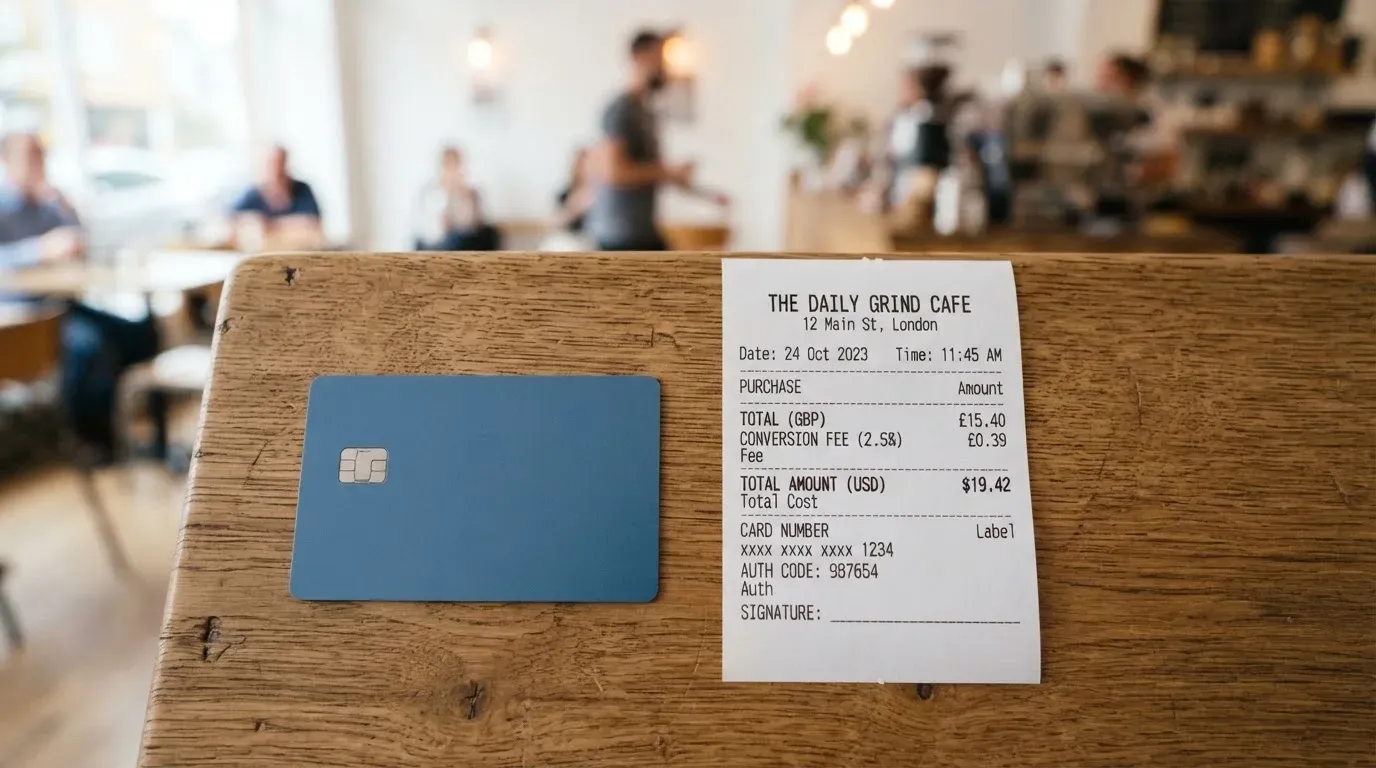
| Criterion | Mark | Why |
|---|---|---|
| Who can get it | 7 / 10 | Decided by country of residence: much of Europe, Australia, Japan, Latin America, Africa, the UAE, Georgia, Kazakhstan and others |
| Cost | 6 / 10 | 0.6% platform fee on every transaction, a 1.2% markup on non-USD payments, and no disclosed issuance fee |
| Top-up options | 6 / 10 | USD, USDT and USDC; networks are not named; the USD account is funded via ACH, Fedwire and SWIFT |
| Reliability and complaints | 7 / 10 | PEXX Technology Pty Ltd, AUSTRAC DCE and FinCEN MSB; the partner bank is not named; Trustpilot 3.5 out of 5 from 3 reviews, with complaints that fees are higher than stated |
| Everyday use | 8 / 10 | Physical and virtual cards, Apple Wallet and Google Pay; the cash machine situation is not disclosed |
| Total | 6.8 / 10 | A usable card with real gaps in what the public pages tell you |
Who suits this card: people who already hold dollars or stablecoins, need high spending limits, and want to pay without a traditional bank account in the way. If that is you, the 8 out of 10 for everyday use is the honest part of the score — cards in hand, a virtual card that arrives instantly, and mobile wallets.
Who it does not suit: anyone shopping on the headline number of “0.6%”, anyone who needs the issuing bank named before signing up, and anyone for whom a 1.2% markup on non-USD spending is the difference between working and not working. If most of your spending is in dollars, the FX line never bites and this is a stronger card than the score suggests. If you spend in euros, pounds or roubles, add that 1.2% to everything and judge again.
Who will they give you the card
Eligibility is decided by country of residence, and the country list is long. Availability covers roughly 35 European countries and territories — including the UK, France, Germany, Italy, Spain and Switzerland — plus Australia, Japan, Macao, Malaysia, the Philippines, South Korea, Taiwan and Thailand; Argentina, Brazil, Chile, Colombia, Ecuador, El Salvador, Mexico, Panama and Peru; Bahrain, Ghana, Kenya, Nigeria, South Africa, Uganda and the UAE; and Azerbaijan, Georgia, Guernsey, the Isle of Man, Jersey, Kazakhstan, Moldova, Ukraine and Uzbekistan.
That is a wide map, and it is one of the real strengths here: for readers in places where an ordinary bank card is hard to get, this is exactly the kind of card the market needs.
Two things the card does not tell you. The card’s eligibility criteria and exclusions are not listed — you cannot read a definitive list of who is turned away, and the reasons for rejection are not published. So if you are in a listed country, that is necessary but not sufficient. The other gap is citizenship: the rule is framed around residence, and the public pages do not spell out how citizenship is treated. Anyone who needs certainty on that should ask support directly before uploading documents, because screening often looks at more than where you live.
How to get it
You need a valid ID and a phone number for the card. For the US virtual bank account specifically, the card requires “level 1 KYC”. Proof of address and age requirements are not stated on the public pages, which is worth knowing before you start.
There is an extra identity check to activate the card — the card’s own help centre carries it as a question title. An application sits at “In Review” for usually one to two business days. The virtual card arrives within one minute after a confirmed deposit.
Two products exist rather than tiers: PEXX Physical, which is loaded with USD and stablecoins, and PEXX Virtual, which is instant and online. The page title names Visa and Mastercard. The currency of the card is implied to be USD rather than explicitly stated.
On delivery: the physical card’s delivery time, delivery cost and replacement cost are not stated. That is a gap if you are outside a major city, and it is one I would want answered before paying for anything.
What it really costs
Fees are where this card needs the most careful reading, because the numbers are not all on one page and the important ones — like issuance — are missing altogether.
| Fee or limit | What the card says |
|---|---|
| Issuance fee | Not stated |
| Monthly fee | Not stated |
| Platform fee | 0.6% on every card transaction |
| Non-USD purchases | 1.2% FX markup; “true mid-market pricing” quoted |
| Cash machine (ATM) | Not stated |
| Card minimum top-up | Not stated |
| Spending limits | “There are currently no spending limits” — with $30,000 per day, $30,000 per transaction and $70,000 per month also given |
| Tiers | No tiers stated; two products, Physical and Virtual |
Let me walk through three ordinary payments so the fees stop being abstract.
A $20 coffee in New York. This is the clean case. You pay 0.6% of $20, so twelve cents, and nothing else. No FX markup, because the purchase is in dollars. If you add it to Apple Wallet and tap, the same twelve cents applies.
A €40 dinner in Berlin. The card converts dollars to euros first. You pay the 0.6% platform fee on the dollar amount and the 1.2% FX markup on the conversion. Together that is the 0.6% platform fee plus a 1.2% FX markup. This is the fee people discover later, and it is why the dollar-holding assumption matters so much.
A €900 laptop online. Same structure, larger number. The combined fees are significant, and if the merchant declines a foreign or prepaid BIN, or the address check fails on a foreign-issued card, you may also eat a decline. Declined authorisations can leave a hold on funds for several days, typically up to seven.
There are no tiers to climb and no annual fee disclosed. The U.S. virtual bank account needs level 1 KYC; cards load with USD and stablecoins. Multi-currency balance is not stated — the card behaves like a dollar card with a conversion layer on top, not like a multi-currency wallet. No cashback is stated, though “PEXX Earn” pays daily interest tied to U.S. Treasury bill rates, and that interest is explicitly not FDIC-insured.
How to Top up
You can fund the card with USD, USDT and USDC. The blockchain networks are not specified — and that is the single most consequential unknown on this page, because sending a stablecoin on the wrong network is how deposits get lost. There is no deposit fee listed. For the USD account, deposits arrive by ACH in one to three US business days, by Fedwire in a few hours to one business day, and by SWIFT in one to five US business days. PEXX Earn has no minimum balance. The card’s minimum top-up is not stated.
Take those timings and plan around them rather than around wishful thinking. If you are paying rent from this card, ACH’s one to three business days is your floor, not the exception.
On the way out: Earn funds can be withdrawn at any time. Card-balance withdrawal and what happens to a balance if you close the account are not stated — the help centre has a withdrawal section with three articles that the public pages do not summarise. Before you commit real money, that is the page to read.
Paying with it every day
Everyday use is this card’s strongest suit, and it earns the 8 out of 10. A physical card for the real world, a virtual card within a minute of a confirmed deposit for online sign-ups and one-off payments, and adding either to Apple Wallet or Google Pay from the Cards tab in the app, confirmed by a one-time password by email or SMS. You do not handle the card number yourself once it is in the wallet.
PEXX Earn pays daily interest against U.S. T-bill rates. That is a genuine add-on for anyone holding an idle balance, and it is not the same as a bank deposit.
What is not disclosed: whether Apple Pay and Google Pay are fully supported in the sense most people mean, blocked merchant category codes, and the cash machine situation. That last one matters more than it sounds — if you plan to live on cash, you will not find the answer on the public pages.
Disputes go through PEXX support and are submitted via the card network. Only successful transactions can be disputed, you have 120 days, and the process takes 60 to 90 days. Chargeback rights may be limited for unauthorised claims made under 3-D Secure, and a USD 25 administration fee may apply if a dispute fails. Ninety days to resolve a dispute is slow, and it is worth pricing that delay into any purchase you would struggle to wait for.
The app’s iOS listing on the Australian App Store shows 5.0 out of 5 from 3 ratings, version 3.6.2, requiring iOS 16.0 or later, in English only. Three ratings is not a track record, but it is not a complaint either. A Google Play app exists; its rating was not read.
What can go wrong
Fees that are higher than advertised. This is the central complaint. On Trustpilot, pexx.com shows 3.5 out of 5 from three reviews. A January 2026 one-star review reports fees higher than advertised, naming a “0.5$ per transaction” charge and deductions with no history shown. A December 2025 five-star review praises the fees and the speed. Officially, no complaints were found on the card’s own pages.
One review is not a pattern, and one five-star review is not a refutation. But when the same theme appears across sources, it is the thing to test yourself: make one small payment, check what the app says it cost, and compare.
A failed deposit. One user reports a crypto deposit that failed and was only partially refunded. This is the ordinary risk of transferring on a network the provider does not support, and blockchain transfers are irreversible — the network cannot freeze or return funds. If your deposit goes wrong, recovery is a support matter with no guarantee.
The bank behind it is unnamed. PEXX Technology Pty Ltd is an Australian company, registered as an AUSTRAC Digital Currency Exchange (DCE100851583-001) and a remittance dealer (IND100851583-001), and as a FinCEN MSB (31000288010318). The issuer is described only as a “partner bank” or “licensed partners”, and no bank is named. Visa and Mastercard do not issue crypto cards to consumers themselves — they license issuers and can suspend a programme — so the unnamed bank is the actual party carrying the regulatory weight. Ask for its name.
Your money is with partners, not a bank. USD deposits are held with licensed partners and are not FDIC-insured. The company says it follows AUSTRAC guidelines and runs an AML/CTF programme with enhanced due diligence, and no dated enforcement events were found. Security features listed are bank-grade encryption and real-time alerts, with in-app payment approval. Card freeze and card insurance are not stated.
Support is thin in one language. Help is in the app or by email, with an FAQ at faq.pexx.com, and Telegram, X, Instagram and Medium. The site is English only and hours are not stated — Russian is not offered. If you are not comfortable in English, that is a real constraint before you start, not after.
The category’s own history. Crypto card programmes have ended before. Visa terminated its global agreements with FTX on 13 November 2022 and the FTX US debit card was wound down by its issuer; WaveCrest, which supplied crypto card brands, was suspended by Visa in Europe in 2018, closing all its Visa programmes. Closures typically mean a notice period, then loading and spending stop, then you are asked to withdraw. That is not a prediction about PEXX. It is why you should not leave more on the card than you can pull out quickly.
One thing that will not be a problem, since you have already hit it: address verification and foreign BINs. Shops can look up the issuer country from the card’s first six or eight digits and may apply extra scrutiny when it differs from your billing address. Expect a decline here and there, especially at a merchant that dislikes prepaid or foreign cards.
What to take instead
Three alternatives came up in the same review. Here is how they compare, and where each one wins.
| PEXX | International Visa Card | UNi Card | Morse | |
|---|---|---|---|---|
| Score | 6.8 / 10 | 6.7 / 10 | 6.1 / 10 | 7.5 / 10 |
| Card | Physical and virtual; Visa and Mastercard per page title | U.S.-issued Platinum Visa, virtual; physical “Coming soon” | Multicurrency Mastercard, physical/virtual not stated | Fully virtual Visa prepaid debit |
| Issuance | Not stated | $5 one-time | Not stated | Not stated |
| Monthly | Not stated | None; plans Classic free, Pro $9.00/month, Max $19.00/month | No annual fee | Not stated |
| FX | 1.2% markup on non-USD | Visa rate + 2% FX fee | No FX fee; live OTC rates, “no hidden exchange fees” | Zero FX fees or markups, real-time Visa rate |
| Platform fee | 0.6% per transaction | Card use in USD free on all plans | Not stated | Paying online and contactless is free |
| Top-up | USD, USDT, USDC; USD account via ACH, Fedwire, SWIFT | USDC or USDT at 1:1, plus USD, EUR, SEPA, SWIFT, FedNow | Not stated | Debit card, stablecoin transfer, Account Details; USDC, USDG, EURC via Solana free |
| Rewards | No cashback stated; Earn pays T-bill-linked interest | No cashback stated | Spend-to-Earn up to 3% | Not stated on card pages |
| Note | Names its partner bank? No | Physical card not yet available | — | Self-custodial wallet |
International Visa Card scores almost identically at 6.7, and it is the cleaner choice for someone who wants a dollar card without a percentage on every purchase — card use in USD is free on all plans, deposits of any kind are free, and only non-USD spending carries the Visa exchange rate plus a 2% FX fee. Its catch is availability: it is not offered to residents or legal registrants of Belarus, mainland China, North Korea, Cuba, India, Iraq, Iran, Israel, Myanmar, Nepal, Nicaragua, Russia, Syria, Turkey, Ukraine, Venezuela or Vietnam, with FATF grey-list countries reviewed case by case with compliance approval, and purchases are blocked in North Korea, Cuba, Iran, Russia, Syria, Ukraine and Venezuela. Note the rule is by residence or registration, not citizenship. And the physical card is still “coming soon”, which is exactly what PEXX has today.
UNi Card scores 6.1, the lowest of the four, but its fee structure is the most attractive in words: no annual fee, no foreign transaction fee, assets converted at live OTC rates with “no hidden exchange fees”. It pays up to 3% back. What I could not establish is who is eligible and how you fund it — both are not stated on the public pages. If rewards matter to you, this is worth a look; if you need to know your limits and top-up routes before committing, it is not.
Morse scores highest at 7.5, and the reason is visible: zero foreign exchange fees or markups at the real-time Visa rate, and paying with the card online and contactless is free. The wallet is self-custodial, and USDC, USDG and EURC via Solana are free to deposit. The catch is access. Eligibility is by residence, users must be at least 18 and resident in a supported country, the app is available in over 140 countries but local add and withdraw in over 70, and the card is “available only in certain countries” with no published list — you check the app. Some countries are in closed beta and need an invite code: American Samoa, Australia, Cape Verde, Guernsey, Hong Kong SAR China, the Isle of Man, Japan, Jersey, New Zealand, Serbia, Singapore, Switzerland, Thailand, Türkiye, the UK and Western Sahara. Morse also cannot serve customers subject to US sanctions (and UK, EU and UN sanctions).
My read: if you are in a country where Morse is open to you and your spending is not mostly in dollars, Morse is the strongest of these four on cost. If you spend in dollars, PEXX and the International Visa Card are close, and the decision turns on whether you want a card in your hand now or a 0.6% toll per purchase.
Who I would recommend it to
I would recommend this card to someone who already holds dollars or stablecoins, lives in one of the listed countries, needs to spend large amounts without a conventional bank card in the way, and is comfortable reading a card’s fee schedule rather than assuming it. The absence of stated spending limits is the quiet headline here — $30,000 a day, $30,000 a transaction, $70,000 a month is a genuinely different league from most cards in this category, and for the person it fits, that is the whole point.
I would not recommend it as a first card, or to anyone who wants to know which bank stands behind it before they hand over money, or to anyone whose spending is mostly outside the dollar zone. Nor would I recommend loading it months ahead of time.
Before you deposit anything, do three things. Make one small payment and check what it actually cost, because that is the complaint that keeps appearing. Ask support which bank issues the card and which networks the USDT and USDC deposits should go on, because both are unstated and both matter. And keep only what you could withdraw quickly if the programme ever changed shape.
Frequently asked questions
What is the PEXX card?
The PEXX card is a payment card you load with dollars or stablecoins and spend like an ordinary card, in shops, online and at cash machines. It comes in two versions: a physical card loaded with USD and stablecoins, and a virtual card that arrives instantly online. The page title names Visa and Mastercard. Its own pages describe it as spending from a pre-loaded balance, so the card itself draws on what you have put in rather than on a bank account.
How does the PEXX card work?
You convert or top up a balance first, and the card spends only that balance, which is why it cannot overdraw. When you pay, the merchant is paid in dollars and, if the purchase is in another currency, your balance is converted at mid-market pricing plus the stated markup. PEXX Earn sits alongside the balance, paying daily interest tied to U.S. Treasury bill rates — that interest is explicitly not FDIC-insured.
Is PEXX a bank?
No. PEXX is PEXX Technology Pty Ltd, an Australian company registered with AUSTRAC as a Digital Currency Exchange (DCE100851583-001) and a remittance dealer (IND100851583-001), and with FinCEN as an MSB (31000288010318). It describes the issuer only as a “partner bank” or “licensed partners” without naming one. That distinction matters: your USD deposits are held with licensed partners, not FDIC-insured, and it is the unnamed issuing bank that carries the card programme.
Who owns PEXX?
Ownership beyond the Australian entity is not stated on the public pages. What is published is the regulatory footprint: the Australian registrations above and the FinCEN MSB number 31000288010318. That is enough to confirm PEXX is a regulated business in the jurisdictions it names, and not enough to tell you who is behind it or how it is financed.
Which countries can use the PEXX card?
Availability is decided by country of residence and is wide: roughly 35 European countries and territories including the UK, France, Germany, Italy, Spain and Switzerland; Australia, Japan, Macao, Malaysia, the Philippines, South Korea, Taiwan, Thailand; much of Latin America; Bahrain, Ghana, Kenya, Nigeria, South Africa, Uganda and the UAE; and Azerbaijan, Georgia, Guernsey, the Isle of Man, Jersey, Kazakhstan, Moldova, Ukraine and Uzbekistan. Eligibility criteria and exclusions are not listed.
Does the PEXX card require KYC?
Yes — a valid ID and a phone number are needed for the card, and the US virtual bank account requires “level 1 KYC”. An extra identity check applies to activate the card, and applications sit at “In Review” for usually one to two business days. Proof of address and age requirements are not stated. If due diligence cannot be completed, accounts can be frozen or closed pending documents.
How do I activate the PEXX card?
Activation follows an extra identity check, described in the card’s help centre as a question of its own. In practice the sequence is: register with ID and phone, get the application through its one to two business day review, fund the card, and the virtual card appears within a minute of a confirmed deposit. The reasons an application can be rejected are not published, which is the part worth asking support about if yours stalls.
How do I top up the PEXX card?
You can fund it with USD, USDT or USDC, with no deposit fee listed. The USD account takes ACH in one to three US business days, Fedwire in a few hours to one business day, or SWIFT in one to five US business days. The blockchain networks for USDT and USDC are not specified, and that is the detail to confirm before sending anything, since a transfer on the wrong network is generally irreversible.
Is the PEXX card free?
Partly. Card use carries a 0.6% platform fee on every transaction, and non-USD purchases add a 1.2% FX markup. Issuance, monthly and cash machine fees are not stated rather than stated as zero, so you cannot treat them as free. There are no tiers to climb and no cashback is stated.
Is the PEXX card safe and worth it?
Worth it for the right person, and the safeguards are real but partial. PEXX lists bank-grade encryption, real-time alerts and in-app payment approval, with USD deposits held at licensed partners and not FDIC-insured; card freeze and card insurance are not stated. Disputes are handled through support via the card network within 120 days, take 60 to 90 days, and a USD 25 administration fee may apply if a dispute fails.
Top app and neobank cards by score – cryptocardtop
Content created by the «cryptocardtop» team