
A stablecoin-funded Visa card that charges $50 to start and $50 a year to keep
 Available in US
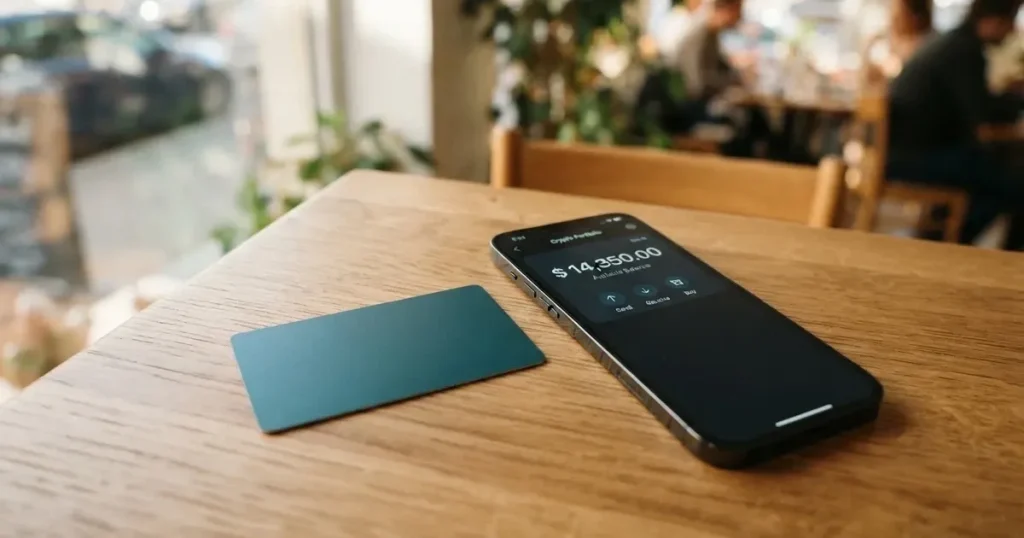
The FV Bank card is a Visa debit card that spends from a US-dollar account you fund with stablecoins. You deposit USDC, USDT or PYUSD, the balance converts to dollars when it lands, and you pay with it wherever Visa is taken — about 1.9 million ATMs across more than 200 countries, according to the bank’s own figures. That is the whole pitch, and on paper it is a clean one: hold dollars on-chain, spend dollars anywhere.
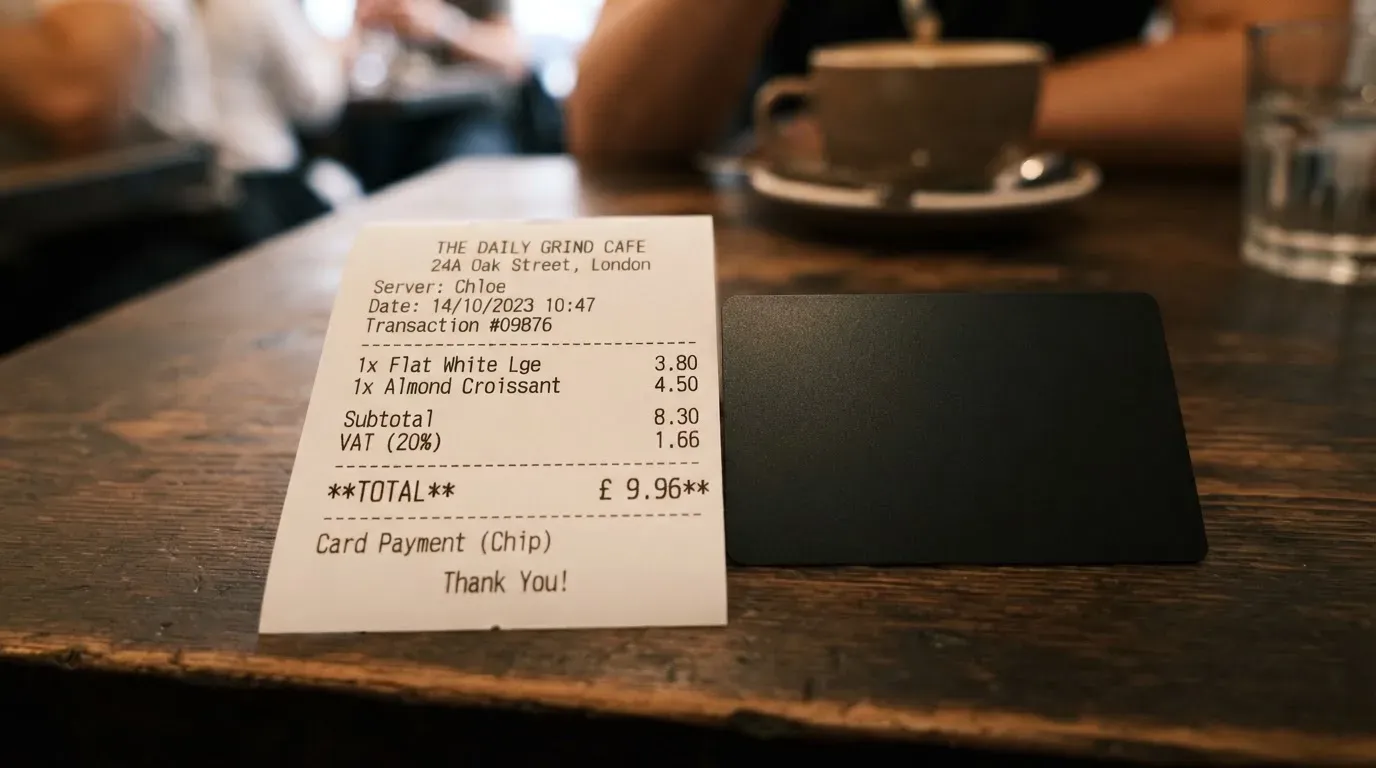
Then you look at the fee schedule. The plastic costs $50. Keeping it costs $50 a year on a US account or $100 a year on an international one. Paying in a foreign currency costs 2.99%. A dollar of groceries in a currency that is not dollars is already 2.99%. And the money sits with FV Bank International Inc., a Puerto Rico-licensed entity that is not FDIC-insured, in a card programme that eight people have reviewed on Trustpilot and given an average score of 2.2 out of 5.
I scored it 5.5 out of 10. Not because it is a scam — I found no official incident, and the licensing is real — but because the price is high, the disclosure is thin, and the customer feedback that exists is bad.
The conditions described here are current as of October 28, 2026.
Verdict: 5.5 out of 10
Who this suits: someone already holding stablecoins who wants a US-dollar account and a physical Visa without going through a traditional bank, and who can live with a $50 annual fee. Who it does not suit: anyone who needs a cheap everyday card, travels often and cares what the exchange rate costs them, or is uneasy about money held by a non-FDIC-insured custodian.
Here is where the marks come from, criterion by criterion.
| Criterion | Mark | Why |
|---|---|---|
| Who can get it | 9 / 10 | Account opening described as available from over 100 countries; the card works wherever Visa is accepted; no country list is published |
| Cost | 1 / 10 | $50 per plastic card, $50 per year maintenance on US accounts ($100 international), 2.99% on currency transactions, $3.50 ATM inside the USA and $5.00 outside it |
| Top-up options | 6 / 10 | USDC, USDT or PYUSD deposited and converted to USD; networks and the deposit fee are not disclosed |
| Reliability and complaints | 5 / 10 | FV Bank International Inc., OCIF licence IFE-063, Visa principal member, not FDIC-insured; Trustpilot 2.2 out of 5 from 8 reviews, about blocked funds and a $200 deduction |
| Everyday use | 7 / 10 | Physical Visa card, around 1.9 million ATMs in 200+ countries, Apple Wallet; Google Pay is not named and a virtual card is not described |
| Total | 5.5 / 10 | Strong on access, weak on price and on how much the bank tells you |
Access is the one genuinely impressive column. An account “available from over 100 countries” with no published exclusion list is more open than almost any comparable card I looked at. Cost is where it collapses. A card that charges a 2.99% currency fee plus a $5 ATM withdrawal abroad is not a travel card; it is a dollar card for people who mostly spend dollars.
Will they give you the card?
Yes, most likely, and more widely than the alternatives I compared it with — which is why access scores 9.
FV Bank describes account opening as available from over 100 countries. The card is usable worldwide wherever Visa is accepted. There is no country list on the page, and no statement of citizenship requirements either.
That last point deserves a pause, because it cuts both ways. Compare the International Visa Card I looked at, which publishes a long exclusion list by residence or legal registration: Belarus, mainland China, North Korea, Cuba, India, Iraq, Iran, Israel, Myanmar, Nepal, Nicaragua, Russia, Syria, Turkey, Ukraine, Venezuela, Vietnam, with FATF grey-list countries reviewed case by case. FV Bank publishes nothing comparable. Openness on paper and openness in practice are not the same thing, and with no list on the page there is no way for you to know in advance whether your country of residence or registration will pass when you apply.
One thing to be clear about: I found no statement of what identity checks are required, at what level, or what documents are needed. The cards page simply does not say. If you are in a jurisdiction with strict rules on holding dollar balances through a foreign entity, that absence is worth asking about directly before you move any funds.
How to get it
The route is short on paper: apply through apply.fvbank.us, and the bank’s own figure for a USD account is “as little as 24 hours”. That is the fastest timeline I saw among the cards in this comparison.
What you get is a Visa debit card issued on the USD account — physical plastic, with an issuance fee attached. The bank also mentions cards for employees. A virtual card is not described on the page, so if you want something usable before the plastic arrives, do not assume there is a digital card waiting.
Delivery is described loosely. According to an FV Bank blog post, physical cards are ordered in the portal or app and delivered “anywhere in the world”. No delivery time and no delivery cost is stated. A replacement card is $50, the same as the original issuance.
So the practical sequence is: apply, fund, wait for the plastic. The step I cannot tell you about is the identity check — the page is silent on what you will be asked for.
Fees: what it really costs
This is the section that decides the score. Here is the full published schedule, and it is worth reading twice because the annual line has two prices and they are not interchangeable.
| Fee or limit | Value |
|---|---|
| Plastic card issuance | $50 per card |
| Replacement card | $50 |
| Annual card maintenance, domestic US account | $50 per card |
| Annual card maintenance, international account | $100 per card |
| Purchase transactions | Free |
| Foreign currency transaction | 2.99% |
| Crypto conversion fee | Not stated |
| ATM withdrawal, inside the USA | $3.50 |
| ATM withdrawal, outside the USA | $5.00 |
| ATM balance inquiry | $1.00 |
| PIN change | Free |
| Purchase limit, domestic US and international individual | $7,500 per day, 15 per day, 60 per week |
| Purchase limit, international business | $12,000 per day, 15 per day, 60 per week |
| ATM limit | Not stated |
Three everyday payments, priced against this schedule:
A coffee in your own country, on a US account. The purchase itself is free. You pay the $50 you already spent on issuance, amortised across however long you keep the card.
The same coffee in a eurozone city. Purchase free, plus 2.99% on the currency conversion. On a $20 bill that is roughly 60 cents. The rate itself is not described — no markup is quoted, no exchange-rate source is named — so 2.99% may not be the whole cost.
Withdrawing $200 from a cash machine abroad. $5.00 for the withdrawal, plus whatever the machine’s own operator charges, on a balance denominated in dollars. If you need local cash rather than a card purchase, this is the expensive route.
Add it up over a year. A US account with one $200 cash withdrawal abroad and a handful of foreign purchases runs well past $100 in fees before you spend anything on what you bought. That is why cost scores 1 out of 10 — not because any single line is outrageous, but because the stack is high and fixed. There are no named tiers here; the schedule simply branches domestic US, international, and business, and the branches differ in both fee and limit.
Top up: how money gets in
The funding model is simple, and it is the part of this card I like most: deposit USDC, USDT or PYUSD, and it converts to USD automatically when the deposit lands. There is also a Convert feature that sells digital assets held in custody for dollars, and withdrawals work by converting those assets to USD and moving them to your bank balance.
Two things are not stated, and both of them matter more than they sound. The deposit fee and the minimum deposit are not published. The networks are not published either — and for stablecoins, the network is the single detail that decides whether your money arrives.
That is not a technicality. Blockchain transfers are irreversible. If you send on a network the provider does not support, or to an address belonging to a different network, the funds can be lost or need manual recovery with no guarantee. Some of the tokens named have their own complications: USDC is natively supported on 38 networks, while USDC over TRC20 stopped being a native option in February 2024, so if your USDT lives on Tron you should confirm how PYUSD and the other two are meant to reach FV Bank. Fees on the sending side are charged by the blockchain, not by the card provider, so a deposit can cost you a network fee before the card ever sees it.
Withdrawal fees and the balance you need to hold to close an account are also not stated on the cards page. Plan for that gap.
Paying with it every day
Day-to-day, this behaves like an ordinary Visa debit. It works online and at terminals, and you can add it to Apple Wallet — the card appeared in Apple Wallet around October 2026, and an earlier version of the cards page said digital wallet use is possible. There is also an online banking platform and a mobile app, and inside them you can set spending limits, change your PIN and disable transactions.
Apple Pay itself is a well-established route: it replaces the card number with a device-specific number held in the Secure Element rather than on Apple’s servers, and each payment carries a one-time code. The issuer can restrict the tokenised number — blocking it on phone or website use, for instance — which is useful to know if the number ever leaks.
What is missing on the everyday-use side: Google Pay is not named. A virtual card is not described. Rewards are not stated, and there is no cashback mentioned anywhere on the page. Disputes and chargeback handling are not stated either — and that last silence matters, because US debit reversal rights come from Regulation E, credit card rights from Regulation Z, and prepaid-card coverage varies and should not be assumed to apply here.
What can go wrong
The structural risk is where your money sits. FV Bank International Inc. is licensed by OCIF in Puerto Rico as an International Financial Entity under licence IFE-063. That is a real licence. It is also not FDIC insurance. The bank describes itself as a licensed bank and a digital-asset custodian — custodial, meaning it holds the credentials, so you are trusting the provider completely with the assets.
I found no official incident: no regulator action, no announced enforcement, nothing in the news. What I did find is user reporting, and I am giving it to you as third-party reports on a review platform, not confirmed by the card. Trustpilot shows 2.2 out of 5 from 8 reviews, seven of them one-star. Read 21 October 2026. The themes: funds blocked after proof of funds was provided (August 2026), an unexpected $200 deduction after a transfer was rejected (October 2025), poor communication (January and October 2025), and doubts about whether this is “a real bank” (June 2025).
An average over eight reviews is not a rate, and I am not treating it as one. But eight is small and negative at the same time, and the categories people complain about — frozen balances, deductions that were not explained, unanswered messages — are the categories that matter most when your money is not covered by deposit insurance.
This is not unusual for the category. Custodial platforms have a documented history of failure: Mt. Gox, about $350 million reported stolen between 2011 and 2014; Coincheck, about $400 million in 2018; Ronin Network, $625 million in 2022. Card programmes have closed too — Visa terminated its global agreements with FTX on 13 November 2022 and the FTX US debit card was wound down, and WaveCrest had all its Visa programmes closed after Visa suspended it in Europe in 2018.
Two more things you should know about keeping money here. First, KYC rules are not the bank’s invention: regulated businesses must verify customers and assess risk as part of anti-money-laundering law, with ongoing monitoring and suspicious-activity reporting, and where due diligence cannot be completed the institution is expected to stop or end the relationship. That is the ordinary legal reason accounts get frozen pending documents, and it is the likeliest explanation for the blocked-funds reports above. Second, if you close or move on, a programme closure typically means a notice period, then spending and loading stop, then you are asked to withdraw what remains.
The card also carries the ordinary friction of a foreign BIN. Merchants can look up the issuing institution and country from the first six or eight digits of the card number, and may apply extra scrutiny when the issuer country differs from the billing address. That is why a card issued in one country can look foreign to a shop in another — sometimes as an extra check, sometimes as a decline.
The company’s own history is short and mostly positive on paper: Visa principal member since October 2021, Visa debit and corporate expense cards launched at Money20/20 USA in October 2024, Stablecoin Invoicing launched around June 2026, a fee agreement effective 13 August 2026, and the card in Apple Wallet around October 2026. Support is reachable through a contact page.
What to take instead
If the reason you are reading this is that an ordinary bank card is awkward to get, here are the three alternatives I compared, with their own marks.
| Card | Score | Card and network | Issuing and annual fee | Currency and top-up notes |
|---|---|---|---|---|
| FV Bank | 5.5 / 10 | Physical Visa debit, USD account | $50 per card; $50/yr US account, $100/yr international | 2.99% currency fee; USDC, USDT or PYUSD converted to USD |
| International Visa Card | 6.7 / 10 | U.S.-issued Platinum Visa, virtual; physical “coming soon” | $5 one-time; no maintenance fee; plans Classic free, Pro $9.00/month, Max $19.00/month | Visa exchange rate + 2% FX fee; USD card use free; USDC/USDT deposits free, also USD, EUR, SEPA, SWIFT, FedNow |
| UNi Card | 6.1 / 10 | Multicurrency card on Mastercard, spends from UNi.Global balance | No annual fee; issuance not stated | No foreign transaction fee; assets converted at live OTC rates |
| Morse | 7.5 / 10 | Fully virtual Visa prepaid debit, spends from Morse Balance in any currency | Issuance and monthly fee not stated; cardholder agreement applies | Zero FX fees or markups, real-time Visa rate; card payments online and contactless free; USDC, USDG, EURC free via Solana, other tokens and chains cost a fee |
Morse scores highest, and for the same reason FV Bank scores low on cost: no foreign exchange fee and no markup, with card payments online and contactless free. Its catch is access — eligibility is by residence rather than citizenship, you must be at least 18 and resident in a supported country, and the app is said to be available in over 140 countries for peer-to-peer use. A list of closed-beta countries needing an invite code includes Australia, Hong Kong SAR China, Japan, New Zealand, Singapore, Switzerland, the United Kingdom and others. It cannot serve customers subject to US sanctions. The card is fully virtual for now.
International Visa Card is the cheapest to start at $5 and charges 2% rather than 2.99% on foreign currency, with free deposits of any kind. Against that, it publishes a real exclusion list by residence or legal registration, and its physical card is not available yet.
UNi Card has no annual fee and no foreign transaction fee, with conversion at live over-the-counter rates, plus spend-to-earn rewards up to 3%. Its eligibility and funding routes are not stated on the pages I read.
Three honest caveats on this comparison. Every one of these cards means your money is held by a provider you did not choose, with recovery depending on their support. None of them is insured the way a bank deposit is. And the scores are not apples to apples — they weigh eligibility, fees, funding and complaints differently, and FV Bank is the only one of the four with a published $50 issuance charge.
Who I would recommend it to
I would recommend the FV Bank card to someone who already holds stablecoins and wants a US-dollar balance with a real Visa card on it, who mostly spends in dollars, and who treats the $50 to $100 a year as the price of not dealing with a traditional bank. For that person the math works and the access is genuinely good.
I would not recommend it as a travel card — 2.99% on currency and $5.00 per ATM withdrawal abroad is too expensive for a card that exists partly to be used abroad. I would not recommend it as a cheap everyday card, because a $50 issuance charge is still $50 the day after you pay it. And I would not recommend it to anyone whose plan depends on getting the balance back quickly: the withdrawal fee and the closure balance are not published, and eight unverified reviews complaining about frozen money and unexplained deductions is not nothing, even at that sample size.
The question I would put to FV Bank, and would want answered before funding it, is simple: what happens to my money, and how fast, if I want to leave? The answer is on the page in pieces — custody, a Convert feature, transfers to a bank balance — but the fees, the minimums and the networks are not there, and those are exactly the details you need before you move the first dollar.
Frequently asked questions
What is the FV Bank card?
The FV Bank card is a Visa debit card linked to a US-dollar account you fund with stablecoins. You deposit USDC, USDT or PYUSD and the balance converts to dollars at deposit, then the card spends that balance wherever Visa is accepted. It is issued by FV Bank International Inc., licensed in Puerto Rico as an International Financial Entity, which is a different thing from a US bank and is not FDIC-insured.
How does the FV Bank card work in practice?
You apply through apply.fvbank.us, the bank’s own figure for a USD account is “as little as 24 hours”, and you fund it with a stablecoin deposit. Purchases are free, and the card works at terminals, online and at ATMs. Inside the online banking platform and app you can set limits, change your PIN, disable transactions and add the card to Apple Wallet. What you spend is what sits in the account, so the card cannot overdraw.
Is FV Bank a real bank?
It is a licensed entity, but not a US bank and not deposit-insured. FV Bank International Inc. holds an OCIF licence in Puerto Rico as an International Financial Entity, number IFE-063, and has been a Visa principal member since October 2021. It also acts as a digital-asset custodian. Some reviewers have expressed doubts about whether it counts as “a real bank” — that is user commentary on a review platform, not an official finding.
Who can get the FV Bank card?
The bank describes account opening as available from over 100 countries, with no country list published on the page, and the card usable worldwide wherever Visa is accepted. Citizenship requirements are not mentioned; rules generally follow residence or registration. No identity-check level or document list is stated. What identity checks apply is not stated on the cards page.
What does the FV Bank card cost?
The plastic is $50 per card and a replacement is $50. Annual card maintenance is $50 per card on a domestic US account and $100 per card on an international account. Purchases are free, but a foreign currency transaction costs 2.99%. An ATM withdrawal is $3.50 inside the USA and $5.00 outside it, and a balance inquiry is $1.00. Changing your PIN is free.
How do I top up the FV Bank card?
You deposit USDC, USDT or PYUSD, and it converts to USD automatically when the deposit arrives. There is also a Convert feature that sells digital assets held in custody for dollars. Neither the deposit fee, the minimum deposit, nor the supported networks are stated, so confirm the network before you send anything — stablecoin transfers are irreversible and a wrong-network deposit can be lost or need manual recovery with no guarantee.
Can I add the FV Bank card to Apple Wallet?
Yes. The card became available in Apple Wallet around October 2026, and an earlier version of the cards page already said digital wallet use was possible. Apple Pay stores a device-specific card number in the phone’s Secure Element rather than on Apple’s servers, and uses a one-time code per payment. Google Pay is not named on the card pages, so do not assume it is supported.
What are the FV Bank card’s limits?
Domestic US and international individual accounts are limited to $7,500 in purchases per day, with a cap of 15 transactions per day and 60 per week. International business accounts get $12,000 per day, with the same 15-per-day and 60-per-week transaction caps. The ATM limit is not stated. These are separate schedules for domestic, international and business accounts rather than named tiers.
Is the FV Bank card safe?
Structurally, it is a custodial product: the provider holds the credentials, so control rests with them rather than with you, and the funds are not FDIC-insured. I found no official incident. On Trustpilot, though, the card shows 2.2 out of 5 from 8 reviews, seven of them one-star, with reports of funds blocked after proof of funds was provided (August 2026) and a $200 deduction after a rejected transfer (October 2025). Those are user reports on a third-party platform, not confirmed by the bank.
Is the FV Bank card free, and is it worth it?
No — there is a $50 issuance charge plus $50 or $100 a year, depending on the account. Whether it is worth it turns almost entirely on why you want it. If you hold stablecoins and need a US-dollar Visa without a traditional bank, the access from over 100 countries is worth something the alternatives do not offer. If you want a cheap card for everyday spending or a travel card, the 2.99% currency fee and $5.00 foreign ATM charge argue against it.
Top app and neobank cards by score – cryptocardtop
Content created by the «cryptocardtop» team