
A free virtual Mastercard for Argentina and Brazil, where the crypto is the point and the trust is the question
 Available in US
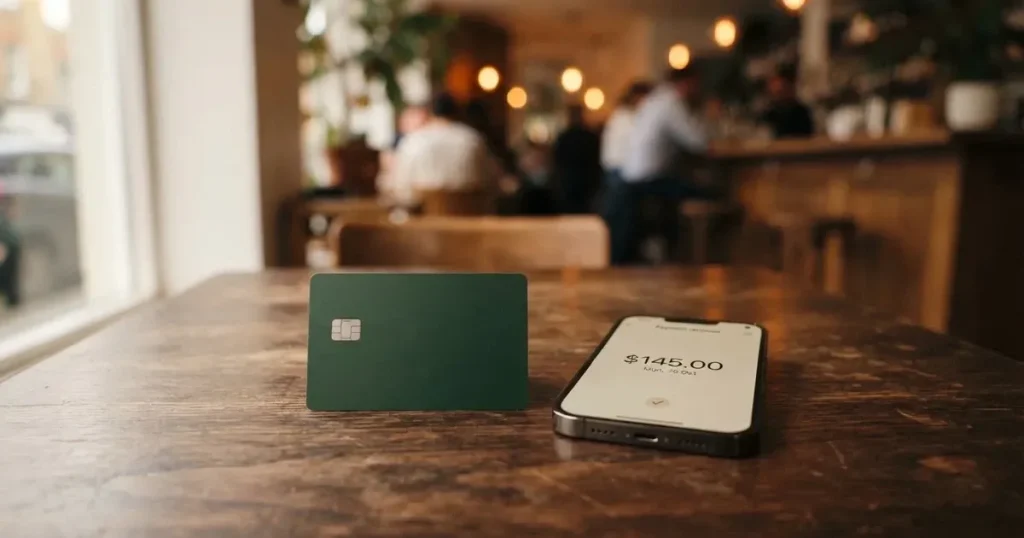
Fiwind is a virtual Mastercard that spends straight from a crypto balance, built by an Argentine fintech company with Brazil in mind as well. There is no physical card: you add the number to Apple Pay or Google Pay and tap. Issuance and monthly servicing cost nothing, card payments carry no commission, and the card can be topped up in pesos, dollars or crypto across a long list of networks.
That is the pitch, and it is a coherent one. The problem is what sits underneath. The company is registered as a virtual asset service provider with Argentina’s securities regulator, and its own site says this implies no licence and no supervision. The card issuer is not named. The card is virtual only, with no ATM described anywhere. It scores 5.8 out of 10 in my assessment — good where it counts on cost and funding, thin everywhere else.
Who this suits: someone in Argentina or Brazil who already holds stablecoins, wants to spend them domestically or abroad without converting to a bank account first, and is comfortable with a custodial platform. Who it does not suit: anyone who needs cash from an ATM, wants a physical card, needs a documented dispute process, or lives outside the region and hopes the card will simply open.
Conditions here are current as of October 28, 2026.
The verdict
The card earns 5.8 out of 10. It is a genuinely cheap way to spend a crypto balance, and the top-up side of the product is the strongest thing about it: 9 out of 10. The everyday-use side is the weakest, at 5 out of 10, because there is no physical card and no ATM story. Reliability sits at 6, with a real regulatory registration on one side and a single one-star review on the other.
| Criterion | Mark | Why |
|---|---|---|
| Who can get it | 3 / 10 | Argentine fintech, focused on Argentina and Brazil (Pix); no country list published, though the card works at merchants worldwide |
| Cost | 7 / 10 | No issuance or maintenance fee, no commission on card payments; 1.5% for processing payments abroad; USDT or USDC transfers 0.50% + 0.50 USD (ACH) |
| Top-up options | 9 / 10 | Pay in pesos, dollars or crypto; networks include Bitcoin (incl. Lightning), Ethereum ERC20, XRP Ledger, BNB BEP20, Arbitrum, Optimism, Cardano, Solana, Polygon, Stellar, TON, Polkadot, World Chain, Tron |
| Reliability and complaints | 6 / 10 | PSAV registry No. 75 at the CNV, and the site itself says this is not a licence; issuer not named; Trustpilot has one 1-star review, Argentine App Store 4.9 from 9.6K ratings |
| Everyday use | 5 / 10 | Virtual Mastercard only, Apple Pay and Google Pay with NFC; no ATM described |
| Total | 5.8 / 10 | A strong top-up experience wrapped in a thin everyday-use product |
The audience this is genuinely for is Argentines and Brazilians paying from crypto balances. If that is you, the cost maths is hard to argue with. If you are anywhere else reading this, you are in the “works at merchants worldwide but not clearly open to you” category, and you should read the eligibility section before anything else.
Who will they give you the card to
The honest answer is: the card’s own public pages do not say. There is no country list published. What is published is the shape of the business — an Argentine fintech company, with Pix support for Brazil, and a card that works at merchants worldwide. So the coverage question and the acceptance question are answered at opposite levels of detail. You may be able to use the card almost anywhere; you cannot tell from the public pages whether you can open an account.
That asymmetry matters if you are outside the region. Do not read “works worldwide” as “available to you”. If you can install the app and complete the flow, the geographic gate appears to be inside the signup process rather than published as a list.
One more thing worth knowing before you start: this is not a bank’s card. Fiwind is registered in the CNV registry as a PSAV, No. 75, dated 6 September 2024 — a virtual asset service provider. The company states plainly that this “does not imply a licence or supervision”. The legal entity behind the platform is not named on the card pages, and neither is the card issuer. When you hold a prepaid-style card, the issuer is the institution that holds the programme and owes you the money; here you cannot find out who that is from the pages.
If you want to understand what sits between you and the merchant, it helps to know the standard plumbing: the card number starts with a 6- or 8-digit BIN identifying the issuing institution, and a merchant can look that BIN up and see both the issuer and its country — and may apply extra scrutiny if that country differs from your billing address. That is the general reason a card issued in one country can look “foreign” in a shop in another, and it is a category-wide effect, not something specific to Fiwind. It also explains why the network name matters at all.
How to get it
The stated flow is short. The card is usable right after you “complete the required details”, and the official pages describe two verifications in the app — your current address and your phone number — plus a chosen payment currency. Document requirements are not stated there. So the card is functionally instant once those steps pass, but the card’s own pages do not describe the identity checks in the terms a bank would use, and it is fair to say the KYC level is not stated.
What is stated is a tier system. Verifying your account gives you Gold. Proof of address moves you to Platinum. Income documents open Black — with the card’s own note that Black is not guaranteed to exceed Platinum. Limits are denominated in USD, there is an annual limit that renews on 1 January with a monthly cap inside it, and the amounts themselves are not shown on the page. The user can set their own daily cap in the app.
Two practical gaps you should hold in mind. Processing time is not stated, and neither are rejection reasons. That second one is the one that matters: if your application is turned down, the card gives you no published basis for understanding why. If you have been refused by other services before, that is worth asking about before you invest time in the flow.
The network is Mastercard, and the card is 100% virtual — “completely virtual”, as the official page puts it. Merchants are always paid in ARS, or BRL for Pix. Virtual only means exactly that: there is no physical card, and none is promised.
Fees: what it really costs
The headline numbers are good. Issuance and maintenance are free — “sin costo de emisión ni mantenimiento”. Card payments carry no commission: “your payments with the fiwind card have no commissions”. Buying and selling crypto inside the app is also commission-free. That is a genuinely strong cost position for a card whose main purpose is spending crypto.
Then come the two places money actually leaves. International purchases carry a “1.5% charge for processing charges abroad”. And the fees page lists USD transfers via USDT or USDC at 0.50% + 0.50 USD by ACH, or + 20 USD by wire. The wire figure is the one to watch: if you are funding from stablecoins across a border, ACH versus wire is a real difference in cost.
A third cost sits in the exchange rate, and it is the one people miss. International purchases “process in US dollars (USD)”, and a single payment can involve up to three currencies: your balance currency, USD, and the merchant’s currency. Fiwind uses its own buy rate for ARS to USD, and Mastercard uses its own rate from USD to the merchant’s currency. Two separate rates, neither of which is the rate you see on a currency-exchange screen. The card currency itself is chosen in the app and can be changed from the card menu.
| Fee or limit | What the card says |
|---|---|
| Issuance | Free — no issuance cost |
| Monthly fee | Free — no maintenance cost |
| Card payments | No commission |
| Crypto buy/sell in app | No commission |
| International purchases | 1.5% charge for processing charges abroad |
| USD transfers via USDT/USDC | 0.50% + 0.50 USD (ACH); 0.50% + 20 USD (wire) |
| Exchange rate | Own buy rate for ARS→USD; Mastercard’s rate for USD→merchant currency; up to three currencies in one payment |
| ATM / cash withdrawal | Not stated |
| Card limits | Figures not stated; crypto payment limits “determined by the sales limit” |
| Spending caps | User-settable daily maximum in the app; account-level monthly operating limits apply |
Note the limits row carefully. The card page says the card “has no limits for making payments” but “consumes the account’s monthly operating limits” when paying with crypto or dollars. The amounts are in a separate article; the daily figure is whatever you set yourself. For most people this means your real ceiling is the account operating limit, not the card — and you will have to go looking for that number rather than find it on the card page.
Three everyday payments, and what actually applies:
- A subscription or app purchase priced in dollars, paid from a peso balance. No card commission; the 1.5% abroad charge does not apply if the purchase counts as domestic; the conversion runs through Fiwind’s own ARS→USD buy rate.
- The same purchase from a euro-priced merchant. Card commission still zero, but you are now paying the 1.5% abroad charge plus Mastercard’s USD→merchant-currency rate, on top of the ARS→USD rate — three currencies in one payment.
- Funding the card from USDT over ACH. Not a card payment at all, so the 1.5% does not apply; this is the 0.50% + 0.50 USD line. Over wire, the same transfer costs 0.50% + 20 USD.
ATM withdrawal is the row with no number in it. The official description of the card is virtual, usable online and via NFC with Apple Pay and Google Pay, with no ATM or cash use described anywhere. Plan on not being able to get cash.
Top up: what goes in, and from where
This is the part Fiwind does best, and I scored it 9 out of 10. You can pay in pesos, dollars or crypto. ARS and USD deposits and withdrawals run 24 hours a day, are “sin costo” — free — and are instant. Crypto buy and sell inside the app carries no commission. The card then pays out from whichever of those balances you have.
The network list is the long one, and it is genuinely long: Bitcoin (including Lightning), Ethereum ERC20, XRP Ledger, BNB BEP20, Arbitrum, Optimism, Cardano, Solana, Polygon, Stellar, TON, Polkadot, World Chain and Tron. For someone holding a stablecoin on a cheaper chain, that breadth is the practical advantage over a card that supports one or two.
Two caveats sit against it. The minimum top-up is not stated, and the card’s pages do not say who pays the network fee on a crypto deposit. That second one is not a detail: on-chain network fees are charged by the blockchain rather than the card provider, so the cost of getting money in is at least partly outside Fiwind’s pricing and outside this fee table. Getting the network right matters more here than at most places, because a transfer sent on a network the provider does not support — or to an address belonging to a different network — can be lost, or need manual recovery with no guarantee attached.
On the way out, ARS and USD can be withdrawn 24 hours a day, free and instantly. Crypto withdrawals and sends are not stated on the fee page, and neither is how closing an account is treated. The help centre has 20 articles under deposits and withdrawals; I did not read them, so treat that as a gap rather than a finding.
Paying with it every day
The daily-use picture is thin in one direction and reasonable in another. There is no physical card, so everything runs through the phone: link the card to Apple Pay or Google Pay and pay contactless over NFC. Both wallets work.
What that means in practice: your card number lives in a phone wallet and nowhere else. That is not a weakness by itself — a tokenised number stored in the device’s Secure Element with a one-time dynamic code per payment is a well-established design, and the issuer can restrict that tokenised number to specific channels if it wants to. But it does mean you cannot hand the card to someone else, cannot leave it in a drawer as a backup, and cannot use it anywhere that insists on a physical card.
The things you would look for in a daily-use section that are simply absent:
- No ATM. Cash is not part of the product as described.
- No stated reward or cashback scheme on the card itself. What exists is help-centre promotions: 30% saving on international purchases with the card, 50% off Cabify, 100% rebate on colectivos, 40% rebate at Hard Rock Café Boca Jrs., and 10% rebate in the YPF app. Those are promotions, undated in the listing — not a standing programme.
- No stated list of blocked merchant categories. That matters: gambling sits under merchant category code 7995, and many issuers block it on specific cards by policy rather than by law, with the list differing by issuer. Here you would have to find out by trying.
- No stated dispute or chargeback process. The card collection has no dispute or chargeback article; the articles there are on taxes and fees. A chargeback is a refund ordered by the issuer to settle a dispute, with reason codes such as fraud, duplicate billing or goods not received — its absence from the help centre is a real gap for anyone spending abroad.
On app quality, the signal is good. iOS and Android are both supported. The Argentine App Store listing shows 4.9 out of 5 from 9.6K ratings, seller FINANCEWIND S.A., version 1.107.0 as read on 2026-10-20. The Google Play rating was not read.
The app does give you the controls you would want: from the card menu you can pause the card, set a maximum daily spend, and change the payment currency. For a virtual card that is the safety net that matters most, and having it is worth something.
What can go wrong
The regulatory position is the first thing to read, and it is not reassuring in the way “registered” usually sounds. Fiwind is an Argentine fintech. It appears in the CNV registry as PSAV No. 75, registered 6 September 2024 — and the site states that this “does not imply a licence or supervision”. The legal entity is not named on the card pages, and the card issuer is not named. Registrations also show Financewind S.A. as a PSAV with the CNV (No. 75) and Fiwind Capital S.A. as an ALYCI, CNV No. 2231. Help-centre card promotions were published in 2026. I found no licence loss and no fines.
Read that as: there is a registry entry, and there is not a licence. In the EU that distinction is a real one — a card is a payment service regulated separately from the crypto side, so a crypto card often depends on two licences rather than one, and an electronic money institution must safeguard customer funds in segregated accounts or insured ones, which are not bank deposits and may not sit under a deposit guarantee scheme. Whether comparable protection exists here, the card’s public pages do not say: insurance and safeguarding are not stated.
Next, custody. This is a custodial platform account, which means the provider holds the credentials and you must trust it completely. That is the trade the convenience is bought with. The category’s record is instructive here: Mt. Gox reported about US$350 million stolen across 2011–2014, Coincheck about US$400 million in 2018, Ronin Network US$625 million in 2022. And blockchain transfers are typically irreversible — a stolen key has no built-in recovery, because the network cannot freeze or return funds. Tether also states it disables tokens in wallets on the OFAC sanctions list and has frozen funds tied to illicit activity, so stablecoin balances are not censorship-proof either.
Then the complaints, which are thin but pointed. Trustpilot carries exactly one review: 1 star, 4 May 2026, in Spanish, reporting an application rejected on a claim that data had been altered, and no real support. No Reddit or card-specific complaints were found. One review is not a pattern, and a single data point should not carry a conclusion — but it is the only direct account of an application problem on the record, and it lines up with the unpublished rejection reasons I noted earlier. Against that, the Argentine App Store rating is 4.9 from 9.6K, which is a real and much larger sample of ordinary experience. I found no other complaint sources.
Support is the quiet risk. The help centre is Spanish only, at twelve collections, plus a spread of social and community channels — X, Instagram, TikTok, LinkedIn, Discord, Telegram, Facebook, YouTube. No support hours and no direct contact channel were found. For a Spanish-speaking Argentine audience that is workable. For anyone else it means every problem you have starts with a language barrier, and the single review above describes exactly that failing.
And the card-closure scenario, which nobody should treat as remote. Card programmes do get shut. Visa terminated its global agreements with FTX on 13 November 2022 and the FTX US debit card was wound down by its issuer. WaveCrest, a Visa card issuer that supplied crypto card brands, was suspended by Visa in Europe in 2018, closing all WaveCrest-issued Visa programmes. The pattern is usually a notice period, then spending and loading stop, then you are asked to withdraw what remains — one 2026 closure reported by a secondary source had new loads end 8 July 2026 and spending stop 8 August 2026, which I could not confirm independently. Given the unnamed issuer and the absent safeguard statement, keep your balance on this card small enough that losing access to it would be annoying rather than damaging. That is prudence, not a prediction.
Two everyday frictions to expect. A declined authorisation can leave a hold on your funds for several days, typically up to 7. And because a merchant can read the BIN and see an Argentine issuer with an address elsewhere, some merchants decline prepaid or foreign BINs outright; Address Verification Service is mainly offered in the US, Canada and the UK and is generally unavailable for foreign-issued cards, which can cause declines. Neither is a Fiwind defect — both are how this category works — but both are more likely to bite you here.
What to take instead
Three alternatives came up in my comparison, and each solves a different part of the problem. None of them is Fiwind with different branding; they trade the crypto-native funding for other strengths.
International Visa Card — 6.7 / 10. The most rules-heavy of the three. Not available to residents or legal registrants of Belarus, mainland China, North Korea, Cuba, India, Iraq, Iran, Israel, Myanmar, Nepal, Nicaragua, Russia, Syria, Turkey, Ukraine, Venezuela or Vietnam, with FATF grey-list countries reviewed case by case with compliance approval; purchases are blocked in North Korea, Cuba, Iran, Russia, Syria, Ukraine and Venezuela. Note the rule is by residence or registration, and citizenship is not mentioned — if you are a national of one of those countries living legally elsewhere, this may not exclude you, and it may. The card is a US-issued Platinum Visa, virtual, paying in USD, with a physical card “coming soon”. Virtual issuance is $5 one-time, there is no maintenance fee, and plans run Classic free, Pro $9.00/month, Max $19.00/month. USD use is free on all plans; foreign currency costs “Visa exchange rate + 2% FX fee”. Deposits of any kind are free, with USDC or USDT into the USD account at 1:1 and also USD, EUR, SEPA, SWIFT and FedNow. No cashback is stated. Compared with Fiwind: a known issuer and a published fee page, at a higher flat cost and a 2% FX fee instead of 1.5%.
UNi Card — 6.1 / 10. A multicurrency card on the Mastercard network, spending from the UNi.Global account balance. “No annual fee”, with the issuance fee not stated. Also “no annual fee or foreign transaction fee”, assets converted at “live OTC rates” and “no hidden exchange fees”. Funding is not stated. Rewards are stated: “Spend-to-Earn” up to 3% with the UNi Card. The interesting part is the 3% against a 1.5% abroad charge — but eligibility is not stated, so I would not build a plan on it.
Morse — 7.5 / 10, the highest of the four. Eligibility is by residence, not citizenship: you must be at least 18 and “a resident in a supported country”, with the app in “over 140 countries” (P2P) and local add/withdraw in over 70. It “cannot serve customers subject to sanctions issued by the United States” (also UK, EU, UN). Closed-beta countries needing an invite code include American Samoa, Australia, Cape Verde, Guernsey, Hong Kong SAR China, Isle of Man, Japan, Jersey, New Zealand, Serbia, Singapore, Switzerland, Thailand, Türkiye, United Kingdom and Western Sahara. The card “is available only in certain countries” — check the app, because the list is not published. It is fully virtual for now, a Visa prepaid debit spending from Morse Balance “in any currency”. Issuance and monthly fees are not stated; the card page says “Fees may apply. See Cardholder Agreement”. What is stated is good: “Zero foreign exchange fees or markups”, the real-time Visa exchange rate, conversions on Morse at the real rate “with no markup”, and paying with the card online and contactless “is free”. Funding is by debit card, stablecoin transfer and Account Details (USD, EUR, MXN, COP; BRL needs a Brazilian CPF); USDC, USDG and EURC via Solana are free while other tokens and blockchains carry a fee; Bitcoin, USDT, Ethereum and other tokens can be deposited. The Morse Wallet “is self-custodial” — the one option here that does not ask you to hand over your keys. No rewards are stated on the card pages.
| Fiwind | International Visa | UNi Card | Morse | |
|---|---|---|---|---|
| Score | 5.8 / 10 | 6.7 / 10 | 6.1 / 10 | 7.5 / 10 |
| Card | Virtual Mastercard | Virtual Platinum Visa, US-issued | Mastercard, multicurrency | Virtual Visa prepaid debit |
| Physical card | No | “Coming soon” | Not stated | No |
| Annual / monthly fee | None | Classic free; Pro $9.00/mo; Max $19.00/mo | No annual fee | Not stated |
| FX cost | 1.5% for payments abroad | Visa rate + 2% | No foreign transaction fee | Zero FX fees or markups |
| ATM | Not stated | Not stated | Not stated | Not stated |
| Crypto funding | Broad network list | USDC/USDT 1:1; networks not stated | Not stated | USDC, USDG, EURC via Solana free |
| Custody | Custodial | Not stated | Not stated | Self-custodial wallet |
| Rewards | Promotions only | None stated | Up to 3% | Not stated |
Read that table as a set of trade-offs rather than a ranking. Morse scores highest because self-custody and zero FX markup are structural advantages, but it is invite-only in a long list of countries and its fees are not published. The International Visa Card publishes everything, including a country blacklist, and charges more. Fiwind is the only one of the four where the region is the point rather than an accident — and the only one with no published issuer.
Who I would recommend it to
I would recommend Fiwind to an Argentine or Brazilian user who already holds USDT or USDC, pays mostly with a phone, and wants to spend a crypto balance without first converting it into a bank balance. The economics are good: no issuance, no maintenance, no commission on card payments, free instant peso and dollar deposits, and a network list wide enough that you are not forced onto an expensive chain. If your spending is domestic, the 1.5% abroad charge may not touch you at all.
I would not recommend it as your only card. There is no ATM, no physical card, no published dispute process, no named issuer, no stated safeguarding, and a support operation with no published hours in one language. If any of those are load-bearing for you — and for anyone travelling or living abroad, disputes and support usually are — pick something with a named issuer behind it, even at a higher flat fee.
And I would not recommend it outside the region on the strength of “works at merchants worldwide”. Acceptance is not eligibility. Unless the app opens and completes for you, this is not a card you can count on having.
If you are self-custody-minded, the short version is that this is not your card: the account is custodial by design. Look at a self-custodial wallet card instead and accept a longer application list.
My own bar for using it: keep the balance on the card at an amount you could lose access to for a week without it mattering. Freeze it from the app when you are not using it. Set the daily cap lower than the account limit, because the account limit is the number that governs you and you have to go looking for it. And check, before your first meaningful payment, which network your stablecoin actually sits on — the cheapest chain to hold is not always the one supported, and a wrong-network transfer here is not recoverable by anyone.
None of that is a complaint about the product. It is what a 5.8 looks like in practice: a card that does one thing well, inside a structure I would want more documentation around before I leaned on it.
Frequently asked questions
What is the Fiwind card?
Fiwind is a virtual Mastercard that spends from a crypto, peso or dollar balance. It is issued by an Argentine fintech company with Pix support for Brazil. There is no physical card — you add the number to Apple Pay or Google Pay and pay contactless. Card payments carry no commission, and issuance and maintenance are free. It is aimed at people paying everyday costs from a crypto balance.
How does the Fiwind card work?
You choose a payment currency in the app, verify your address and phone number, and the card is usable right away. Merchants are always paid in ARS, or BRL for Pix. International purchases process in US dollars, so a payment can involve up to three currencies, with Fiwind’s buy rate for ARS to USD and Mastercard’s rate from USD to the merchant’s currency. The card draws on a stored balance rather than a bank account.
Is Fiwind a bank?
No. Fiwind appears in the CNV registry as a virtual asset service provider, PSAV No. 75, registered 6 September 2024. The company’s own site states that this does not imply a licence or supervision. The card issuer is not named on the public pages, and whether customer funds are safeguarded or insured is not stated. Treat it as a fintech platform, not a bank.
Who can get the Fiwind card?
The card’s public pages do not publish a country list. What they do say is that the company is Argentine, that Pix is supported for Brazil, and that the card works at merchants worldwide. Eligibility therefore appears to be decided inside the signup flow. If you are outside Argentina and Brazil, check whether the app completes before relying on anything else you have read.
Does the Fiwind card require KYC?
Identity checks are not described in detail. The stated requirement for a card is verification of your current address and your phone number, plus a chosen payment currency, after which the card is usable. Document requirements are not stated at that step. Account verification gives you Gold tier, proof of address gives Platinum, and income documents give Black.
How do I top up the Fiwind card?
You can fund it in pesos, dollars or crypto. ARS and USD deposits and withdrawals run 24 hours a day, free and instant, and crypto buy/sell in the app carries no commission. Supported networks include Bitcoin with Lightning, Ethereum ERC20, XRP Ledger, BNB BEP20, Arbitrum, Optimism, Cardano, Solana, Polygon, Stellar, TON, Polkadot, World Chain and Tron.
Can I get cash from an Fiwind ATM?
No ATM or cash withdrawal is described anywhere on the card’s pages — the card is described as virtual, usable online and via NFC with Apple Pay and Google Pay. Plan on paying by card or contactless only, and do not rely on this card as your source of physical cash. If cash matters to you, this is the clearest reason to choose a different card.
What does the Fiwind card cost?
Issuance and monthly maintenance are free, and card payments have no commission. International purchases carry a 1.5% charge for processing charges abroad. USD transfers via USDT or USDC cost 0.50% + 0.50 USD by ACH, or 0.50% + 20 USD by wire. Crypto buy and sell in the app is commission-free, though network fees are charged by the blockchain.
Is the Fiwind card safe?
Treat it as custodial: the platform holds the credentials, so the usual counterparty and hack risks of holding funds with a provider apply, and crypto transfers are generally irreversible. The company states its CNV registration implies no licence or supervision, and safeguarding is not stated. The app gives you real controls — pause the card, set a daily maximum, change payment currency — so keep a modest balance on it.
What are the alternatives to the Fiwind card?
The strongest of the alternatives I compared is Morse, scored 7.5 out of 10, with zero foreign-exchange markups and a self-custodial wallet — though it is invite-only in a long list of countries and does not publish its fees. An International Visa Card scores 6.7 with a named US issuer but costs $5 to issue and adds a 2% FX fee. UNi Card scores 6.1 with no foreign transaction fee and rewards up to 3%, but eligibility and funding are not stated.
Top app and neobank cards by score – cryptocardtop
Content created by the «cryptocardtop» team