
A prepaid Mastercard that spends straight from a CoinSpot wallet, with no annual fee and a digital-only design that limits where it works
 Available in US
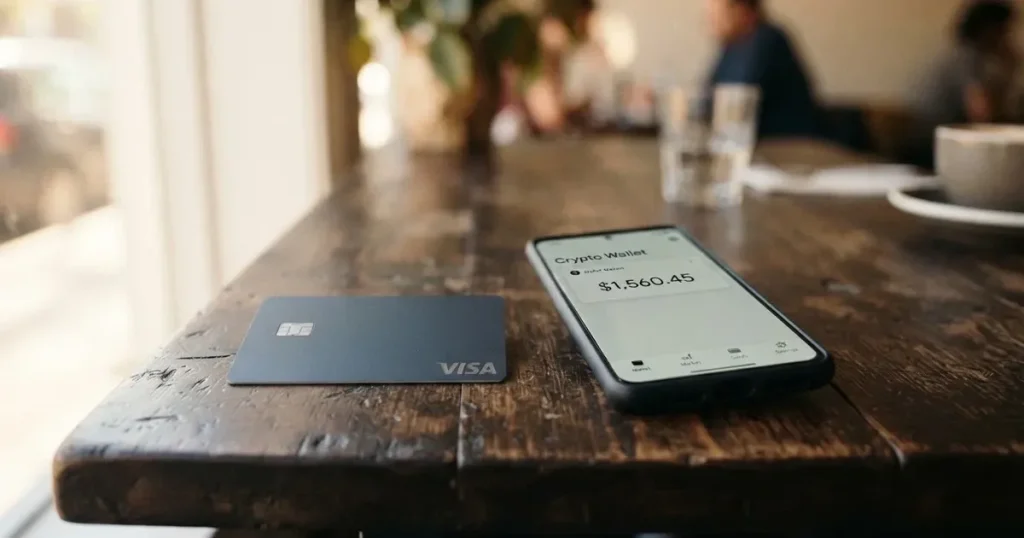
Coinspot sells a prepaid, reloadable Mastercard that draws on crypto held in your CoinSpot wallets, converting it to Australian dollars at the moment of each purchase. There is no annual fee and no startup fee, and the card turns out to be digital-only rather than a piece of plastic in the post. That single fact shapes most of what follows: it suits people already inside the Australian CoinSpot ecosystem who want to spend crypto through a phone wallet, and it does not suit anyone who needs a physical card, cash withdrawals, or a spending limit the official pages will actually state.
I score it 6.2 out of 10. The fee structure is genuinely clean and the exchange behind it is well reviewed, but the everyday-use experience is the weak half of the picture, and several things you would want to know — ATM fees, spending limits, foreign-currency charges, rewards — simply are not published.
The conditions described here are current as of October 28, 2026.
Verdict: 6.2 / 10
The score breaks into six criteria, and the spread between them tells you most of what you need to know. Cost is the best part. Everyday use is the worst.
| Criterion | Mark | Why |
|---|---|---|
| Who can get it | 3 / 10 | The page refers to AUD and Australian licensing, requires a fully verified CoinSpot account with 2FA, and third-party sources describe it as for Australian customers |
| Cost | 8 / 10 | No startup or annual fees and no lock-in period; third-party coverage reports a 1% conversion fee |
| Top-up options | 7 / 10 | Any cryptocurrency listed on CoinSpot, drawn from up to five linked wallets in a chosen order, over 470 coins; the networks are not named |
| Reliability and complaints | 8 / 10 | Issuer is EML Payment Solutions Limited (AFSL 404131), distributed by Casey Block Services Pty Ltd; the exchange scores 4.3/5 on Trustpilot from 2,823 reviews, with complaints about account restrictions |
| Everyday use | 5 / 10 | Prepaid Mastercard with Apple Pay and Google Pay; no physical card mentioned, and third-party sources describe it as digital-only with no ATM withdrawals |
| Total | 6.2 / 10 | A strong fee structure wrapped in a card that stays on your phone |
The audience this fits is narrow and worth saying plainly: Australian residents who already hold and use crypto on CoinSpot, who are comfortable leaving funds on a custodial exchange, and whose spending is mostly online or contactless. If you are in that group, the appeal is real — no annual fee, no lock-in, a wide choice of coins to spend from, and conversion at CoinSpot’s own exchange rate at the point of sale.
If you are outside that group, the case weakens quickly. The card currency is AUD and there is no published foreign-currency fee. Eligibility is tied to a fully verified CoinSpot account with 2FA enabled, and third-party reporting points to Australian customers. If you have no CoinSpot account, no Australian connection, or a need for physical plastic and cash access, you are reading about the wrong product.
Will they give you the card?
The short answer is: the page does not publish a country list, so eligibility is something you confirm only by having an account that passes verification.
What the card’s own page does say is that it works in AUD and refers to Australian licensing. That is the whole official story on geography. What it requires, clearly, is a fully verified CoinSpot account — individual verification — with two-factor authentication switched on. The card is not available on a half-finished account, and 2FA is not optional if you want it.
Third-party reporting goes further and describes the card as available to Australian customers with a verified CoinSpot account (per Finder, September 2024). Treat that as unofficial: the card’s public pages do not state it themselves.
A few things that would normally matter here are simply absent from the pages. The documents you need to submit are not stated. An age requirement is not stated. Verification tier levels are not stated. How long verification takes is not stated. Why a verification might be refused is not stated. That is a lot of gaps for anyone trying to work out in advance whether this is realistic for them.
The one thing you can take from this section as solid: the card is built on an account that has already been verified. If you are starting from nothing, this is not a quick card to obtain — it is a card that arrives at the end of a KYC process that belongs to the exchange, not to the card.
How to get it
Getting the card is not an application form of its own. It is the last step of becoming a verified CoinSpot customer.
The path runs through individual account verification with two-factor authentication enabled. Once that is done, the card becomes available inside the exchange. The card page describes adding it to Apple Pay or Google Pay, which is how you are meant to use it.
The card itself is a prepaid, reloadable debit Mastercard. Its currency is AUD. A physical version is not mentioned anywhere on the card page, and third-party reporting is explicit that physical cards are not available. So the realistic picture is: you get a card number, you put it in your phone’s wallet, and you tap. That is the whole product shape.
Two cautions before you go looking. First, if you were hoping for plastic in the post, this is not it. Second, the verification process is the exchange’s, and it comes with the exchange’s rules and its occasional friction — a point I return to in the risks section, because it is the most consistent theme in user complaints about this company.
Fees and what a payment really costs
This is the strongest part of the card. The published position is: no startup or annual fees, and no lock-in periods. For a financial product, that is unusually clean, and it is why cost scores highest of anything here.
| Fee or limit | What the card’s pages say |
|---|---|
| Issuance / startup | “No startup or annual fees” |
| Monthly or annual fee | None; no lock-in periods |
| Conversion | Crypto converted to AUD in real time at the point of transaction, at “CoinSpot’s best exchange rates”; no margin or FX fee figures on the page |
| Foreign-currency fee | Not stated |
| ATM fee | Not stated |
| Daily spending limit | Not stated |
| Monthly spending limit | Not stated |
| Card currency | AUD; crypto is converted to AUD at the time of each transaction |
The mechanics are worth understanding. When you tap, the crypto you have selected is converted to Australian dollars at that moment, and the AUD value is loaded and spent. There is no fee line for this conversion on the card’s pages — the conversion happens at CoinSpot’s own exchange rate.
Third-party launch coverage and comparison sites put a number on the conversion: a 1% conversion fee with no annual or activation fee (per Accountants Daily), and Finder in September 2024 reports that “1% fee applies to buys, sells, and swaps.” This is unofficial, and it is not the same thing as the card’s own statement — the card page gives no percentage at all. Either way, the honest reading is that the conversion is not free; it is just not described in detail by the issuer.
Three everyday payments, and what applies to each:
- A $30 coffee in Melbourne. You pay the price of the coffee. The crypto converts to AUD in real time. Any conversion fee applies, and there is no published foreign-currency fee to worry about because you are spending in the card’s own currency.
- A $60 online subscription billed in USD. The AUD amount is converted to USD at the network’s rate, and whether your exchange rate or a markup applies is not something the card’s pages answer. This is the case where an unstated foreign-currency fee would hurt, and you cannot size it from the official material.
- An international shop purchase. The same unknowns apply, and the risks are larger. A card issued in Australia can also simply be declined — a merchant can look up the issuer country and apply extra scrutiny when it differs from the billing address. That is a category-level risk, not a Coinspot-specific rule, but it is what people mean when they ask where the card can be used.
One more thing that matters at refund time: a refund returns the AUD value to your CoinSpot account. The coins that were spent are not returned. If the coin has moved up while you were away, the AUD you get back is not the same amount of crypto you would have had by holding.
How to top it up
Top-up is not a bank transfer here. It is spending crypto you already hold.
The card is funded by drawing on crypto from up to five linked CoinSpot wallets, in an order you choose. Over 470 cryptocurrencies are listed on the card page, and the funding sources are restricted to coins listed on CoinSpot. You set the order, and the card draws from wallet one first, then wallet two, and so on — which is genuinely useful if you are holding several coins across several wallets and want the card to empty them predictably.
What is not stated is worth listing, because these are exactly the questions people ask before they try:
- Which networks are supported for a top-up. Not stated.
- The top-up fee. Not stated.
- The minimum top-up. Not stated.
- Network fees. Not stated on the card page.
- How to withdraw money from CoinSpot. Not stated on the card page.
The one related figure that is public: CoinSpot’s fees page lists card (AUD) deposits to the exchange as free. That covers putting Australian dollars onto the exchange, not loading the card itself, so do not read it as “free top-up.”
One practical warning from the wider category, because it is the mistake that costs people real money: blockchain transfers are irreversible. If you send on a network the card provider does not support, or to an address belonging to a different network, the funds can be lost or need manual recovery with no guarantee. Since this card’s pages do not name the supported networks, that risk sits with you to resolve by asking support first.
Paying with it every day
The everyday experience is the part this card is weakest on, and it is not a disaster — it is just narrow.
What you have is Apple Pay and Google Pay support, a prepaid Mastercard number, and a card you manage in the CoinSpot app on iOS or Android. The app is rated 4.8/5 on the App Store from 46K ratings (read on 20 October 2026, version 3.11.14); the Google Play rating was not readable. Everything — balances and transactions — is handled in the app.
What you do not have, on the official pages:
- No physical card. Not mentioned on the card page; third-party sources say physical cards are not available.
- No ATM withdrawals. Not described anywhere; Finder in September 2024 notes ATM fees are not mentioned. No ATM fee figure was found in any source.
- No spending limits published. Neither daily nor monthly. Third-party reporting gives a daily spending limit of $4,999 (per Finder, September 2024) — unofficial, and not confirmed by the card.
- No blocked merchant categories listed. Not stated.
- No rewards or cashback. Not stated on the card page, and Finder in September 2024 reports no rewards or cashback. There is a single card, no tiers, no metal version.
There is also a set of app controls that third-party sources describe — per third-party sources, you can freeze the card, set spending limits, and switch it on or off. That is unofficial but consistent with how these apps usually work, and freeze-and-switch controls are worth having regardless of where the feature description came from.
So where can you use it? Anywhere that accepts contactless Mastercard or online card payments, in practice, with the usual category-level caveats: gambling merchants are frequently blocked by issuers as policy, some merchants decline prepaid or foreign-issued cards after checking the issuer country, and online address verification is generally unavailable for foreign-issued cards, which can cause declines. If you travel, expect the card to look foreign and occasionally be treated that way.
What can go wrong
There are four risk areas, and one of them is not really about the card at all — which is the point.
Account restrictions are the main reported complaint. Official complaints channels exist but the card page does not spell out a card-specific complaints process (the PDS and TMD are referenced but not linked). What users report, through complaint-service aggregators citing ProductReview and Trustpilot, is accounts frozen for “security review” when a withdrawal starts, with funds held. No card-specific complaints or Reddit threads were found.
The exchange’s reputation is the card’s floor. On Trustpilot, CoinSpot scores a TrustScore of 4.3 from 2,823 reviews, 278 of them in the last twelve months, with 7% one-star (read 20 October 2026). Those reviews mention the exchange, not the card. The recurring themes are accounts and transfers restricted without a clear explanation (September–October 2026), difficulties with withdrawals and 2FA (October 2026), and slow support giving repetitive replies (September–October 2026). CoinSpot replies to 89% of negative reviews. That is a decent response rate on an exchange whose complaints centre on money movement — which is exactly what a card is.
Holding funds on a custodian carries real risk. CoinSpot is custodial: the provider holds the credentials, so you depend on it entirely. The category history is not encouraging — Mt. Gox (about US$350 million reported stolen, 2011–2014), Coincheck (about US$400 million, 2018), Ronin Network (US$625 million, 2022). A seed phrase, if you ever hold one, is typically 12 to 24 words in plain form; anyone who obtains it can restore the wallet and spend the funds, and blockchain transfers are irreversible with no built-in recovery.
Programmes can close. Cards in this category have been shut down before. Visa terminated its global agreements with FTX on 13 November 2022, and WaveCrest, a Visa issuer that supplied crypto card brands, was suspended by Visa in Europe in 2018, closing all WaveCrest-issued Visa programmes. Closures typically mean a notice period, then spending and loading stop, then you are asked to withdraw remaining balances. One 2026 closure reported by a secondary source ended new loads on 8 July 2026 and spending on 8 August 2026 — single source, unconfirmed, but the shape of it is what to watch for. Two further snags: a declined authorisation can leave a hold on your funds for several days, and dispute handling differs sharply by country, with US debit reversal rights under Regulation E and prepaid-card coverage varying — do not assume yours applies.
One practical security note. Two-factor authentication is required to get the card, which is genuinely better than cards that treat it as optional. Support is live chat 24/7 with a local team, email at [email protected], a Help Centre at coinspot.zendesk.com, and a contact form at coinspot.com.au/contact. Insurance on the balance is not stated on the card page.
Structure, plainly. The card is issued by EML Payment Solutions Limited (AFSL 404131). Casey Block Services Pty Ltd, trading as CoinSpot, promotes and distributes it. In plain terms: the network routes the payments and sets the rules, EML holds the licensed card programme, and CoinSpot is the front end you deal with and the custodian of your coins. Visa and Mastercard do not issue crypto cards to consumers themselves — they license issuers and can suspend a programme.
What to take instead
Three alternatives are worth considering here, and comparing them honestly is more useful than a ranking.
| Coinspot | Young Card | Coinbase Card | OKX | |
|---|---|---|---|---|
| Score | 6.2 / 10 | 5.7 / 10 | 6.4 / 10 | 6.2 / 10 |
| Who can get it | Fully verified CoinSpot account with 2FA; page refers to AUD and Australian licensing | Not stated | All US states except Hawaii, under USA PATRIOT Act identity rules; no other countries | EU plus Norway, launched 28 January 2026; Iceland and Liechtenstein excluded |
| Card | Prepaid reloadable Mastercard, AUD, Apple Pay and Google Pay, digital-only per third parties | Not stated officially | Visa prepaid debit, virtual or physical; converts all crypto to US dollars | Mastercard euro-denominated virtual debit card linked to OKX Pay; physical not mentioned |
| Fees | No startup or annual fees; 1% conversion fee per third parties | Not stated officially | “Zero spending fees and no annual fees”; a spread applies on crypto buys, sells and trades | No card fee, no transaction fee, no OKX FX fee; conversion spread 0.1% per the explainer (May 2026) against 0.4% in the launch release |
| Funding | Up to five linked CoinSpot wallets in chosen order, 470+ coins | Not stated for the card itself | Link a bank account or deposit part of a paycheck, zero fees | USDC or USDG in OKX Pay; other coins converted first; no auto top-up |
| Rewards | Not stated; third parties report none | Cashback in YNG tokens by Club tier: Essential 0.1%, Gold 1.8%, Platinum 3.6% | Optional crypto rewards per purchase, US Card users only, variable rate | Cashback on USDG purchases only, monthly caps from Regular 2% cap 10 up to VIP4+ 10% cap 1,000 |
Read across the rows and the trade-offs are clear.
If you are in the US, Coinbase Card is the one with a physical option and a stated zero-fee position, plus optional crypto rewards. Against that, it is US-only outside the states, its only real cost is a spread on crypto conversion, and rewards are US Card users only with a variable rate shown in the app.
If you are in the EU or Norway, OKX is the closest comparable — a euro-denominated Mastercard with no card fee. But there is no auto top-up, the payment is declined if the balance is insufficient, you need USDC or USDG specifically, and its cashback caps are messy and internally inconsistent.
Young Card scores lowest, and its cost and eligibility are not stated officially. What it does publish is a token-based cashback structure that reads as a loyalty programme rather than a saving.
None of them is dramatically better than Coinspot. What differs is which awkward gaps you mind. Coinspot’s gaps are physical card and ATM. Coinbase’s are country. OKX’s are top-up mechanics. Pick the one whose gaps match your actual spending.
Who I would recommend it to
I would recommend the Coinspot card to an Australian resident who already holds crypto on CoinSpot, pays for most things online or by tap, and has no need for cash. You get a clean fee structure with no annual charge, a very wide choice of coins to spend from across up to five wallets, conversion at the exchange’s own rate at the point of sale, and app-based controls including freeze and spending limits. If you spend most of your crypto balance through this one card, that is a reasonable, low-friction way to do it.
I would not recommend it if any of these apply to you. You need a physical card. You need to take money out at an ATM. You are not in Australia, or you have no verified CoinSpot account. You are planning to hold a large balance on the exchange purely to fund the card. You travel regularly and need the card to behave everywhere. Or you are the kind of person who needs the spending limit, ATM fee and foreign-currency fee written down before you commit — because for this card, they are not written down, and no amount of reading the official pages will produce them.
One last practical step before you decide, and it is not advice about the product, just about the gaps: ask [email protected] the three questions the page will not answer — what the daily and monthly spending limits are, what happens to a foreign-currency purchase, and whether ATM withdrawal is possible at all. Live chat is 24/7. If the answers are not to your liking, that is a legitimate reason to stop, and it is a cheaper test than funding the card and finding out.
I am not a tax adviser and this is not tax or legal advice, but one thing is worth knowing as a general matter of how this works in several countries: digital assets are commonly treated as property, so exchanging them for goods or dollars generally produces a taxable gain or loss measured in local fiat currency at the value on the transaction date. Each card payment funded from crypto can therefore be a separate disposal. Your own jurisdiction’s treatment is worth checking with a professional.
Frequently asked questions
What is the Coinspot card?
It is a prepaid, reloadable Mastercard that spends crypto held in your CoinSpot wallets. When you tap, the crypto converts to Australian dollars in real time at the point of transaction, at what the page calls “CoinSpot’s best exchange rates”. The card currency is AUD, you can add it to Apple Pay and Google Pay, and no physical version is mentioned on the card’s pages.
How does the Coinspot card work?
You link up to five CoinSpot wallets in the order you want them drawn from, then spend. At each payment the crypto is converted to AUD and loaded as fiat balance, which is spent. The card has no overdraft — it can only spend what you have converted. Over 470 cryptocurrencies are listed on the card page.
Who can get the Coinspot card?
You need a fully verified CoinSpot individual account with 2FA enabled. The page refers to AUD and Australian licensing but publishes no country list. Third-party reporting describes it as available to Australian customers with a verified CoinSpot account (per Finder, September 2024) — unofficial. Documents, age requirement, verification tiers and timing are not stated.
How much does the Coinspot card cost?
The card’s own position is “no startup or annual fees” with no lock-in periods, which is why cost scores 8/10. Third-party coverage reports a 1% conversion fee, and Finder says 1% applies to buys, sells and swaps. The card page gives no percentage, no FX or margin figure, and no ATM fee. Those numbers are unofficial and unconfirmed by the card.
How do I top up the Coinspot card?
By spending crypto you already hold, drawn from up to five linked CoinSpot wallets in the order you set. Only coins listed on CoinSpot work, and the page mentions 470+. Networks, top-up fees, minimums and network fees are not stated. One caution: blockchain transfers are irreversible, so sending on an unsupported network or to another network’s address can lose funds.
Is the Coinspot card available outside Australia?
The official pages do not say — there is no country list, and eligibility runs through a fully verified CoinSpot account. The page refers to AUD and Australian licensing, and third-party sources describe it as for Australian customers. If you have no Australian connection, treat that as a likely no, and confirm with support rather than assuming either way.
Does the Coinspot card have a physical card or ATM access?
Not as far as the card’s pages go. A physical card is not mentioned, and Finder in September 2024 reports physical cards are not available and ATM fees are not mentioned. No ATM fee figure was found in any source. Third-party reporting describes the card as digital-only, so treat this as a phone-wallet card rather than something for a cash machine.
What are the Coinspot card’s spending limits?
Not stated on the card’s pages — neither daily nor monthly. Finder in September 2024 gives a daily spending limit of $4,999, which is unofficial. Third-party sources also describe app controls for freezing the card, setting spending limits and switching it on or off. Worth asking support for the real figures before you rely on them.
Is the Coinspot card safe?
It requires 2FA, uses tokenised mobile wallets, and reportedly has freeze and limit controls in the app — real safeguards. But CoinSpot is a custodial exchange, so the provider holds your keys and you depend on it entirely, and transfers are irreversible. The exchange scores 4.3/5 on Trustpilot from 2,823 reviews, with recurring complaints about accounts and withdrawals being restricted without clear explanation.
Is Coinspot a bank, and who owns it?
CoinSpot is a crypto exchange, not a bank, operated by Casey Block Services Pty Ltd. The card is issued by EML Payment Solutions Limited (AFSL 404131), which CoinSpot promotes and distributes. So the exchange is your counterparty and custodian, while a separately licensed company holds the card programme — the structure that most cards in this category use.
Top exchange cards by score – cryptocardtop
Content created by the «cryptocardtop» team