
CL card review: a crypto debit card for Ledger owners, weighed honestly
 Available in US
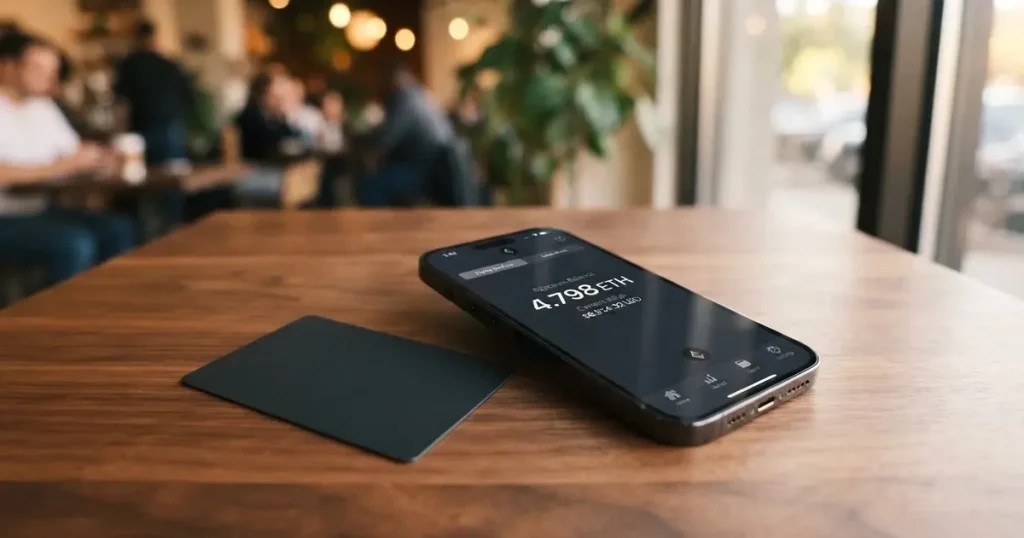
The CL card is a crypto-backed payment card that pairs with a Ledger hardware wallet. It is marketed to people who already keep their coins on a Ledger device and want a card that spends directly from that balance, without giving up control to an exchange. The question this review tries to answer is simple: does it work well enough in everyday life to be worth setting up, and what does it really cost once you do?
Conditions on this page are current as of October 28, 2026.
Verdict: 6.9 out of 10
The CL card earns a 6.9 out of 10 in this review. That puts it in the “good but not great” band: it does the everyday things well, and it has unusually clean self-custody plumbing because it ties to a Ledger signer, but the day-to-day cost of using it is higher than the official fee document suggests, and the customer-experience story on Trustpilot is uneven.
Here is how the score breaks down.
| Criterion | Mark | Why it earns it |
|---|---|---|
| Who can get it | 7 / 10 | Available across the EEA, UK, US, Canada, Switzerland, Colombia, Mexico, and Brazil; the list of excluded countries is not published, and citizenship vs residence rules are not stated. |
| Cost | 7 / 10 | The virtual card is free with no monthly fee and 0% foreign-currency payment fee on the official fee document. Unofficial sources add a 1.75% crypto-to-fiat conversion fee and a 1.75% FX fee, and a flat ATM fee outside the UK of EUR 3 plus 1.5%. |
| Top-up options | 7 / 10 | BTC, ETH, SOL, stablecoins, and others, funded from a Ledger signer. Networks are not named on the public page, which leaves room for mistakes. |
| Reliability and complaints | 5 / 10 | The card sits inside Baanx’s programme and uses Ledger SAS as the brand. Trustpilot sits at 3.0/5 from 263 reviews, with 35% one-star, and the most common complaint is account restrictions without warning. |
| Everyday use | 9 / 10 | Free virtual card, Apple Pay and Google Pay support, and ATM cash withdrawals worldwide make it work in most shops and apps. |
| Total | 6.9 / 10 |
The audience this card fits best is people who already own a Ledger device and want to spend from a hardware-wallet-protected balance. If you do not have a Ledger, the rest of the value proposition is much harder to justify: the card is not the cheapest crypto card on the market, and several rivals offer richer rewards.
The audience it does not fit is anyone who needs a card today, in a hurry, in a country that is not on the supported list, or who expects a frictionless, exchange-style experience. The complaints are concentrated around account freezes, slow templated support, and the occasional long wait to get funds back out.
Who CL will give the card to
CL is “currently available in the EEA, the UK, the US, Canada, Switzerland, Colombia, Mexico, and Brazil” according to the card page. The list of excluded countries is not stated, and the public page does not say whether what matters is the country of residence, the country of citizenship, or both. That ambiguity matters because the two are not the same: a US citizen living in Germany, for example, may be treated differently from a German citizen living in Germany, and the card page gives no guidance on this.
What is missing from the page is just as important as what is on it. The card page does not state a minimum age, does not describe what identity documents are needed, and does not describe the verification levels (a “basic” check versus an “enhanced” check) that regulated institutions in the EU typically run. Unofficial reports say the identity check is handled by Veriff, a third-party verification vendor, and that some users have been asked for utility bills or tax returns after their account was restricted. None of that is confirmed by the card’s own pages.
The pattern is familiar for cards issued in this part of the market. The institution that actually opens the account and issues the card depends on where you live: in the EU the issuer is UAB Monavate, in the UK it is Monavate Ltd, and in the US the Visa debit card is issued with Cross River Bank, which is a Member FDIC bank. That is why the same product can be available in a country where one issuer is licensed and not in a country where none of them is.
In practice, the easiest way to find out whether you can have the card is to start the sign-up flow. If your country is not in the supported list at that stage, you will be told before any documents are requested. If you are in one of the listed countries, the next step is the KYC (Know Your Customer) check, which is the regulated process a card issuer uses to confirm who you are.
How to get the CL card
The card page lists a free virtual card. A physical card is not mentioned on the official card page, but a third-party site describes a physical Visa-branded card as “available upon request” with Apple Pay and Google Pay supported. That second claim does not contradict the official text, because the official page simply does not describe a physical card at all, so the public information is incomplete rather than inconsistent.
For US users the card is described as a Visa debit card. The card page does not say whether users in other regions get a Visa or a Mastercard. In the crypto-card market this matters: some merchants accept one network more reliably than the other, and a few niche merchants accept neither.
Crypto is converted to fiat at the time of purchase, so there is no pre-funded fiat balance to top up in advance. That is one of the more user-friendly features of the card: you do not have to load it, you just pay, and the conversion happens at the moment of sale.
The fee information document lists the issuing fee for a debit card as EUR 0.00, the replacement fee as EUR 5.00, and the cancellation fee as EUR 3.50 if you cancel within 14 days of ordering. Delivery time and delivery countries are not stated, and because the card page mentions only a free virtual card, in practice the delivery question only arises if you request a physical card from support.
If you live in the US, the public cardholder terms and the account-opening disclosures are PDFs that are linked from the fee pages; reading them is the only way to find the full KYC and account rules that the marketing page leaves out. For users elsewhere, the same kind of detail is spread across several linked documents under withcl.com/legal.
Fees: what the CL card really costs
The cost picture is the part where the official and unofficial sources disagree the most, and it is worth showing both.
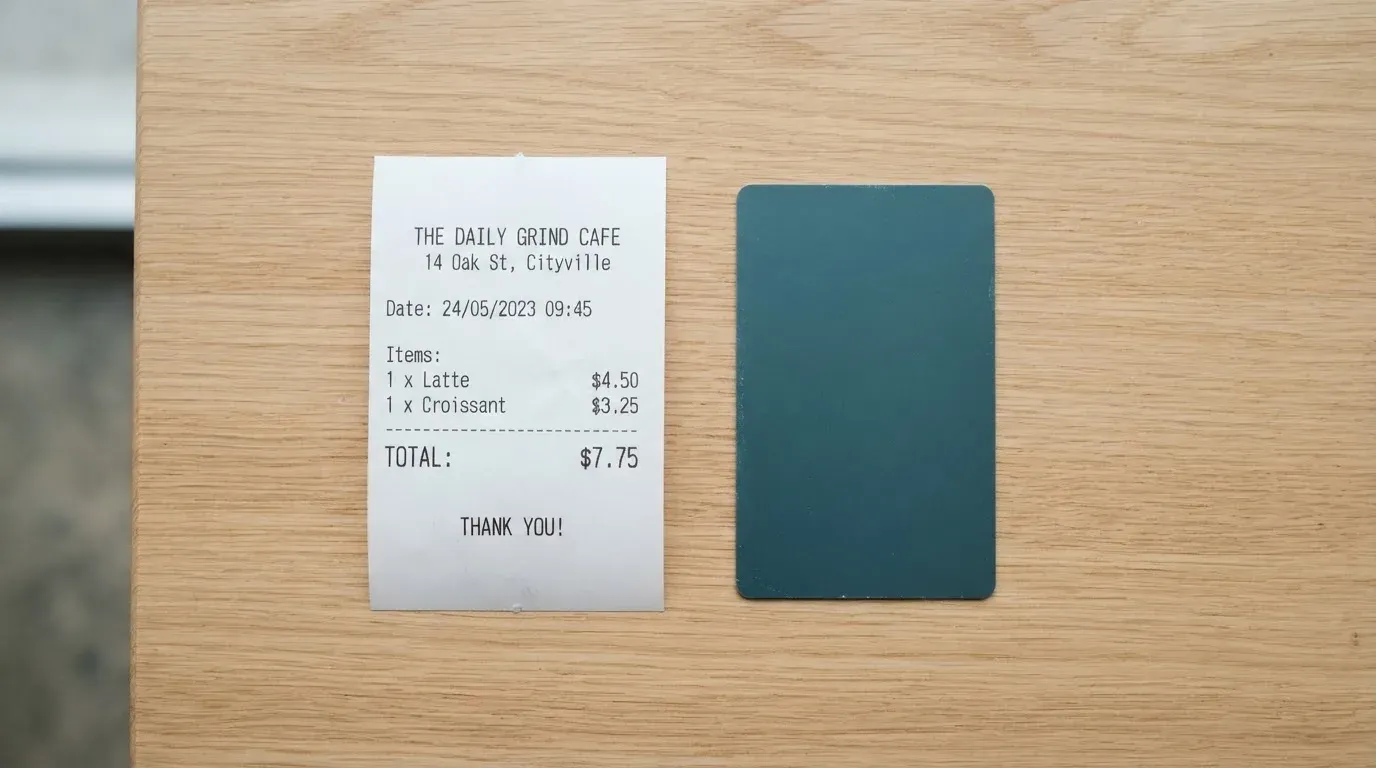
The official fee information document for the EU issuer (UAB Monavate, dated 3 November 2023) says the following: debit card payment in a foreign currency is EUR 0.00 plus 0% of the transaction value; monthly maintenance is EUR 0.00; replacement card is EUR 5.00; cash withdrawal in pounds in the UK is EUR 2.50 per withdrawal; cash withdrawal in a foreign currency outside the UK is EUR 3.00 plus 1.5% of the transaction value; and an ATM balance enquiry is EUR 0.35. The card currency is not stated on the public card page, and the same official document mixes “pound” and “euro” wording, which can confuse readers.
Unofficial third-party sources add three costs that the official document does not list. The most-cited one is a crypto-to-fiat conversion fee of 1.75% when you spend a coin that is not stablecoin-denominated. Another is an FX fee of 1.75% on non-base-currency transactions, which directly contradicts the official 0% figure in the 2023 document. A third, from a different aggregator, lists a flat 1.5% FX surcharge. The two unofficial sources disagree, and the official document disagrees with both.
| Fee or limit | Amount | Source |
|---|---|---|
| Virtual card issuance | Free | Official card page |
| Physical card | Available on request (unofficial) | Third-party site |
| Monthly maintenance | EUR 0.00 | Official fee document |
| Replacement card | EUR 5.00 | Official fee document |
| Cancellation within 14 days of order | EUR 3.50 | Official fee document |
| Foreign-currency payment (official) | EUR 0.00 + 0% | Official fee document |
| Foreign-currency payment (unofficial) | 1.75% or flat 1.5% | Third-party sites, disagreeing |
| Crypto-to-fiat conversion (unofficial) | 1.75% manual, 2% card spend | Third-party site |
| ATM in the UK | EUR 2.50 flat | Official fee document |
| ATM outside the UK | EUR 3.00 + 1.5% | Official fee document |
| ATM daily limit (unofficial) | $500 | Third-party site |
| Monthly spending (unofficial) | $15,000 | Third-party site |
| Initial spend cap until extra proof of funds | EUR / USD 1,000 | Second third-party site, undated |
| Single top-up or withdrawal requiring manual review | EUR 10,000 or more | Second third-party site, undated |
To make this concrete, three everyday payments show how the fees stack up.
Paying for a EUR 50 coffee in Spain with bitcoin held on a Ledger device. The card converts BTC to EUR at the point of sale. The official fee document says the foreign-currency payment is 0%. The unofficial conversion fee is 1.75%. The cost of the coffee, all in, is the EUR 50 charged by the café plus 1.75% (about EUR 0.88) for the conversion, plus the on-chain fee the user paid to move BTC onto the platform in the first place, if any.
Withdrawing GBP 200 from an ATM in London. The official fee document says GBP ATM withdrawal is EUR 2.50 per withdrawal, regardless of amount, so the fee is EUR 2.50 on a GBP 200 withdrawal. (The euro-versus-pound wording in the official document is itself a small warning sign: the fee currency is not crystal clear.)
Withdrawing USD 100 from an ATM in the United States. The official fee document says non-UK ATM withdrawal is EUR 3.00 plus 1.5% of the transaction value. That is EUR 3.00 plus USD 1.50, or roughly USD 4.50 on a USD 100 withdrawal. The on-screen amount dispensed is USD 100, the bank statement shows the withdrawal plus the fee.
The two unofficial sources disagree with each other, and both disagree with the 2023 official document. The honest reading is that the official document is older than the unofficial sources, and a fee change in the meantime is plausible. Anyone making a big spending decision on the card should check the live fee document at withcl.com/legal before relying on these numbers.
Top up: how to add funds to the CL card
The top-up flow is one of the card’s selling points. You can top up with “BTC, ETH, SOL, stablecoins and more”, and the funds are signed from a Ledger device through the Ledger Wallet app, which means the private keys never leave the hardware wallet. That is the difference between this card and a typical exchange-issued card: the user, not the platform, holds the keys.
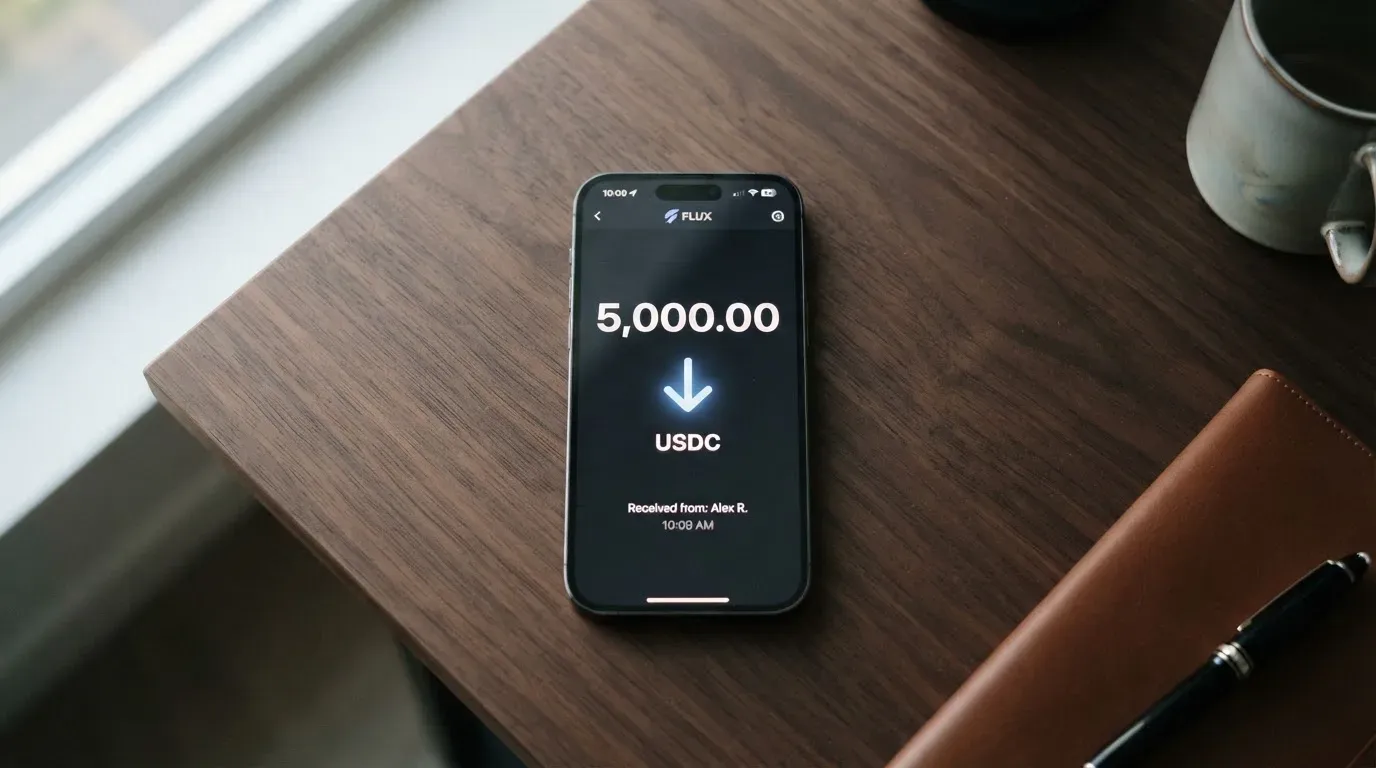
The official fee document’s “Receiving money” line says “Not applicable” for the card programme itself, which suggests there is no separate loading fee charged by the card programme. Crypto top-up and minimum top-up amounts are not stated. Network choice is the part that needs the most care, and it is the part the public page says least about: the official list of supported networks is not stated. In a market where the same coin exists on half a dozen networks, sending USDC on the wrong chain is a real and irreversible mistake.
The unofficial sources describe limits that the official document does not confirm. One site lists a $15,000 monthly spending cap and a $500 daily ATM cap. Another, undated, site lists a default daily point-of-sale limit of EUR 15,000, a daily ATM limit of EUR 2,000, an initial cap of EUR/USD 1,000 until extra proof of funds is approved, and manual review for single top-ups or withdrawals of EUR 10,000 or more. The two sources disagree on the monthly figure and on whether the ATM cap is per day or per transaction, so the practical guidance is to assume conservative limits until proven otherwise.
The mechanics of a top-up look like this in practice. The user opens the Ledger Wallet app, picks the asset to fund the card with, and confirms the transfer on the Ledger device. Because the funds move from the user’s own wallet, the only third parties in the loop are the blockchain network (which charges its own gas or bandwidth fee) and the card programme. There is no bank account in the funding path.
Two practical warnings are worth keeping in mind. First, transfers on a blockchain are irreversible, so a top-up sent to an address that does not belong to the card, or sent on a network the card does not support, can be lost. Second, the official page does not say which networks are supported, so the safe move is to find the supported list inside the app before sending anything larger than a test amount.
Paying with the CL card every day
The everyday experience is the strongest part of the card. The free virtual card, the support for Apple Pay and Google Pay, and ATM cash withdrawals worldwide together cover most of what a person does with a payment card.
Tokenised mobile wallets (Apple Pay and Google Pay) are an underrated part of the package. A tokenised card replaces the long card number with a one-time device-specific number for each transaction, which means a leaked card number cannot be reused. Most card-issuer apps also let the user freeze the card instantly. The card page does not explicitly describe a card-freeze feature or 2FA, but the underlying app platform (Ledger Wallet) does provide app-based authentication as standard.
Cashback is paid in BTC or USDC for US users, and in BTC or USDT for users in other countries, at 1% of total card transactions, calculated monthly. The 1% rate is a reasonable floor for this market. Several rival cards offer 2% or 3% on the first slice of monthly spend, and a few premium cards offer more, but 1% paid in crypto, with no annual fee, is a fair deal for a no-membership card.
Blocked merchant categories are not stated. In the wider market, gambling (MCC 7995) and a handful of other categories are commonly restricted, and the official CL card page does not say which categories it blocks. If a particular merchant category matters, the only safe check is to ask support before relying on the card for it.
The card page does not describe a rewards tier system, a points programme, or any upgrade path. There is one card product, free, with one reward rate, and that simplicity is part of the appeal. Anyone who wants a higher cashback rate or a metal card with extra perks will need to look at the alternatives section below.
Online payments add a wrinkle that is worth knowing about. Most online card payments now go through 3-D Secure, which is a one-time identity check the issuer can require at checkout. Address Verification Service (AVS), which checks the numeric parts of the billing address, is mostly a US, Canadian, and UK tool, and is generally unavailable for foreign-issued cards, which can cause declines. That is a category-level fact about crypto cards, not a CL-specific issue, but it is the kind of thing that turns into a support ticket if you do not know it is coming.
What can go wrong with the CL card
The risks are concentrated in three places: the company structure, the support experience, and the published limits. Each is worth looking at on its own.
The card is provided by Baanx, a programme manager, with Ledger SAS as the brand owner. In the EU the issuing partner is UAB Monavate, in the UK it is Monavate Ltd, and in the US the Visa debit card is issued with Cross River Bank, a Member FDIC bank. That stack is normal for a crypto card, but it does mean the user’s relationship is split across several regulated entities, and a question about a blocked card may end up with a different company than a question about a delayed top-up.
The complaint pattern on Trustpilot is the most concrete thing to look at. The CL Card page is at 3.0/5 from 263 reviews as of 20 October 2026, with 35% of reviews giving one star. The themes repeat: accounts disabled or restricted without warning, followed by document requests; withdrawals delayed from hours to weeks; cards and app failures; UK customers unable to get replacement cards; slow, templated support; and an unverified claim from a few reviewers that Baanx entered insolvency. The unverified insolvency claim is the loudest version of the rumour: a single third-party aggregator in Chinese repeats that Baanx and Monavate entered insolvency proceedings in April-May 2026, and a second aggregator (spendnode.io, dated 3 August 2026) shows no insolvency or enforcement news. The honest reading is that the insolvency claim is uncorroborated and should be treated as unverified rumour, not as fact.
A small but instructive failure mode is the July 2026 case of 15,300 XRP lost to a memo or tag error. Memo and tag mistakes are not unique to CL, but they are a reminder that on some networks a missing or wrong memo or tag can send funds into an address that is hard or impossible to recover from.
There is also a category-level risk worth naming. Card programmes can be closed. The history of crypto cards includes FTX’s debit card wound down in November 2022 and WaveCrest’s Visa programmes closed in 2018. A card programme closure typically follows a notice period, then a stop on new loads, then a stop on spending, then a request to withdraw the remaining balance. Single-source 2026 reports describe a closure that ended new loads on 8 July 2026 and spending on 8 August 2026, but that report is not corroborated.
The security side of the card is largely the security of the Ledger device itself. Self-custody is not stated as an explicit feature on the card page, but the design (spend from a Ledger signer) implies it. Card-freeze and 2FA are not stated on the card page. Help is available through the Ledger Help Center “CL Card FAQs” article and the general Ledger support site, and the languages and hours of support are not stated.
The complaints also include a meta-pattern that is worth flagging. Several reviewers in September and October 2026 describe accounts being disabled or restricted without warning, then a document request, then weeks of templated support replies. The regulation behind this is real: regulated institutions in the EU are required to do ongoing customer due diligence and to file suspicious-activity reports, and when that process flags an account, the institution is required either to complete the check or to end the relationship. That is the law working as written. It is also, from the user’s point of view, an experience that can lock funds for weeks.
What to take instead of the CL card
If the CL card is not the right fit, three alternatives cover the main reasons a person might look elsewhere: a different geographic footprint, a richer rewards programme, and a non-custodial alternative that does not require a Ledger device.
TokenPocket (5.8 / 10)
TokenPocket’s TP Card is a Visa or Mastercard debit card issued on the Arbitrum network. The Visa debit covers a list of European countries including Germany, France, Spain, and Switzerland; the Mastercard debit covers Australia, Canada, Hong Kong, Japan, Taiwan, New Zealand, Singapore, South Korea, and the UK, among others. The Americas are described as planned for Q2 2025, so coverage there may be limited. The cards are virtual; Fiat24 balances in EUR24 and USD24 are held in the card.
The fee structure is simpler than CL’s official one. Apart from a small portion of an NFT creation fee that the user pays, “TP Card does not charge any additional fees”. A 1% fee is charged on cryptocurrency deposits into the card, and that fee is later refunded through rewards or reduced transaction fees, so the net cost on a steady spender is meant to be near zero. No cashback is paid, and the FX fee is not stated.
TokenPocket is the right pick for users who want a virtual card on a non-custodial wallet, who live in one of the listed European or Asia-Pacific countries, and who do not need physical cash.
MetaMask Card (7.1 / 10)
The MetaMask Card is a Mastercard issued by Monovate with Crypto Life as the card provider. Sign-up is open in 45 listed countries and territories, with proof of residency required and other regions on a waitlist. A virtual card is issued first and is instant, and a Metal card can be pre-ordered in the app after the Virtual is approved. One card per user. US and UK sign-ups are temporarily closed per the FAQ, which is a real limitation if either is the target market.
The cost structure is: virtual free, no annual or maintenance fee; Metal at $199 per year. A “minimal fee” is charged per transaction, with the precise amount linked rather than stated; MetaMask itself adds no fee; there is no foreign transaction fee, with the Mastercard rate used. Spending is directly from the connected wallet, on networks including Linea, Base, Monad, and Solana, with tokens including mUSD, wETH, EURe, GBPe, USDC, and USDT (the page says nine in total). Solana-only wallets cannot withdraw credit.
Cashback is paid in mUSD into the Money Account: 1% on Virtual; 3% on Metal headline, footnote-limited to 3% on the first $10,000 spent then 1% thereafter. There is also a $FLY bonus multiplier via the Blackbird dining app: 5x on Virtual, 7x on Metal. The MetaMask Card is the right pick for users in one of the 45 listed countries who spend directly from a non-custodial wallet and who want a richer rewards programme than CL offers.
KAST (6.1 / 10)
KAST runs a residence-based country check at KYC, with the country list not published. The platform explicitly notes that a supported country of residence is not enough on its own: holding an ID from a restricted region can still disqualify an applicant, and a VPN does not bypass the check. Up to 10 cards per user, in three tiers: Standard (Visa Platinum, free annual membership), Premium (Visa Infinite metal, $1,000 per year), and Private (Visa Infinite gold plated, $10,000 per year). The account is denominated in USD, with stablecoin deposits converted 1:1 at 0% spread.
The fee structure is detailed. Stablecoin top-up is 0%. Card spend in USD is 0%. Transaction fee is 0%. Apple Pay and Google Pay are 0%. Non-USD FX is 0.5% to 1.75% depending on residence country, transaction country, and card programme. Non-USD transactions under USD 25 carry a USD 0.10 fee. A declined transaction for insufficient balance costs USD 0.50. Non-stablecoin tokens may be auto-converted at a fee shown in-app. Funding is in USDT, USDC, PYUSD, or RLUSD, on Ethereum, Solana, Polygon, Arbitrum, or TRON (the app shows the current list); the platform’s terms say acceptable tokens are “currently USDT and USDC”, which conflicts with the in-app list and is worth keeping in mind.
Cashback is paid in USD: Standard 1.5% on the first $2,000 per month, Premium 2% on the first $10,000 per month, Private 3% on the first $40,000 per month, plus KAST Points on Premium and Private. KAST is the right pick for users in a supported country who want a tiered product with high cashback and a stablecoin-funded USD balance, and who can stomach the annual fee on Premium and Private.
Across the three alternatives, the trade-off is consistent. KAST is the strongest if you want the highest cashback and a US-dollar account. MetaMask Card is the strongest if you want non-custodial spending with rewards. TokenPocket is the strongest if you want a free virtual card and you are happy with the Arbitrum-only network. CL is the strongest if you already own a Ledger device and you want the simplest possible spend-from-hardware-wallet flow.
Who I would recommend the CL card to
The short version: if you already keep your crypto on a Ledger device, the CL card is the simplest way to spend from that hardware-wallet-protected balance without giving up your keys. The card is free, the maintenance fee is zero, Apple Pay and Google Pay work, and 1% cashback in BTC or USDC/USDT is a fair rate for a no-membership card.
The longer version: the card is not the cheapest option in this market. Unofficial sources put the all-in cost of a typical transaction at around 1.75% for the crypto-to-fiat conversion plus the official 0% foreign-currency fee, and that is before any on-chain network fee. Cashback at 1% partly offsets that, but the math is closer to break-even than to a profit. The complaints picture is also real: a non-trivial share of users run into account restrictions, slow support, and long waits to get funds back.
That makes the recommendation narrower than the marketing suggests. The card suits:
- People who already own a Ledger device and want to spend from a hardware-wallet-protected balance without moving funds to an exchange.
- People in the EEA, UK, US, Canada, Switzerland, Colombia, Mexico, or Brazil who do not need a premium rewards tier.
- People who can live with the unofficial fee structure, including the 1.75% conversion cost, and who treat the card as a convenient spending tool rather than a yield product.
The card does not suit:
- People who are not on the supported-country list, who live in a country whose KYC rules are not yet integrated, or who do not have a Ledger device.
- People who need a high cashback rate, a metal card, or a tiered rewards programme; the alternatives above are stronger on each axis.
- People who cannot tolerate the risk of an account freeze that takes weeks to resolve. The regulation behind those freezes is real, and so is the experience of being stuck waiting.
If any of those “does not suit” cases apply, the alternative section above is the right place to start.
FAQ
What is the CL card?
The CL card is a crypto-backed payment card that pairs with a Ledger hardware wallet. Crypto is converted to fiat at the point of sale, so the user does not pre-load a fiat balance. The card is provided by Baanx, branded by Ledger SAS, and issued by UAB Monavate in the EU, Monavate Ltd in the UK, and Cross River Bank in the US.
How does the CL card work?
The user funds the card from a Ledger signer through the Ledger Wallet app. At the time of purchase, the crypto is converted to fiat and the merchant is paid in fiat. The user keeps custody of the private keys on the Ledger device, so the platform does not hold the underlying crypto on the user’s behalf.
Is CL a bank?
No. CL is a card programme. The actual issuer is UAB Monavate in the EU, Monavate Ltd in the UK, and Cross River Bank (Member FDIC) in the US. Baanx is the programme manager and Ledger SAS is the brand owner. None of these is a retail bank in the everyday sense.
Who owns CL?
The brand is owned by Ledger SAS, a French company based in Paris. The card programme is run by Baanx. The card itself is issued by UAB Monavate (EU), Monavate Ltd (UK), or Cross River Bank (US), depending on the user’s country.
Is the CL card available in my country?
According to the card page, the CL card is currently available in the EEA, the UK, the US, Canada, Switzerland, Colombia, Mexico, and Brazil. The list of excluded countries is not published, and the public page does not say whether what matters is the country of residence, the country of citizenship, or both.
How do I get the CL card?
The free virtual card is the standard entry point. A physical card is not mentioned on the official card page but is described by a third-party site as available on request. Sign-up is in the Ledger Wallet app, and the KYC check is run by the issuing partner, with documents depending on the issuer and the user’s country.
Does the CL card require KYC?
Yes. The card is issued by regulated institutions, which are required to verify the identity of their customers. The public card page does not list the specific documents required, and unofficial reports identify Veriff as the verification vendor. Some users have reported being asked for utility bills or tax returns after their account was restricted.
How do I top up the CL card?
Open the Ledger Wallet app, pick the asset, and confirm the transfer on the Ledger device. The supported assets are BTC, ETH, SOL, stablecoins, and others. The supported networks are not stated on the public page, so the safe move is to check the in-app list before sending anything larger than a test amount.
Is the CL card free?
The virtual card is free, monthly maintenance is EUR 0.00, and the official foreign-currency payment fee is 0%. Unofficial sources add a 1.75% crypto-to-fiat conversion fee and a 1.75% FX fee, and the two unofficial sources disagree with each other and with the 2023 official document. The card pays 1% cashback in BTC or USDC/USDT, which partly offsets the unofficial fees.
How do I add the CL card to Apple Wallet or Google Pay?
Tokenised mobile wallet support is described by a third-party site as available. The in-app flow for adding a card to Apple Pay or Google Pay is the standard one, and the same one-time device number is used for each transaction, which means a leaked card number cannot be reused.
Is the CL card safe?
The card is issued by regulated institutions, and the underlying crypto stays on the user’s Ledger device. The platform can freeze accounts as part of its regulated KYC and AML process, and several reviewers report weeks-long waits while documents are reviewed. Treat the card as convenient rather than as a place to park large balances, and keep only what you plan to spend in the near term.
Is the CL card worth it?
If you already own a Ledger device, the card is a simple way to spend from a hardware-wallet-protected balance, and 1% cashback in crypto is fair for a no-membership card. If you do not own a Ledger, or if you want a higher cashback rate or a tiered rewards programme, one of the alternatives in the section above is likely a better fit.
Top wallet cards by score – cryptocardtop
Content created by the «cryptocardtop» team