
CardFlow's virtual USD Mastercard, read carefully: who it suits, what it costs and what it does not say
 Available in US

CardFlow is a virtual USD Mastercard aimed primarily at Nigerian users, though the site also describes it as serving “Nigerians and global users.” The pitch is straightforward: create a virtual card in 3 minutes, fund it with Bitcoin, USDT, ETH or a naira bank transfer, and spend the balance in US dollars anywhere Mastercard is accepted online. That promise will be familiar to anyone who has looked at prepaid crypto cards before, and most of the practical questions come down to the same handful of issues: who actually gets one, what it costs day to day, and how reliable the service is.
The short answer, before the detail below, is that CardFlow covers the basics of a crypto-funded virtual card, but the public information about it is thin in places that matter. The issuing entity is not named on the site, the fee schedule is barely described, and the eligibility rules outside Nigeria are not spelled out. If you are comfortable with that level of opacity, the product can work for the use case it is built around. If you are not, several of the alternatives discussed later publish far more detail about their fees, eligibility and company structure.
Conditions current as of October 28, 2026.
Verdict
CardFlow earns 4.9 out of 10. The product is functional for the specific use case the company is targeting, but the score reflects what is missing from the public information as much as what is present.
| Criterion | Mark | Reason |
|---|---|---|
| Who can get it | 5/10 | Aimed at Nigeria and “Nigerians and global users” but the site does not list countries or exclusions |
| Cost | 6/10 | Virtual card creation is free; the rest of the fee schedule is not disclosed |
| Top-up options | 6/10 | Bitcoin, USDT, ETH or naira transfer; USDT TRC-20 lands quickly, BTC and ETH take 5–30 minutes, other networks not named |
| Reliability and complaints | 4/10 | No named issuer or legal entity, no complaints found, no independent reviews surfaced |
| Everyday use | 3/10 | Virtual only, USD only, no disclosed support for Apple Pay or Google Pay, no ATM access |
| Total | 4.9/10 |
This is a card for someone in Nigeria who wants a USD-denominated virtual Mastercard funded with naira or crypto, and who is comfortable relying on a service that does not publish a full fee table or a list of supported countries. If you are outside that picture, or you need physical card features, ATM withdrawals or a clearly identified issuer, the picture is less favourable.
Who they will give the card to
CardFlow’s own description of its audience is “Nigeria’s smartest fintech card platform,” pitched to “Nigerians and global users.” That covers a lot of ground but does not say where the line is drawn. There is no country list on the site, no list of excluded territories, and no clear statement about whether the offer is the same for someone in Lagos and someone in London. Practically, the product has been built around naira funding and a USD card balance, which already narrows who finds it useful, but eligibility itself is not stated.
The signup process itself is built around speed. The site says a card can be created in 3 minutes, which is the kind of timeline that normally comes with light onboarding. The site does not say what documents, if any, are required, nor what identity checks are run. That is not unusual for crypto-funded cards at the lower end of the market, but it is something to keep in mind. In the EU, regulated card issuers have to verify customer identity under anti-money-laundering rules, checking name, address, date of birth, nationality and identity documents and screening against sanctions lists, and in the US the customer identification programme requires name, date of birth, address and an identification number. Whatever CardFlow’s own checks are, they are not described in public.
The minimum age is not stated. Most prepaid and debit cards require the holder to be at least 18, and some issuers set the bar higher, but the site does not confirm either way.
In short: if you are in Nigeria or you have a clear reason to want a USD virtual card funded with naira or crypto, you are within the audience the company describes. If you are somewhere else, there is no public statement confirming that you will be served, only the phrase “global users.”
How to get it
The site says a virtual card can be created in 3 minutes. The process itself is not described step by step in the public material, but the typical flow on a service like this is: sign up on the site, provide whatever contact and identification details are required, create the wallet, and generate the virtual card. The card is then available immediately, with a card number, expiry and security code that can be used at online merchants.
The card is virtual only. There is no physical version, no delivery step and no shipping address to consider. If you need a card you can tap at a shop terminal or insert into an ATM, CardFlow is not the product for that; the alternatives section below includes options that offer both.
The level of identity verification is not stated. Some virtual card services require a full KYC review before the card is usable for online payments; others allow light sign-up but block higher-value transactions until documents are supplied. CardFlow does not explain which model it follows, so it is worth treating the first few transactions as a test rather than betting on the card working for a high-value purchase straight away.
Fees: what it really costs
The one clear statement about cost is that “creating a virtual card is completely free” appears in the site FAQ, on a section titled “Create Free Card.” That covers the upfront cost of the card itself. Beyond that, the public information is thin.

| Fee or limit | Amount or status |
|---|---|
| Card creation (virtual) | Free |
| Monthly fee | Not stated |
| Conversion fee | Not stated |
| FX fee | Not stated |
| ATM withdrawal | Not applicable (virtual card, no ATM) |
| Daily spending limit | Not stated |
| Monthly spending limit | Not stated |
| Top-up fees | Not stated |
| Minimum top-up | Not stated |
That table is mostly gaps. To put a few everyday payments side by side with the fees that would apply, the working assumption has to be that the only fee the site confirms is zero, and any other charge would have to be checked in the app at the time of the transaction. The everyday scenarios below are framed that way.
A small online subscription paid in USD with a USDT-funded balance would, on the published information, cost only the network fee on the USDT deposit. The deposit fee on the blockchain side is charged by the network itself, not by the card provider, so for USDT on TRC-20 the cost is typically a fraction of a US cent. There is no published conversion or FX fee to add to that on the CardFlow side.
A larger online purchase at a US merchant, paid in USD from a balance funded with naira, would route through the naira-to-USD conversion. The site confirms that NGN and USD wallets sit behind the card and that a virtual naira account is part of the setup, but it does not say what the conversion rate or fee is. In practice that is the fee that matters most for everyday use, and it is the one the site does not name.
A payment to a non-USD merchant, for example a European online store charging in euros, would add an FX component on top of the conversion. The site does not state the FX margin. For comparison, some prepaid crypto cards charge fees on currency conversion, and some charge more; without a published number, this is the kind of detail to confirm in-app before relying on the card for non-USD spending.
Because the fee schedule is not public, the practical advice is to test with a small amount first, look at what the app says the conversion and any FX margin were, and only then scale up.
Top up: how to fund the card
CardFlow describes funding as “Bank Transfer or Crypto (BTC, ETH, USDT)” in its FAQ. Bitcoin, USDT, ETH or a naira bank transfer are the four options named. The site also notes that USDT on TRC-20 lands “almost instantly,” while BTC and ETH take 5 to 30 minutes. Networks for the other options are not specified.
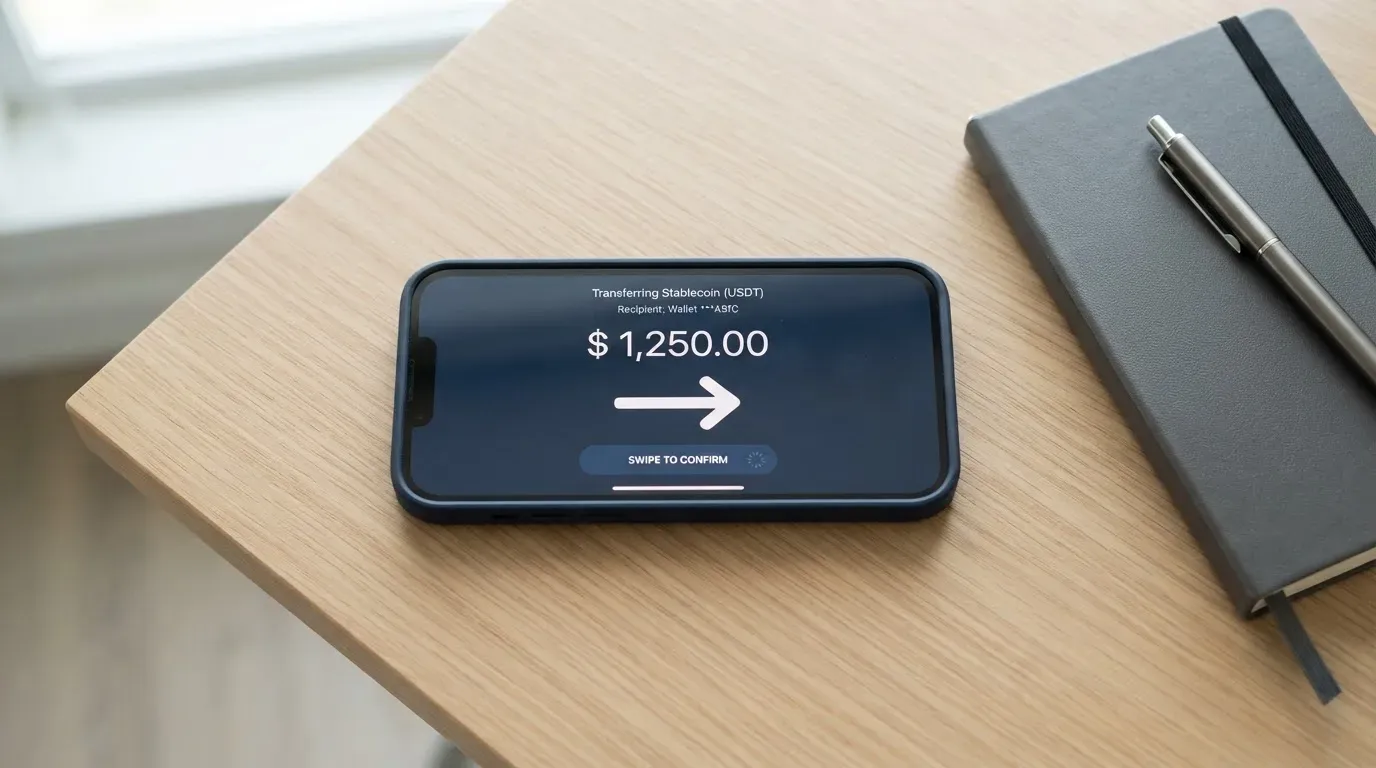
For someone funding in naira, the flow is a bank transfer into the virtual naira account that is part of the wallet setup. The naira balance then converts to USD when the card is spent, or possibly when it is loaded onto the card, and the rate used for that conversion is not published.
For someone funding in crypto, the choice of network matters more than the choice of coin. A USDT deposit on TRC-20 is the cheapest in network fees and the fastest in confirmation time according to the site, but TRC-20 is a specific network and a deposit on the wrong network can be lost, because blockchain transfers are irreversible and an address on one network is not the same wallet on another. That risk applies to any crypto deposit, not just to CardFlow, but it is worth being deliberate about which network is being used.
There is no published minimum top-up and no published top-up fee. Some card providers charge a percentage on top-ups in addition to the network fee, and some fold the cost into the conversion rate; the site does not say which model CardFlow uses.
Cash withdrawal is not described. Since the card is virtual, ATM access is not part of the product, and the site does not describe a separate withdrawal flow either.
Paying with it every day
The site lists Amazon, Netflix, Shopify, AWS and “more” as places where the CardFlow Mastercard works. That is consistent with any properly issued Mastercard being accepted at most online merchants that take the network. The card is denominated in US dollars, so for a US-based merchant the transaction is a same-currency payment and no FX margin should apply; for a merchant in another currency, the card has to convert, and the rate is whatever the site charges, which is not stated.
In-store tap-and-pay through Apple Pay or Google Pay is not addressed. Tokenisation through a mobile wallet replaces the card number with a device-specific number and is how most people pay in shops with a card that exists only on their phone, but the site does not say whether CardFlow supports it. The same goes for blocked merchant categories. Some issuers block gambling transactions (MCC 7995) or other categories; CardFlow does not list its own.
A few mechanics are worth understanding for everyday use. Online card payments often go through 3-D Secure, an extra identity check where the issuer may either approve the transaction without a prompt or ask for a one-time code or biometric. For cards issued by an institution the merchant does not recognise, address verification (AVS) may not be available because it is mainly offered in the US, Canada and the UK, and merchants sometimes decline prepaid or foreign-issued cards on principle. The card number itself starts with a bank identification number (BIN) that tells the merchant which institution issued it and from what country, and a card that looks “foreign” relative to the buyer’s billing address can attract extra scrutiny. None of this is unique to CardFlow, but the combination of a virtual card, an unnamed issuer and a USD denomination on a Nigerian-focused product is a profile that may produce the occasional decline.
Spending rewards are not stated. Some crypto cards offer cashback on card spend or interest on idle balances; the CardFlow site does not mention either.
A dedicated mobile app was not found. The site appears to be the main interface; if there is a mobile app, it is not listed in the public app stores.
Disputes and chargebacks are not described. A chargeback is a refund the card issuer orders to settle a dispute (for fraud, duplicate billing or non-delivery), and the cardholder’s rights depend on whether the card is treated as credit, debit or prepaid. For a prepaid card the coverage can be thinner than for a standard debit card, and the rules differ between the US and the EU. The site does not explain how CardFlow handles disputes.
What can go wrong
The first risk to weigh is the missing information. The card’s issuer and the legal entity behind the service are not named on the site. That does not mean the product is not legitimate, but it does mean a cardholder has limited public information to lean on if something goes wrong. If a programme is wound down, the standard pattern is a notice period, then a stop on new spending and loading, then a request to withdraw remaining balances, and the cardholder’s leverage depends on who actually held the funds. The site does not say who that is.
Independent reviews are scarce. Searches for CardFlow reviews on Trustpilot, Reddit and other consumer sites did not surface a Trustpilot page for the CardFlow website, and reviews of similar names refer to other companies. The lack of complaints is not, on its own, reassuring: a small product with a small user base will not always show up on review platforms, and the absence of a public footprint is consistent with a small, local product rather than with a track record either way.
The site does describe some safety features. Cards can be frozen and unfrozen with a single tap from the Cards page, and the site mentions two-factor authentication. Those are reasonable baseline features for a card product. The site does not describe how customer funds are safeguarded, whether they are segregated in a dedicated account or insured, or how the company would handle an insolvency.
Support is described as an in-site chat widget labelled “CardFlow Support,” with the status “Online · Replies in minutes,” backed by a FAQ. That is a normal setup for a small fintech, and the response-time label is a useful thing to test before relying on the card for anything time-sensitive.
The general risks that apply to any prepaid crypto card are worth keeping in mind here too. Card payments on prepaid cards draw on a stored balance, so the card cannot overdraw, but if the balance is funded from crypto, the conversion and the price of the underlying asset both move between top-up and spend. Stablecoins are usually treated as roughly 1:1 with the dollar, but “despite the name, stablecoins are not necessarily stable,” and Tether’s USDT and Circle’s USDC, which together account for about 90% of stablecoin market capitalisation, have both seen brief depegs in the past. If the card balance is funded from naira, the relevant risk is the naira-dollar rate, which has historically moved more than a euro-dollar rate would.
A further risk applies to anyone funding with crypto: deposits on the wrong network are not recoverable, and the network fee for the deposit is set by the blockchain, not by CardFlow. If the deposit sits on a chain the platform does not support, or is sent to an address on the wrong network, the funds are not just delayed, they are usually lost.
A final point is on regulation. In the EU, crypto-asset service providers have to be authorised under MiCA, the markets-in-crypto-assets regulation that took effect in stages from June 2023, with the main rules applying from 30 December 2024 and a transitional period running to 1 July 2026 for providers already operating under national law. In the US, FinCEN guidance treats administrators and exchangers of convertible virtual currency as money transmitters. CardFlow does not say which licences it holds, in which jurisdictions, or whether it is covered by either regime.
What to take instead
If the gaps in CardFlow’s public information are a problem, the alternatives below publish more detail. Each of these is a separate product from a different company, with its own rules and fee schedule; the comparison here is based on the public pages of each and is meant to be a starting point rather than a recommendation.
HyperCard. HyperCard is a prepaid card available in “more than 176 countries” according to the App Store listing, with card balances in USD or EUR. The card can be funded with crypto such as USDT, BTC or ETH, converted to USD or EUR on the card at the time of deposit. The card’s network is not stated on the App Store page, and the full fee schedule is not on the readable pages. For someone who is outside Nigeria and wants a card with a clearly stated country footprint, HyperCard is the more explicit of the two on geography, though not on costs.
Card.fi. Card.fi is a more developed product on the same general model, with virtual Classic and Premium cards, physical Classic and Premium cards and a metal (stainless steel) option; every physical order includes a virtual card. The site says cards ship to 200+ countries, with a sanctions-based bar on residents of sanctioned jurisdictions, and cards are issued “under licence from the relevant card schemes” (the Visa/Mastercard brand is not named in the readable terms). The fees are published: a one-time Virtual Classic $49, Virtual Premium $249, with no monthly, annual, inactivity or minimum-balance fee; top-up fees of 1.5% + $1.00 on Classic and 1% on Premium; FX fees of 3.5% on Classic and 2.5% on Premium; cashback on card spending from 0.8% on Classic to 2% on Metal. Funding covers 32 coins across 5 networks (Ethereum, Base, BNB Chain, Solana, Kaanch) including USDT, USDC, ETH, BNB, SOL and KAANCH, with the conversion rate shown before each top-up and a warning that the wrong chain can mean permanent loss. It scores 6.6 out of 10. For someone who wants a published fee table, a published network list and a wider range of card tiers, Card.fi is the more complete product in this comparison.
Nero. Nero is a virtual card with a standard number, expiry and CVC, with the network and card currency not stated on the readable pages. Funding is USDT or USDC, converted to fiat at the time of payment, and a 4% top-up commission is published. The site says restricted countries exist but the list was not read. It scores 4.8 out of 10. For someone who simply wants a published top-up fee and is comfortable with a thinner feature set, Nero is a closer fit on transparency than CardFlow, though with a less developed product.
A summary of how the four cards compare on key service points:
- Who can get it: CardFlow is Nigeria-focused with no list; HyperCard says 176+ countries; Card.fi says 200+ countries; Nero says there is a list but does not publish it.
- Card type: CardFlow is virtual only; HyperCard is virtual; Card.fi has virtual and physical and metal tiers; Nero is virtual.
- Top-up: CardFlow takes BTC, USDT, ETH or naira; HyperCard takes USDT, BTC, ETH; Card.fi takes 32 coins on 5 networks; Nero takes USDT or USDC.
- Published fees: CardFlow only confirms the card is free; HyperCard’s App Store page lists no fees; Card.fi publishes a full fee table; Nero publishes a 4% top-up fee.
- Score: CardFlow 4.9, HyperCard 4.7, Card.fi 6.6, Nero 4.8.
For someone who needs the specific combination CardFlow is built around (naira funding, USD card, Nigeria-first), the alternatives are not direct substitutes: Card.fi and Nero do not list naira funding, and HyperCard’s USD/EUR model is closer to a general-purpose crypto card. The trade-off is between a product that fits the use case but does not say much about itself, and products that say more about themselves but do not cover the use case.
Who I would recommend it to
I would recommend CardFlow to a user in Nigeria who already has a clear picture of how they will fund the card (naira transfer, USDT on TRC-20 or one of the other supported coins) and a clear use case for a USD-denominated virtual Mastercard, who is comfortable with a product that does not publish a full fee schedule and does not name its issuer, and who is willing to test the card with a small amount before relying on it. Within that narrow use case, the product appears to do what it says it does: produce a virtual USD Mastercard in a few minutes, accept crypto or naira funding, and work at the online merchants the site lists.
I would not recommend CardFlow to a user outside Nigeria unless they have a specific reason to believe the service is available to them, because the site does not list countries or exclusions. I would not recommend it to anyone who needs a physical card, ATM access, or mobile-wallet tokenisation, because those are not in the product. And I would not recommend it to anyone whose priority is a clear answer on fees, on the legal entity behind the card, or on the regulatory regime it operates under, because the site does not provide one.
For a user outside that specific picture, Card.fi is the more complete product on the same general model, with a published fee table, a published list of networks and coins, and a wider set of card tiers. For a user who needs a card with a clear global footprint and is comfortable with less detail on costs, HyperCard is the more explicit on geography.
Frequently asked questions
What is CardFlow?
CardFlow is a virtual USD Mastercard aimed at Nigerian users, with the site also describing it as serving “Nigerians and global users.” The card is created online in 3 minutes, funded with Bitcoin, USDT, ETH or a naira bank transfer, and spent in US dollars at online merchants that take Mastercard. The site does not name the legal entity behind the service or the card issuer.
How does CardFlow work?
The site describes a wallet with NGN and USD balances, a virtual naira account, and a virtual USD Mastercard. You fund the wallet with a bank transfer in naira or with crypto, the card draws on the balance, and payments are processed by Mastercard. USDT on TRC-20 confirms “almost instantly” according to the site, while BTC and ETH take 5 to 30 minutes.
Is CardFlow a bank?
The site does not describe CardFlow as a bank. It is presented as a fintech card platform. Banks and electronic money institutions are licensed to issue cards, and CardFlow does not name a partner bank or EMI on its public pages, so it is not possible to confirm which institution actually issues the card.
Who owns CardFlow?
Not stated on the site. The site does not name a parent company, a registered legal entity or an issuer, which is a meaningful gap in the public information given that the card is a financial product.
Is CardFlow card available outside Nigeria?
Not stated. The site describes the product as for “Nigerians and global users,” but it does not list the countries where the card is available, and it does not list the countries where it is not. A user outside Nigeria would have to test the sign-up to know for sure.
How do I get a CardFlow card?
According to the site, you create an account, set up the wallet and create the virtual card. The site says the card can be created in 3 minutes. The site does not describe the identity documents required, the KYC checks performed, or the minimum age for applicants.
Does CardFlow require KYC?
Not stated. The site says a card can be created in 3 minutes, which usually implies a light sign-up, but it does not describe which documents are required, what the verification thresholds are, or how a higher-value account is treated. In regulated markets, card issuers typically have to verify customer identity under anti-money-laundering rules.
How do I top up CardFlow?
The site lists four top-up options: Bitcoin, USDT, ETH, and a naira bank transfer. USDT on TRC-20 lands “almost instantly”; BTC and ETH take 5 to 30 minutes; other networks are not specified. The minimum top-up, the top-up fee and the network for each option are not published.
Is CardFlow free?
The site states that creating a virtual card is free. It does not state a monthly fee, a conversion fee, an FX fee or a top-up fee. There is no physical card and no ATM access, so those fee lines do not apply. Because most of the fee schedule is not published, the practical answer is to test with a small amount first and check the app for any conversion or FX margin before scaling up.
Where can I use CardFlow card?
The site lists Amazon, Netflix, Shopify, AWS and “more.” Because the card is a Mastercard, it can be used at any online merchant that takes the network, subject to the merchant’s own acceptance rules. The card is denominated in US dollars, so payments in other currencies will involve an FX margin, the size of which is not published.
Top virtual cards by score – cryptocardtop
Content created by the «cryptocardtop» team