
Bix card reviewed: who can get it, what it costs, and what it actually does today
 Available in US
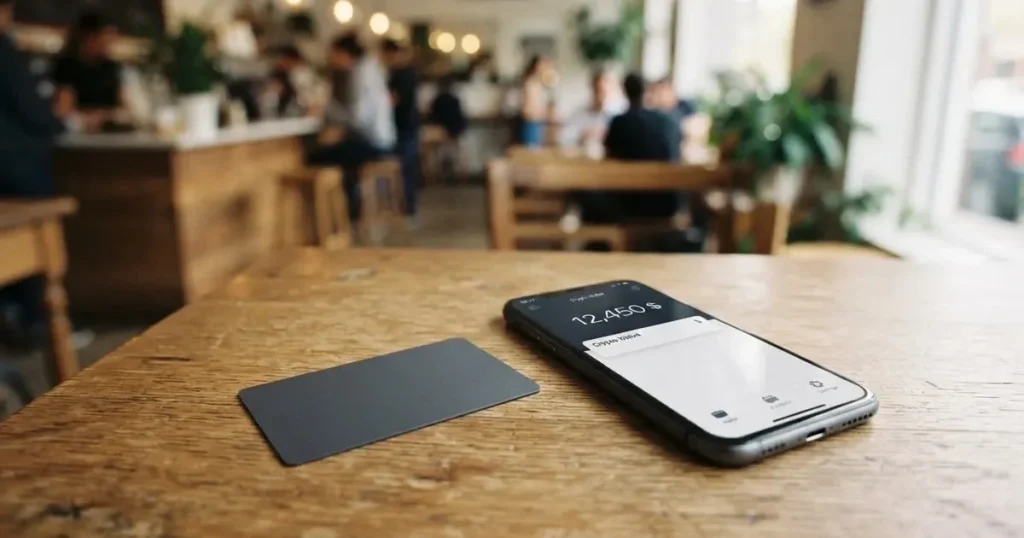
Bix pitches a Visa debit card that spends directly from a self-custody crypto wallet, the kind of wallet where you, not a company, hold the private keys. That is the headline. The reality in late 2026 is that the card has just launched in a slice of the United States, the physical and metal versions are still in the pipeline, and the help-centre fee table and the company’s own press release do not fully agree on what you will pay. This review walks through who can get the card, what it costs, how you top it up, what everyday use looks like, and where the rough edges are, so you can decide whether Bix is worth waiting for or whether an alternative fits you better.
Conditions are current as of October 28, 2026.
Verdict
Bix earns 5.2 out of 10 in this review. The idea is right: keep your crypto in your own wallet, and have a Visa that spends from it. The execution today is thin. Only 29 US states are live at launch, with a target of 49 within six to eight months, and there is no published list of countries. The virtual card exists now at $9.99, the physical and metal cards are “coming soon”, and a BIX Plus tier is planned at $119 a year. The fee table in the help centre shows a 3% purchase fee and a 1% currency conversion fee; the press release says there are no funding fees and a 1% FX rate. That kind of mismatch between the support pages and the marketing is exactly the kind of thing you want to clear up before you put real money on the card.
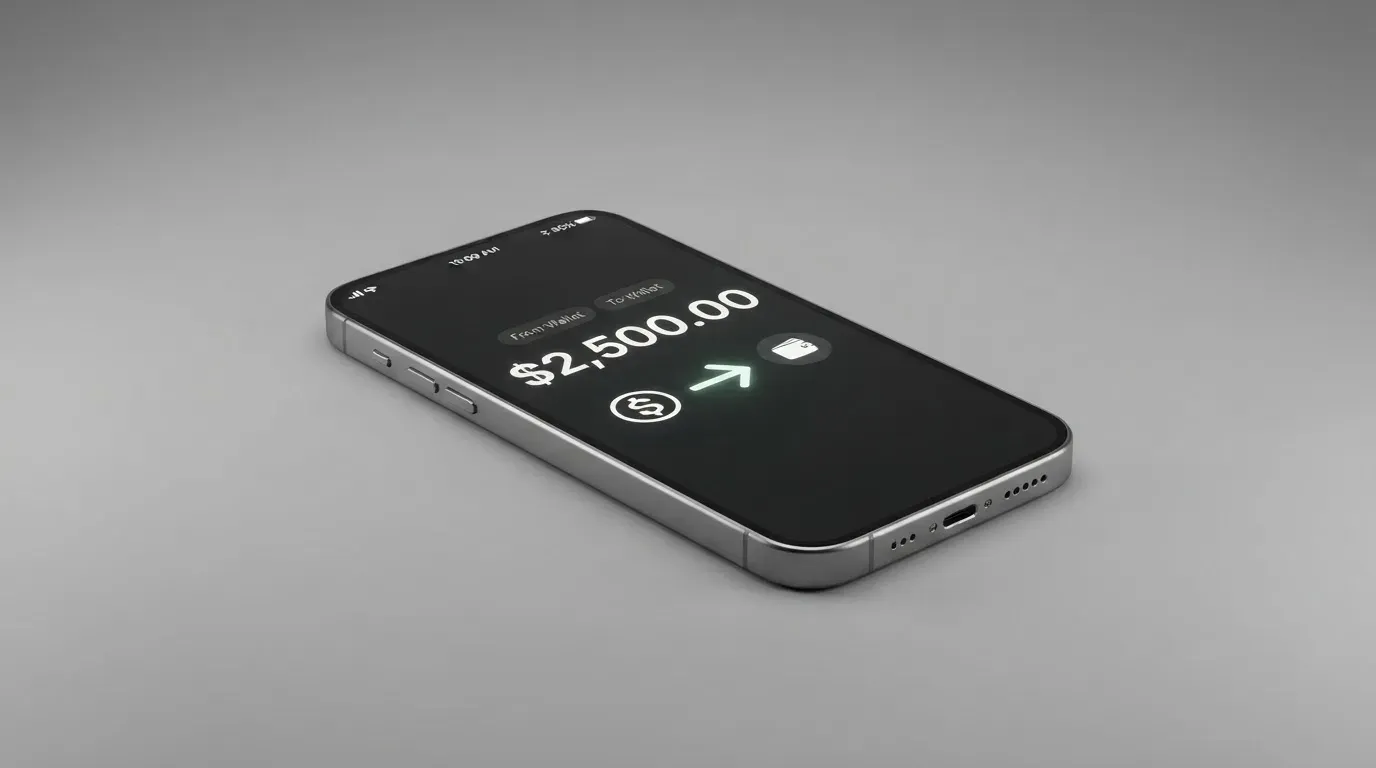
Bix fits a narrow reader: someone in an eligible US state who already keeps crypto in a self-custody wallet, who is comfortable with stablecoins like USDT and USDC, and who is happy to start with a virtual card. It does not fit someone who needs a physical card today, someone outside the US, or someone who wants a published fee table that matches the press release on day one.
| Criterion | Mark | Why |
|---|---|---|
| Who can get it | 2/10 | 29 US states live, 49 targeted, no country list |
| Cost | 5/10 | $9.99 virtual, free membership; 3% purchase, 1% FX in help centre, 1% FX and no funding fees in the press release |
| Top-up options | 8/10 | USDT and USDC as collateral on Ethereum, BNB Smart Chain, Base, Solana, Optimism; fiat “coming soon” |
| Reliability and complaints | 6/10 | Bix Ltd (Cayman Islands) with Dubai offices; issuer not named; no complaints found; iOS app 4.4 out of 5 from 7 ratings |
| Everyday use | 7/10 | Virtual only for now, physical and metal “coming soon”; Apple Pay and Google Pay supported; ATM $1 + 0.6% |
| Total | 5.2/10 |
Who they will give the card to
The Bix site does the thing crypto products often do: it says “Service availability depends on your location, eligibility and the relevant provider’s terms” without telling you what that means. There is no country list on the public site, and no state list either.
What we do know comes from a sponsored press release dated 25 September 2026. Bix says the card is live for residents of 29 US states and that the goal is 49 states within six to eight months. If you sit outside the United States, the public material is silent, and the site phrases availability in a way that suggests it can change without notice. Practically, if you are not in one of the 29 launch states today, you are looking at a wait, and if you are outside the US entirely, you are looking at uncertainty.
Because Bix holds the actual keys to your crypto in your own wallet, the card itself runs on identity verification, the same KYC process a bank would use, applied to “eligible users”. The site does not list which documents you will be asked for, what counts as address proof, or the minimum age, and it does not publish tiered verification levels. You should expect a standard ID and address check, and you should not be surprised if the company asks for more later.
The bottom line: this is a US-state-by-US-state rollout, the list is not public, and the rest of the world has no published answer. If you are in one of the 29 launch states, you can apply; otherwise, you are betting on the rollout reaching you.
How to get it
Sign-up is built around the BIX Wallet, a self-custody wallet. You create the wallet first, complete identity verification for “eligible users”, and then request a card. The card is a Visa debit card linked to that wallet. Today only a virtual Visa exists, priced at $9.99, and you can add it to Apple Pay or Google Pay. Physical and metal versions are listed as “coming soon”, with planned prices of $99 for the physical card and $119 a year for a BIX Plus tier.
What is not in the public material: how long the physical card would take to arrive once available, the documents required for KYC, or whether the KYC is a single step or a tiered process. Those gaps are normal for a brand-new product, and they are the first things to ask the support team if you are about to load meaningful funds.
If you are applying from outside the US, the public pages do not give a clear path. The safest read of the available material is that you should wait until the company publishes a country list or your country is named in a press release.
What it really costs: Fees and the fine print
This is the section where you have to read two documents at once, because they disagree.
The Bix help-centre fee table sets out:
- 3% on card purchases
- 1% currency conversion
- $0.75 authorisation charge for transactions under $50
- $0.65 for a declined transaction
- A line that fees “may vary depending on the transaction type or payment network”
The press release announcing the US launch says there are no funding fees and a 1% FX rate. The 3% purchase fee in the help centre does not appear in the press release. ATM withdrawals are listed at $1 plus 0.6% in the help centre, with the press release saying a 0.6% physical-card ATM fee is planned. There is no published free ATM allowance. Spend limits are described as “configurable” and “flexible and customizable based on the user’s deposited collateral”, with no specific numbers.
There is also a planned tier system: a free standard membership today, a $119-a-year BIX Plus tier planned, and a $99 physical card planned alongside a $9.99 virtual card. The Bix site describes the cards as a progression from virtual to physical to metal, with the metal still “coming soon”.
| Fee or limit | Amount |
|---|---|
| Card issuance (virtual) | $9.99 |
| Card issuance (physical, planned) | $99 |
| BIX Plus tier (planned) | $119/year |
| Standard membership | Free |
| Card purchase | 3% (help centre) |
| Currency conversion | 1% |
| Small authorisation (under $50) | $0.75 |
| Declined transaction | $0.65 |
| ATM withdrawal | $1 + 0.6% |
| Free ATM allowance | Not stated |
| Daily limit | Not stated |
| Monthly limit | “Configurable” and based on collateral |
Three everyday payments show why that mismatch matters. A $4 coffee in a currency your card already holds would, on the help-centre table, attract 3% on the purchase, which is 12 cents, and because the authorisation is under $50, another $0.75, leaving the merchant auth at about 87 cents against a $4 sale. The same coffee, billed in a foreign currency, would carry 1% conversion on top. A $30 grocery shop in your card’s base currency would cost 90 cents, with no small-authorisation fee. A $200 ATM withdrawal in your base currency would cost $1 plus 0.6%, or $2.20 in fees. None of those numbers are ruinous on their own; the issue is the gap between what the help centre says and what the press release says, and the small-authorisation fee, which is unusual for a debit product.
How to top it up: a stablecoin-first wallet
Top-up is where Bix differs from most crypto cards, because the money is not loaded onto the card. It sits in your own wallet as collateral.
Bix accepts USDT and USDC as collateral held in the BIX Wallet. The wallet is self-custody, which means you keep control of the keys. The supported blockchains, in combinations the company describes as “supported”, are:
- Ethereum
- BNB Smart Chain
- Base
- Solana
- Optimism
A fiat on-ramp, the kind of “buy crypto with a bank card” button you see on most exchanges, is listed as “coming soon”. Until that lands, the only way in is a stablecoin transfer from somewhere you already hold USDT or USDC.
The company says there are no funding fees. The minimum top-up, the network-fee payer and any withdrawal terms are not stated. On-chain network fees, the gas you pay to move stablecoins on Ethereum, for example, are charged by the blockchain, not by Bix, and ERC-20 transfers need ETH in the wallet to pay gas.
A practical note for anyone new to self-custody: stablecoin transfers are not reversible, and if you send USDT on a network Bix does not list, or to a deposit address built for a different network, the funds can be lost or stuck in support for an unbounded time. Send a small test amount first, on a network Bix explicitly supports, and only after you have confirmed the wallet address and the network choice twice.
Paying with it every day
The Bix card is a Visa debit card. For now, that means a virtual card you can drop into Apple Pay or Google Pay, with physical and metal versions “coming soon”. Tokenised mobile wallets work in the same way as for any other Visa: the card number is replaced by a device-specific number stored in the Secure Element, each payment uses a one-time code, and the issuer can restrict where the tokenised number can be used.
Blocked merchant categories are not stated, so it is not clear whether things like gambling, adult content or crypto purchases will be declined by policy. The card is listed as carrying Visa Signature benefits, including lounge access, travel and rental car insurance, hotel discounts up to 65% and a concierge service, with a 24/7 concierge line. Those benefits usually attach to the physical card, and the virtual card today may not unlock all of them.
Rewards, branded as BIX Rewards, are listed as “coming soon”, with no published rate. The iOS app, BixPay, sits at 4.4 out of 5 from 7 ratings as of 21 October 2026; the Google Play listing was not read for this review.
A practical issue with cards that spend from a held collateral balance: the merchant sees a prepaid-style authorisation. Some merchants and fraud systems treat prepaid authorisations differently, especially for foreign-issued BIN ranges, and the small-authorisation fee in the help-centre table only adds to that. If a payment is declined, the help-centre table charges $0.65, and the authorisation can leave a hold for several days, the way holds work on most card networks.
What can go wrong
A few risks worth weighing before you load funds.
The fee table is inconsistent. The help centre says 3% on purchases and a $0.75 small-authorisation fee; the press release says no funding fees and 1% FX. The card is brand new, and it is fair to expect the public fee table to change, but you should not load meaningful collateral until the table and the marketing agree.
The issuer is unnamed. Bix is “a technology company, not a bank”. The card programme runs through third-party partners, and the bank or e-money institution that actually issues the card is not named on the public pages. That matters because, if the programme is suspended, it is the issuer that handles the wind-down, not the crypto brand.
The company is Bix Ltd, registered in the Cayman Islands, with operating offices in Dubai. The app on iOS is listed under Bit One Ventures Inc. None of that is disqualifying, but a Cayman-domiciled company with a Dubai office and an unnamed issuer is a thinner corporate trail than you would see with a US- or EU-regulated card.
On the security side, the BIX Wallet is non-custodial: the company says your keys are never stored in complete form, and it uses Shamir’s Secret Sharing, AWS Nitro trusted execution environments, SOC 2 Type II controls, audits by Cure53, Zellic and Doyensec, and 24/7 monitoring. “BIX does not hold or control assets in your wallet” is the line. That is the right shape of security for a self-custody wallet, and the trade-off is the standard one: if you lose your seed phrase, no one can restore it for you.
No user complaints were found within the search budget. There is no Trustpilot page for Bix, no published incident notice, and the iOS rating is built on only 7 reviews. The absence of complaints is not the same as a clean track record; the product is too new for a track record. Treat the lack of complaints as “no signal”, not “all clear”.
What to take instead
If Bix is not for you, three alternatives cover the most common reasons people look elsewhere. Each is a different compromise.
| Bix | TokenPocket | MetaMask Card | KAST | |
|---|---|---|---|---|
| Score | 5.2/10 | 5.8/10 | 7.1/10 | 6.1/10 |
| Where you can get it | 29 US states (49 targeted) | List of European countries (Visa); Australia, Canada, Hong Kong, Japan, Singapore, South Korea, UK and others (Mastercard) | 45 listed countries/territories; waitlist elsewhere | Residence-based; list not published; KYC blocks unsupported countries |
| Card form | Virtual now, physical and metal planned | Virtual (Fiat24) | Virtual free; Metal $199/year | Virtual and physical, up to 10 cards |
| Annual cost | Free standard; Plus $119 planned | Free; NFT creation fee partly covered | Free virtual; $199/year Metal | Standard $0, Premium $1,000/year, Private $10,000/year |
| Funding | USDT, USDC on Ethereum, BNB Smart Chain, Base, Solana, Optimism | Crypto deposits from the TokenPocket wallet | Spends from connected wallet on Linea, Base, Monad, Solana; nine tokens including mUSD, wETH, USDC, USDT | USDT, USDC, PYUSD, RLUSD on Ethereum, Solana, Polygon, Arbitrum, TRON |
| Purchase fee | 3% (help centre) | 1% on crypto deposit (later refunded via rewards) | “Minimal fee” per transaction (amount not stated) | 0% on USD spending; non-USD FX 0.5%–1.75% |
| Rewards | “Coming soon” | 1% deposit fee refunded via rewards later | Virtual 1%, Metal 3% on first $10,000 then 1% in mUSD; Blackbird $FLY bonus | Standard 1.5% on first $2,000/month, Premium 2% on first $10,000, Private 3% on first $40,000 |
If you are outside the US, MetaMask Card has the broadest published country list and the cleanest fee story for spending from a self-custody wallet, with a free virtual card and a Metal upgrade. If you want a US-friendly prepaid card that is virtual today and grows into a physical card, KAST is worth a look, but its $1,000 Premium and $10,000 Private tiers are not entry-level. If you are in Europe and want a crypto-funded Visa without committing to a wallet you do not already use, TokenPocket’s Fiat24 card runs on Arbitrum and accepts deposits from the TokenPocket wallet, with the 1% deposit fee later refunded via rewards.
Who I would recommend it to
Bix is the right product for a narrow reader. If you live in one of the 29 launch states, already keep USDT or USDC in a self-custody wallet on Ethereum, BNB Smart Chain, Base, Solana or Optimism, and you are happy to start with a $9.99 virtual card in Apple Pay or Google Pay while you wait for the physical card, Bix is a reasonable first step. The non-custodial design is the right shape, the audits are credible, and the planned tiering suggests the company is building rather than launching and leaving.
Bix is the wrong product if you need a physical card today, if you are outside the US, if you want a published country list before you sign up, or if you plan to spend in a currency other than the card’s base currency often enough that a 1% conversion fee matters. It is also the wrong product if you do not already have a self-custody wallet: the cost of learning to manage a seed phrase, a gas reserve and a stablecoin transfer is real, and you can pay it with a custodial card and a smaller feature set.
The honest summary is that Bix is a real product from a real company, on a brand-new card programme, with a fee table that does not yet match its press release, an unnamed issuer, and a rollout that has reached 29 US states out of a target of 49. It is worth keeping an eye on, and worth a small first load if the help-centre fee table has been clarified by the time you read this.
Frequently asked questions
What is the Bix card?
The Bix card is a Visa debit card linked to the BIX Wallet, a self-custody crypto wallet. It spends from USDT or USDC held as collateral in your own wallet, and the company says it does not hold or control those assets. Today it is a virtual card priced at $9.99; physical and metal versions are planned.
How does the Bix card work?
You keep USDT or USDC in the BIX Wallet, and the card draws on that collateral at the moment of payment. The wallet is non-custodial, the company uses Shamir’s Secret Sharing and hardware-isolated key handling, and you can add the virtual card to Apple Pay or Google Pay. The card is a standard Visa on the merchant side.
Is Bix a bank?
No. Bix says it is a technology company, not a bank. The card programme is operated through third-party regulated partners, and the issuing bank or e-money institution is not named on the public pages. That means the card’s payment licence lives with the unnamed partner, not with Bix.
Who owns Bix?
The company is Bix Ltd, registered in the Cayman Islands, with operating offices in Dubai. The iOS app is published under Bit One Ventures Inc. The card’s issuing institution is not named in the public material.
Is the Bix card available in my country?
At launch, the card is live in 29 US states, with a goal of 49 states within six to eight months. The Bix site says “Service availability depends on your location, eligibility and the relevant provider’s terms” but does not publish a country list. If you are outside the US, the public material is silent, and the safest read is to wait for a published country list or a press release naming your country.
How do I get the Bix card?
Create a BIX Wallet, complete identity verification as an eligible user, and request a virtual Visa. You pay $9.99 for the virtual card today. The physical and metal cards are planned but not yet available.
Does the Bix card require KYC?
Yes. The site mentions “identity verification and programme requirements” for eligible users. The specific documents, the address-proof rules and the minimum age are not stated on the public pages, so you should expect a standard ID and address check, with the company free to ask for more later.
How do I top up the Bix card?
You transfer USDT or USDC to your BIX Wallet on one of the supported networks: Ethereum, BNB Smart Chain, Base, Solana or Optimism. The company says there are no funding fees. A fiat on-ramp, the kind of “buy crypto with a bank card” button on most exchanges, is listed as “coming soon”.
Is the Bix card free?
The standard membership is free, and the virtual card is $9.99. The press release says there are no funding fees, and lists a 1% FX rate. The help-centre fee table says purchases cost 3%, currency conversion 1%, small authorisations under $50 cost $0.75, and declined transactions cost $0.65. The two documents disagree, and you should clarify which one applies before loading meaningful funds.
Is the Bix card safe?
The wallet is non-custodial, with Shamir’s Secret Sharing, AWS Nitro trusted execution environments, SOC 2 Type II, audits by Cure53, Zellic and Doyensec, and 24/7 monitoring. That is the right shape of security for a self-custody wallet, and the trade-off is the standard one: if you lose your seed phrase, no one can restore it for you. The card programme is brand new, the issuer is not named, and there is no public track record of complaints, which is not the same as a clean history.
Top wallet cards by score – cryptocardtop
Content created by the «cryptocardtop» team